

How many exposures on 120 film can you get from a single roll?
This guide gives a quick answer up front and then shows why frame size, camera, and film type change that number.
You will learn what 120 film is, the common formats (6×4.5, 6×6, 6×7, 6×9, 6×12), and how many frames each typically yields per roll.
Read on for simple planning tips, sample shoot scenarios, a quick checklist, and ways to avoid common gotchas like 15‑frame quirks or rare 220 rolls.
What Is 120 Film?
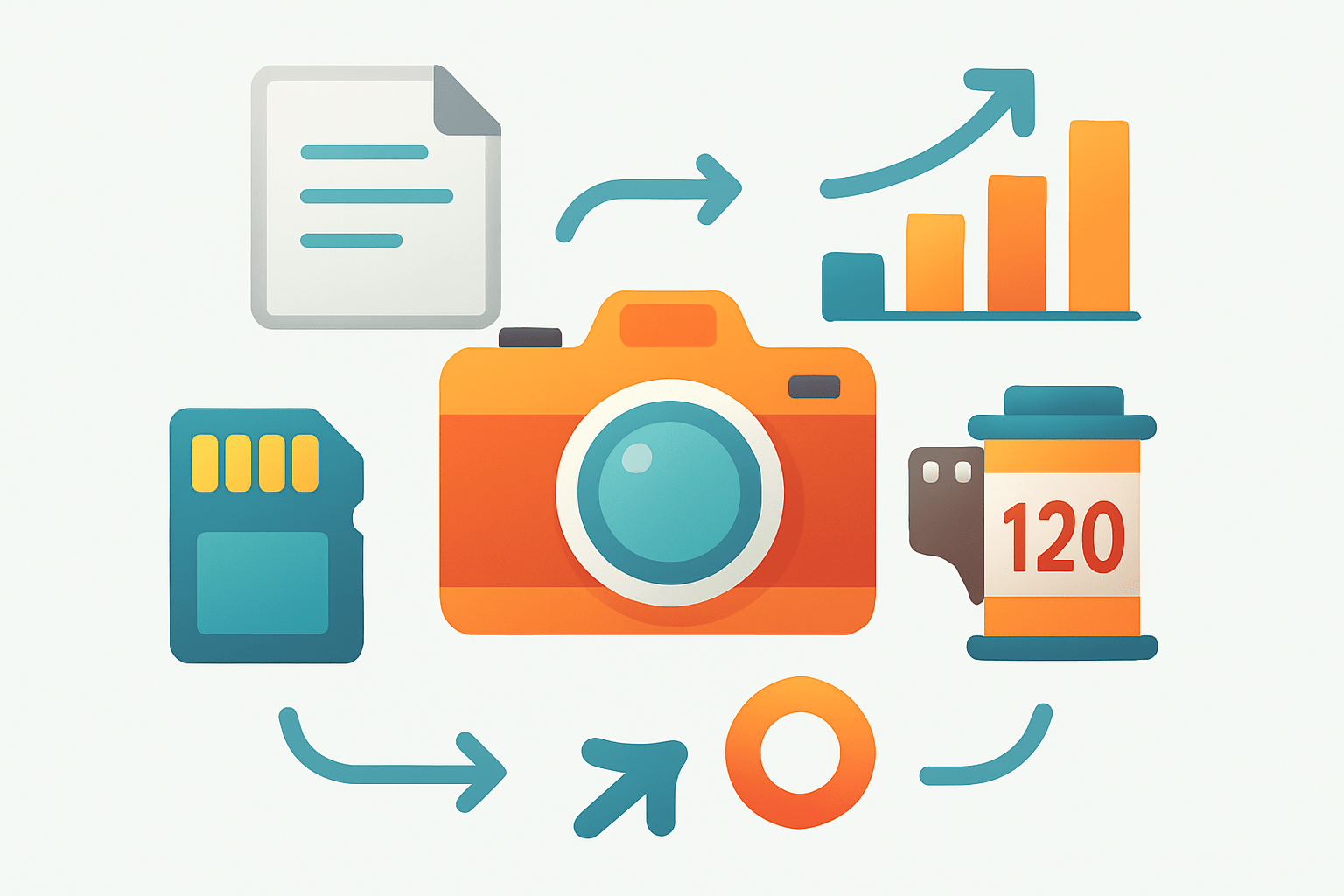
120 film is a roll film format used in medium‑format cameras. The film is about 60 mm wide and comes wrapped in protective backing paper that has frame numbers printed on it. Most cameras either read those numbers through a red window or use internal rollers to count the frames as you wind.
The “120” name comes from Kodak’s early roll‑film numbering system, not from the width of the film itself.
Photographers love 120 because it makes larger negatives than 35 mm, which means smoother tones and more detail. You can choose from modern black‑and‑white, color negative, and slide stocks, so it fits many looks and lighting situations. The bigger image area also scans and prints beautifully.
That backing paper does more than protect the emulsion. It shows frame numbers for different formats, which makes it easy to see your progress during a shoot. Older cameras rely on the window, while newer ones advance automatically and stop at the next frame.
You may hear about 220 film, which is a longer roll with backing paper only at the ends. It typically doubles the shots per roll, but it is rare today and requires a compatible back or pressure plate. We will cover counts and planning in detail when we answer how many exposures on 120 film later in this guide.
Medium Format Film Sizes
Unlike 35 mm, 120 film can be shot in several frame sizes depending on the camera. The most common are 6×4.5, 6×6, 6×7, 6×9, and 6×12, and those labels describe the approximate image dimensions in centimeters. The numbers are nominal, so the actual image area varies slightly by camera gate and film back.
6×4.5 is roughly 5.6 by 4.1 cm and has a near 4:3 aspect ratio. It balances quality with convenience and is popular for travel, weddings, and documentary work. Because the frame is smaller than other medium formats, you get more shots per roll and less cropping pain when printing standard rectangles.
6×6 is about 5.6 by 5.6 cm and gives a square 1:1 image. The square encourages clean, centered compositions and strong symmetry, which many portrait and editorial photographers love. If you need rectangular prints, you should expect to crop a little when going to 8×10 or 11×14 sizes.
6×7 measures roughly 5.6 by 7.0 cm with an aspect close to 5:4, often called the “ideal format” for printing. It produces big, detailed negatives that enlarge to 8×10 or 16×20 with ease. Many fine art and studio shooters choose it for its combination of area and elegant proportions.
6×9 is around 5.6 by 8.4 cm and has a 2:3 aspect similar to 35 mm. That makes it friendly for landscape and travel work where wide scenes and standard 2:3 prints are common. The frames are huge, so scans take more time and your enlarger or scanning carrier needs to handle the size.
6×12 is approximately 5.6 by 11.2 cm and delivers a panoramic 1:2 ratio. It excels at sweeping vistas, architecture, and cinematic compositions where negative space is part of the story. Many cameras achieve it with special panoramic backs or masks, and labs may charge more to scan these long frames.
Remember, these labels are nominal. Some cameras mask a little tighter or a little wider, and the exact image area can change a few millimeters. When you scan or print, you may see black borders or slight edge variation depending on carriers and enlarger masks. If you want a concise refresher on how the system works, this 120 film guide is a handy overview.
Choosing Your Format Based on Shots Per Roll
Quick answer to how many exposures on 120 film: 6×4.5 gives about 15–16 frames per roll (most give 16, a few give 15); 6×6 gives 12; 6×7 gives 10; 6×9 gives 8; 6×12 gives 6. Where available, 220 film usually doubles those counts to 32, 24, 20, 16, and 12 respectively.
Those numbers can shift a little based on the camera and back. Frame spacing and the film gate design matter, and some makers build in extra margin to prevent frame overlap. This is why a few 6×4.5 models show 15 frames instead of 16 even though most deliver 16.
Planning is easier when you estimate your total shots first, then work backward. If you expect to make 60 exposures, a 6×4.5 camera with 16 frames per roll needs 4 rolls, while a 6×6 camera with 12 frames needs 5 rolls. For 6×7 at 10 frames per roll, plan on 6 rolls; for 6×9 at 8 frames, bring 8 rolls; for 6×12 at 6 frames, you will need 10 rolls.
A simple way to calculate is to use this formula in your head: rolls needed equals the ceiling of planned shots divided by frames per roll. For example, if you plan 37 shots on a 6×7 camera, 37 ÷ 10 = 3.7, so you need 4 rolls. If you plan 95 shots on a 6×4.5 camera that gives 16 frames, 95 ÷ 16 = 5.94, so you should pack 6 rolls.
More frames per roll give flexibility and lower cost per frame, but the negative is smaller. That is the 6×4.5 tradeoff, and it is perfect for sessions where you want variety and do not need huge prints. Larger formats like 6×6 and 6×7 give richer detail and tonality, but every press of the shutter consumes a bigger slice of the roll and raises the cost per usable image.
Panoramic formats demand extra discipline because you have so few frames. With 6×12, bracketing two shots per scene can burn a roll in three attempts. Pre‑visualize the composition, meter carefully, and keep a short shot list so you leave with the frames that matter.
Do not assume your count without confirming it. Check your camera manual or the film back for the exact frame count, and look at the backing paper through the red window if your camera uses one. It is wise to shoot a test roll, count the frames, and note spacing before a paid job, and if you are tempted by 220 film, verify that your back supports it and that your lab will process it.
If you want another clear breakdown of planning rolls and results, you may find this how many photos guide helpful for cross‑checking your math. Whatever you shoot, keep the core question in mind: how many exposures on 120 film do you really need for the day, and which format gives you the right balance of quantity and quality?
Medium Format Film Cameras
Twin‑lens reflex cameras are the classic 6×6 machines. They are quiet, compact for medium format, and many include a red window or automatic frame stop that consistently yields 12 frames per 120 roll. The square viewfinder fosters a deliberate, centered approach to composition.
Single‑lens reflex systems cover several formats, including 6×4.5, 6×6, and 6×7. These bodies often offer interchangeable lenses and finders, and some use magazines or inserts that determine the frame size and the number of exposures. With these systems, your frame count usually lines up precisely with the format standards listed above.
Rangefinders and folding cameras commonly shoot 6×7, 6×9, and sometimes 6×12 with special backs. They are prized for portability, big negatives, and fast handling in the field. Press and panoramic backs may change the frame size and the count per roll, so always check before loading.
Camera design affects how frames are spaced and counted. Built‑in winders, film sensors, and fixed masks all influence exact spacing, while interchangeable backs can let you switch formats mid‑shoot. Many modern or aftermarket backs list their exact frame counts, but it is still smart to verify with the manual and run a test roll.
Some older models use the backing paper numbers to set frames, and those numbers differ by format. If you switch between 6×4.5 and 6×6 masks on the same camera, be sure you are aligning to the correct printed numbers for that format. This habit prevents wasted space at the end of a roll or, worse, overlapping frames.
What to Consider Before Choosing 120 Film
Fewer shots per roll is the first practical difference you will feel. Plan your workflow around slower reloads, and bring more spares than you think you need. A small routine of loading, logging, and packing empties keeps your momentum during a shoot.
Medium format gear is bigger and heavier than 35 mm, so handling changes too. A sturdy strap, a comfortable bag, and a light meter make a real difference when you are working all day. If you are new to the format, this quick overview for medium format for beginners can help you set expectations.
Consider cost per exposure from end to end. Film is only part of it, because processing and scanning add up, and larger negatives can cost more to scan at high resolution. Labs often price by frame, so formats with fewer frames per roll can increase the cost per image even if the roll price is the same.
Think about your shooting style. 120 encourages a slower, more deliberate pace, and many photographers meter more carefully and shoot fewer variations. If you like bracketing, remember that it doubles or triples your roll consumption, especially with 6×12.
Check film stock and processing availability in your area. Color negative is widely supported, most labs handle black‑and‑white, and slide film needs tight exposure and a lab that does E‑6. If you rely on scans, ask your lab about max resolution carriers for 6×9 and panoramic frames.
Compatibility matters, so match your camera, back, and film choice. Verify the frames per roll your setup delivers, and confirm if 220 is supported before buying any. Pressure plate settings and film path differences can ruin a roll if they are wrong.
Plan logistics before you leave home. Estimate total exposures, choose the format that balances image quality with the number of frames you need, and calculate your rolls with the formula: rolls = ceiling of shots divided by frames per roll. Add one spare roll for every three to five planned rolls, label each roll, and keep a simple shot log with date, roll number, and exposures used.
A last note on 220: it does double the counts, but it is scarce and many labs no longer process it routinely. If you find some, test a roll and confirm lab support before a big job. Above all, base your choice on how many exposures on 120 film your camera gives and how that count supports the story you want to tell.
What People Ask Most
How many exposures on 120 film can I expect?
It depends on the frame size your camera uses, but most setups give roughly 8 to 16 exposures per roll, so check your camera’s format.
Does the camera format change how many exposures on 120 film I get?
Yes, larger frame formats use more film and give fewer exposures, while smaller formats let you get more frames from the same roll.
Can I increase how many exposures on 120 film by cropping or shooting differently?
Cropping after you shoot won’t increase exposures, and changing frame size or using a different camera is the main way to change the number of frames.
How do I keep track of how many exposures on 120 film I’ve used?
Advance and count each frame as you shoot or mark the backing paper between shots, and some cameras include a frame counter to help.
Is it safe to remove a partially used roll if I run out of shots in a session?
You can remove it, but protect the roll from light by keeping the backing paper intact or finishing the roll in a changing bag to avoid ruining frames.
Does shooting portrait versus landscape affect how many exposures on 120 film I get?
No, orientation doesn’t change the film length or exposure count; only the frame size and camera do.
What common mistakes should beginners avoid about how many exposures on 120 film they’ll get?
Don’t assume every roll gives the same number of shots and don’t forget to check your camera’s frame format and track your shots during a session.
Final Thoughts on Choosing 120 Film
We began by defining 120 film and explaining why its larger negatives deliver richer tones, finer detail, and a more forgiving tonal range — the core benefit you’ll get from shooting medium format; 270 appears here as a single keyword mention. You also got a straight, early answer to how many exposures on 120 film and a quick table to make planning fast.
Realistic caution: fewer frames per roll means you’ll need to plan and carry spares, and some cameras or backs will give slightly different counts. This guide walks through the tradeoffs — more frames per roll for flexibility, larger negatives for image quality — and shows who gains most: deliberate portrait, landscape, and fine‑art shooters who value nuance over volume.
By circling back to the opening question, we gave both the quick counts and a simple planning checklist so you won’t be guessing on location. Expect to learn most by testing one format for a few shoots; the next rolls you shoot will sharpen your choices and confidence.


0 Comments