
How to photograph birds in flight? Want crisp wings, sharp eyes, and dramatic skies in every shot?
This guide gives clear step‑by‑step settings, a printable field checklist, and exact preset numbers for different birds. You will also get lens advice, composition tips, and annotated EXIF photos to study.
You will learn both freeze and panning techniques, autofocus setup, and common mistakes to avoid. Plus there are quick practice drills and a 1–2 minute routine to build tracking skills fast.
Follow the steps and you will leave ready to shoot better flight photos on your next outing. Scroll down for the full how-to, example images, and a one‑page cheat sheet you can print.
How to Photograph Birds in Flight
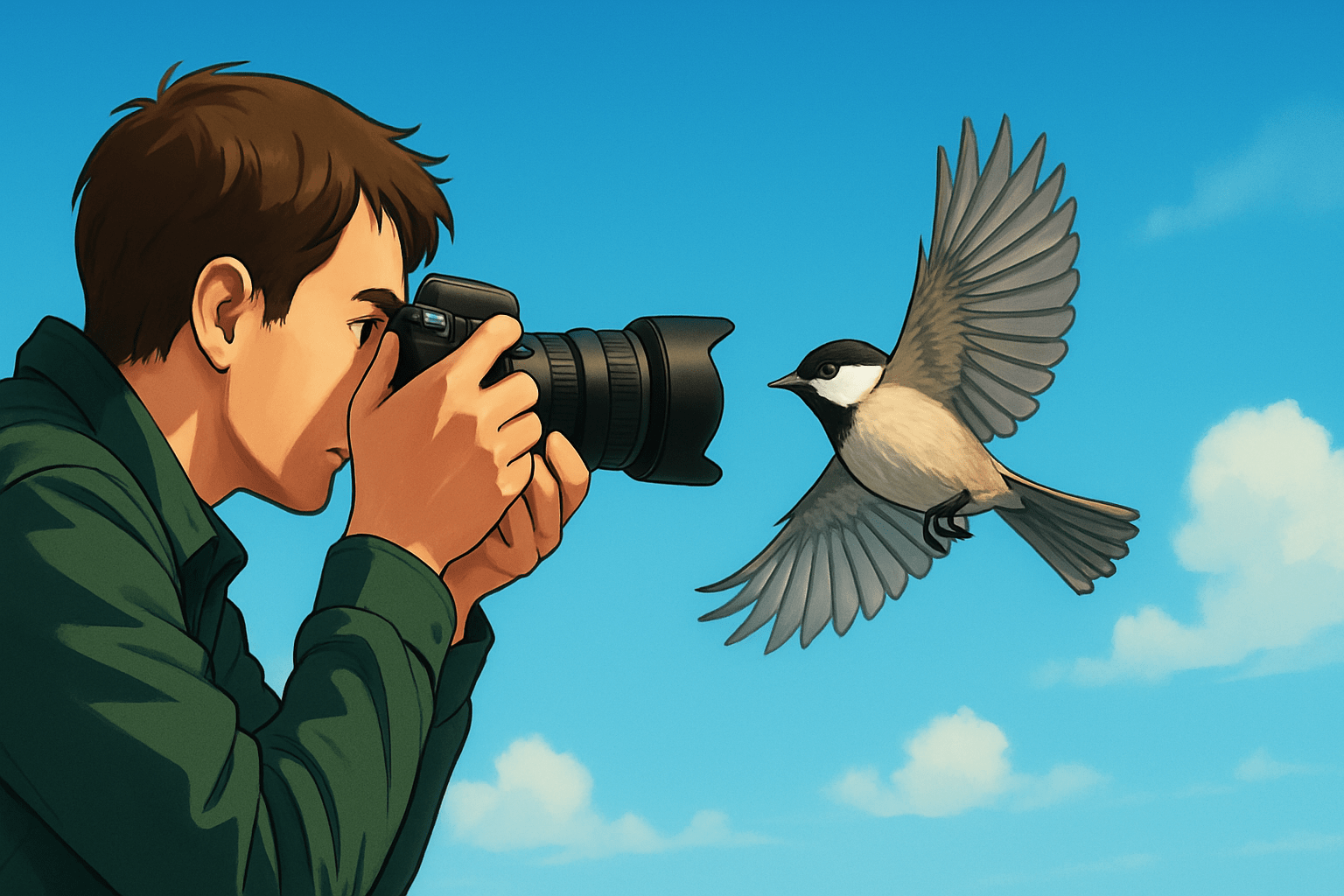
If you came here to learn how to photograph birds in flight, start with a simple plan you can repeat. Keep your setup consistent, then build small habits that let you react fast. That mix of prep and practice is what turns near misses into keepers.
Before you aim, run a quick printable checklist in your head. Fast shutter set, AF‑C or Servo on, high‑speed drive enabled, AF area chosen for the species, Auto ISO with a sensible cap, back‑button focus assigned, stabilization set correctly, burst on, cards formatted and batteries topped up. Keep this card in your bag and you’ll save shots when the action starts.
Use a clean sequence every time. Spot the bird early, predict its path, and pre‑focus on a similar distance or start tracking as it enters range. Plant your feet, elbows in, then ride the bird smoothly through the frame, hold the shutter for a short burst, and keep panning after the last frame to avoid motion snatch.
There are two main approaches. To freeze action, use a very fast shutter so feather detail and wings stay tack sharp. Aim for 1/2000s or faster in bright light and be ready to push ISO when the sky dims.
For panning, use a slower shutter so the background blurs into streaks while the bird stays sharp. Begin around 1/60–1/250s, swing from the hips, and press the shutter smoothly while matching the bird’s speed. A monopod or gimbal can steady your motion and keep lines clean.
Here are quick presets you can print and carry. Small fast passerines work well at 1/2000–1/4000s, f/5.6–f/8, Auto ISO 100–3200, AF‑C, highest fps you have. Medium ducks and waterfowl sit nicely at 1/1250–1/2000s, f/5.6–f/8, and large soaring raptors are fine at 1/800–1/1600s around f/8; for creative pans try 1/60–1/250s at f/8–f/11 with smoother follow‑through.
Watch for common mistakes and fix them fast. If wings blur on a sunny day, your shutter is too slow; bump it a stop or two and lift ISO. If the camera locks on the background, use group‑area AF or a larger zone and keep the AF point on the chest or eye; if you clip wings, shoot a touch wider and crop later.
Two example frames help tie this together. Freeze example: EXIF 1/3200s, f/6.3, ISO 800, 600mm, AF‑C, group area; look for sharp eye, crisp primaries, and no wing clip. Panning example: EXIF 1/80s, f/10, ISO 100, 400mm, Mode 2 stabilization; the bird’s head stays crisp while the reeds melt into lines—see more tips on refining that look.
Try a two‑minute drill before the birds arrive. Pick a fixed target and track it in smooth figure‑eights, then switch to a passing cyclist or car and pan at 1/125s for ten bursts. This quick warmup calms nerves and resets muscle memory so you’re ready when wings appear.
Settings for Photographing Birds in Flight
When you ask how to photograph birds in flight, the right settings make everything easier. The goal is simple controls that you can adjust without thinking. Set them once, then fine‑tune only what the light or subject demands.
Choose Manual exposure for shutter and aperture, and use Auto ISO with an upper limit that matches your noise tolerance. This gives you consistent motion control while ISO floats to keep exposure steady. Shutter Priority works in a pinch, but it may stop down too far and push ISO higher than needed.
Set AF mode to AF‑C or Servo so the camera keeps focusing while you track. Use back‑button focus so your thumb handles tracking and your index finger fires bursts without refocusing every tap. This separation prevents accidental focus hunting during action.
Pick your AF area with the bird in mind. Single point is precise for large birds against plain sky, but it is unforgiving for erratic flyers. Dynamic or group‑area AF adds helper points for small fast subjects, and subject tracking modes shine when the background is busy.
Put the drive mode on high‑speed continuous and learn your buffer limit. Short, timed bursts reduce buffer clog and give more keepers than one long spray. Meter with Evaluative for balanced scenes, and when birds fly against bright sky, add +0.3 to +1 EV so the plumage does not silhouette.
Use stabilization when handholding and shooting at moderate speeds, but consider turning it off on a solid gimbal. For panning, use the panning mode so horizontal shake is allowed while vertical shake is corrected. If the camera hesitates, check that stabilization is not fighting your motion.
Enable the focus limiter on your lens if you know the working distance. This stops the lens from racking focus to close‑up ranges and speeds acquisition. It is a small switch that saves big moments.
Keep numeric targets in your head so choices are quick. Small fast birds need 1/2000–1/4000s, medium birds 1/1250–1/2000s, and large or soaring birds 1/800–1/1600s. For panning, begin at 1/125s and adjust based on your success rate and the bird’s speed.
Dial autofocus behavior to the subject. Use bird‑eye AF if your camera has it, and increase tracking sensitivity for steady flyers while lowering it a notch for erratic darting birds. If the camera keeps grabbing the background, try a tighter AF area or pre‑focus to the flight lane.
Field setup matters as much as the numbers. Set a high ISO ceiling you can clean in post, carry spare batteries, pick fast UHS‑II or CFexpress cards, and format them before you start. For a deeper dive into setup choices and trade‑offs, see these detailed settings.
Best Lenses for Birds in Flight
Your lens decides reach, speed, and how long you can hold the camera. Most flyers are best covered by 300–600mm. Zooms like 100–400, 200–500, and 150–600 offer flexibility when distance changes fast.
Primes at 300, 400, 500, or 600mm are sharper and focus fast, but they are heavy and lock your framing. Zooms are lighter and cheaper, and they help you track, acquire, and then zoom in once you have the bird locked. Pick based on how you shoot and how far you must carry gear.
Aperture affects both light and autofocus performance. f/2.8 or f/4 glass gives cleaner files at high shutter speeds and stronger AF in dim light, but weight and cost rise quickly. f/5.6–f/8 lenses are common, practical, and excellent in daylight.
Teleconverters extend reach but cost light and AF speed. A 1.4× loses one stop and often keeps good AF, while a 2× loses two stops and may slow tracking on smaller bodies. Use them in bright light on cooperative subjects and stop down a little to recover sharpness.
Support gear matters with long glass. A gimbal head balances big primes and makes tracking smooth, a monopod adds mobility with less fatigue, and handheld shooting is fastest when you need to react instantly. Choose the one that fits your session, not just the lens.
Look for fast, accurate AF, strong stabilization, and weather sealing. If you handhold a lot, weight becomes a creative limit, so lighter lenses win real‑world shots. Renting before buying and testing AF tracking on your own camera will save you money and frustration.
If your combo misses focus too often, consider a calibration service. Pack a simple bag: lens cloth, extra card, extra battery, rain cover, and a strap you trust. For reference visuals, compare crops of the same bird at 300mm and 600mm to see how reach changes your framing choices.
Composition in Flight Photography
Settings earn you sharp files, but composition makes people stop and stare. Think about where the bird is going and where your viewer will look next. Make choices that tell a clear story.
Use the rule of space. Leave room in front of the bird in the direction of travel so it can breathe in the frame. Track a fraction ahead of the beak to keep that space consistent through your burst.
Eyes pull attention, even at a distance. Try to shoot at eye level and watch for a tiny catchlight that brings life to the frame. If the eye looks small, tighten your composition or wait for a banking turn that shows the head.
Protect the wingtips. In fast action, frame a little wider and watch the corners of your viewfinder. You can crop later, but you cannot fix a clipped primary.
Backgrounds make or break flight shots. A plain sky, distant tree line, or smooth water isolates the subject and boosts contrast. Move your feet or change height to remove clutter and create clean negative space.
Choose orientation based on the move. Vertical frames suit takeoffs, dives, and banking climbs; horizontal frames fit glides, low passes, and flocks. Switch quickly by assigning a rotate button or flipping the camera with elbows tucked.
Get creative when light turns dramatic. Silhouettes at sunrise or sunset need clean profiles and exposing for the sky, while backlit rim light sings when you add a touch of exposure compensation. Panning adds energy to commuting flocks and can turn a messy background into color streaks.
Frame for the story you want to tell. Tight crops show power and feather detail; wider views place the bird in its habitat and explain behavior. Mix both in a session so your set feels complete.
Give yourself drills to build instincts. Practice the rule of space with gulls or terns and aim for fifty clean keepers, then review what worked and what clipped; before/after crops will teach you fast. For more refined framing and planning, explore practical composition tips and apply them on your next outing.
Understanding Bird Behavior
Fieldcraft is the secret engine behind consistent flight photos. The more you know about a species, the less you chase and the more you anticipate. That is the real answer to how to photograph birds in flight with confidence.
Birds follow routes and triggers. Watch feeding circuits along shorelines and rivers, cliff faces where swallows loop, feeders with steady traffic, and narrow corridors between roosts and fields. Set up where paths are predictable, not at random perches.
Time your sessions to match activity. Dawn and dusk bring low, soft light and more flights as birds feed and commute. Midday is excellent for soaring raptors riding thermals, giving you long, smooth passes and time to compose.
Use wind and sun to your advantage. With sun and wind at your back, birds often take off or land toward you, giving front light and easy eye contact. Side light adds shape, but watch shadows, and be ready to nudge exposure up for bright skies.
Know how species fly. Swifts and swallows beat fast and erratic, so use higher shutter speeds and group‑area AF; gulls and herons flap slower and glide, so you can track more calmly; hawks and eagles soar and bank, rewarding patience and slightly slower shutters. Let behavior pick your technique, not the other way around.
Scout before you shoot. Walk the site, talk with local birders, check recent reports or observatory notes, and then spend a few minutes just watching with your camera down. You will spot launch points, preferred heights, and lanes that make tracking easier.
Keep ethics front and center. Never flush birds for a shot, especially during nesting or harsh weather, and maintain a respectful distance. Use blinds where appropriate and follow local laws and access rules.
Build an observation habit that sharpens timing. Spend 30 minutes with one species and note where it perches, how it launches, and how close you can be without changing behavior. An annotated map of a river bend or cliff edge will reveal flight paths you can return to week after week.
What People Ask Most
What are the basics of how to photograph birds in flight?
Start by practicing tracking and keeping the bird in the frame, use continuous focus and a fast shutter, and shoot in bursts to increase your chances of a sharp image.
Where should I stand to get better shots of flying birds?
Pick an open spot with clear sky and good light, and position yourself so the sun is behind you to light the bird. Being near common flight paths helps you anticipate movement.
How can I keep birds in focus while they move?
Use continuous autofocus and pan smoothly with the bird as it flies, keeping it centered in the viewfinder. Shooting short bursts also raises the odds of a focused frame.
What common mistakes should beginners avoid when photographing birds in flight?
Avoid jerky tracking, waiting too long to press the shutter, and framing too tightly so wings get cut off. Stay patient and practice steady movements.
Is it better to photograph birds in flight early morning or late afternoon?
Yes, early morning and late afternoon give softer, warmer light that improves color and contrast and makes exposure easier. These times also often mean more active birds.
How do I get sharper images of fast-moving birds?
Stand with a stable stance, follow the bird smoothly, and use continuous shooting to capture multiple frames. Focus on technique and timing rather than gear alone.
Can I learn how to photograph birds in flight without expensive gear?
Absolutely — good technique, practice, and patience matter more than expensive equipment. Start with what you have and work on tracking and timing.
Final Thoughts on Photographing Birds in Flight
You’ll leave with the real payoff: turning split‑second wingbeats into steady, expressive photos you can be proud of. Even a 270 mm reach or a modest zoom can change how you frame the subject, and the practical steps here help everyone from backyard birders to serious wildlife shooters. You’ll also walk away with clear, usable steps rather than vague theory, so you can start shooting right away.
One realistic caution: don’t over‑rely on automation or push settings so hard that you stress or disturb the birds — ethics and patience matter as much as technique. This guide answered the opening question about how to photograph birds in flight by giving a printable checklist, concrete presets, autofocus tuning tips, lens recommendations, composition rules, and behavior cues so you’ll know what to do in the field. We also flagged common mistakes and offered quick fixes so you won’t lose shots to simple errors.
Whether you’re just starting or sharpening kit‑based skills, these practices will make each outing more productive and more fun. Keep practicing the short drills, trust what you learn, and you’ll see those keeper shots stack up season after season.





0 Comments