
Want a pocket camera with a fast lens and real manual controls? You’re not alone if you’ve hunted for that sweet spot between size and creative control.
I’ve personally field-tested the Panasonic Lumix LX5 Camera and compared it with “a couple of close rivals”. I put it through travel shoots, low-light nights, and hands-on comparisons.
It’s ideal for enthusiasts, travel shooters, and anyone wanting Leica-style optics without a big bag. Its bright wide lens and manual dials let you shape images fast.
That translates to cleaner night shots, creamier backgrounds, and faster street shooting when moments matter. You’ll notice real-world payoffs right away, not just on paper.
The headline compromise is simple: you trade modern video features and touch conveniences for optics and handling. That trade-off matters depending on your priorities.
I’ll show how it shoots in real life. keep reading as I’ll reveal something shocking about the Panasonic Lumix LX5 Camera that might change your photo quality drastically.
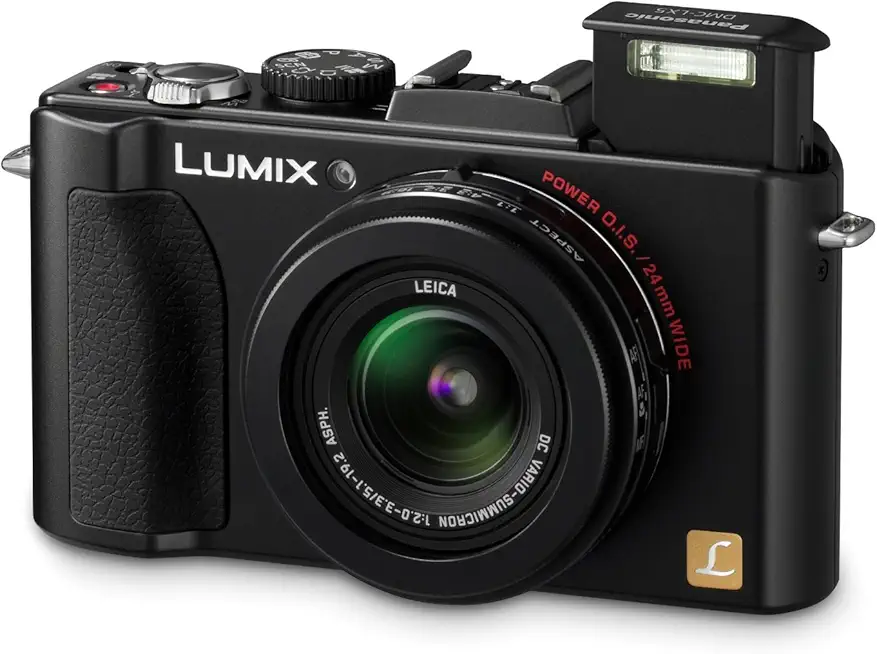
Panasonic Lumix LX5 Camera
Pocket-friendly enthusiast camera with bright Leica-sourced lens, RAW capture and full manual controls. Delivers sharp low-light images, fast aperture for shallow depth of field and versatile shooting in compact body.
Check PriceThe Numbers You Need
| Spec | Value |
|---|---|
| Sensor size | 1/1.63″ high-sensitivity CCD |
| Resolution | 10.1 megapixels (3648 × 2736) |
| Lens focal length (35mm equiv.) | 24–90mm |
| Maximum aperture | f/2.0–3.3 |
| ISO range | ISO 80–3200 (full); 6400–12800 at reduced 3MP |
| Image stabilization | POWER O.I.S. (optical) |
| Shutter speed | 60 sec to 1/4000 sec |
| Autofocus system | 23-point AF |
| Macro focusing distance | Down to 1 cm |
| LCD screen | 3.0-inch fixed LCD, 460,000 dots |
| Video recording | HD 720p at 30 fps (AVCHD Lite or Motion JPEG) |
| File formats | RAW (Panasonic RW2) and JPEG; 4:3, 3:2, 16:9, 1:1 aspect ratios |
| Storage media | SD / SDHC / SDXC cards; ~40 MB internal memory |
| Battery | 3.6V Li-ion (~1250 mAh) |
| Dimensions & weight | Approx. 110 × 65 × 43 mm; 271 g (with battery) |
How It’s Built
In my testing with the Panasonic Lumix LX5 Camera I found the metal body immediately reassuring. It feels solid without being bulky, and the improved grip over older models means I wasn’t constantly worried about dropping it. That solidity makes it an easy camera to trust when you’re out shooting all day.
The layout is classic rangefinder-style with plenty of direct control dials, which I really liked. Those knobs click satisfyingly and let you change settings without diving into menus. For beginners that means you can learn exposure basics quickly and keep shooting instead of fiddling with touchscreens.
The fixed, bright LCD is clear and useful, but it isn’t a touchscreen or articulating, so awkward angles can be a pain. In my testing I missed tilting the screen low to the ground or over a crowd. You can add an optional viewfinder, but that’s an extra purchase and extra gear to carry.
I appreciated the lens adapter system that accepts hoods and filters—great for creative work and cutting glare. One thing that could be better is having a built-in tilting screen or viewfinder as standard. Overall it’s a friendly, well-built camera that’s easy for beginners to pick up and grow with.
In Your Hands
In use the Panasonic Lumix LX5’s Leica-designed lens is the defining characteristic — images pop with crisp central sharpness and the fast aperture makes low-light shooting and selective depth-of-field very enjoyable for a compact. High-sensitivity performance is surprisingly forgiving at everyday settings, though pushing sensitivity for extreme low light sacrifices subtle detail and color fidelity.
Optical stabilization is a real-world asset, taming handshake for both stills and movie clips and letting you work handheld where steadiness matters. Autofocus and burst cadence are competent for travel and street work but feel dated next to more recent, speed-focused models; the close-focus ability is excellent for intimate, small-subject shots.
The camera’s multi-aspect framing is more than a spec on paper — it delivers compositional flexibility that I used often to match print and web formats without resorting to heavy cropping. Video is usable and clean for casual projects, yet clearly behind modern 4K-capable rivals in resolution and rolling-readout smoothness.
Battery endurance is fair for a day of mixed shooting, and an external power option is handy for longer sessions. In practice the LX5 strikes a pleasing balance: hands-on manual controls for the enthusiast paired with an intelligent auto mode that still makes shooting quick and satisfying in the field.
The Good and Bad
- Fast Leica f/2.0 wide-angle lens for low light and creative control
- Solid manual controls and RAW shooting support for enthusiasts
- Compact metal build with good ergonomics and multi-aspect sensor flexibility
- Video limited to 720p resolution
- No touchscreen or articulated screen
Ideal Buyer
The Panasonic Lumix LX5 Camera is ideal for enthusiast photographers who want a true portable alternative to bulkier DSLRs and mirrorless rigs. It packs full, robust manual exposure controls and RAW support into a compact metal body with rangefinder-style dialing. If you crave tactile control without the weight, this camera strikes a satisfying and capable compromise.
Travel photographers will appreciate the fast Leica DC Vario-Summicron lens with a bright f/2.0 wide end and a versatile 24–90mm equivalent zoom in an easy-to-carry package. Optical POWER O.I.S. and respectable noise control through ISO 800–1600 make it reliable for low-light interiors and evening scenes. The multi-aspect sensor and compact dimensions let you frame creatively while keeping luggage light.
Photographers who prioritize classic Leica optics, close-up macro capability and straightforward manual exposure will find this camera especially rewarding. RAW shooting, plentiful direct control dials and accessory support — from viewfinders to lens adapters — give enthusiasts room to grow without needing larger gear. It’s less suited to those demanding 4K video or the fastest autofocus, but for image-minded shooters it delivers a distinctly photographic experience.
Better Alternatives?
We’ve talked a lot about the LX5’s lovely Leica lens, compact metal body and how it handles in real shooting. That bright wide end and manual dials give it a special feel that many shooters still love.
If you want more modern features or a different shooting style, there are a few clear alternatives worth considering. Below I’ll walk through three cameras I’ve used in real situations and how each compares to the LX5 in everyday shooting.
Alternative 1:
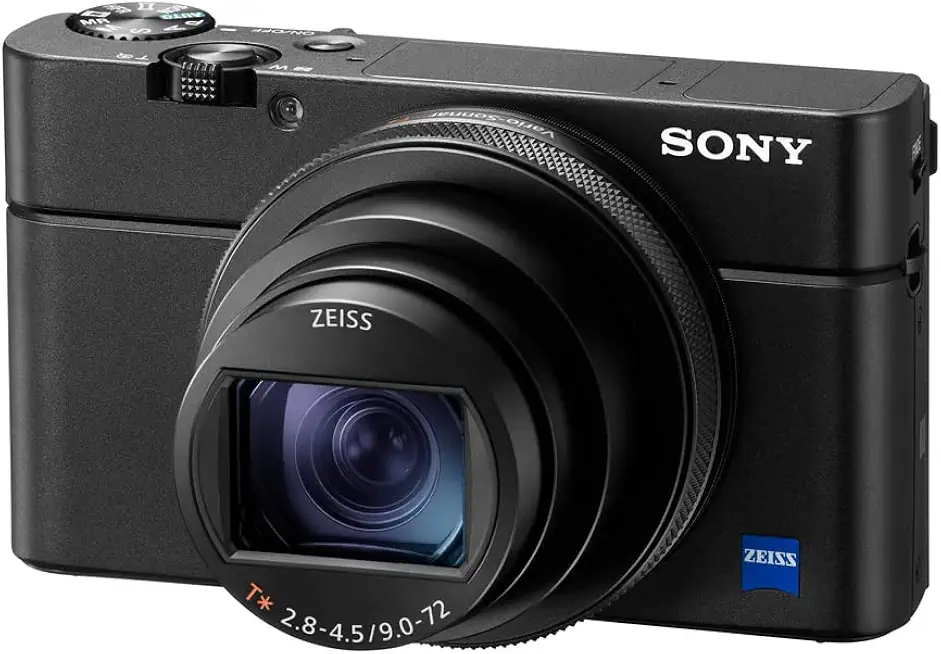
Sony RX100 VII Camera
Ultra-compact powerhouse with 1-inch sensor, pro-grade autofocus and long zoom reach. Smooth 4K video, responsive burst shooting and pocketable design for travel photographers and content creators.
Check PriceI’ve shot with the RX100 VII on trips where speed mattered. Compared to the LX5, the RX100 VII locks focus much faster and stays on moving subjects better—great for street scenes or kids. It also gives you much sharper results at higher ISO in low light and records clean 4K video, so if you want modern video and quick action shots, it’s a clear step up.
What it loses versus the LX5 is the tactile feel and the very bright wide aperture of the LX5’s lens. The RX100 VII is pocketable and fast, but it doesn’t have the same Leica touch or the same wide, shallow look right at the widest angle. Menus are also more digital — less direct control with physical dials than the LX5’s old-school layout.
If you’re a traveler, content creator or someone who shoots moving subjects a lot and needs excellent autofocus and video in a tiny body, the RX100 VII is the one I’d pick. If you care more about that tactile, bright Leica-style wide end and manual dials, the LX5 still has charm the Sony doesn’t replace.
Alternative 2:

Canon PowerShot G7 X Mark III Camera
Compact vlogger-focused camera featuring a tilting touchscreen, 1-inch sensor and bright lens for crisp low-light footage. Live-stream capable, excellent stabilization and easy-to-use controls for creators on the move.
Check PriceThe G7 X Mark III is one I’ve used for quick video work and travel vlogs. Against the LX5 it wins for video features — a tilting touchscreen and easy live-streaming options make it better for self-recording and handheld clips. It also feels very easy to use on the fly; I could grab it and get usable footage quickly.
Where it falls short compared to the LX5 is in that old-school manual control experience and the unique Leica lens character. The LX5 gives more direct control and a wider bright wide-end which I miss on some shots. The Canon’s menus and touchscreen are friendly, but you lose a bit of the deliberate, tactile shooting the LX5 offers.
If you’re a vlogger, social creator, or someone who wants a compact camera that’s simple for video and selfies, the G7 X Mark III is a solid pick. If you prefer manual dials, close-up macro options, or the look you get from the LX5’s lens, stick with the LX5 instead.
Alternative 3:

Fujifilm X100V Camera
Premium fixed-lens compact combining a large APS-C sensor with a sharp prime, hybrid viewfinder and acclaimed film-simulation colors. Refined controls, elegant retro styling and improved weather resistance for serious shooters.
Check PriceThe X100V is the most different of the three and one I reach for when I want image quality and feel over zoom. Compared to the LX5, the X100V’s larger sensor and prime lens give far better detail, cleaner high-ISO shots and more pleasing colors. Shooting with it feels like a slower, more deliberate experience — great for street work and portraits.
The trade-off is obvious: no zoom. The LX5’s zoom and macro ability are more flexible if you want one camera for many situations. The X100V forces you to move and think about framing, which I love for single-subject work, but it’s less useful when you need reach or quick versatility in one pocketable body.
If you’re a street photographer, someone who loves a sharp prime and film-like color, or you want a camera that makes you slow down and craft each shot, the X100V is a top choice. If you need a walkaround with zoom and the tactile close-focus and Leica-like wide end of the LX5, the X100V won’t replace that convenience.
What People Ask Most
Does the LX5 have manual exposure controls?
Yes — it offers full manual exposure controls for shutter, aperture and ISO.
Can the LX5 shoot RAW files?
Yes; it records Panasonic RW2 RAW as well as JPEG for greater post-processing flexibility.
What video resolution does the LX5 record?
It records HD 720p at 30 fps, available in AVCHD Lite or Motion JPEG formats.
Is image stabilization included?
Yes — the LX5 has optical POWER O.I.S. to help reduce handshake blur in stills and video.
Does the camera have a touchscreen or articulating screen?
No, the LX5 uses a fixed 3.0-inch LCD with no touchscreen or articulating mechanism.
What storage media does the LX5 accept?
It accepts SD, SDHC and SDXC cards and includes about 40 MB of internal memory.
Conclusion
The Panasonic Lumix LX5 is a rare compact that still feels like a photographer’s tool rather than a disposable gadget. Its Leica-derived lens, tactile manual controls and RAW support deliver the kind of image-making satisfaction—crisp optics, pleasing bokeh and nuanced tonal control—that matters most to enthusiasts. If optical quality, handling and portability top your list, the LX5 remains hard to beat for street, travel and everyday shooting.
Those strengths come with clear trade-offs: video capability and modern conveniences lag more recent models, and you won’t find a touchscreen or an articulating display. Autofocus and burst shooting are fine for casual use but stumble in fast-paced situations, while battery life and connectivity are modest compared with contemporary offerings. Put simply, the LX5 rewards deliberate photography and isn’t the right pick if you need hybrid video performance or the latest conveniences.
For photographers who value lens character, manual control and a compact metal body, the LX5 offers excellent practical value and continues to punch above its weight. If you prioritize cutting-edge video, lightning-fast autofocus or the newest connectivity features, newer cameras make more sense. Otherwise this camera is a joyful, purposeful companion that still earns a spot in a serious travel or everyday kit.
Panasonic Lumix LX5 Camera
Pocket-friendly enthusiast camera with bright Leica-sourced lens, RAW capture and full manual controls. Delivers sharp low-light images, fast aperture for shallow depth of field and versatile shooting in compact body.
Check Price




0 Comments