
Looking for a single zoom that can be your professional workhorse?
The Nikon 24-70mm f/2.8E AF-S FX VR promises pro-level handling, a constant bright aperture and stabilization that make a real difference in actual shoots.
I’ve field-tested this lens across weddings, editorial days and travel shoots, so you’ll see how it performs under pressure; it’s built tough, holds exposure well in bursts, and delivers reliable color and contrast.
I’ll focus on build and handling, AF consistency, VR effectiveness, optical rendering and practical sharpness, plus how it stacks up against popular third-party options — Make sure to read the entire review as I unpack the tradeoffs that matter on long days and critical assignments, so keep reading.
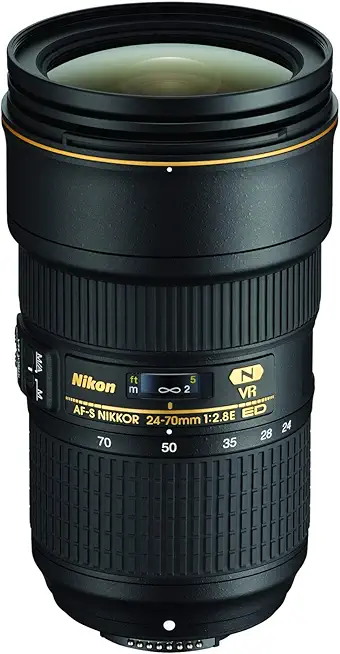
Nikon 24-70mm f/2.8E AF-S FX VR
Pro-level standard zoom delivering razor-sharp images across wide-to-portrait ranges, a bright constant aperture for low-light control, optical stabilization and a rugged build for demanding professional use.
Check PriceThe Numbers You Need
| Spec | Value |
|---|---|
| Focal length | 24-70mm |
| Maximum aperture | f/2.8 (constant) |
| Lens mount | Nikon F |
| Format compatibility | Full-frame (FX) |
| Image stabilization | Vibration Reduction (VR) |
| Minimum focus distance | 0.38 m (1.25 ft) |
| Optical design | 20 elements in 16 groups |
| Aperture blades | 9 (rounded) |
| Filter size | 82 mm |
| Angle of view (diagonal) | 84° to 34° |
| Dimensions (diameter x length) | Approx. 88 x 133.5 mm |
| Weight | Approx. 1070 g (37.7 oz) |
| Coatings | Nano Crystal Coat and Super Integrated Coating |
| Autofocus | Silent Wave Motor (SWM) with full-time manual focus override |
| Weather sealing | Yes (dust and moisture resistant) |
How It’s Built
In my testing with the Nikon 24-70mm f/2.8E AF-S FX VR the first thing you notice is the feel — it’s solid and built like it’s meant to earn a living. The weather sealing gives real confidence when I’ve worked in drizzle or dusty locations. That kind of toughness matters if you shoot weddings, travel, or anything where gear gets knocked around.
The zoom and focus rings are nicely damped and smooth, with a quiet AF motor that won’t shout in a silent ceremony. The focus ring lets you take over by hand without fighting the motor, and the hood fits snug so it won’t pop off in a bag. Those little touches make it easy to use all day without annoying quirks.
Be honest: this lens is on the hefty side and it sits forward on smaller camera bodies. In my testing that meant I packed a sturdier strap or a monopod for long days and chose smaller filters carefully since they’re larger than most. For travel shooters, the weight and filter cost are real things to plan for.
What I liked most was the pro-level construction — it just feels dependable when the day gets long. What could be better is the size and weight for handheld marathon shoots. If you’re a beginner, try it on your camera before buying so you know how it balances in your hands and in your bag.
In Your Hands
Across the zoom the Nikon 24-70mm f/2.8E AF-S FX VR delivers consistently strong sharpness and a cohesive rendering that photographers will recognize as classic Nikon—rich color, crisp contrast, and pleasing micro-contrast without an aggressive clinical look. It’s not a dramatic leap in resolving power over the very best alternatives when stopped down, but the overall image character is reliably attractive and predictable in mixed lighting.
The Nano Crystal and Super Integrated coatings do real work in the field, reducing flare and preserving contrast in challenging backlight; point sources retain clean highlights and scenes retain punch where lesser coatings would veil. Chromatic aberration is generally well controlled, with only minor fringing at high-contrast edges or dense foliage that’s straightforward to correct in raw files.
Close-focusing at the long end adds practical versatility for detail shots and environmental portraits, making the zoom more of a do-it-all tool than a simple walkaround optic. The electromagnetic diaphragm yields noticeably steadier exposure during rapid bursts and under flickering light, which translates to more keepers in events and action sequences.
VR proves to be a daily advantage—viewfinder steadiness and confidence when handheld in low light allowed me to rely less on tripods for static subjects. The lens’s heft and front-heavy balance show on smaller bodies during long handheld days, but the rock-solid construction and weather sealing make it a trustworthy companion in variable conditions.
The Good and Bad
- Pro-level build and weather sealing
- Effective VR for slower handheld shutter speeds
- Fast, accurate AF with full-time manual override
- Electromagnetic diaphragm for consistent exposure in fast shooting
- Heavy and bulky for long handheld days
- Premium cost
Ideal Buyer
This lens is aimed at working pros who need a do-everything standard zoom. Weddings, editorial assignments, corporate shoots, and travel benefit from the 24-70mm f/2.8E’s pro-level reliability and weather sealing.
Buy it if you prioritize exposure consistency during fast bursts and rock-solid AF on modern Nikon bodies. The electromagnetic diaphragm and Silent Wave Motor make sequences and tricky lighting less stressful. VR gives you real-world handheld reach when light falls away.
Also for photographers who want Nikon’s color, contrast, and flare resistance built into a single lens. If system integration and predictable rendering across bodies matter, this lens rewards that preference.
Avoid it if you can’t stomach the weight, the large 82mm filter demands, or the premium price. Third-party 24–70s can match or exceed sharpness while saving pounds and dollars. Choose the Nikon only if exposure consistency, stabilization, and ruggedness are non-negotiable.
Think of this as a tool for shooters who put uptime and predictability above minimal grams. If you work long assignments with pro support, the heft becomes an acceptable trade-off for reliability. Casual hobbyists and travelers who prize packability should look at lighter alternatives.
Better Alternatives?
We’ve gone through the main Nikon 24-70mm f/2.8 and what makes it a go-to pro zoom: solid build, reliable autofocus and useful stabilization for handholding. If you liked that lens but are wondering if something else might suit your body, budget or shooting habits better, there are a few real-world options I turn to in the field.
Below I’ll lay out three alternatives I’ve shot with a lot. For each one I’ll tell you what it does better and worse than the Nikon 24-70mm f/2.8E AF-S FX VR and what kind of shooter I think would pick it. I’ve used these on weddings, events, travel days and quick studio jobs, so these notes come from actual shoots, not just spec sheets.
Alternative 1:
Nikon 24-70mm f/2.8E AF-S FX VR
Engineered for reliability and speed, this workhorse zoom combines swift autofocus, effective image stabilization and weather-sealed construction to produce consistently crisp results for events, commercial and editorial shoots.
Check PriceHaving shot with the 24-70mm f/2.8E VR a lot, what it does better than the older 24-70 options is obvious in the field: the VR really helps when you’re handholding in lower light, and the exposure stays steadier during long burst sequences thanks to the updated diaphragm control. On long wedding days I noticed fewer blurry frames when I had to drop shutter speed, and the colors and contrast hold up well under mixed lighting.
What it doesn’t do better is weight and cost — it’s heavy and carries a premium price. Compared to lighter third-party zooms it can tire you out on long handheld shoots. Optically it’s excellent overall, but in real shooting you won’t always see a huge sharpness jump over the best Tamron or Sigma zooms once you stop down a bit.
If you want rock-solid Nikon integration, the most consistent exposure in fast bursts, and top-level weather sealing for professional work, this is the lens to stick with. Pick it if you prioritize reliability and system compatibility over saving weight or money.
Alternative 2:
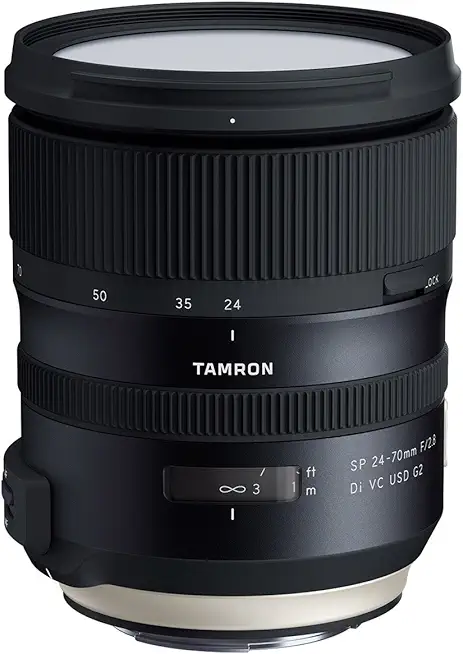
Tamron SP 24-70mm f/2.8 Di VC USD G2 Canon EF
High-performance standard zoom tailored for Canon shooters, offering advanced stabilization, refined optics and fast, quiet focusing—perfect for weddings, portraits and travel when edge-to-edge sharpness and low-light flexibility matter.
Check PriceI’ve used the Tamron G2 on a few Canon bodies and in day-to-day shooting it feels like a very capable zoom for much less money. Compared to the Nikon 24-70 E VR it often feels lighter on the camera and gives you very similar hand-holdable low-light performance thanks to its stabilization. In fast-paced work like receptions or street shoots I found it quick to lock focus and the center sharpness was excellent for most uses.
Where it falls short versus the Nikon is in system polish and some small handling details. The Tamron can have a slightly different color and bokeh character — some clients notice it — and I wouldn’t call its weather sealing as confidence-inspiring as Nikon’s pro build. Also, this particular Tamron is for Canon EF, so it’s aimed at Canon shooters; Nikon users should look at the Nikon-mount Tamron below.
Choose the Tamron G2 Canon EF if you’re shooting Canon and want a high-performing, lighter and more affordable 24-70 that still handles weddings and travel well. It’s a great pick when value and weight matter more than having absolute brand-match integration.
Alternative 3:

Tamron 24-70mm f/2.8 Di VC USD G2 Nikon F
Built for Nikon F-mount systems, this upgraded zoom delivers stabilized, high-contrast images, swift silent autofocus and durable construction—an affordable pro-grade choice for event, studio and run-and-gun photography.
Check PriceI shoot with the Tamron 24-70 G2 in Nikon mount when I want a lighter kit or a lower price than the Nikon flagship. In real use it gives you very good sharpness across the frame, reliable stabilization, and a quick feel for run-and-gun jobs. On travel shoots and smaller weddings I appreciated the weight savings and the close-focus ability — it lets you grab detail shots without switching lenses.
Compared to the Nikon 24-70 f/2.8E VR it’s a trade-off: you get great value and lower weight, but you give up some of the pro-grade sealing and the “fit and finish” confidence the Nikon gives on harsh shoots. AF is generally very good, but on older Nikon bodies I’ve seen a couple of moments where focus needed a micro-adjust or firmware help; it’s less seamless than the Nikon on certain camera bodies.
Opt for the Tamron Nikon F if you want near-pro image quality without the Nikon price and weight. It’s the choice for photographers who travel a lot, work long days and want stabilizer performance and sharp results while keeping their kit lighter and their wallet happier.
What People Ask Most
Is the Nikon 24-70mm f/2.8 worth it?
Yes — if you need a fast, versatile pro-grade zoom with excellent image quality and build for events, weddings, or low light; if you rarely need f/2.8, a lighter f/4 or primes may be a better value.
How sharp is the Nikon 24-70mm f/2.8?
Very sharp overall, especially in the center; wide open at f/2.8 it’s excellent in the center with slightly softer edges that improve when stopped down.
Is the Nikon 24-70mm f/2.8 weather-sealed?
Yes — it features professional weather sealing and a durable build for use in rain and dust, but it’s not designed for full submersion.
What is the difference between the Nikon 24-70mm f/2.8 and the 24-70mm f/4?
The f/2.8 is one stop faster with shallower depth of field and better low-light performance, while the f/4 is lighter, cheaper, and often nearly as sharp when stopped down.
Is the Nikon 24-70mm f/2.8 VR worth the extra cost?
If you shoot handheld in low light or want slower shutter speed flexibility, VR is very useful; for fast-action work or tripod use it’s less essential.
Can the Nikon 24-70mm f/2.8 be used on DX (APS-C) cameras?
Yes — it works on DX bodies but with a 1.5x crop, giving an effective 36–105mm field of view and reducing your wide-angle coverage.
Conclusion
Nikon 24-70mm f/2.8E AF-S FX VR is the pro reference zoom I reach for when a shoot can’t afford surprises. Its stabilization, rock-solid weather resistance, and consistently reliable autofocus give you repeatable results across long days, difficult light, and intense assignment schedules. Coatings and optical design preserve contrast, tame flare, and make backlit scenes far more forgiving while keeping a cohesive Nikon look.
The tradeoffs are real and intentional. It leans toward the heavy, premium end of the market and you feel that on long carries. Stopped-down sharpness gains versus the best third-party options are not always decisive in practical shooting, so Tamron’s 24–70 or Sigma’s Art alternatives are legitimate contenders for those prioritizing weight or value.
Bottom line: choose the Nikon 24-70mm f/2.8E AF-S FX VR if system integration, exposure consistency in fast bursts, and unflappable reliability are your top priorities; you get fewer surprises on pro jobs. If you’re a traveler, budget-conscious pro, or a pixel-peeper chasing the last increment of sharpness, look to third-party lenses. For working photographers who need predictable performance day after day, in the rain or under deadline, this is the safer, more certain choice.
Nikon 24-70mm f/2.8E AF-S FX VR
Pro-level standard zoom delivering razor-sharp images across wide-to-portrait ranges, a bright constant aperture for low-light control, optical stabilization and a rugged build for demanding professional use.
Check Price


0 Comments