
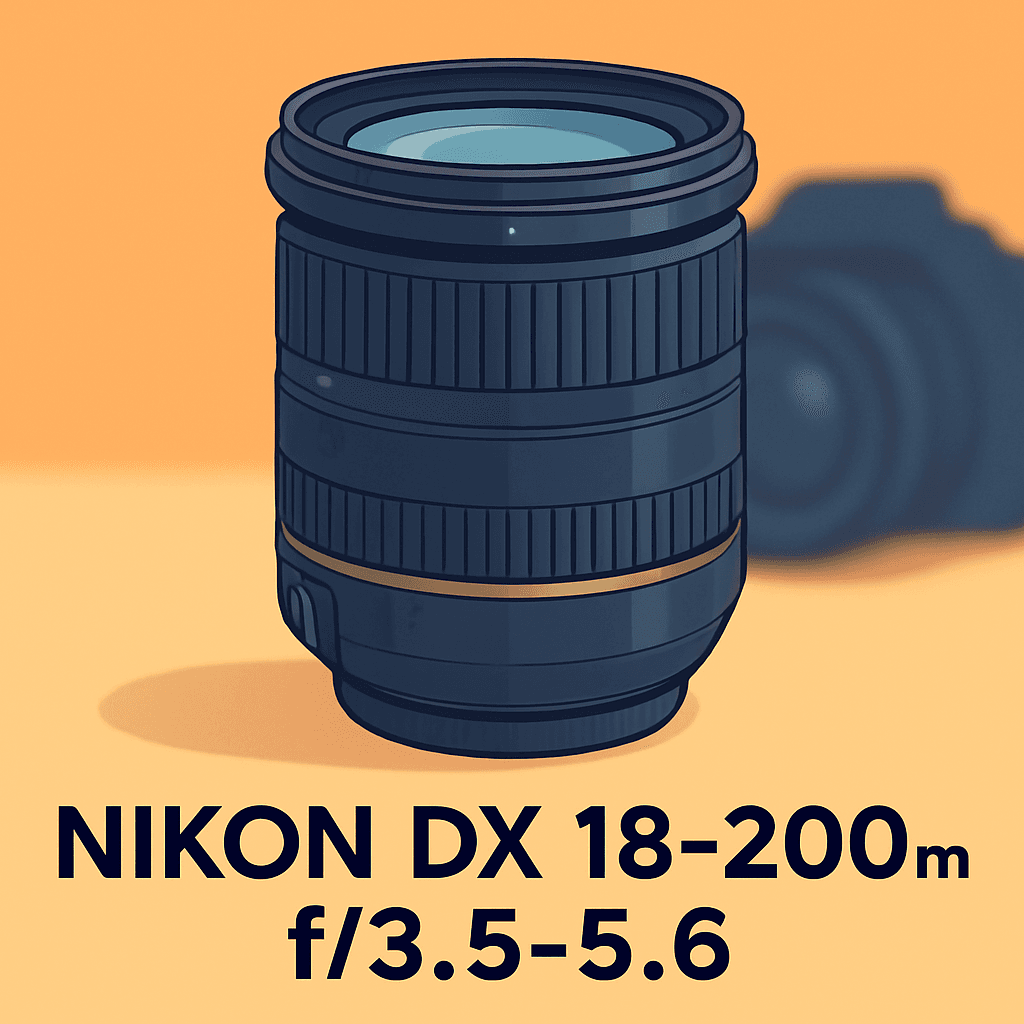
Want one lens that handles wide landscapes, backyard portraits, and the kid’s soccer game without swapping glass? You’ll appreciate a do-it-all optic that keeps you shooting instead of fiddling with gear.
The Nikon AF-S DX NIKKOR 18-200mm f/3.5-5.6G ED VR II is pitched as that convenience-first superzoom, with long reach, VR II stabilization, and quiet AF for everyday use.
It’s the sort of lens travel, family, and walkaround shooters will love for its versatility and practical size, and I field-tested it on trips and weekend shoots to see how it behaves in the real world.
This intro won’t tell you every result, but I’ll unpack handling, stabilization, and the trade-offs between convenience and optical perfection—make sure to read the entire review as you’ll want to keep reading.

Nikon AF-S DX NIKKOR 18-200mm f/3.5-5.6G ED VR II
All-in-one travel zoom delivering wide-to-tele flexibility with effective image stabilization, ED glass elements, and quiet autofocus. Compact and lightweight, it produces sharp images for landscapes, portraits, and everyday photography.
Check PriceThe Numbers You Need
| Spec | Value |
|---|---|
| Lens mount | Nikon F (DX) |
| Focal length | 18–200 mm |
| Maximum aperture | f/3.5–5.6 |
| Minimum aperture | f/22–36 |
| Lens construction | 16 elements in 12 groups |
| ED elements | 2 |
| Aspherical elements | 3 |
| Vibration Reduction (VR) | Yes (II generation) |
| AF-S (Silent Wave Motor) | Yes |
| Minimum focus distance | 0.5 m |
| Filter size | 72 mm |
| Dimensions (approx.) | 77 x 96.5 mm |
| Weight | 565 g |
| Zoom ratio | 11.1x |
| Internal focusing | Yes |
| Diaphragm blades | 7 (rounded) |
How It’s Built
In my testing the Nikon AF-S DX NIKKOR 18-200mm f/3.5-5.6G ED VR II feels like a travel tool—mostly plastic but well put together. Fit and finish are tighter than you’d expect. That gives me confidence to toss it in a backpack and hike all day.
I really liked the internal focusing design because the front element doesn’t rotate, so using a polarizer was painless. The lens ships with the hood and caps, so you’re ready to shoot right away. Beginners will appreciate not fiddling with filters while framing.
The zoom ring has a smooth, slightly damped action that makes framing quick and predictable. After using it for a while I did notice some zoom creep if I carry the camera strap-down. That’s the one design area I’d want Nikon to improve.
Mounted on small entry-level bodies the lens reads a touch front-heavy, which makes long handheld sessions a little tiring. On heftier DX bodies it balances much better and the viewfinder feels less nose-heavy. In practice, handholding for walks and family shots is still easy.
The mount is solid metal while the barrel is lightweight composite, which keeps the overall weight manageable without feeling flimsy. There’s no weather sealing, so keep it out of rain and sand. Over months of use it held up with no looseness or wobbles.
In Your Hands
The AF-S system on the Nikon AF-S DX NIKKOR 18-200mm f/3.5-5.6G ED VR II locks in good light and stays quiet for stills and video. In dim interiors it can hesitate and isn’t optimized for fast sport action, but travel and family scenes are tracked reliably. Full-time manual override feels precise and focus breathing is minimal when racked.
Close-focus ability is practical rather than macro — you can capture tight portraits and tabletop detail without switching lenses. At the long end the working distance gives comfortable reach for distant subjects, though it won’t substitute for a dedicated tele-macro.
Center sharpness is the lens’s strongest card across the zoom range while edges soften toward the extremes and when shot wide-open; stopping down tightens the field. Color and contrast are pleasing and microcontrast is moderate, with generally smooth out-of-focus areas at longer focal lengths. Expect visible distortion and chromatic fringes in high-contrast scenes and occasional flare under harsh backlight, all of which are manageable in post.
The variable aperture forces a trade-off between shutter speed and ISO at longer focal lengths indoors, so mind your exposure settings for action or low light. Handling is comfortable on mid-sized DX bodies, the zoom rotates smoothly with only occasional light creep when carried lens-down, and the common filter thread makes polarizers and NDs straightforward to use. My sample delivered consistent, reliable results.
The Good and Bad
- One-lens convenience: 18–200mm 11.1x coverage
- VR II stabilization for handheld shooting
- AF-S silent internal focusing with a non-rotating front for use with polarizers and ND filters
- Practical size and weight for its range (77 x 96.5 mm; 565 g)
- Variable maximum aperture f/3.5–5.6 limits low-light performance and background blur at the long end
- Superzoom optical trade-offs versus primes and shorter zooms (sharpness, distortion, CA, vignetting)
Ideal Buyer
If you prize convenience and hate swapping glass, the Nikon AF-S DX NIKKOR 18-200mm f/3.5-5.6G ED VR II is built for you. It compresses wide-to-tele coverage into one practical package that keeps travel bags light.
Beginners and enthusiasts assembling a lightweight DX kit will appreciate the lens’ reach and VR II steadiness. Event and family shooters benefit from fast framing changes and quiet AF without fumbling for replacements. Casual hobbyists who want one reliable lens for most days will find it forgiving and versatile.
This is the lens to grab for vacations, city walks, amusement parks, or backyard wildlife where changing lenses is inconvenient. Landscapes, portraits, and kid-level action are all within its comfort zone. The 18–200mm range shines when flexibility matters more than pixel-peeping perfection.
Skip it if you need fast low-light primes, specialist portrait glass, or telephoto reach with the highest sharpness. If you demand maximum image quality, dramatic background blur, or serious wildlife reach, opt for faster or more specialized optics. For everyone else who values one-lens simplicity, this is a practical, do-it-all workhorse.
Better Alternatives?
We’ve gone through what the 18–200 VR II does well: it’s a true one-lens solution for travel, family events, and walkaround shooting. It gives you a lot of focal length in a single package and the VR and AF-S make it easy to get usable shots without swapping glass. At the same time, we also covered its optical compromises and the limits you hit when you push it hard.
If you want something a little different—smaller size, more reach, or just a different balance of handling versus image trade-offs—there are solid alternatives. Below I’ll compare three lenses I’ve actually used against the 18–200 so you can pick what matches your shooting style.
Alternative 1:
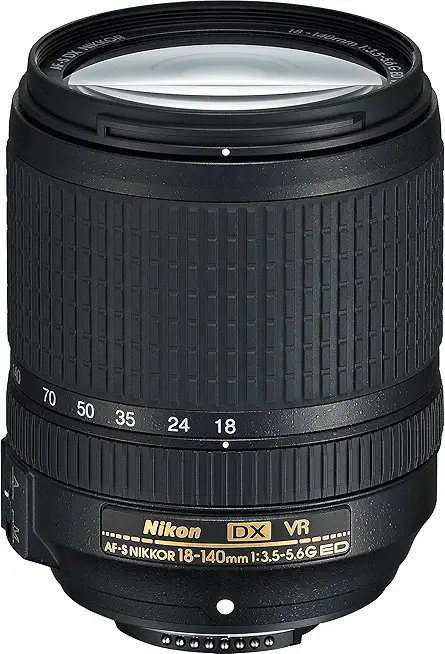
Nikon AF-S DX NIKKOR 18-140mm f/3.5-5.6G ED VR
A versatile everyday zoom covering wide-angle to short telephoto with optical stabilization, ED elements, and smooth, dependable autofocus. Durable build and balanced handling make it ideal for travel, family, and street photography.
Check PriceI’ve used the 18–140 on small DX bodies and the first thing you notice is how light and balanced it feels compared to the 18–200. In real shooting the 18–140 is easier to carry all day and feels less front-heavy, which matters for street work and long walks. The images also tend to look a touch cleaner in the mid-range—better contrast and a bit more edge detail at the common focal lengths I use for portraits and landscapes.
Where it loses out versus the 18–200 is reach. If you regularly need 200mm for distant subjects—wildlife at a zoo, kids across a field, or distant details—you’ll miss the extra tele. The VR and AF are similar in behavior, but because the 18–140 is smaller it often feels snappier and more stable on lighter bodies, which helps in everyday shooting.
If you prefer handling and slightly better image feel over maximum reach, the 18–140 is the one to consider. It’s the kind of lens a travel or street photographer will like—someone who wants good IQ, low weight, and won’t miss that extra 60mm most of the time.
Alternative 2:

Nikon AF-S DX NIKKOR 18-300mm f/3.5-6.3G ED VR
Super-tele reach in a single-lens solution, pairing an expansive focal range with effective stabilization, ED glass, and reliable autofocus. Perfect for wildlife, sports, and travel when maximum reach and versatility matter.
Check PriceThe 18–300 is for photographers who want maximum reach without changing lenses. I’ve used it on trips where I didn’t want to carry more than one lens and the freedom to zoom from wide to far-away subjects is liberating—especially for travel or casual wildlife where you can’t predict the distance to your subject. The extra reach means you’ll capture things the 18–200 simply can’t without cropping or a teleconverter.
That extra range comes with real trade-offs. In field use the 18–300 feels heavier and less nimble, and image sharpness at the long end is softer than the 18–200 at comparable focal lengths. I also noticed more visible distortion and chromatic fringing when shooting high-contrast scenes at the long end, and AF can hunt more in low light. VR helps, but the weight and optical compromises are obvious when you pixel-peep.
Choose the 18–300 if you need reach above all else—travelers who want one lens, hobbyists shooting distant subjects, or anyone who hates changing glass mid-trip. If you value packing light and the cleanest images across the frame, the 18–300 won’t beat the 18–200 in everyday image quality.
Alternative 3:
Nikon AF-S DX NIKKOR 18-300mm f/3.5-6.3G ED VR
All-purpose telephoto zoom offering massive focal coverage with vibration reduction, specialty glass, and versatile close-focusing. Streamlines kit for travelers and hobbyists seeking reach without swapping lenses or adding weight.
Check PriceTo add another angle: when I used the 18–300 as my only lens for multi-day trips, it truly simplified shooting. You can react to scenes quickly—tight portraits one moment, distant action the next—without thinking about lens swaps. The close-focusing at shorter lengths is also handy for casual close-ups, so you get a lot of useful framing options in one piece of glass.
However, compared directly to the 18–200 the 18–300 rarely matches the same level of clarity, especially in the corners and at long focal lengths. In practical shooting that means wall prints or crops from 300mm sometimes look softer and need more post-processing to clean up color fringing. Handling-wise it’s bulkier and you feel that extra weight after a few hours of handheld work.
This version of the 18–300 is aimed at the traveler or hobbyist who values reach and convenience above optical perfection. If you want to travel light and still photograph a wide range of subjects without changing lenses, it’s a great choice. If you’re after cleaner images and better balance on small bodies, stick with the 18–200 or the smaller 18–140 instead.
What People Ask Most
Is the Nikon DX 18-200mm f/3.5-5.6 a good lens?
Yes for convenience and versatility—it’s a solid all-in-one for hobbyists and travel, but it won’t match the sharpness or speed of primes or professional zooms.
Is the Nikon 18-200mm f/3.5-5.6 VR worth buying?
Yes if you want a single lens with wide range and vibration reduction for travel or everyday use; skip it if you need the best image quality or low-light performance.
How sharp is the Nikon 18-200mm f/3.5-5.6?
Center sharpness is decent stopped down, but edges and the long end are noticeably softer, so expect compromises compared with better-quality lenses.
Can the Nikon 18-200mm f/3.5-5.6 be used on full-frame (FX) bodies?
No — it’s a DX lens and will vignette badly on FX bodies unless you shoot in crop mode, as it’s designed for APS-C sensors.
Is the Nikon 18-200mm f/3.5-5.6 good for travel and everyday photography?
Absolutely — its wide zoom range and VR make it ideal for travel and walkaround shooting when you want to avoid swapping lenses.
How does the Nikon 18-200mm f/3.5-5.6 compare to the 18-105mm or 16-85mm lenses?
The 18-200mm gives more reach but generally trades off some sharpness, contrast, and handling compared to the 18-105mm or 16-85mm, which offer better optical performance and often faster autofocus.
Conclusion
If you want a single, do-it-all lens for travel and everyday shooting, the Nikon AF-S DX NIKKOR 18-200mm f/3.5-5.6G ED VR II is the obvious convenience pick. It marries long reach with Nikon’s VR II stabilization and quiet AF-S focusing so you can react quickly without swapping glass. In practice it keeps your bag light and your shooting options wide, which is exactly what many DX shooters need.
It’s not a panacea for image perfection, and you have to accept the inevitable superzoom compromises. The variable aperture and broad optical trade-offs mean it won’t equal primes or shorter, faster zooms in low light, subject isolation, or corner microcontrast. Still, for travel, family events and walkaround work its balance of utility and performance is hard to beat.
Choose the 18–200 VR II when reach and flexibility outweigh the last stop of IQ or the lightest handling. If you want a smaller package and slightly crisper midrange images, look to the 18–140. If maximum reach is critical go 18–300, and if price is the driver the Tamron 18–200 gives similar convenience for less. Overall, this Nikon is the pragmatic one‑lens answer for generalist DX shooters who value versatility above specialization.
Nikon AF-S DX NIKKOR 18-200mm f/3.5-5.6G ED VR II
All-in-one travel zoom delivering wide-to-tele flexibility with effective image stabilization, ED glass elements, and quiet autofocus. Compact and lightweight, it produces sharp images for landscapes, portraits, and everyday photography.
Check Price

0 Comments