
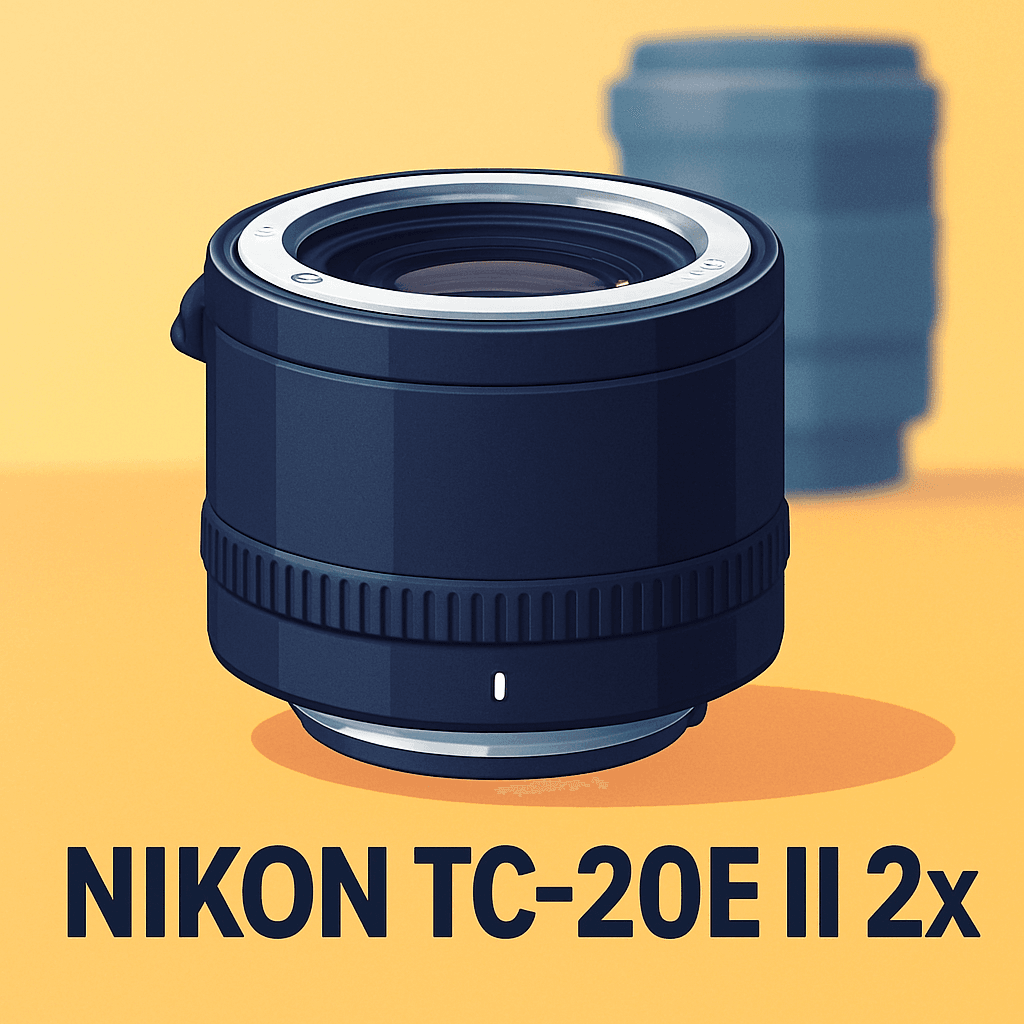
Want more reach from your telephoto without buying a whole new lens? The Nikon F Mount TC-20E II 2.0x AF-S promises to double your framing distance and open up distant wildlife and sports shots you couldn’t get before.
It’s a compact, field-friendly way to extend reach for photographers who value portability, though it brings some light loss and a touch of autofocus slowdown you’ll need to plan for. I’ve spent time with this converter in real shooting conditions and saw both the upside and the trade-offs first-hand.
If you’re curious whether this is the right add-on for your AF-S telephoto rig, I’ll walk through real-world performance, usability, and who benefits most—Make sure to read the entire review as you’ll want to know when the reach outweighs the compromises, keep reading.

Nikon F Mount TC-20E II 2.0x AF-S
Double your telephoto reach while preserving AF performance on AF-S lenses; a rugged, professional-grade teleconverter built for wildlife and sports, offering solid optics and secure metal mounting for dependable use.
Check PriceThe Numbers You Need
| Spec | Value |
|---|---|
| Type | 2× teleconverter |
| Mount | Nikon F-mount |
| Lens compatibility | AF-S and AF-I Nikkor telephoto lenses |
| Compatibility note | Not compatible with non-AF-S/AF-I lenses |
| Magnification factor | 2× focal length increase |
| Maximum aperture reduction | 2 stops |
| Autofocus | Supported with compatible lenses, may be slower |
| Lens elements/groups | 7 elements in 5 groups |
| Coating | Nano Crystal Coat for flare reduction |
| Weight | Approximately 230 grams |
| Length | About 67 mm |
| Weather sealing | No |
| Filter thread | None (extends lens) |
| Image quality impact | Slight decrease due to doubling focal length |
| Designed use | Extending telephoto lenses for wildlife and sports photography |
How It’s Built
In my testing the Nikon F Mount TC-20E II 2.0x AF-S feels solid and well made. The metal mount mates precisely with compatible telephotos and gives a reassuring click. That means less wobble and more confidence when switching lenses in the field.
It’s compact and easy to carry, but it does add length and a bit of weight to your setup. I found the balance shifts forward, so I changed my grip and used a monopod more often. For beginners that means a small adjustment to shooting technique, not a whole new kit.
The optics are treated with Nikon’s coating which helped reduce flare in backlit shots I took. One thing I really liked was how contrast held up in harsh light. One thing that could be better is the lack of weather sealing and no filter thread, so I’m cautious in rain and dust.
Mount precision made pairing with AF-S telephotos painless in my hands-on use. It’s a neat, portable add-on that gets you more reach without hauling a bigger lens. After using it for a while I appreciated the build, but I always carry a simple rain cover for outdoor shoots.
In Your Hands
In the field the TC-20E II reliably doubles your reach, turning distant subjects into usable frame-fillers, but that extra reach comes with a roughly two‑stop light penalty you have to manage. That loss forces practical choices: you’ll often trade aperture or raise ISO to maintain action‑stopping shutter speeds, and the converter’s presence changes how you expose and compose in real time.
Autofocus works with the right AF‑S/AF‑I telephotos, though I noticed a measurable slowdown compared with shooting native glass — tracking is solid in good light but can hesitate in marginal conditions. Optically you can expect a slight softening and reduced micro‑contrast versus the bare lens, yet images remain very usable for editorial and field work when focused carefully and shot with steady technique.
Where the TC shines is obvious: distant wildlife and sideline sports where getting closer in the frame matters more than absolute corner‑to‑corner excellence. Conversely, in low light or when subjects erupt with frantic motion the light loss and AF lag can reduce keeper rates, so pick your moments to mount it rather than leaving it on constantly.
Build and coating help practical use — the converter’s finish tames flare in backlit scenes, but the lack of weather sealing means I treat it as a delicate link in a rugged kit. In practice I compensate by favoring faster shutter speeds, careful support or stabilization, and a willingness to nudge ISO up to preserve sharp, decisive frames when that doubled reach is mission‑critical.
The Good and Bad
- 2× focal length increase for wildlife and sports
- Autofocus supported with compatible AF-S/AF-I telephoto lenses
- Solid metal mount construction
- Nano Crystal Coat for flare reduction
- 2-stop maximum aperture reduction
- Autofocus may be slower
Ideal Buyer
The Nikon F Mount TC-20E II 2.0x AF-S is for photographers who need twice the reach without buying a new super-telephoto. Wildlife and field-sports shooters who already own compatible AF-S or AF‑I telephoto lenses will benefit most. It’s a quick way to get closer to distant subjects.
If you can accept a two‑stop exposure hit and the modest AF slowdown, the payoff is dramatic framing. The unit’s compact 230 g weight and short profile keeps your rig more portable than a longer prime. This makes it great for long hikes, blinds, and ad‑hoc field work.
Best candidates are shooters using high-quality AF‑S/AF‑I telephoto primes or pro-level zooms on bodies with reliable AF tracking. Seasoned shooters who know to raise ISO, lock faster shutter speeds and use solid support will see the most keepers. In good light the TC‑20E II often gives usable files where framing otherwise would fail.
Not ideal buyers include owners of non‑AF‑S/non‑AF‑I lenses, photographers who insist on the absolute best sharpness, and those who regularly shoot in bad weather without sealed gear. If autofocus reliability or minimal IQ loss is critical, consider 1.4× or 1.7× teleconverters or a longer native prime. The TC‑20E II is a reach tool, not a universal fix.
Better Alternatives?
We’ve already gone over the TC-20E II and what it gives you: double the reach, but with two stops of light loss and a noticeable hit to sharpness and AF speed on some bodies. If that trade-off doesn’t sit right for you, or you want a cleaner file from the same lens, there are solid options that shift the balance toward image quality or AF reliability instead of raw reach.
Below I’ll run through three practical alternatives I’ve used in the field. I’ll point out what each one does better and worse than the TC-20E II, and which kind of shooter will get the most out of each choice.
Alternative 1:

Nikon F Mount TC-20E III 2.0x AF-S
Next-gen 2x teleconverter with upgraded coatings and refined optics to maximize sharpness and contrast across the frame; preserves fast AF on modern lenses, ideal for demanding wildlife and action work.
Check PriceI’ve used the TC-20E III as the “best possible 2x” option when I absolutely needed to double focal length. Compared to the TC-20E II, the III gives cleaner images — better contrast and a touch more micro-contrast — so your files look less washed-out at long distances. On modern bodies and top telephoto lenses I noticed autofocus behaved a bit better and focus acquisition felt more reliable than the II.
What it doesn’t fix is the basic 2× trade-offs: you still lose two stops of light and you’ll still see some softness vs. shooting without a converter. The III is also pricier and a little heavier, so you pay more for that cleaner output and slightly improved AF behavior.
Who should pick it: shooters who need true 2× reach and want the best possible IQ from a Nikon 2x converter — wildlife and action pros who use modern AF-S telephoto primes and are willing to pay a premium for fewer compromises.
Alternative 2:

Nikon F Mount TC-17E II 1.7x AF-S
Gain 1.7x added reach while striking a balance between magnification and image quality; optimized for AF-S glass to retain autofocus and deliver crisp results for birding and sports photography.
Check PriceThe TC-17E II sits between the 1.4× and 2× options and I found it to be the best compromise in many real shoots. Compared with the TC-20E II, it gives you more reach than a 1.4× but with noticeably less light loss and less softening than the full 2×. In practice that means higher keeper rates for moving birds and sports in decent light.
On the downside, you don’t get the full doubling of focal length, so very distant subjects still benefit more from a 2×. And while AF is generally steadier than with a 2× unit, it’s not as foolproof as the 1.4× in low light or on slower bodies.
Who should pick it: photographers who want extra reach without fully accepting the IQ and AF penalties of 2× — birders and amateur sports shooters who need that middle ground and want better real-world results than the TC-20E II in mixed lighting.
Alternative 3:

Nikon F Mount TC-14E II 1.4x AF-S
Extend focal length with minimal light loss and exceptional resolution preservation; compact, professional teleconverter that maintains autofocus with many lenses, perfect for portraits, wildlife, and travel telephoto needs.
Check PriceThe 1.4× TC-14E II is the mildest and most forgiving option I use most often when image quality and AF reliability matter. Compared with the TC-20E II it keeps far more sharpness and contrast and only costs you about one stop of light. Autofocus stays snappier and keeper rates rise, especially in lower light or with fast-moving subjects.
The trade-off is obvious: you won’t gain nearly as much reach as the 2×. For very distant wildlife or tiny targets you may still want the extra reach of the 2×, but for travel, portraits, and most wildlife work the 1.4× often gives a better final image in real shooting conditions.
Who should pick it: shooters who put IQ and AF performance first — wedding, portrait, and wildlife photographers who want a compact, dependable boost without the big hit to sharpness and shutter speed that comes with a 2× converter.
What People Ask Most
What does the Nikon TC-20E II 2× teleconverter do?
It doubles the focal length of a compatible lens, giving you twice the reach without buying a longer lens.
How much light and aperture do I lose using the 2× teleconverter?
You lose two stops of light, so an f/2.8 lens becomes f/5.6 and an f/4 becomes f/8.
Will it hurt image quality and autofocus?
Yes—expect some loss of sharpness, contrast, and increased aberrations, and autofocus will be slower or may not work reliably on slower lenses or older bodies.
Which lenses and cameras work best with this teleconverter?
It works best on high-quality, fast telephoto primes (ideally f/2.8 or f/4) and AF-S/AF-I Nikon tele lenses; always check Nikon’s official compatibility list for your camera and lens.
Is buying a TC-20E II a good alternative to buying a longer prime lens?
It’s a cost-effective way to gain reach for occasional use, but if you need the best image quality and AF performance regularly, a dedicated longer prime is usually the better choice.
Can I use the TC-20E II on DX and FX bodies and with VR lenses?
Yes, it can be used on both DX and FX cameras and with VR lenses, but effective reach and low-light performance change and VR/AF performance may be reduced.
Conclusion
The Nikon F Mount TC-20E II 2.0x AF-S is a purpose-built reach extender that delivers unmistakable telephoto gains while insisting you accept certain compromises. It’s a tool that answers a single question: do you need more reach, now?
In practice it does what it promises—bringing distant wildlife and field sports subjects notably closer without forcing you to haul bigger glass. The mechanical build is reassuringly solid and the Nano Crystal coating keeps contrast up in tricky light. Autofocus stays functional with the right AF‑S/AF‑I lenses, which keeps the converter usable for action work.
That utility comes with costs: roughly a two‑stop exposure hit, a modest drop in micro‑contrast and sharpness, and slower AF when light fades or subjects dart. There’s no weather sealing and compatibility is limited, so it’s not a universal upgrade. For many shots the reach outweighs these penalties, but not for every shoot.
If doubling your framing is mission‑critical and you shoot mainly in good light with compatible telephotos, this is a practical, value‑packed choice. If you demand the highest keeper rate, pristine IQ, or all‑weather reliability, lean toward 1.7×/1.4× options or native long glass instead. Ultimately it’s a conditional yes: buy it for reach‑first shooting and skip it if concessions aren’t acceptable.
Nikon F Mount TC-20E II 2.0x AF-S
Double your telephoto reach while preserving AF performance on AF-S lenses; a rugged, professional-grade teleconverter built for wildlife and sports, offering solid optics and secure metal mounting for dependable use.
Check Price



0 Comments