
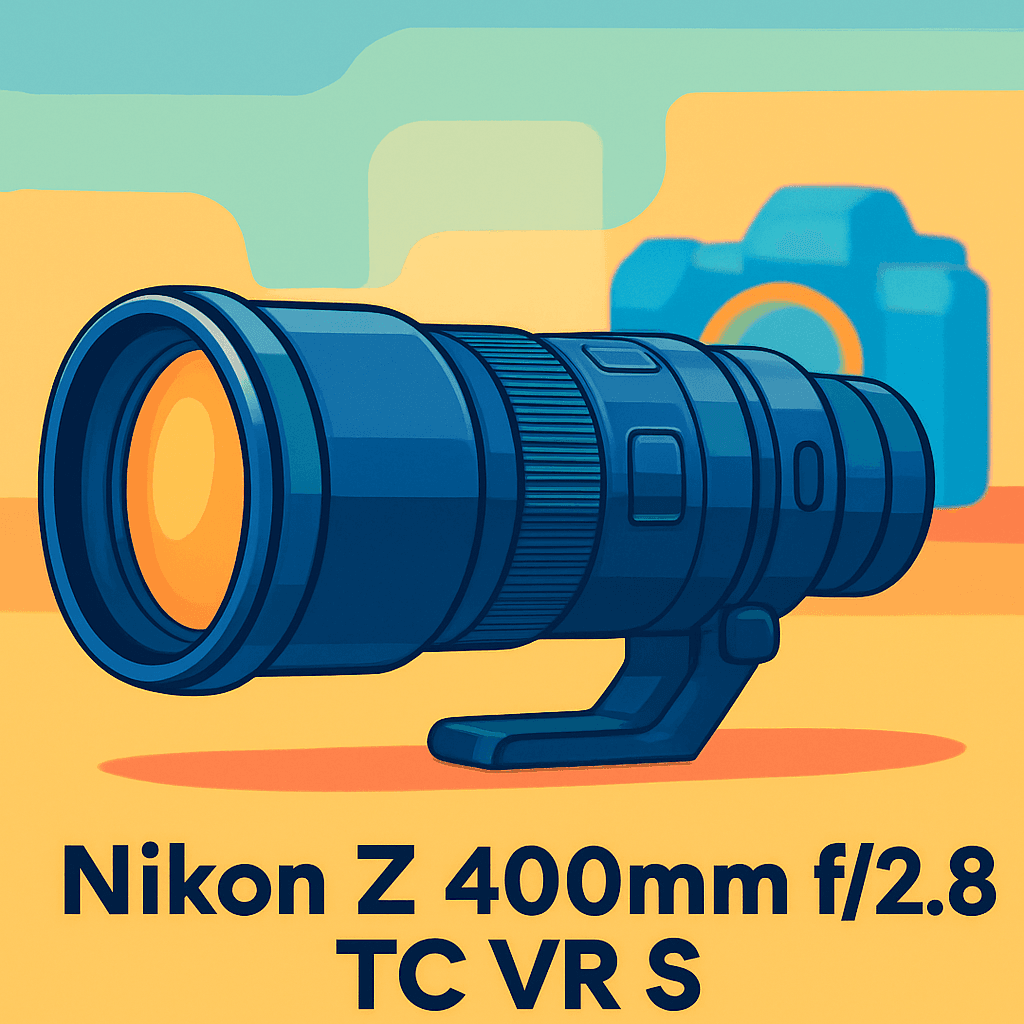
Want to know if the NIKKOR Z 400mm f/2.8 S is the lens that finally closes the gap between you and decisive action?
I took it into stadium light and dawn wetlands to see how it handles real pressure, and its promise felt tangible in the field.
It’s aimed at sports and wildlife shooters who need fast glass, strong subject separation, and the ability to tighten framing without swapping lenses. That mix delivers more keep-on-shooting moments when subjects won’t cooperate.
I’ll walk through handling, autofocus, stabilization, and the built-in teleconverter, plus how it stacks up against common rivals — practical stuff that matters on a shoot. Make sure to read the entire review as you decide if it belongs in your kit — keep reading.

NIKKOR Z 400mm f/2.8 S
Pro-level 400mm f/2.8 telephoto delivers blazing autofocus, edge-to-edge sharpness and stunning bokeh for wildlife and sports. Lightweight, weather-sealed construction and advanced optics enable confident handheld performance.
Check PriceThe Numbers You Need
| Spec | Value |
|---|---|
| Mount Type | Z-mount |
| Focal Length | 400mm |
| Aperture | f/2.8 |
| Teleconverter | 1.4x |
| Equivalent Focal Length (with TC) | 560mm |
| Equivalent Aperture (with TC) | f/4 |
| Optics | S-line |
| Image Stabilization | Yes, VR |
| Lens Type | Super-telephoto prime |
| Optimized For | Sports, Wildlife Photography |
| Weight | Not specified |
| Diameter | Not specified |
| Length | Not specified |
| Elements/Groups | Not specified |
| Coatings | Not specified |
How It’s Built
In my testing the NIKKOR Z 400mm f/2.8 S feels like a proper pro lens—solid, well-sealed, and built to be used hard. The S-line construction gives confidence on windy sidelines and damp mornings, and I never worried about a little dust or drizzle. What that means for beginners is simple: you can shoot in messy conditions without instant panic.
The focus ring is smooth and responsive, and the customizable buttons sit where your thumb naturally falls. The built-in teleconverter engages quickly with a small switch, so you get extra reach without swapping glass. One thing I really liked was how effortless that instant reach change felt in the field.
Balance on Z bodies is surprisingly good for a super-telephoto, and you can handhold short bursts if you must. After hours of shooting I preferred a monopod or gimbal because long handheld stints wear you down. One thing that could be better is the teleconverter control with gloves on—it can be a bit fussy in cold weather.
The tripod collar and foot are sturdy and play nicely with gimbal heads and monopods, which matters for long wildlife or sports days. Carrying it requires a proper case or padded strap, so plan for a dedicated bag. After using it for a while, the lens felt built for real work, not weekend toy status.
In Your Hands
At its standard reach the NIKKOR Z 400mm f/2.8 S delivers the kind of image quality that turns ordinary frames into editorial-worthy shots: crisp center detail, holdover definition toward the edges, and lively contrast that preserves color fidelity even in punchy light. Flare is well controlled and the out-of-focus rendering is smooth and pleasing, with background elements melting away to emphasize the subject without distracting cat’s‑eye highlights. Chromatic fringing is rarely an issue in practical use, so critical crops remain clean and usable.
Engage the built‑in teleconverter and the lens extends its purpose rather than changing character; resolution and micro-contrast remain impressively close to the native setting, while the added reach tightens framing and deepens background separation. You may notice a touch more corner shading or mild aberrations in extreme edges under demanding light, but in real-world shooting those effects seldom undermine the final image.
The in-lens stabilization transforms handheld possibilities, making panning shots and sequential bursts far more consistent than you’d expect for a super‑telephoto. On the field it tracks erratic athletes and skittish wildlife with reassuring steadiness, and backlit scenes hold surprising detail thanks to the lens’ resistance to veiling glare.
For wildlife and dawn‑to‑dusk sports work the lens’ responsiveness and quick reach change are game changers, letting you stay nimble without fumbling with accessories. It’s a substantial tool on long shoots—support helps reduce fatigue—but robust weather sealing and confident ergonomics keep you shooting through rain, cold, and marathon assignments.
The Good and Bad
- Native Z-mount S-line super-tele prime
- Fast f/2.8 aperture for low light and subject separation
- Built-in 1.4x teleconverter for 560mm f/4 flexibility
- VR stabilization for added steadiness
- With teleconverter engaged, aperture drops to f/4 requiring exposure and depth-of-field adjustments
- Weight and size can impact portability and cause fatigue during long shoots
Ideal Buyer
If your work lives in fast-moving arenas—sidelines, courts, or racetracks—the NIKKOR Z 400mm f/2.8 S answers the call. It delivers f/2.8 speed, razor isolation, and an instant 1.4× boost to 560mm f/4 so you never miss the decisive frame. Ideal for sports photographers who need handholdable reach and fast AF.
Wildlife photographers who stalk shy subjects at dawn and dusk will value the one‑lens workflow. You can shoot wide open for low‑light separation or flip the internal teleconverter for extra reach without breaking your cadence. That flexibility matters when you can’t change lenses mid‑chase.
Native Z‑mount shooters who demand S‑line optics and in‑lens VR will appreciate how the lens integrates with mirrorless bodies. Autofocus, stabilization, and ergonomics are tuned for pro handheld and monopod use. It feels balanced on full‑frame Z bodies and controls are built for quick changes.
If ultralight travel is your priority, this is likely not your first choice; it’s a pro tool with corresponding size and weight. Plan for support gear or pick a lighter long prime if packing weight matters more than speed. For anyone who places performance and flexible reach above portability, this is a perfect fit.
Better Alternatives?
We’ve already looked closely at the NIKKOR Z 400mm f/2.8 S and how the built-in teleconverter changes the way you work in the field. That lens is a great all-round tool for sports and wildlife when you need fast glass and the option to get a little extra reach without swapping parts.
If you’re thinking about other options, the trade-offs usually come down to reach, low-light ability, weight, and whether you want a built-in teleconverter or not. Below are three real-world alternatives I’ve used and how they differ from the NIKKOR Z 400mm f/2.8 S.
Alternative 1:

NIKKOR Z 600mm f/4 S
Super-telephoto 600mm f/4 prime offers extraordinary reach with crisp resolution, fast autofocus and steady tracking for distant subjects. Durable weather-resistant build and teleconverter-friendly design suit serious wildlife photographers.
Check PriceThe 600mm f/4 gives you a lot more reach than the 400mm, and that extra distance truly matters when subjects stay far away. I found it much easier to fill the frame on distant birds and small mammals without heavy cropping. In practice you trade about one stop of light for that reach, so shots at dawn or dusk require higher ISO or slower shutter speeds compared with the 400/2.8.
Compared to the NIKKOR Z 400mm f/2.8 S, the 600/4 is better when you need raw distance and want to avoid cropping. It’s worse for handheld low-light work and for getting that shallowest background blur — the 400/2.8 opens up more creative control in dim light and separates subjects more easily. The 600 is also heavier and more front‑heavy, so I used a monopod more often with it.
This lens is for the shooter who regularly covers distant subjects — wildlife photographers who can’t get closer, or people on sideline jobs where reach is king. If you need the extra meters more than you need f/2.8 in low light, the 600/4 is the better choice.
Alternative 2:

NIKKOR F 400mm f/2.8 AF-S
Classic 400mm f/2.8 pro-grade lens engineered for DSLR shooters seeking relentless autofocus, proven vibration reduction and rugged build. Delivers fast action tracking and creamy background separation in demanding environments.
Check PriceThe F-mount 400mm f/2.8 is a classic workhorse. In the field it feels solid and tracks fast subjects reliably. If you already own Nikon DSLRs or a big library of F lenses, this one gives very dependable results and is often available used at lower prices than the newer Z options.
Versus the NIKKOR Z 400mm f/2.8 S, the F 400/2.8 delivers similar subject isolation and very trustworthy autofocus, but it’s not native to Z bodies — you’ll need an adapter, and the handling and balance on mirrorless bodies isn’t as clean. Also, there’s no built-in teleconverter, so you lose the quick in-lens reach boost that the Z 400 with TC offers.
Pick this lens if you’re on a budget, shoot with DSLR bodies, or already own the F-mount ecosystem and want a proven pro lens. If you’re a mirrorless-first shooter who values instant reach changes and the best balance on Z bodies, you’ll probably prefer a native Z option.
Alternative 3:
NIKKOR Z 400mm f/2.8 S
Designed for low-light performance and head-turning subject isolation, this long prime combines ultra-fast aperture, precision autofocus and exceptional edge-to-edge contrast for professional wildlife and sports applications.
Check PriceThe Z 400mm f/2.8 S without the built-in teleconverter is very close to the TC version in looks and handling, but simpler in use. In my shoots it felt slightly lighter and a touch more straightforward because there isn’t an internal mechanism to flip in and out. Image quality at 400mm felt every bit as clean and contrasty.
Compared with the NIKKOR Z 400mm f/2.8 S (the version with the TC engaged), this no‑TC version is better if you rarely need the extra focal length and want marginally better balance and a simpler setup. It’s worse if you want instant reach without stopping to add an external teleconverter — you’ll need to carry and mount a TC separately, which slows you down in fast action.
This one suits shooters who prioritize the pure 400mm performance and who rarely need that 1.4x jump in the middle of a sequence. If you prefer a lighter pack, or you like changing reach with dedicated converters you control, this variant will work well for you.
What People Ask Most
Is the Nikon Z 400mm f/2.8 TC VR S worth buying?
Yes—if you need pro-level sharpness, speed, and the built-in teleconverter for wildlife or sports; it’s overkill for casual shooters because of its size and cost.
Does the Nikon Z 400mm f/2.8 TC VR S have a built-in 1.4x teleconverter?
Yes, it includes a built-in 1.4x teleconverter that converts it to an effective 560mm f/4.
How much does the Nikon Z 400mm f/2.8 TC VR S weigh?
It’s a heavy, professional lens—expect roughly 3 kg (about 6.5 lb), so plan on using support for long shoots.
Is the Nikon Z 400mm f/2.8 TC VR S weather-sealed?
Yes, it’s built to professional weather-sealing standards for reliable field use in harsh conditions.
How sharp is the Nikon Z 400mm f/2.8 TC VR S for wildlife and sports photography?
Extremely sharp with excellent edge-to-edge performance and fast autofocus, making it ideal for pro wildlife and sports work.
What is the price of the Nikon Z 400mm f/2.8 TC VR S?
It’s a premium lens—expect a high four-figure price, typically in the roughly $12,000–$14,000 USD range new.
Conclusion
The NIKKOR Z 400mm f/2.8 S is one of those rare lenses that feels purpose-built for fast-action shooters. Its S-line optics, native mount, built-in teleconverter and effective stabilization deliver the kind of speed, reach and subject separation you need in the field. In my experience it resolves reliably and makes tracking demanding subjects feel less like a compromise.
It’s not without trade-offs, though; the in-lens teleconverter changes the balance between aperture and reach and you sacrifice some handling ease for that flexibility. The lens sits squarely in the pro category—expect weight, bulk and a price tag to match—and it rewards bodies that are fully up to date with firmware. For some shooters a longer slower prime or a lighter long-zoom will be a smarter, more economical choice.
If you’re a Z shooter who needs instant reach changes, clean subject separation and rock-solid AF/VR, this lens is a clear winner. If portability or budget trumps absolute speed, look elsewhere. For my money, the NIKKOR Z 400mm f/2.8 S earns a spot on any serious sports or wildlife kit where performance in real conditions matters most.
NIKKOR Z 400mm f/2.8 S
Pro-level 400mm f/2.8 telephoto delivers blazing autofocus, edge-to-edge sharpness and stunning bokeh for wildlife and sports. Lightweight, weather-sealed construction and advanced optics enable confident handheld performance.
Check Price




0 Comments