
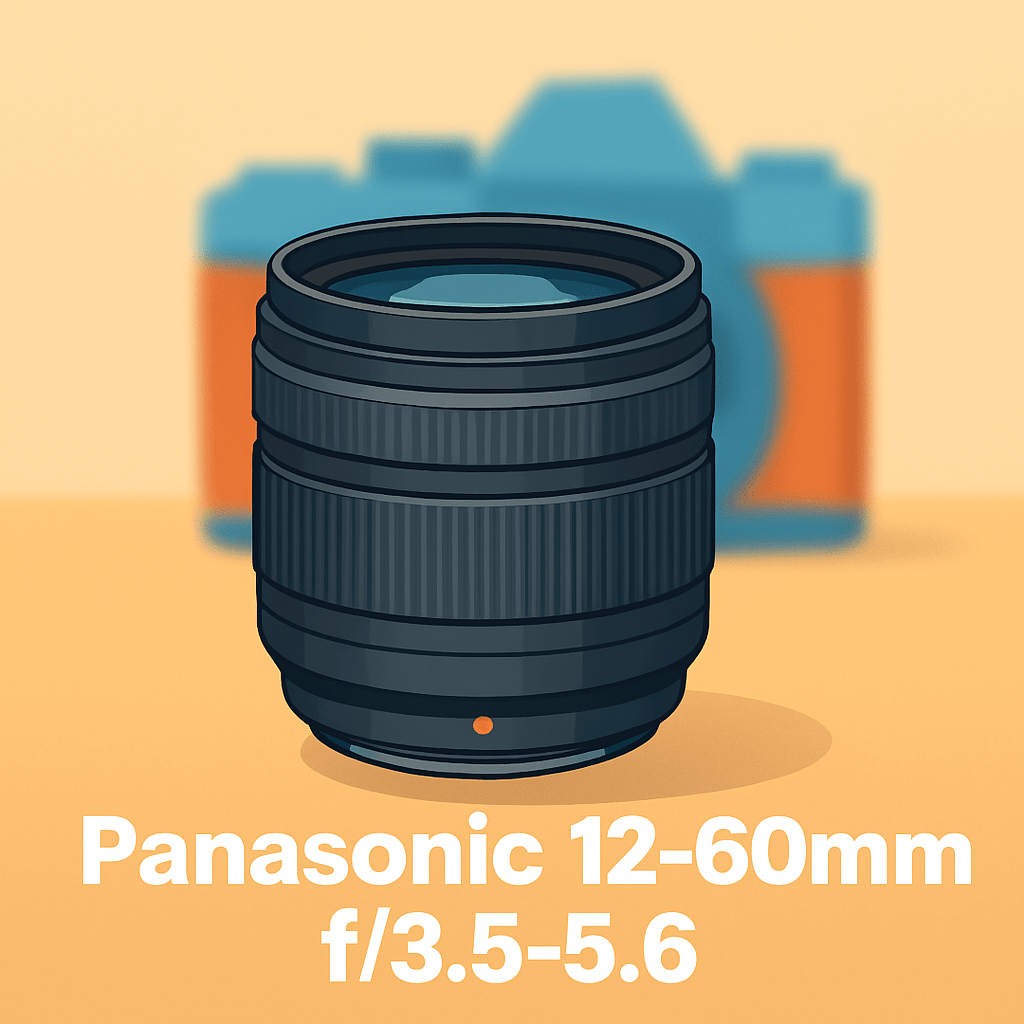
Looking for a single compact lens that covers your next trip, family day, and casual video?
The Panasonic Micro Four Thirds 12-60mm f/3.5-5.6 LUMIX G VARIO H-FS12060 promises a do-it-all walkaround option that’s lightweight, stabilized, and splash-resistant for outdoor use.
I took it into the field to see how it handles on small MFT bodies and how the optics perform in real situations.
You’ll get notes on handling, real-world image quality with a variable aperture, stabilization, and how it compares to faster or longer options—Make sure to read the entire review as I break down where it shines and where you might reach for something else; keep reading.

Panasonic Micro Four Thirds 12-60mm f/3.5-5.6 LUMIX G VARIO H-FS12060
Versatile travel zoom delivering wide-to-tele coverage in a compact package. Sharp, reliable performance for landscapes, portraits and everyday shooting, with smooth zoom action and responsive autofocus for stills and video.
Check PriceThe Numbers You Need
| Spec | Value |
|---|---|
| Focal length | 12-60mm |
| Equivalent focal length (35mm) | 24-120mm |
| Aperture range | f/3.5-5.6 |
| Lens mount | Micro Four Thirds |
| Optical image stabilization | POWER O.I.S. (Optical Image Stabilizer) built-in |
| Lens construction | 12 elements in 10 groups (includes ASPH elements) |
| Minimum focusing distance | 0.2 m |
| Maximum magnification ratio | 0.3× |
| Filter thread size | 58mm |
| Diaphragm blades | 7, rounded |
| Dimensions (diameter × length) | approximately 63mm × 70mm |
| Weight | around 210 grams |
| Autofocus | Contrast-detect with stepping motor for quiet and smooth focus |
| Weather-sealing | Splash-resistant construction |
| Zoom type | Standard zoom (wide to short telephoto) |
How It’s Built
In my testing the Panasonic Micro Four Thirds 12-60mm f/3.5-5.6 LUMIX G VARIO H-FS12060 feels like a true walk-around lens. It mounts only to Micro Four Thirds bodies and the whole package is surprisingly light and compact, so it doesn’t pull you down during a long day of shooting. For beginners that means less gear fuss and more time making pictures.
I tried it on smaller MFT bodies and on slightly bigger ones. On petite cameras it sits perfectly balanced and comfortable to carry all day, which I loved. On larger bodies it feels a touch front-heavy but still very usable for casual shooting.
The zoom and focus rings are smooth with a predictable action that’s easy to work with when you’re learning. The finish is mostly high-quality plastic with tight fit and no wiggle, which keeps weight down but doesn’t feel as hearty as pricier metal lenses. One thing I really liked was the splash-resistant build — perfect for rainy walks — while one thing that could be better is a slightly more solid, premium feel.
After using it for a while I found the design makes it a no-brainer everyday lens: light enough to forget, rugged enough to take outside, and simple enough for new shooters to get comfortable quickly. It’s practical and friendly in the real world.
In Your Hands
The lens’s broad wide-to-short-tele coverage made it my go-to on urban walks and weekend trips, handling everything from street scenes and environmental portraits to sweeping vistas and close-up details without a lens change. I often left it mounted for a full day of shooting; its compact balance on smaller Micro Four Thirds bodies keeps fatigue low and keeps you in the moment rather than fiddling with gear. The zoom range gives real flexibility for travel and family work, reducing the need to swap lenses between shots.
Autofocus behavior is pleasantly unobtrusive — the stepping motor runs quietly and delivers smooth transitions that work well for casual video and everyday stills. In well-lit, contrasty situations it stays locked with reassuring accuracy, though in low-contrast or very fast-action scenes you can feel the contrast-detect system hunt more than phase-detect designs. For chaotic subjects like kids and pets it’s reliable enough for most keepsakes, even if it’s not an action specialist.
Close-focus capability is a surprising asset, letting you get intimate with food, textures, and small objects without carrying a macro lens, and the background separation at the long end is pleasant if you work the distance carefully. The variable aperture means background blur is modest, so composition and perspective become key tools for isolating subjects rather than relying on shallow depth of field.
Built-in stabilization is a practical difference-maker for hand-held shooting and casual video, smoothing micro-jitter and helping with slower shutter choices for static subjects. Panning and walking shots are steadier than handheld alone, though very aggressive motion still exposes the limits compared with heavier, pro-focused rigs. Overall, the lens delivers a confident, user-friendly performance for travel, family, and everyday content creation.
The Good and Bad
- Versatile 24–120mm equivalent range covers most everyday and travel needs
- Lightweight (around 210g) and compact—easy to carry all day
- POWER O.I.S. helps with handheld stills and smoother video
- Quiet, smooth stepping motor AF that’s video-friendly
- Variable and relatively slow f/3.5–5.6 aperture limits low-light performance and shallow depth of field
- Micro Four Thirds only with no cross-mount flexibility
Ideal Buyer
If you’re the photographer who prefers one do‑it‑all optic, the Panasonic Micro Four Thirds 12-60mm f/3.5-5.6 LUMIX G VARIO H-FS12060 is made for travel and everyday shooting. Its compact, lightweight build and 24–120mm equivalent range mean it can stay on your camera from sightseeing to family dinners, and it pairs especially well with small MFT bodies. You sacrifice big-aperture separation for convenience, but gain coverage and portability.
Content creators and casual videographers will appreciate the quiet stepping AF and POWER O.I.S., which smooths handheld pans, reduces micro‑jitter, and limits focus noise. Close-focus to 0.2 m gives near-macro options for food, detail shots and storytelling b-roll, letting you craft intimate frames. Outdoor enthusiasts also benefit from splash-resistant construction and a 58mm filter thread for practical filters.
This lens isn’t the right pick for low-light specialists, action shooters chasing fast subjects, or portraitists who want strong background blur or the absolute fastest apertures. If you need constant f/2.8 performance or super-tele reach, a faster zoom or long superzoom will serve better. For most Micro Four Thirds users who value versatility, balance and quiet stabilized performance, however, it’s a very sensible everyday choice.
Better Alternatives?
We’ve finished going over the Panasonic Micro Four Thirds 12-60mm f/3.5-5.6 LUMIX G VARIO H-FS12060 and its place as a light, versatile walk-around zoom. It’s a great all-day lens for travel and everyday shooting, but depending on what you shoot most you might want something faster, sharper, or with a different feel.
Below I list a few real-world alternatives I’ve used. For each one I’ll say where it wins and where it loses compared to the 12-60, and who I think would be happiest with each choice.
Alternative 1:

Panasonic Micro Four Thirds 12-35mm f/2.8 G X VARIO II H-HSA12035
Constant bright aperture provides control over depth of field and low-light capability. Precision optics and fast, quiet focusing produce professional-grade image quality and smooth performance for photo and video work.
Check PriceThe 12-35mm f/2.8 is the easy pick if you need more light and nicer subject separation. In real shoots I reached for this lens in dim cafes, indoors at events, and when I wanted creamier backgrounds. That constant f/2.8 makes a real difference versus the 12-60’s variable f/3.5–5.6: you get faster shutter speeds and more control over depth of field.
Where it loses to the Panasonic 12-60mm f/3.5-5.6 LUMIX G VARIO H-FS12060 is range and weight. The 12-35 stops at 35mm, so you’ll miss the extra tele reach for tighter portraits or distant subjects. It’s also heavier and usually pricier, so it’s less of a “grab-and-go” travel lens than the 12-60.
If you shoot events, weddings, low-light interiors, or do a lot of video work where a brighter lens helps with exposure and smoother background blur, you’ll prefer the 12-35. If you value maximum zoom reach and carry comfort for travel, the 12-60 stays the smarter everyday choice.
Alternative 2:

Olympus Micro Four Thirds M.Zuiko Digital ED 12-45mm f/4 PRO
Compact pro-grade zoom with a constant aperture for consistent exposure. Exceptional edge-to-edge sharpness, robust weather resistance and quick autofocus make it ideal for travel, landscapes and run-and-gun video.
Check PriceThe Olympus 12-45mm f/4 PRO surprised me with how sharp it renders across the frame. On hikes and city streets I found landscapes and architecture came out with clean edges and nice contrast without fuss. The constant aperture also gives steady exposure and predictable depth of field through the zoom range, which helps for video and pano work.
Compared to the Panasonic 12-60mm f/3.5-5.6 LUMIX G VARIO H-FS12060, the 12-45 trades reach for image quality and build. You lose those extra tele millimeters, so it’s less flexible for tele portraits or grabbing far-away subjects. The Olympus can feel a bit more “tool-like” in the hand, which I liked, but if you need the broad 24–120mm equivalent range the 12-60 is more practical.
Pick the 12-45 if you care most about sharp, even images and a pro-feel lens for landscapes, travel where you stay closer to subjects, or run-and-gun video that needs consistent exposure. If you want wider zoom coverage for general travel and family use, the 12-60 stays more useful.
Alternative 3:
Olympus Micro Four Thirds M.Zuiko Digital ED 12-45mm f/4 PRO
Designed for demanding shooters seeking reliable, repeatable results. Smooth zoom and focus mechanisms, neutral rendering and professional build quality ensure consistent images during busy shoots and cinematic handheld recording.
Check PriceUsed from a different angle, the 12-45 f/4 PRO is one of those lenses that just behaves predictably day after day. For timed shoots or tight schedules I liked how the zoom and focus feel stayed smooth and repeatable. That neutral color and controlled contrast mean less fiddling with settings in the field.
Against the Panasonic Micro Four Thirds 12-60mm f/3.5-5.6 LUMIX G VARIO H-FS12060 the main downsides are the same: you give up tele reach and you don’t gain a brighter aperture. In practice that means if you suddenly need to pull a distant subject closer, the 12-60 will save you. The Olympus wins for consistent handling and a slightly more “professional” touch in finish and operation.
If you’re a working shooter who needs a lens that produces the same results day in, day out—think small wedding crews, landscape pros, or video shooters who prize smooth control—you’ll like the 12-45. If you want a single lens that covers a wider range for casual travel or family work, stick with the 12-60 for its broader reach and lighter carry.
What People Ask Most
Is the Panasonic 12-60mm f/3.5-5.6 weather-sealed?
Yes — it has splash/dust resistance and a weather-sealed mount, good for shooting in light rain and dusty conditions.
Is the Panasonic 12-60mm f/3.5-5.6 a good lens for travel and general photography?
Yes — its wide-to-tele range and compact size make it a very practical walkaround lens for travel and everyday shooting.
Does the Panasonic 12-60mm f/3.5-5.6 have image stabilization (OIS)?
Yes — it includes Panasonic Power O.I.S. and works well with in-body stabilization for steadier handheld shots.
How sharp is the Panasonic 12-60mm f/3.5-5.6?
Center sharpness is good, especially stopped down around f/5.6–f/8, though corners can be softer at the extremes of the zoom.
How does the Panasonic 12-60mm f/3.5-5.6 compare to the Panasonic 12-35mm f/2.8?
The 12-35mm f/2.8 is faster and generally sharper with better low-light performance, while the 12-60mm offers more reach and versatility for travel at a lower price.
What is the 35mm equivalent focal length of the Panasonic 12-60mm f/3.5-5.6?
On Micro Four Thirds bodies the equivalent focal length is about 24–120mm (2x crop factor).
Conclusion
The Panasonic Micro Four Thirds 12-60mm f/3.5-5.6 LUMIX G VARIO H-FS12060 earns its place as a true everyday travel lens. It combines broad focal coverage, reliable stabilization and quiet autofocus into a compact, weather‑ready package you can comfortably carry all day. Add a useful close‑focus range and dependable color and contrast in typical lighting, and you have a single lens that handles families, street work, landscapes and casual video with easy competence.
Its compromises are straightforward and familiar: the variable, modest maximum aperture limits low‑light performance and the ability to isolate subjects with shallow depth of field, and it makes hand‑held night shooting more challenging without higher ISO or a tripod. If you’re chasing dramatic background blur, fast low‑light action or the ultimate edge‑to‑edge performance of a pro zoom, this isn’t the specialist for you. For photographers who prioritize light weight and shooting versatility, those tradeoffs are reasonable and easy to accept.
Bottom line: this lens is a pragmatic, well‑rounded companion for Micro Four Thirds shooters who value coverage and convenience over outright speed, and it represents excellent practical value for most walk‑around shooters. It’s an honest tool that earns its keep on trips, family outings and run‑and‑gun video, and it rarely feels like a compromise. Buy it if you want one lightweight, stable zoom that solves most everyday needs without fuss; skip it if fast glass or extreme reach are your priorities.
Panasonic Micro Four Thirds 12-60mm f/3.5-5.6 LUMIX G VARIO H-FS12060
Versatile travel zoom delivering wide-to-tele coverage in a compact package. Sharp, reliable performance for landscapes, portraits and everyday shooting, with smooth zoom action and responsive autofocus for stills and video.
Check Price



0 Comments