
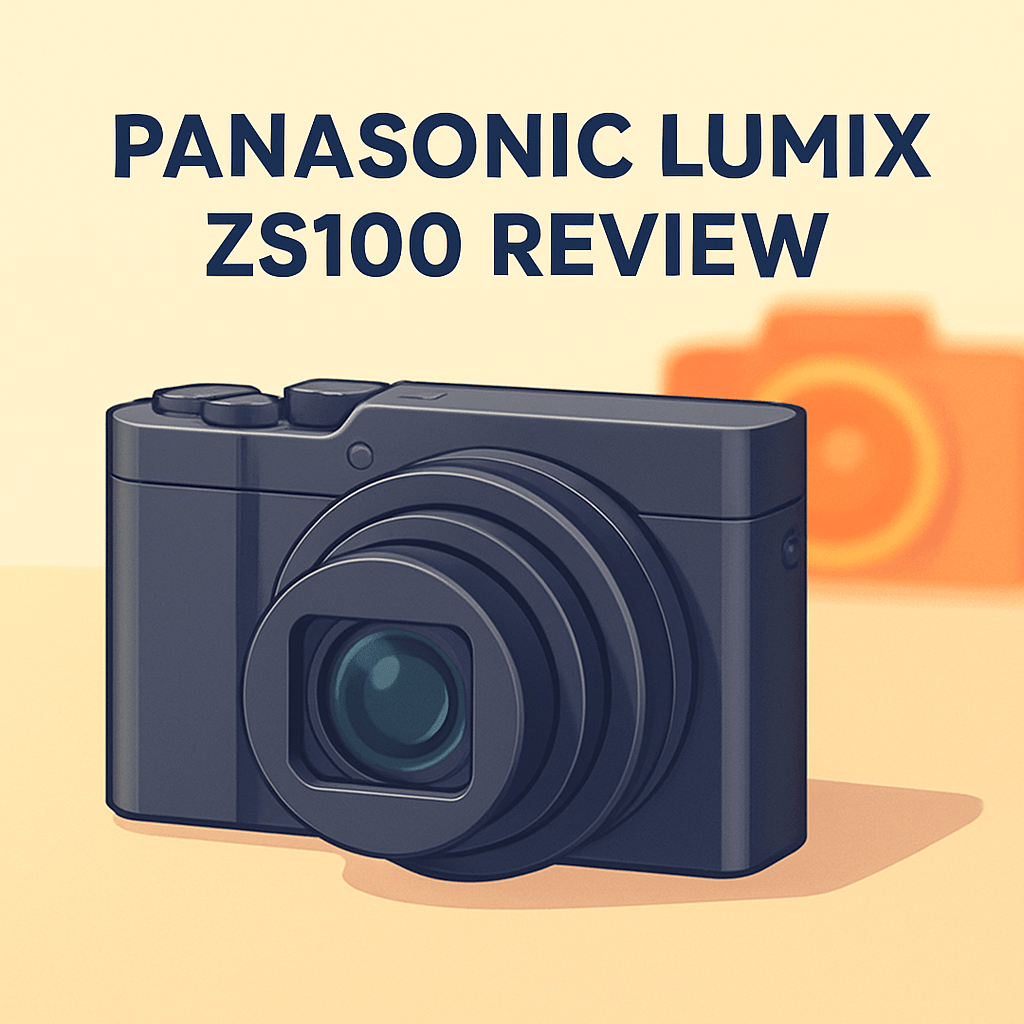
Want a pocket camera that improves your image quality without hauling a DSLR? Is the Panasonic Lumix ZS100 Camera the travel-ready all-rounder you’ve been looking for?
I’ve spent days shooting the ZS100 across cities and trails, so I saw where it truly shines and where it strains. Its long reach, pocketable body and 4K video make it tempting for trips.
Expect strong convenience, useful telephoto reach, and reliable stabilization for everyday shooting, but don’t expect class-leading low-light telephoto performance or cutting-edge subject tracking.
If you’re a traveler, parent, or creator who wants long reach in a pocketable camera, this review’s for you. Make sure to read the entire review — keep reading.

Panasonic Lumix ZS100 Camera
Travel-ready compact with a large 1-inch sensor and bright zoom lens, delivering sharp RAW photos, 4K video, and intuitive controls for everyday adventures and low-light performance.
Check PriceThe Numbers You Need
| Spec | Value |
|---|---|
| Sensor | 1-inch, 20.1 MP |
| Zoom | 10x optical (25–250mm equivalent) |
| Lens Aperture | f/2.8–5.9 |
| 4K Video | Yes |
| RAW Support | Yes |
| Viewfinder | Built-in electronic viewfinder (EVF) |
| LCD | 3.0″ touchscreen |
| Image Stabilization | 5-axis hybrid |
| Max ISO | 25600 |
| Wi-Fi | Yes |
| Bluetooth | No |
| Weight | ~310 g |
| Dimensions | 111 × 65 × 44 mm |
| Burst Shooting | 10 fps |
| Focus System | 49-point contrast-detect autofocus |
How It’s Built
In my testing the Panasonic Lumix ZS100 Camera feels shockingly small and light for what it does. It slips into a jacket or small bag so you actually bring it along. The built-in EVF lets you compose at eye level when the sun is blasting, which makes shooting outside so much easier.
The EVF is bright and comfortable for quick framing, and the touchscreen speeds up focus and menu navigation. I found the screen can wash out in very bright sun and it’s fiddly with gloves on. In normal light the touchscreen is snappy and intuitive, which is great if you’re just starting out.
Handling is confident for one-handed street work but I went to two hands when I zoomed in. Menus are straightforward and I could change ISO and exposure without digging around. If you have big hands some buttons feel small, so fast changes can be a little clumsy.
Wi‑Fi pairing worked well for sending shots to my phone, but there’s no Bluetooth for always-on pairing or low-energy remotes. The build felt solid with tight tolerances and I didn’t notice any play in the dials or buttons. One thing I really liked was the pocketable size plus EVF; one thing that could be better is touchscreen visibility in harsh light and with gloves.
In Your Hands
The Panasonic Lumix ZS100’s contrast-detect autofocus is confident in good light, locking quickly on static and slowly moving subjects. In dim light or on crossing subjects it can hesitate, so a measured approach helps. The burst mode is a boon for street and family moments, useful for nailing expressions though not a magic bullet for fast action.
Its five-axis stabilization makes handheld telephoto shots and walk-and-talk video far more usable than you’d expect from a pocket camera. At the longest reach you still want a solid two-handed grip or a monopod. For video the stabilization smooths steps and breathing, though very aggressive pans still reveal the system working.
4K footage delivers pleasing detail and color for travel vlogs and family archives, though very fast pans can show a bit of skew from the sensor readout. Touch autofocus in recording is practical for re-framing, but it can hunt in low light or at extended reach. The built-in EVF is invaluable in bright sun; the rear touchscreen is intuitive for quick menus and touch focus when lighting allows.
Built-in Wi‑Fi makes on-the-go sharing straightforward and generally reliable, with the occasional lag when moving large files. In real-world shooting—street, dim interiors, or telephoto framing—the ZS100 rewards steady technique: quick to draw and compose, competent indoors with higher ISO compromises, and useful for family bursts where timing and face detect help capture moments.
The Good and Bad
- 1-inch 20.1MP sensor for higher-quality images than typical small-sensor compacts
- 10x 25–250mm zoom delivers strong travel versatility
- 4K video capability for detailed footage
- 5-axis hybrid stabilization aids telephoto stills and handheld video
- f/5.9 at 250mm limits low-light telephoto performance and subject separation
- Contrast-detect AF (49-point) lacks phase-detect subject tracking
Ideal Buyer
If you travel light but crave reach, the Panasonic Lumix ZS100 Camera is built for you. Its 10x 25–250mm zoom, 1-inch 20.1MP sensor, built-in EVF, 4K and RAW give DSLR-like flexibility in a pocketable package. At roughly 310 grams it slips into a jacket pocket or day bag with ease.
Pick it if you value convenience and versatility over cutting-edge AF or the brightest tele lens. Contrast-detect AF and an f/5.9 aperture at 250mm mean you’ll accept some compromise in low-light action and subject tracking. The 5-axis stabilization and 10 fps burst raise your keeper rate for travel, street, and family moments.
Skip it if your work depends on elite subject-tracking, super-fast continuous AF, or the brightest telephoto available for low‑light action. If that’s you, consider an RX100 VII for tracking or an LX100 II/G5 X II if you prioritize lens speed and larger sensor performance. Sports shooters and wildlife photographers will likely want more aggressive AF and faster apertures.
For everyone else — bloggers, commuting parents, and sightseers — the ZS100 balances reach, image quality, and portability in a way few compacts do. It’s a satisfying one-camera travel solution when you want more reach without extra lenses. For casual pros it’s an excellent backup body that won’t slow you down.
Better Alternatives?
We’ve already gone over what makes the Lumix ZS100 useful: long 10x reach in a pocketable body, a 1‑inch sensor that handles a lot of travel work, and solid 4K video. That main lens choice and the camera’s balance of reach and convenience are what most buyers care about, so it helps to see where other compacts trade those strengths for other benefits.
Below are a few compact alternatives I’ve shot with in real trips and jobs. I’ll point out what each one does better and where it gives ground to the ZS100, and who I’d recommend each camera to in everyday shooting.
Alternative 1:
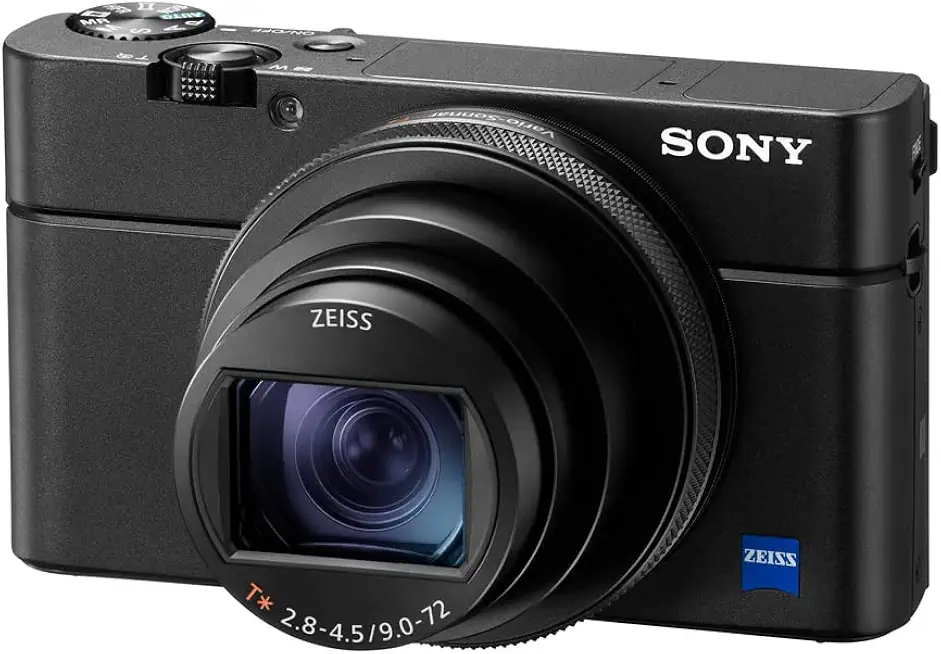
Sony RX100 VII Camera
Pocket-sized powerhouse offering fast autofocus, extensive zoom reach, and buttery real-time tracking; capture crisp 4K footage and high-resolution stills with pro-level features in a truly compact body.
Check PriceI’ve used the RX100 VII when I needed the fastest, most reliable focusing from a pocket camera. Compared to the ZS100, the RX100 VII nails tracking and burst shooting — it locks onto faces and moving subjects much more often, so you get more keepers with fast street moments, kids on the move, or quick events. Image quality feels just as good in normal light because both cameras use a 1‑inch sensor, but Sony’s AF makes the difference in real-world shoots.
Where the RX100 VII falls short versus the ZS100 is reach and endurance. You lose some telephoto reach (the RX’s zoom doesn’t go as long as the ZS100), so for distant subjects — architecture details or wildlife on a trip — the ZS100 will frame tighter without stepping closer. The Sony is also pricier and the battery drains faster in heavy use, so I carry spare batteries on long days.
Pick the RX100 VII if you’re a shooter who cares most about autofocus speed and reliability — street shooters, event shooters, or vloggers who need fast, responsive AF. If you often rely on long telephoto reach for travel and wildlife, the ZS100 still has the edge.
Alternative 2:

Canon PowerShot G5 X Camera
Sleek enthusiast tool with a bright, fast lens and built-in electronic viewfinder; produces detailed RAW files, excels in low light, and offers tactile controls for creative shooting on the go.
Check PriceThe Canon G5 X I’ve shot with feels like a nicer handling compact for stills. Its lens is brighter at the wide end, so it beats the ZS100 indoors and in low light — you get shallower depth of field and cleaner shots in dim rooms without pushing ISO as hard. The color rendering and JPEGs out of the camera are pleasing too, which helps if you want good images straight away.
On the flip side, the G5 X’s zoom is much shorter than the ZS100’s travel-friendly 25–250mm reach. That means you give up telephoto framing for better low‑light and a faster wide end. Autofocus and burst aren’t as aggressive as the RX100 VII, and in some quick-action situations I found the ZS100’s longer reach more useful even if its AF is a touch slower.
Choose the Canon if you mostly shoot interiors, portraits, or travel where wide and normal lenses are enough and you want a pleasing out‑of‑camera look and solid handling. If long telephoto reach or the fastest AF are must-haves, the ZS100 or RX100 VII would serve you better.
Alternative 3:
Canon PowerShot G5 X Camera
Versatile compact praised for its ergonomic handling, quick responsiveness, and rich color rendering; ideal for street photography and vloggers who want pro image quality without bulky gear.
Check PriceAnother way to look at the G5 X is as a very ergonomic, photographer‑friendly compact. In hand it feels balanced and the controls let you change exposure or dial in settings fast — I liked using it for relaxed street shooting where I wanted deliberate framing and color. Compared to the ZS100, it feels more like a small enthusiast camera than a travel zoom tool.
What it doesn’t do as well as the ZS100 is the long reach and some travel conveniences. If you’re photographing scenes where you suddenly need a longer lens, the G5 X’s shorter zoom leaves you stepping closer or cropping later. Also, while its AF is fine for most situations, it won’t track fast-moving subjects as reliably as the RX100 VII or be as consistent as some users might expect from the ZS100 in certain hands-off scenarios.
You’d prefer this Canon if you value handling, quick manual control, and rich colors for street work or vlogging where long telephoto reach isn’t important. If your trips need one camera that covers far-off subjects without swapping lenses, the ZS100’s longer zoom is the better choice.
What People Ask Most
Is the Panasonic Lumix ZS100 worth buying?
Yes — it’s a strong choice if you want a compact camera with a 1‑inch sensor and a long 10× zoom, though faster AF and slightly better low‑light handling are found in many RX100 models.
How does the image quality of the Lumix ZS100 compare to the Sony RX100?
The RX100 series usually delivers slightly cleaner files and quicker autofocus, but the ZS100’s 1‑inch sensor still gives very good detail and the advantage of a much longer zoom.
Does the Panasonic Lumix ZS100 shoot RAW photos?
Yes — it records RAW (DNG) files so you can do full post‑processing edits.
Is the Lumix ZS100 good for travel and everyday use?
Yes — it’s pocketable with a versatile 25–250mm equivalent zoom, making it ideal for travel and everyday carry.
Does the Panasonic ZS100 have a built-in electronic viewfinder?
Yes — it has a pop‑up built‑in electronic viewfinder that’s useful in bright conditions.
How is the low-light performance and battery life of the Lumix ZS100?
Low‑light performance is respectable for a 1‑inch sensor but noise rises above ISO 1600; battery life is modest, so bring a spare for a full day of shooting.
Conclusion
The Panasonic Lumix ZS100 Camera is one of those rare compacts that actually delivers DSLR-like results without the bulk. Its larger-than-usual sensor, long-reach zoom, built-in viewfinder, 4K video and RAW support combine with a responsive touchscreen and solid stabilization to make it a brilliant travel and everyday tool. In hand it feels purposeful and capable, punching above its pocketable footprint.
That said, it has clear trade-offs. The longest end of the zoom is noticeably dim and demands more light or higher ISO, its contrast-based autofocus can lag behind the fastest trackers, and the lack of low-energy wireless pairing is an inconvenience for some workflows. Those limits mean it’s not the first choice for fast-action sports or dim telephoto work without extra support.
Bottom line: if you want maximum reach, portability and flexible imaging in one compact package, the Panasonic Lumix ZS100 Camera is an excellent, practical pick. If elite autofocus or the brightest telephoto glass is your priority, look toward competitors focused on speed or larger sensors; otherwise this is the balanced travel camera most people will find hard to put down.
Panasonic Lumix ZS100 Camera
Travel-ready compact with a large 1-inch sensor and bright zoom lens, delivering sharp RAW photos, 4K video, and intuitive controls for everyday adventures and low-light performance.
Check Price


0 Comments