
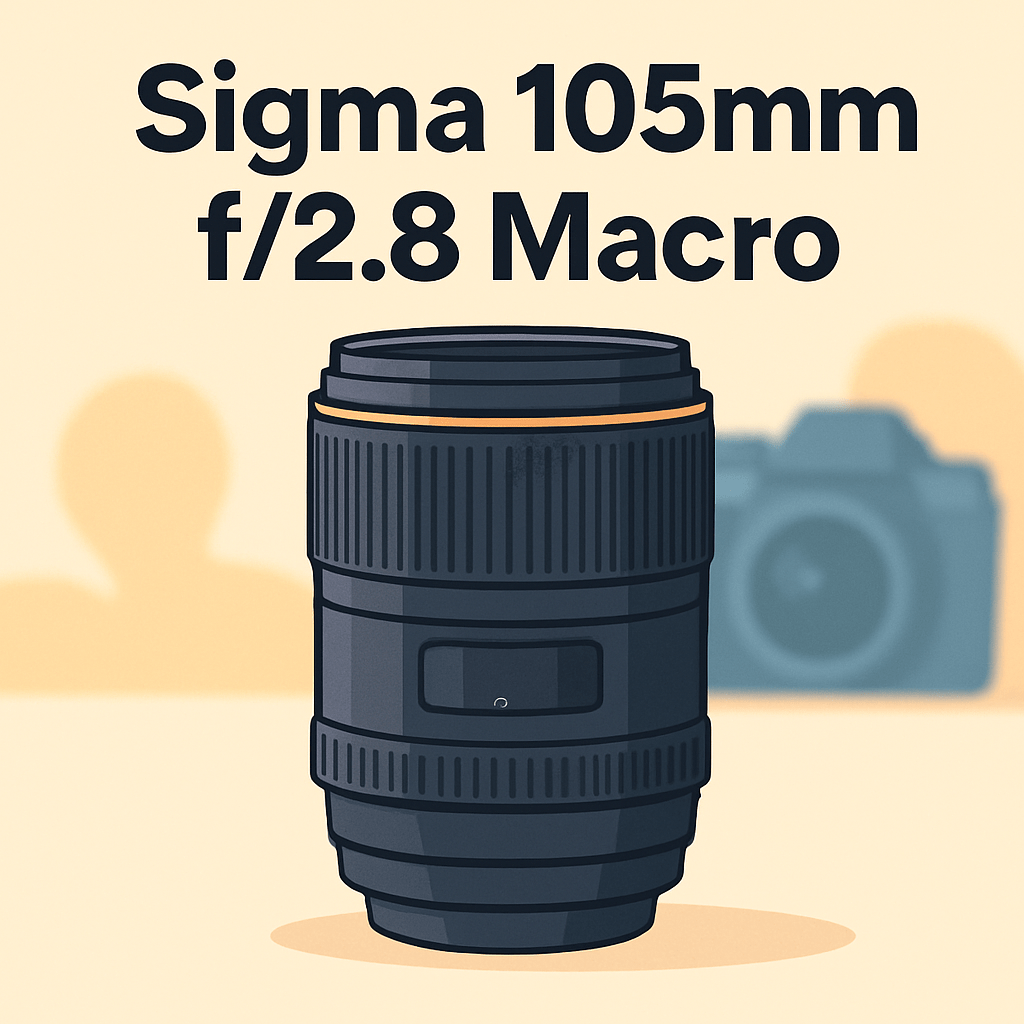
Want a single lens that makes tiny details sing — from skittish insects to fine jewelry — and wonder if it’ll handle real-world shooting without surprises?
This is the Sigma 105mm F2.8 DG DN Macro Art Sony E, often called the Sigma 105mm f/2.8 Macro, a true 1:1 macro prime built for detail-driven creatives.
After a few days shooting it on insects, food, and studio subjects, I saw practical strengths and a few tradeoffs you’ll want to know before buying.
If you’re into nature, product, or portrait close-ups, this will matter. Make sure to read the entire review as I unpack handling, sharpness, and AF — keep reading.

Sigma 105mm F2.8 DG DN Macro Art Sony E
Designed for Sony E, this tele-macro delivers 1:1 magnification, exceptional edge-to-edge sharpness, creamy bokeh, fast quiet autofocus, close-focusing performance, and durable weather-sealed construction for studio and outdoor shooting.
Check PriceThe Numbers You Need
| Spec | Value |
|---|---|
| Focal Length | 105mm |
| Aperture | f/2.8 |
| Macro Magnification | 1:1 |
| Lens Type | Macro |
| Mount Type | DG DN (compatible with Sony E‑mount and L‑mount) |
| Minimum Focus Distance | Varies by mount |
| Maximum Reproduction Ratio | 1:1 |
| Optical Design | Includes special elements for reduced aberrations |
| Weather Sealing | Yes |
| Filter Size | 62mm |
| Lens Construction | 17 elements in 12 groups |
| Special Features | Focus limiter, AFL button |
| Closest Working Distance | Approx. 11.6 in (29.5 cm) |
| Weight | Approx. 22.6 oz (640 g) |
| Diameter | Approx. 3 in (76 mm) |
How It’s Built
In my testing on a Sony E body the Sigma 105mm F2.8 DG DN Macro Art Sony E feels reassuringly solid in the hand. The mount and seals give me real confidence to shoot outdoors without tiptoeing around light drizzle. In plain terms: you can keep shooting when others are packing up.
The lens puts useful controls right where you want them. The focus limiter and the AFL button sit within easy thumb reach, and on Sony bodies I could customize the button for focus hold or magnify — small touches that speed up a macro workflow.
The focus ring is smooth and precise, tuned for tiny adjustments. After using it for a while I found it easy to nail critical focus for stacking or single-frame macro, though beginners may need a little practice to master the feel.
One thing I really liked was the weather protection and overall build quality — it just inspires confidence in the field. One thing that could be better is the balance on smaller mirrorless bodies; it gets tiring after long handheld sessions, so a tripod helps for marathon shoots.
The barrel finish resists fingerprints and the lens plays nicely with common macro accessories. In short, it feels like a thoughtful, well-made tool that’s friendly for beginners and serious enough for pros.
In Your Hands
Shooting with the Sigma 105mm F2.8 DG DN Macro Art reveals true life‑size reproduction that renders coin edges and insect hairs with arresting clarity; the lens gives you tactile control over the plane of focus so fine details pop without feeling clinical. Working distance is generous for a macro prime, which keeps flash and reflectors out of your subject’s face and makes approaching skittish insects far less stressful.
Handheld work is surprisingly practical for field use — you’ll get a steady keeper rate with deliberate technique and higher shutter speeds — but the lens really shines on a tripod or rail when you need pixel‑level precision. Focus stacking workflows feel repeatable thanks to a smooth, well‑damped focus ring and predictable focus throw.
Bokeh is forgiving and generally smooth, turning specular highlights into pleasing discs rather than harsh rings at close range, and mid‑distance backgrounds blur into creamy texture for product and portrait work. In high‑contrast macro scenes lateral color is well controlled and flare is manageable when using the supplied hood or careful angles.
As a crossover optic it produces flattering subject isolation for short‑tele portraits and studio product shots at wide apertures, while offering the manual focus precision studio rigs demand for stacking. The lens integrates cleanly into a controlled workflow where repeatable framing and focus shifts are essential.
Physically it balances well on a mirrorless body for extended shoots, though heft becomes noticeable after long handheld sessions; the focus limiter noticeably accelerates acquisition when switching from near to mid distances. The customizable AFL button is a small but meaningful convenience for magnification, focus hold, or other body‑level functions during close work.
The Good and Bad
- True 1:1 macro reproduction
- 105mm focal length for comfortable working distance
- Weather-sealed construction
- Focus limiter and AFL button for better control
- AF hunting at 1:1 or in dim light
- Balance and fatigue over long handheld sessions
Ideal Buyer
For photographers who live for tiny details, the Sigma 105mm F2.8 DG DN Macro Art (also known simply as the Sigma 105mm f/2.8 Macro) is built to be put to work. It’s aimed at insect and nature shooters, jewelry and food stylists, product photographers, and anyone obsessed with texture and surface detail.
The extra reach of a 105mm macro creates comfortable working distance and clearer lighting access, so skittish subjects stay undisturbed and flashes or reflectors fit more easily into the frame. Weather‑resistant construction and tactile controls mean you can trust it on damp trails or in sticky studio setups. The focus limiter and AFL button speed workflows when every shot needs to count.
Studio and product shooters will appreciate the repeatable manual focus feel and compatibility with focus‑stacking rigs for maximum detail. The lens’s micro‑contrast and sharp center rendering make it easy to produce technical, gallery‑grade macro images without a full telephoto setup.
It also doubles as a short tele for portraits where sharpness and compression matter, giving creative crossover value. Best of all, this DG DN design is optimized for Sony E users while also available in L‑mount for hybrid shooters seeking a dedicated 1:1 macro prime.
Better Alternatives?
We’ve dug into the Sigma 105mm f/2.8 Macro (aka the Sigma 105mm F2.8 DG DN Macro Art for Sony E) and seen where it shines: real 1:1 life‑size capture, a good working distance, solid build, and useful controls for serious close‑up work. That lens is a great all‑around macro for Sony shooters, but no single lens fits every need.
If you want a slightly different tool — maybe in‑lens stabilization, tighter system integration, or a different color look — here are a few alternatives I’ve used in the field and how they actually compare to the Sigma in real shoots.
Alternative 1:
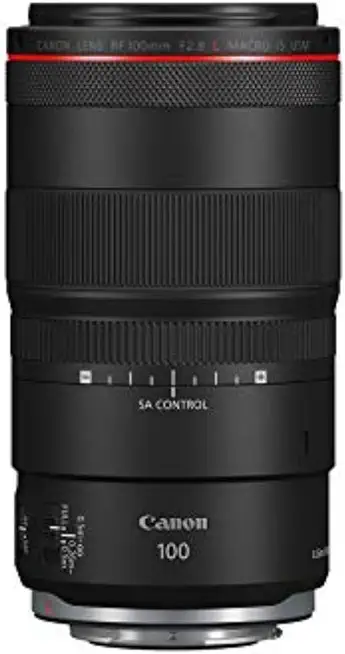
Canon RF 100mm F2.8 L Macro
Professional-grade short telephoto offering true 1:1 macro capability, with exceptional micro-contrast and color rendition, class-leading stabilization, buttery bokeh, precise autofocus, and rugged weather-sealed construction—perfect for product, nature, and portrait close-ups.
Check PriceThe Canon RF 100mm F2.8 L Macro beats the Sigma in one big, practical way: it has in‑lens image stabilization. When I’m handholding tight close‑ups of flowers or jewelry, the Canon lets me shoot at slower shutter speeds with fewer rejects. On Canon bodies the AF feels slick and snappy, and the L‑series build gives real confidence in bad weather.
Where it’s worse than the Sigma is price and reach. It costs more and that extra cost is real in the field — you notice it when you’re on a budget. The 100mm focal length is very close to 105mm, but I found the Sigma’s slightly longer reach and lower price make it a better value on Sony bodies with IBIS. Also, the Sigma’s focus feel and the little controls (focus limiter, AF‑lock) are tuned nicely for handheld macro work on Sony cameras.
If you shoot on a Canon RF body and often work handheld or shoot video, the Canon will be the better pick — especially if you want the extra help from IS and the pro L‑series finish. If you’re on Sony and already have good in‑body stabilization, the Sigma will likely give you similar sharpness for less money.
Alternative 2:

Nikon NIKKOR Z 105mm F2.8 MC VR S
Z-mount short telephoto delivering 1:1 reproduction, industry-leading vibration reduction, multi-coated optics for minimal flare, razor-sharp resolution, sumptuous bokeh, and professional weather-sealed build for demanding shoots.
Check PriceThe NIKKOR Z 105mm f/2.8 MC VR S is a real pleasure to use for handheld macro. Its VR does a great job stabilizing small movements, so I could handhold at slower speeds and still get sharp frames. In my shoots it also gave very even sharpness across the frame and neutral, natural color straight out of the camera — fewer tweaks needed in post than with the Sigma.
Where the Nikon isn’t as friendly as the Sigma is cost and weight. It’s generally pricier and a bit heavier to carry around for full‑day field trips. The Sigma holds its own optically and feels slightly more compact on a Sony body, and the Sigma can be the smarter buy if you don’t need the Nikon’s VR or if cost is a concern.
This Nikon is aimed at Z‑system shooters who want top‑class out‑of‑camera results and use their lens handheld a lot. If you value Nikon’s VR and the most even corner‑to‑corner results for studio and outdoor macro, pick the Z 105mm. If you want a lighter, lower‑cost option on Sony, the Sigma stays very competitive.
Alternative 3:
Nikon NIKKOR Z 105mm F2.8 MC VR S
Engineered for uncompromising handheld macro and portrait work, this short-tele delivers precise manual control, responsive autofocus, effective VR for low-light handheld shots, and neutral color with lifelike micro-contrast.
Check PriceUsed as a portrait lens as much as a macro, the Nikon 105mm gives pleasing background separation and very clean rendering of skin and textures. In real shoots I liked switching between close macro details and mid‑distance portraits without feeling like I’d lost character — the lens stays neutral and predictable, which is great when you’re mixing job types.
Compared to the Sigma 105mm F2.8 DG DN Macro Art Sony E, this Nikon gives a more refined handheld experience thanks to its VR and Z‑mount integration, but the Sigma beats it on price for Sony users and feels slightly more at home on Sony bodies. The Nikon also tends to be a bit heavier in the bag, and if you rarely handhold at very slow speeds you might not need its VR.
So choose this Nikon if you shoot a mix of handheld macro and portraits on a Nikon Z camera and want smooth, reliable VR and very neutral colors with good micro‑contrast. If you’re on Sony, prefer a lighter, less expensive option, or rely on in‑body stabilization, the Sigma still makes a lot of sense.
What People Ask Most
Is the Sigma 105mm f/2.8 Macro a good lens for macro photography?
Yes — it delivers true 1:1 magnification, excellent sharpness and a comfortable working distance, making it a strong choice for dedicated macro shooters.
Does the Sigma 105mm f/2.8 Macro have image stabilization (OS)?
Some versions of the Sigma 105mm include Optical Stabilizer (OS), but older/non‑OS variants exist, so check the specific model before buying.
What is the minimum focusing distance and maximum magnification of the Sigma 105mm f/2.8 Macro?
Typical minimum focus is about 31 cm (around 12 inches) with a maximum 1:1 (life‑size) magnification.
Is the Sigma 105mm f/2.8 Macro compatible with full-frame and APS-C cameras?
Yes — it is designed for full‑frame but works perfectly on APS‑C bodies, where it yields a tighter field of view due to the crop factor.
How sharp is the Sigma 105mm f/2.8 Macro at different apertures (e.g., f/2.8 vs f/8)?
Wide open at f/2.8 it’s usable but a bit softer with shallower DOF; sharpness typically improves and peaks around f/5.6–f/8.
Does the Sigma 105mm f/2.8 Macro have autofocus and is it reliable on Canon/Nikon/Sony bodies?
Yes — it uses Sigma’s HSM/AF motor and is reliable on Canon and Nikon DSLRs; on Sony mirrorless you’ll want the native E‑mount version or expect varied AF performance with adapters.
Conclusion
The Sigma 105mm F2.8 DG DN Macro Art (Sigma 105mm f/2.8 Macro) is a purpose-built 1:1 macro made for serious close‑up shooters on Sony E. It pairs convincing optical resolution with a practical working distance, weather‑sealed confidence, and well‑placed controls that speed real‑world workflows.
In handheld and tripod scenarios it proved dependable, delivering repeatable sharpness across magnifications and pleasing rendering when you stop down for depth. Autofocus is generally accurate and the focus limiter plus the AFL button make acquisition faster, though you’ll want to respect focus technique at the highest magnifications. The lens feels purposeful in the field and makes lighting and approach easier than shorter macros.
It’s not flawless — you may encounter occasional hunting in very dim light and a touch of focus breathing that affects framing in video or stacked work. Without in‑lens stabilization some handheld scenarios will be more demanding, and longer handheld sessions can lead to fatigue. These are manageable tradeoffs for most macro shooters but matter to specific users.
If you need a dedicated, rugged 1:1 macro for Sony E with thoughtful controls and strong imaging, buy this Sigma. Consider alternatives if built‑in stabilization or tighter native system integration is a hard requirement.
Sigma 105mm F2.8 DG DN Macro Art Sony E
Designed for Sony E, this tele-macro delivers 1:1 magnification, exceptional edge-to-edge sharpness, creamy bokeh, fast quiet autofocus, close-focusing performance, and durable weather-sealed construction for studio and outdoor shooting.
Check Price



0 Comments