
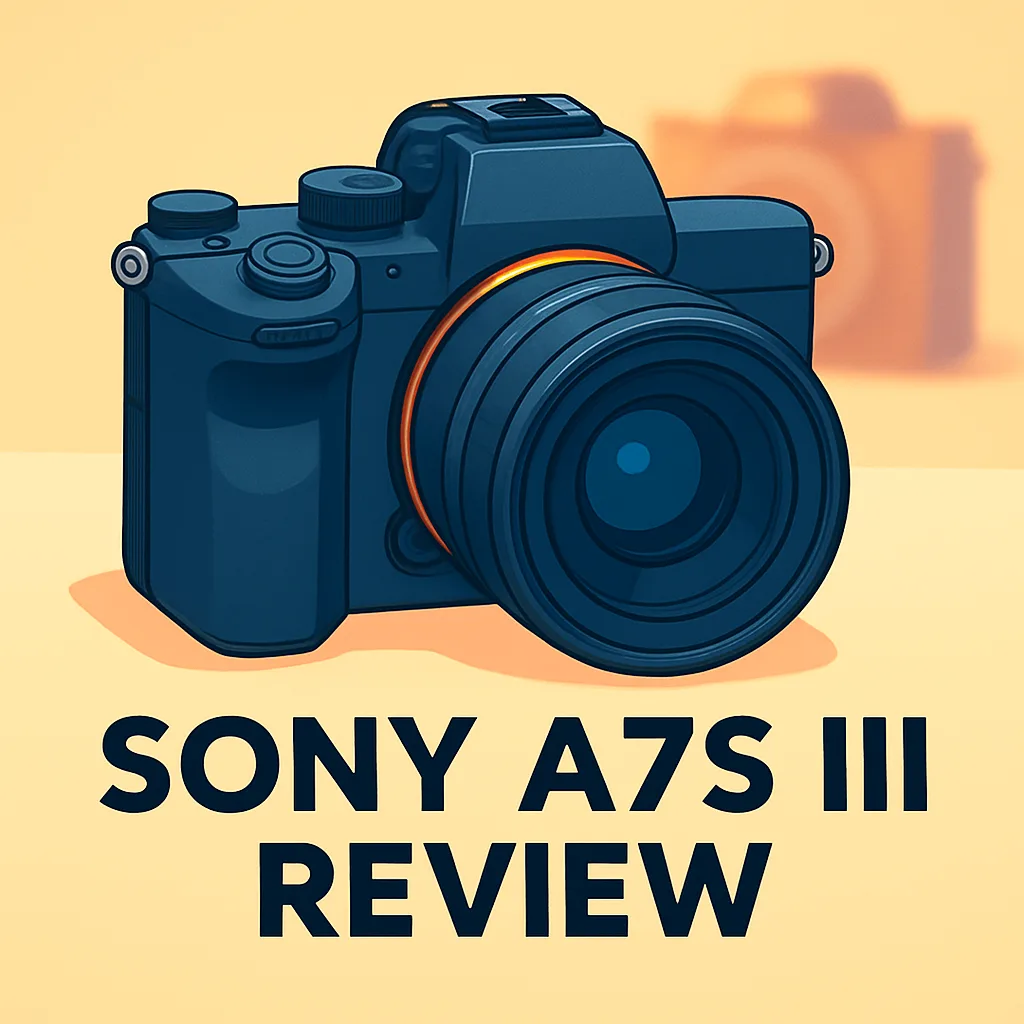
Want a camera that actually makes low‑light nights and cinematic slow‑motion feel effortless?
I’ve spent years shooting events, documentary and commercial work, so I was keen to field‑test the Sony A7S III Camera on real shoots and see how it performs where it matters.
If you’re a videographer, event shooter, or hybrid creator who needs reliable AF, usable high‑ISO performance, and steady handheld footage, this review’s for you. You’ll get real‑world payoffs, not just spec talk.
I’ll walk through design and handling, autofocus and stills, video performance, low‑light behavior, plus pros, cons and alternatives to help you decide — make sure to read the entire review as I break it all down, keep reading.

Sony A7S III Camera
Exceptional low-light sensitivity and cinema-level video performance deliver stunning 4K footage at high frame rates, paired with fast autofocus, durable magnesium-body construction, and professional connectivity for demanding hybrid shooters.
Check PriceThe Numbers You Need
| Spec | Value |
|---|---|
| Sensor | 12.1 MP |
| Lens Mount | E-mount |
| IBIS | Yes |
| ISO Range | 80-102400 |
| Shutter Speed | 1/8000s to 30s |
| Continuous Shooting | Up to 10 fps |
| Video | 4K @ 120fps; 1080p @ 240fps |
| Autofocus | Fast Hybrid AF |
| Viewfinder | 9.44M-dot OLED |
| LCD | 3″ 1,440,000-dot touchscreen |
| Storage | Dual SD / CFexpress slots |
| USB | USB-C |
| Weight | 699 g |
| Dimensions | 129.7 x 97.6 x 81.8 mm |
| Battery Life | Up to 600 shots |
How It’s Built
In my testing the Sony A7S III felt like a well-made tool you can use all day. The grip is confident and sits in my hand without slipping, so I didn’t get as tired on long shoots. I liked that it felt roomy enough for big lenses but still compact enough to carry around.
Controls are laid out for quick changes and the custom buttons were genuinely useful when I needed to switch modes fast. I found some menus a bit deep at first, so beginners should take a little time to map their favorite settings. Once set up, changing things on the fly became second nature.
The body handled real-world shoots without drama and shrugged off a little rain and dust during runs and events. That said, I always carried a simple rain cover for heavy weather just to be safe. For most field work it held up and felt solid in hand.
The electronic viewfinder is stunningly clear and made manual focus and composition easy for long sessions without tiring my eyes. The rear touchscreen is responsive and tilts for low and high angles, which helped when I was shooting on the move. I would have liked a fully side-flipping screen for easy selfie or vlog framing, though.
IBIS made handheld photos and video noticeably steadier during run-and-gun shoots, which I loved. Dual card slots gave me peace of mind and flexible workflows, and USB-C made charging and offloading painless in the field. Battery life got me through most of the day, but I still recommend bringing a spare for nonstop events.
In Your Hands
Autofocus on the Sony A7S III felt immediate and reliable across the kinds of shoots I do most—portraits, events, street work and quick run‑and‑gun moments. Face and eye detection proved remarkably sticky, locking onto subjects in mixed and low light more often than not, which let me concentrate on composition rather than hunting focus. In especially frantic action I still found anticipation and technique mattered, but the system rarely left me with soft keepers.
The camera’s continuous shooting behavior is practical for documentary and wedding work, catching decisive moments without the panic of endless file dumps. Bursts recover smoothly and the camera feels ready again quickly after sustained shooting, which is what you want on a long day. That said, if your job is heavy sports or wildlife action, you’ll want to weigh how aggressively you shoot.
The modest stills resolution is a clear design choice that pays off in low‑light headroom and clean files for web, editorial and medium prints, though aggressive cropping for huge murals will expose limits. In everyday work the in‑body stabilization made handheld photos and run‑and‑gun video far more usable, letting me retain slower shutter speeds and cleaner footage without always reaching for a gimbal.
Ergonomically the high‑quality viewfinder and responsive rear screen made framing and focus confirmation easy in bright sun and at night. Battery life carried me through long shoots with USB‑C topping up in a pinch, and switching between stills and video felt fluid thanks to sensible controls and customizable menus.
The Good and Bad
- Excellent slow-motion options: 4K120 and 1080p240
- Strong low-light potential suggested by 12.1 MP sensor and high ISO ceiling
- IBIS for improved handheld shooting
- Fast Hybrid AF for stills and video focusing
- 12.1 MP resolution may limit cropping/large print needs for stills-focused shooters
- 10 fps burst may be modest for demanding sports/wildlife use cases
Ideal Buyer
The Sony A7S III Camera is built for filmmakers and hybrid creators who put motion first. If you live on low‑light sets, run‑and‑gun shoots, or need 4K120 slow motion, it shines in real-world work. I relied on it during concerts and night shoots and found its IBIS and AF make handheld nights feel manageable.
Event and documentary shooters will value how the A7S III holds color and usable detail at very high ISOs. For weddings, live music, and dim interiors it delivers footage when other bodies fall apart. Dual card slots and strong battery life keep long days and quick turnarounds moving.
It’s less ideal for photographers who need maximum megapixels for large prints or heavy cropping. Sports and wildlife pros who want extreme burst speeds should look elsewhere. If you prioritize stills resolution, consider a higher‑MP alternative instead.
Choose the A7S III when low‑light latitude, clean slow‑motion options, and steady handheld video are your top priorities. Consider the A7 IV, EOS R5, or S1H if you need higher resolution, alternate codecs, or a more balanced stills/video toolkit. In short, buy it when motion and night performance drive your work, not when pixel count rules.
Better Alternatives?
We’ve already walked through the Sony A7S III and what makes it such a go-to for low-light video and slow‑motion work. If you want something that leans more toward pure video or much higher stills detail, there are a few clear alternatives worth thinking about.
Below are three cameras I’ve used in real shoots that people often pick instead of the A7S III. I’ll point out what each one does better and where it falls short compared to the A7S III, and who will get the most out of each choice.
Alternative 1:

Canon EOS R5 Camera
Studio-grade high-resolution sensor captures enormous detail while offering impressive autofocus and in-body stabilization; versatile for pro photographers needing 8K-capable video, rapid burst shooting, and reliable weather-sealed performance in challenging conditions.
Check PriceIn real shoots the Canon R5 stands out for stills. Its high resolution gives you a lot more detail and cropping room than the A7S III, so for portraits, commercial work, and large prints it’s a big step up. I’ve used it on studio jobs and advertising shoots where that extra detail mattered for retouching and large output.
Where it’s worse compared to the A7S III is in very low light and long handheld video runs. The R5 can heat up during heavy 8K or long 4K recording, and under very dark conditions the A7S III’s lower‑megapixel sensor often handles noise better for clean video. Autofocus and colors are excellent on the R5, but if your main job is run‑and‑gun low‑light video, the A7S III still wins.
If you’re mainly a photographer who also shoots video, or you need top‑level stills for clients, the R5 is the one to pick. It’s for shooters who value resolution and color straight out of camera and are willing to work around video recording limits when needed.
Alternative 2:

Panasonic Lumix S1H Camera
Designed for cinematic filmmaking, this full-frame body records high-resolution motion with extended recording times, professional color profiles, superior heat management, and cinematic codecs to satisfy demanding video productions and storytellers.
Check PriceThe Lumix S1H is a cinema‑first tool I’ve used on longer film shoots and it shines where long continuous recording and cinematic color are key. Its heat management and codec choices let you record long takes on set without chopping off a scene, and the files grade very nicely for narrative work. If you’re building a kit for short films or commercials, the S1H feels like a purpose‑built option.
Compared to the A7S III, the S1H is less friendly for quick solo run‑and‑gun work. Its autofocus isn’t as sticky for fast moving faces, and in very low light the A7S III still has the edge for cleaner handheld footage. The S1H is also a bigger, heavier body, so it’s fantastic on a rig or tripod but not as convenient when you need to move fast between shots.
Choose the S1H if you shoot longer, planned video projects where color grading and long takes matter most—think indie films, commercials, and studio shoots. If you’re a one‑person shooter needing fast AF and top low‑light handheld performance, the A7S III may still be easier to work with.
Alternative 3:
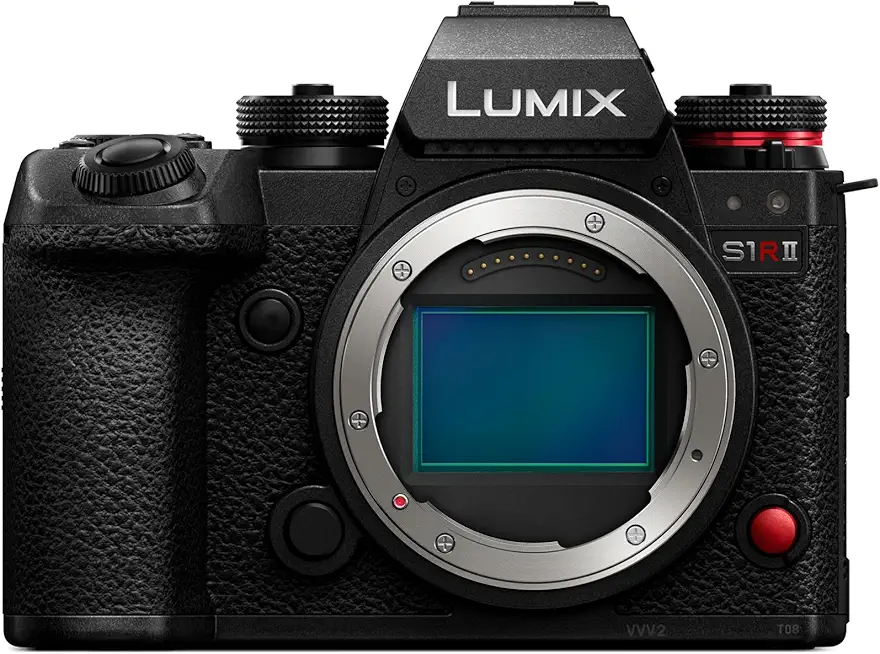
Panasonic Lumix S1R II Camera
Ultra-high-resolution sensor produces incredibly detailed images ideal for large prints and commercial work; paired with precise stabilization, refined autofocus, robust weather-sealed build, and versatile pro-level shooting features.
Check PriceThe S1R II is a pure high‑resolution photographer’s tool. I’ve used it for landscape and studio work where every pixel counts, and the detail it captures for large prints is impressive. It also gives solid stabilization and a build that holds up outdoors, so for image makers who sell big prints or need extreme crop room, this is a strong pick over the A7S III.
On the flip side, the S1R II is not the A7S III for low‑light video. Because it prioritizes resolution, it won’t match the A7S III’s clean high‑ISO look for night shoots or long handheld video work. Autofocus is good for stills, but if your job mixes a lot of dim light video and fast subject tracking the A7S III will be more forgiving and faster to work with.
Photographers who make large prints, do commercial studio work, or need the most detail for landscapes and architecture will prefer the S1R II. If your work is video‑heavy or you shoot a lot of dimly lit events, stick with the A7S III or consider a hybrid model instead.
What People Ask Most
Is the Sony A7S III worth buying?
Yes—if you need best-in-class low-light performance and pro-level video features; it’s a specialist camera that’s less ideal if you prioritize very high-resolution stills.
How good is the Sony A7S III for video?
Excellent—clean 4K up to 120fps, robust codecs, S-Log3 and effective heat management make it a top choice for filmmakers.
How is the low-light performance of the Sony A7S III?
Outstanding—the low-megapixel sensor and large pixels deliver very clean high-ISO images and great dynamic range in dim conditions.
Sony A7S III vs A7 IV: what’s the difference?
The A7S III is optimized for low-light and video with lower resolution and superior high-ISO behavior, while the A7 IV is a higher-resolution, more generalist hybrid for stills and video.
Is the autofocus on the Sony A7S III reliable?
Yes—autofocus is fast and accurate with strong subject and eye tracking, though very low-contrast or extreme low-light scenes can still challenge it.
What are the best lenses for the Sony A7S III?
Start with a 24-70mm f/2.8 and 70-200mm f/2.8 for versatility, plus a fast prime like a 35mm or 50mm f/1.4 for low-light and shallow depth of field.
Conclusion
The Sony A7S III Camera is a purpose‑built tool for low‑light and video‑forward creators. Its low‑light‑leaning sensor, true slow‑motion options, solid IBIS, dependable autofocus, bright EVF, dual card slots and strong battery life combine into a camera that lets you work with confidence in difficult lighting.
That focus brings clear trade‑offs. If you prioritize high‑resolution stills or blistering burst rates for demanding sports and wildlife work, the A7S III will feel constrained.
I recommend the Sony A7S III Camera without hesitation for videographers, event shooters and documentary makers who need clean high‑ISO performance and versatile slow‑motion in a compact, stable package. If your work leans toward high‑res commercial photography, extreme cropping or cinema rigs with alternate codecs, consider the R5, S1H or the more balanced A7 IV instead. This camera is an investment in usable image quality where low‑light footage matters more than megapixel counts.
You’ll be happiest using it on dimly lit stages, night streets, wedding receptions and solo run‑and‑gun shoots where reliability matters. For creators who put video and low‑light results first, few cameras deliver this much practical workflow confidence.
Sony A7S III Camera
Exceptional low-light sensitivity and cinema-level video performance deliver stunning 4K footage at high frame rates, paired with fast autofocus, durable magnesium-body construction, and professional connectivity for demanding hybrid shooters.
Check Price


0 Comments