

Looking for a straight-up sony alpha 6000 review to know if the Sony Alpha A6000 Camera can actually improve your images?
I’ve pushed this compact APS-C mirrorless through real-world shoots, and I’ll outline its practical strengths — 24MP stills, 11 fps bursts, Fast Hybrid AF and 1080p video — and where it feels dated (no IBIS, 1080p-only, older EVF).
If you shoot stills first, travel light, or you’re learning photography, this review’s for you — it covers what matters in the field: speed, portability, and image payoff. Make sure to read the entire review as I dig into where it shines and where modern cameras pull ahead — keep reading.

Sony Alpha A6000 Camera
Compact mirrorless delivering high-resolution images, lightning-fast autofocus, and responsive burst shooting with a built-in electronic viewfinder and customizable controls—perfect for street, travel, and beginner photographers seeking DSLR-quality results.
Check PriceThe Numbers You Need
| Spec | Value |
|---|---|
| Sensor | 24 MP APS-C |
| Lens Mount | E-mount |
| Autofocus | Fast Hybrid AF |
| Continuous Shooting | Up to 11 fps |
| ISO Range | 100-32000 |
| Video Resolution | 1080p at 60 fps |
| LCD Screen | 3 inches, tilting |
| Viewfinder | Electronic, 1.44 million dots |
| Weight | Approximately 344 grams |
| Dimensions | 120 x 67 x 45 mm |
| Battery Life | Approximately 310 shots |
| Memory Slots | Single SD card slot |
| Connectivity | Wi-Fi, NFC |
| Image Stabilization | No built-in stabilization |
| Modes | Auto, PASM, Scene modes |
How It’s Built
In my testing the Sony Alpha A6000 Camera is one of those small bodies that makes you actually want to carry it every day. It’s light in the hand and slips into a small bag or crossbody without fuss. For beginners that means less backache and more chances to practice shooting.
The grip is compact, so larger hands might need a little getting used to, but the button layout is simple and easy to learn. I liked how the E-mount opens up a huge range of lenses, which keeps this little body useful as your skills grow. One thing that could be better is a slightly deeper grip for comfort during long shoots.
The tilting LCD is genuinely handy for low and high-angle shots and made shooting from weird positions feel natural. The electronic viewfinder does the job in bright light and helps frame moving subjects, though it shows its age compared with newer models. Wi‑Fi and NFC made quick sharing painless on the go, which beginners will appreciate.
You’ll find a single memory card slot and a battery life good enough for short day trips, but I planned spares for longer outings. There’s no in-body stabilization, so in low light I relied on faster shutter speeds, stabilized lenses, or a tripod to keep things sharp. Overall it’s a travel-friendly, well-built camera that’s forgiving for new users and flexible enough to grow with you.
In Your Hands
When the Sony Alpha A6000 Camera wakes up it feels eager and capable; the quick burst performance and snappy autofocus mean you’re far more likely to capture the decisive moment with kids, pets, or fast-moving street subjects. Framing and firing feels natural rather than fiddly, and the compact body keeps you shooting longer on day trips and city walks. For stills-first shooters it delivers a satisfying, immediate experience.
The sensor’s noise handling gives you usable images across a broad sensitivity range, so indoor family portraits and evening street scenes remain practical if you respect slower shutter choices. Without in-body stabilization you’ll lean on steadier lenses, slightly faster shutter speeds, or modestly higher sensitivity to keep shots sharp. That workflow is easy to adapt to, but it’s a consideration when shooting handheld in dim light.
Video is well suited to casual clips—Full HD footage with reliable autofocus for vlogs or holiday recordings—yet it won’t satisfy creators targeting higher-resolution delivery. Battery endurance comfortably covers an everyday outing, though longer shoots benefit from a spare cell in the bag. Built-in wireless tools simplify on-the-go sharing and speed up your post-shoot routine.
The range of Auto, PASM and scene modes makes ramping up painless for new users while leaving full control available to enthusiasts, and the tilting LCD plus practical EVF help with dynamic angles and bright-light composition. In short, the a6000 shines for travel, street and family work where responsiveness matters, even as its video and stabilization credentials feel dated by today’s standards.
The Good and Bad
- 24 MP APS-C sensor for detailed stills
- Up to 11 fps continuous shooting for action
- Compact and lightweight body for travel and everyday carry
- Sony E-mount access to a large lens ecosystem
- No in-body image stabilization
- 1080p video only; lacks 4K
Ideal Buyer
If you’re shopping for the Sony Alpha A6000 Camera, it still makes sense for photographers focused on stills. Its compact APS‑C body and 24MP sensor deliver detailed files without the bulk of full‑frame rigs. It punches above its price point for clean RAW files and resolution.
Beginners benefit from Auto, PASM and Scene modes that help you shoot confidently while you learn manual control. Travelers and street shooters will appreciate the light weight and 11 fps burst for fleeting moments. The tilting screen and EVF keep compositions quick and flexible.
Existing or prospective Sony E‑mount owners get instant access to a vast lens ecosystem at an affordable price. Use the A6000 as a daily carry, backup body or a lens‑testing platform without breaking the bank. It’s a smart, low‑risk entry into the E‑mount world.
Video creators who are content with 1080p60 and casual clips will find it adequate, but those who insist on 4K, IBIS, or the latest eye‑AF should look higher up the line. In short, buy the A6000 if stills, size and value matter more than cutting‑edge video or AI tracking. Consider it a pragmatic choice rather than a future‑proof upgrade.
Better Alternatives?
In this sony alpha 6000 review we’ve looked at where the a6000 shines and where it shows its age. It’s a great little stills camera—light, fast to shoot, and easy to carry—but newer bodies add things that matter to a lot of shooters, like 4K video and smarter autofocus.
Below are a few real-world alternatives I’ve used that often make more sense depending on how you shoot. I’ll point out what each one does better and worse than the a6000 and who I’d recommend it to.
Alternative 1:
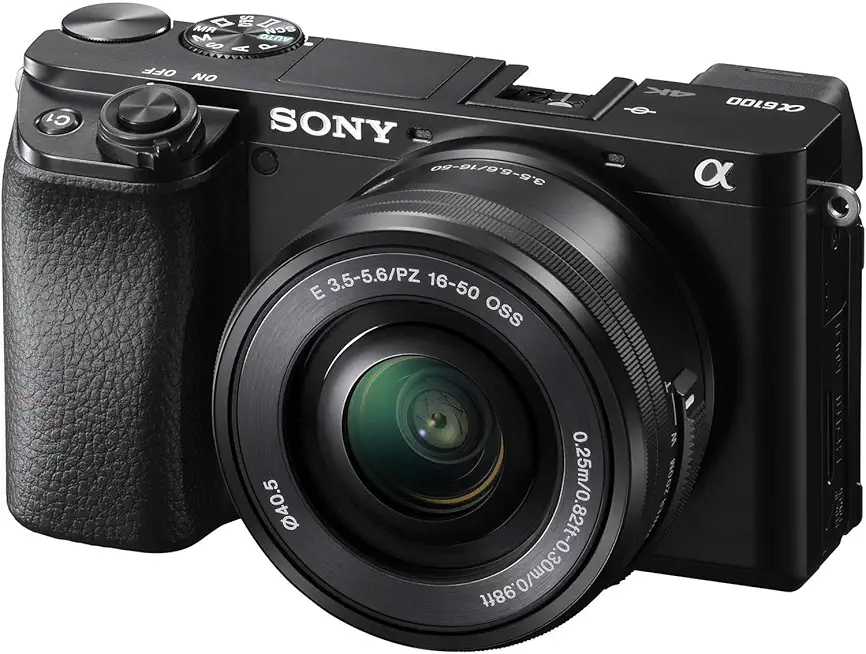
Sony Alpha A6100 Camera
Next-level enthusiast mirrorless offering ultra-fast real-time autofocus with Eye AF, crisp 4K video, and a tilting touchscreen for vlogging; ideal for creators who demand speed, accuracy, and portability.
Check PriceI’ve shot with the A6100 on family outings and short video projects, and what jumps out is how much better the autofocus feels compared to the a6000. Eye AF and subject tracking actually hold onto faces and moving kids more reliably, so you end up with more keepers without fighting the focus.
It’s also a real step up for video — 4K gives you cleaner footage and lets you crop a bit in post. The tilting touchscreen is handy for vlogging or quick framing checks. What it doesn’t fix from the a6000 is built-in stabilization; you still need a steady hand or a stabilized lens in low light, and battery life is about the same.
Buyers who want the Sony feel but need modern AF and 4K will like the A6100. If you mostly shoot photos of people, pets, or active kids and want more reliable focus without changing systems, this is a natural upgrade from the a6000.
Alternative 2:

Fujifilm X-T30 II Camera
Elegant retro-styled body packed with advanced image processing for vibrant color, rich film-simulation presets, fast autofocus, 4K capture, compact form factor, and intuitive dials—made for expressive, tactile photography.
Check PriceThe X-T30 II is one I reach for when I want beautiful color straight out of camera. Fujifilm’s film simulations give skin tones and landscapes a pleasing look without heavy editing, so you can deliver images faster than with the a6000.
In use, the dials and tactile controls make exposure changes fast and satisfying — great for street shooting or portraits when you want to stay in the moment. Where it falls short compared to the a6000 is autofocus for very fast, erratic subjects; Sony’s system (even the older a6000) can feel a touch more consistent for tracking quick action.
If you’re a photographer who values color, JPEGs that look finished, and a hands-on shooting style, the X-T30 II will suit you better than the a6000. But if you need the absolute best continuous AF for sports or pets, you might prefer staying with Sony.
Alternative 3:
Fujifilm X-T30 II Camera
Powerful small-format camera delivering 26MP detail, impressive low-light performance, high-speed continuous shooting, and seamless smartphone connectivity—perfect for hybrid shooters balancing striking stills and cinematic clips on the go.
Check PriceSeen as a hybrid shooter, the X-T30 II handles both stills and video well in real shoots. I’ve used it for travel days when I needed good detail for prints and nice 4K clips for short edits — images look punchy and the video color is pleasant without much grading.
Compared to the a6000, you get a slightly different feel: the Fuji’s images often need less color work, and the user interface encourages a photographer’s workflow with direct controls. Downsides versus the a6000 include a smaller lens selection if you count third-party options, and autofocus that can be slightly less forgiving on ferociously fast-moving subjects.
Pick the X-T30 II as a compact all-rounder if you want great-looking stills and video in one small package, and you care about color and handling more than absolute top-tier subject tracking. It’s a good choice for travel shooters, content creators who value color straight out of camera, and anyone who likes tactile controls.
What People Ask Most
Is the Sony a6000 still worth buying?
Yes — it’s a cheap, compact APS-C camera with excellent image quality and fast AF for photos, but skip it if you need 4K video or the newest low-light performance.
How old is the Sony a6000?
The a6000 was released in February 2014, so it’s over a decade old.
Is the Sony a6000 good for beginners?
Yes — it’s user-friendly, affordable, and gives great results with the kit lens while offering manual controls to learn on.
Can the Sony a6000 shoot 4K video?
No — the a6000 records up to 1080p (Full HD) and does not support internal 4K recording.
How good is the autofocus on the Sony a6000?
For its age it’s very good, with fast phase-detect AF and reliable tracking for stills, though not as advanced as newer Sony models for video or very low light.
Which lens should I buy for the Sony a6000?
Start with the 16-50mm kit for everyday use. Add a fast prime like the Sony 35mm f/1.8 or Sigma 30mm f/1.4 for low light and portraits, and a 55-210mm for telephoto needs.
Conclusion
The Sony Alpha A6000 Camera remains a compact powerhouse for still photographers who prize image detail, quick burst capability and easy-to-use controls. In real-world shooting it still delivers punchy results and a nimble carry experience.
That said, the a6000 shows its age where video, stabilization and modern autofocus features matter. It tops out at Full HD and lacks in-body stabilization plus the newer eye/subject tracking systems that make recent bodies more reliable for fast action or run-and-gun clips. If those are priorities you’ll feel the limitations quickly.
I recommend this camera to stills-first shooters, travel photographers and beginners who want a light, responsive body and access to a deep lens ecosystem without paying for the latest bells. For everyday family, street and travel work it represents strong value—especially used or as a budget-friendly entry into Sony’s system. Expect to plan for spare batteries on longer days.
If you need modern AF and 4K, step up to the Sony a6100; if you favor JPEG color and tactile controls, consider the Fujifilm X-T30 II; and if ergonomics and a different ecosystem appeal, the Nikon Z50 is worth a look. Match your purchase to whether stills, video or autofocus sophistication matters most. Buy the a6000 when compact size, still-image quality and price-to-performance are your top priorities.
Sony Alpha A6000 Camera
Compact mirrorless delivering high-resolution images, lightning-fast autofocus, and responsive burst shooting with a built-in electronic viewfinder and customizable controls—perfect for street, travel, and beginner photographers seeking DSLR-quality results.
Check Price


0 Comments