
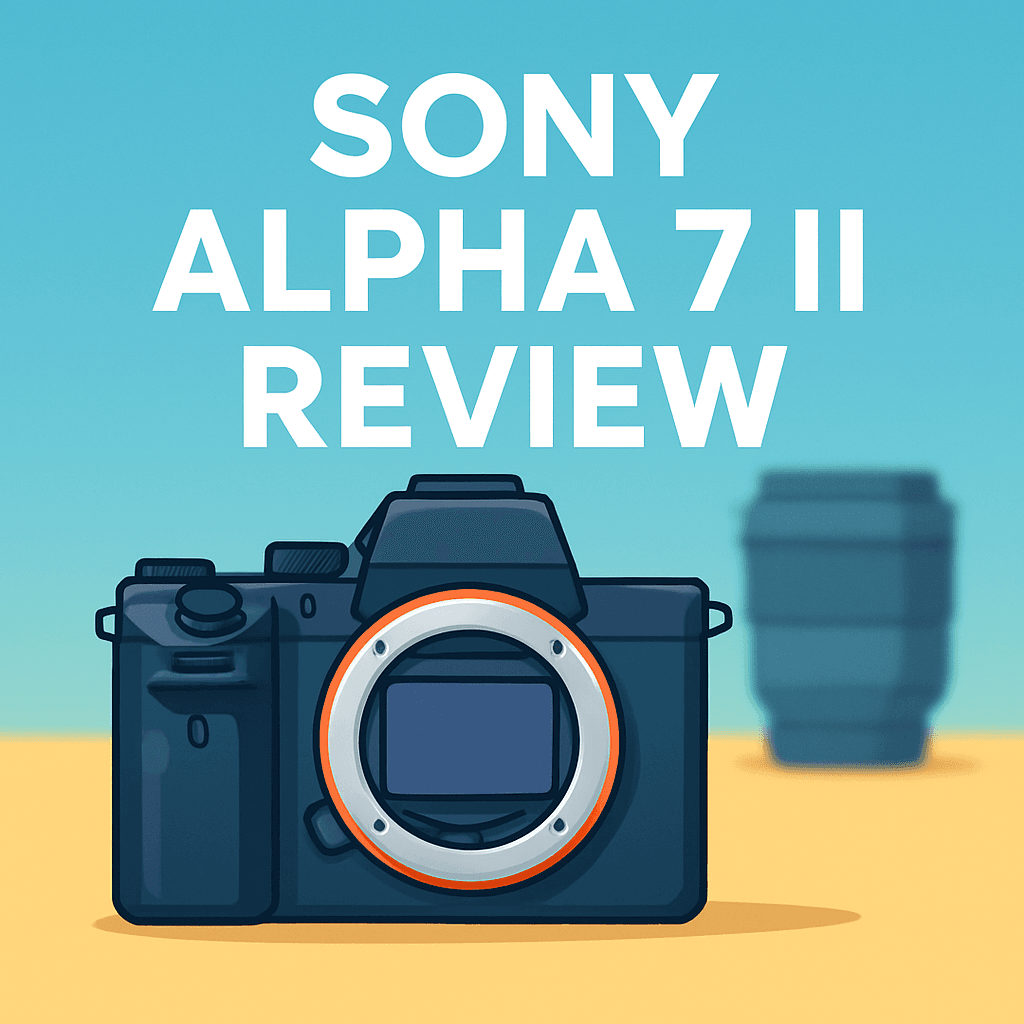
Want that full-frame look and steadier handheld shots without hauling a big rig?
I’ve field-tested the Sony Alpha 7 II on portraits, street walks, and travel shoots, and those real shoots revealed what matters day to day.
This one’s for stills-first shooters, E‑mount owners, and creators who value steady full-frame images. We’ll cover handling, image and video payoffs and the tradeoffs you should know — keep reading.

Sony Alpha 7 II Camera
Compact full-frame mirrorless offering stabilized imaging and high-resolution capture, ideal for handheld shooting. Responsive controls, solid build, and rich color science deliver professional photo quality for travel and everyday assignments.
Check PriceThe Numbers You Need
| Spec | Value |
|---|---|
| Sensor | 24.3 MP full-frame CMOS |
| Image Stabilization | 5-axis in-body |
| ISO Range | 100–25600 (expandable) |
| Autofocus | Fast Hybrid AF |
| Focus Points | 117 |
| Continuous Shooting | 5 fps |
| Shutter Speed | 1/8000 sec (mechanical), 1/4000 sec (electronic) |
| Viewfinder | 2.36 million-dot OLED, 0.71x magnification |
| LCD | 3.0-inch tiltable |
| Video | Full HD 1080p (XAVC S) |
| Lens Mount | Sony E-mount |
| Weight | 599 g (body only) |
| Weather Sealing | Partial |
| Battery Life | Approx. 350 shots (CIPA) |
| Memory Card | SD, SDHC, SDXC (UHS-I) |
How It’s Built
In my testing the Sony Alpha 7 II feels solid and familiar in the hand. The grip is comfortable and the main dials fall naturally under my fingers. I really liked how it stays steady with small primes, though big lenses make it feel front-heavy.
The build uses good materials and gives you confidence shooting outside, but it’s only partly sealed. After using it in misty mornings I kept a towel handy and avoided heavy rain. I would prefer fuller weather protection for worry-free outdoor use.
The electronic viewfinder is clear enough to nail manual focus and feels responsive while tracking subjects. The tilting LCD is great for low and high angles, but it can get reflective in bright sun. For street and travel shooting it’s very handy.
Mounting lenses is easy thanks to the E-mount ecosystem; I paired it with compact primes and a travel zoom during shoots and enjoyed the flexibility. Wireless transfers and SD card use work fine for quick jobs, but large files move more slowly than I hoped.
The shutter has a pleasant, predictable click and ports are easy to reach during shoots. Menus are readable but a little dated for newcomers, and a bulky tripod plate can crowd the battery door. Overall it’s user-friendly for beginners with a few practical notes.
In Your Hands
In the field the Sony Alpha 7 II’s Fast Hybrid AF with its many focus points felt dependable for the majority of my shoots; faces and moderately paced subjects lock quickly and keeper rates at events and portraits were reassuring. Low-contrast scenes can still trip it up occasionally, so I tend to pre-focus or use back-button AF when the action becomes frantic.
The camera’s continuous shooting pace is modest, which makes it better suited to decisive moments than prolonged tracking of fast action; learning to time short bursts paid off more than holding down the button. The shutter capability lets you freeze movement and shoot wide-aperture glass confidently in bright conditions, keeping creative control in my hands.
Its five-axis in-body stabilization is the feature that changed my handheld work — I frequently pulled off slower shutter speeds with primes and adapted lenses that would otherwise have needed a tripod. For travel and street work that translates to more keepers and cleaner files without pushing ISO.
Battery endurance is workable for a day of mixed shooting if you manage power and offload images, but I always pack a spare and keep an eye on settings. UHS‑I media means buffer clearing isn’t instant during long bursts, and the built-in Wi‑Fi/NFC is handy for quick transfers and remote control even if it isn’t lightning fast.
In practice the A7 II shines at portraits, city/street, and travel photography where stabilization and full-frame rendering matter most; indoor low-light work benefits hugely from IBIS and careful technique, though demanding action or marathon shoots expose its throughput and power limits.
The Good and Bad
- 24.3 MP full-frame CMOS sensor
- 5-axis in-body image stabilization
- Fast Hybrid AF system with 117 focus points
- Manageable weight at 599 g (body only)
- Continuous shooting capped at 5 fps
- Video limited to Full HD 1080p
Ideal Buyer
The Sony Alpha 7 II is ideal for stills-first photographers who prize handheld versatility and classic full-frame rendering. Its five-axis IBIS and 24.3MP sensor make it a smart pick for anyone who wants sharp, usable files without leaning on tripods. If you shoot primarily photos and care more about composition and lens character than peak AF/burst specs, this body will reward disciplined shooting.
Existing E-mount shooters looking to step up to a full-frame body will feel at home with the A7 II’s controls and lens ecosystem. Portrait, street, and travel photographers who favor stabilized primes, deliberate framing, and modest burst needs (5 fps) will get strong real-world results. Full HD video is serviceable for social clips and behind-the-scenes, but not the place to buy this camera for high-end hybrid work.
Buyers comfortable managing a modest battery life and UHS‑I card throughput—bringing spare batteries and planning card swaps—will find the camera dependable on assignments. If you routinely chase fast-action subjects, demand cutting-edge AF, or need 4K video and longer continuous shooting, consider newer alternatives instead. For photographers who value stabilized full-frame stills, lens flexibility, and a familiar Sony workflow, the A7 II remains a pragmatic, creative tool.
Better Alternatives?
We’ve gone through the Sony A7 II and how it handles in real shooting situations — its stabilization, image look, and the tradeoffs you live with if you pick an older full‑frame body. If you’re reading this, you probably like what the A7 II offers but are curious about bodies that solve its weak spots: autofocus hold, battery life, burst speed and modern video features.
Below are a few solid alternatives I’ve used in the field. I’ll point out what each one does better and where it still falls short compared to the A7 II, and who I’d recommend each camera to based on real shoots, not just spec sheets.
Alternative 1:
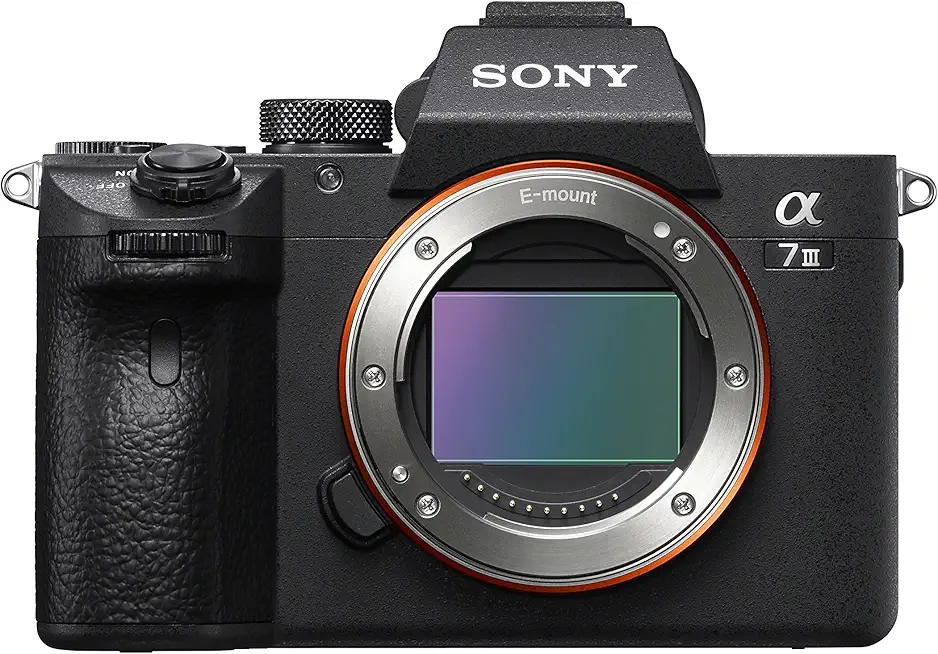
Sony Alpha 7 III Camera
Everyday professional body with exceptional low-light performance and fast hybrid autofocus. Long battery life, smooth continuous shooting and versatile video features make it an all-purpose tool for photographers and creators.
Check PriceHaving shot weddings, portraits, and low‑light gigs with the A7 III, the most obvious real-world gains over the A7 II are autofocus and stamina. The A7 III locks onto faces and moving subjects far more reliably, so you’ll keep more keepers during fast-paced events. In low light it holds focus better and the images look cleaner at higher ISOs, which means less time fixing noise in post and more usable frames straight out of the camera.
Where it’s worse than the A7 II is really just practical: it costs more and feels a touch more complex at first. If you’re used to the simpler controls and menu flow on the A7 II, there’s a learning curve to squeeze the most from the A7 III. It’s also a slightly different weight and balance, so some small lenses will feel different on a long walkabout.
If you’re a working shooter who needs reliable AF, longer battery life, and a more forgiving low‑light camera for events, weddings, or run‑and‑gun jobs, I’d recommend the A7 III. It’s the upgrade I reach for when I need to shoot all day without swapping batteries and want fewer missed shots in mixed lighting.
Alternative 2:
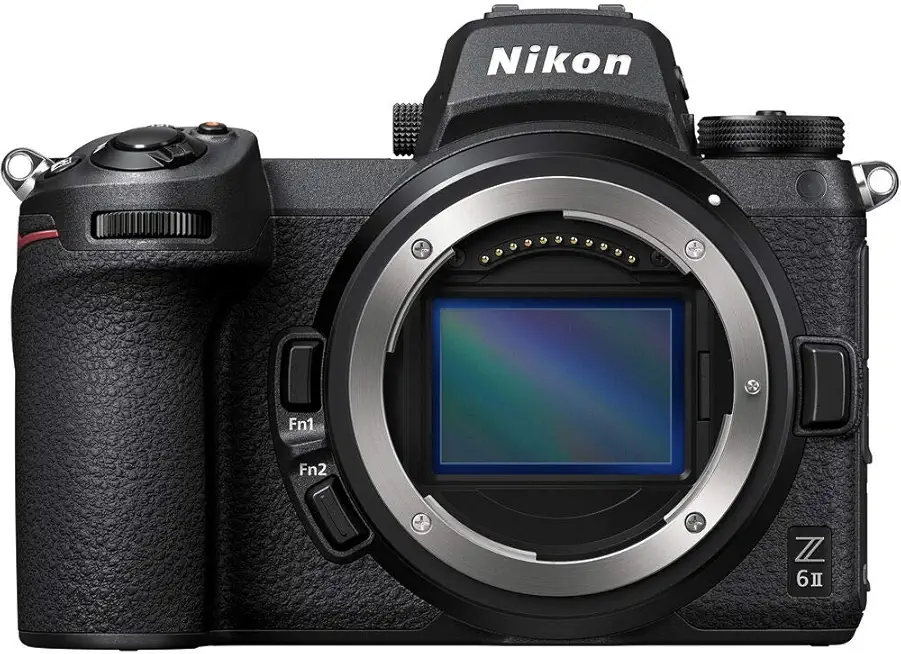
Nikon Z6 II Camera
Versatile full-frame shooter built for hybrid work, combining improved autofocus and dual processors for snappy responsiveness. Excellent video capabilities, robust ergonomics, and reliable performance for demanding photo and film projects.
Check PriceOn shoots with the Z6 II I noticed the handling and color straight away — the body feels solid in hand and skin tones come out pleasing with less fuss in post. Autofocus is noticeably better than the A7 II, especially for static subjects and eye detection, so portrait sessions feel smoother and you spend less time redoing frames. The camera’s hybrid nature means video clips are easier to use right away, which helped me when I had to grab short clips between stills.
Where the Z6 II isn’t as strong as the A7 II is mainly about lens choices and ecosystem breadth if you’re already deep in Sony glass. Adapters work, and Nikon’s Z lenses are growing, but you won’t find as many native third‑party E‑mount options as with Sony. Also, if you rely on very specific Sony menus or workflows, moving to Nikon introduces new habits that take time to settle into.
This camera suits photographers who care about handling and color out of camera, and who want a dependable hybrid body for both photos and video. If you’re a studio, portrait, or documentary shooter who values ergonomics and a modern AF system, the Z6 II is a solid pick — especially if you’re starting fresh or already own Nikon glass.
Alternative 3:
Nikon Z6 II Camera
Balanced pro-grade camera offering smooth continuous bursts, rich color reproduction, and low-light resilience. Intuitive controls and sturdy construction make it a go-to choice for studio, event, and run-and-gun shooters.
Check PriceUsing the Z6 II for longer event days showed me its steady continuous shooting and consistent colors are real advantages. The buffer and burst handling feel more confident than the A7 II when you need to pull off a quick sequence of frames. Low‑light performance is also better in practice — you get cleaner shots in dim venues without constantly thinking about ISO penalties.
The Z6 II still can’t beat the A7 II on one point: if you already own a lot of Sony E‑mount lenses, the transition costs time and money. Also, certain niche Sony lenses and adapters pair more seamlessly with Sony bodies, so the Z6 II can feel like a step away from gear continuity for long-time Sony users. For some fast-action needs, there are other bodies that outpace both, but for balanced work it’s very capable.
Pick the Z6 II if you want a rugged, all‑around camera that handles long sessions and gives you attractive colors straight out of the camera. It’s my recommendation for studio shooters who also cover events, and for run‑and‑gun shooters who want a dependable, comfortable body that won’t slow you down during a busy day.
What People Ask Most
Is the Sony Alpha 7 II still worth buying?
Yes — it’s a solid, affordable full‑frame camera with good image quality and in‑body stabilization, but skip it if you need fast AF, 4K video, or the latest features.
How does the Sony A7 II compare to the Sony A7 III?
The A7 III is a big step up with far better autofocus, low‑light performance, 4K video, and much longer battery life, while the A7 II is cheaper but older and less capable for action or video work.
Does the Sony A7 II have in-body image stabilization?
Yes — it has 5‑axis in‑body stabilization that helps handheld shots, roughly worth a few stops of shutter speed.
Is the autofocus on the Sony A7 II good?
It’s fine for portraits and general stills, but slower and less reliable on fast or erratic subjects compared with newer Sony bodies.
Can the Sony A7 II shoot 4K video?
No — the A7 II only records up to 1080p internally, so it’s not ideal if you need onboard 4K video.
What is the battery life of the Sony A7 II?
Expect roughly 300–400 shots per charge (around a CIPA rating of 350), so bring spare batteries for long shoots.
Conclusion
The Sony Alpha 7 II remains a sensible tool for photographers who prize full-frame stills and steady handheld shooting. Its combination of a capable full-frame sensor, five-axis IBIS, and practical EVF/LCD delivers reliable images in real-world shoots.
What it does best is simple: deliver clean, full-frame stills with stabilization that lets primes and adapted lenses shine. The tradeoffs are real — modest burst speed, a Full HD video ceiling, UHS‑I media limits, partial weather sealing, and a battery life that benefits from spares. Those compromises don’t undermine the camera’s core value but they do shape when you’ll reach for something newer.
Choose the A7 II if you’re stills-first, already invested in Sony E‑mount glass, and favor composition and stabilized handheld results over headline specs. If your work demands blistering AF tracking, long battery days, fast throughput, or advanced hybrid video, newer bodies make more sense. For many photographers on a budget the A7 II still represents a pragmatic, capable option.
Match the body to your shooting style, and plan your workflow around its few quirks. Bring spare power, fast cards within its limits, and a lens kit that leans on stabilization, and you’ll get reliably excellent results.
Sony Alpha 7 II Camera
Compact full-frame mirrorless offering stabilized imaging and high-resolution capture, ideal for handheld shooting. Responsive controls, solid build, and rich color science deliver professional photo quality for travel and everyday assignments.
Check Price


0 Comments