
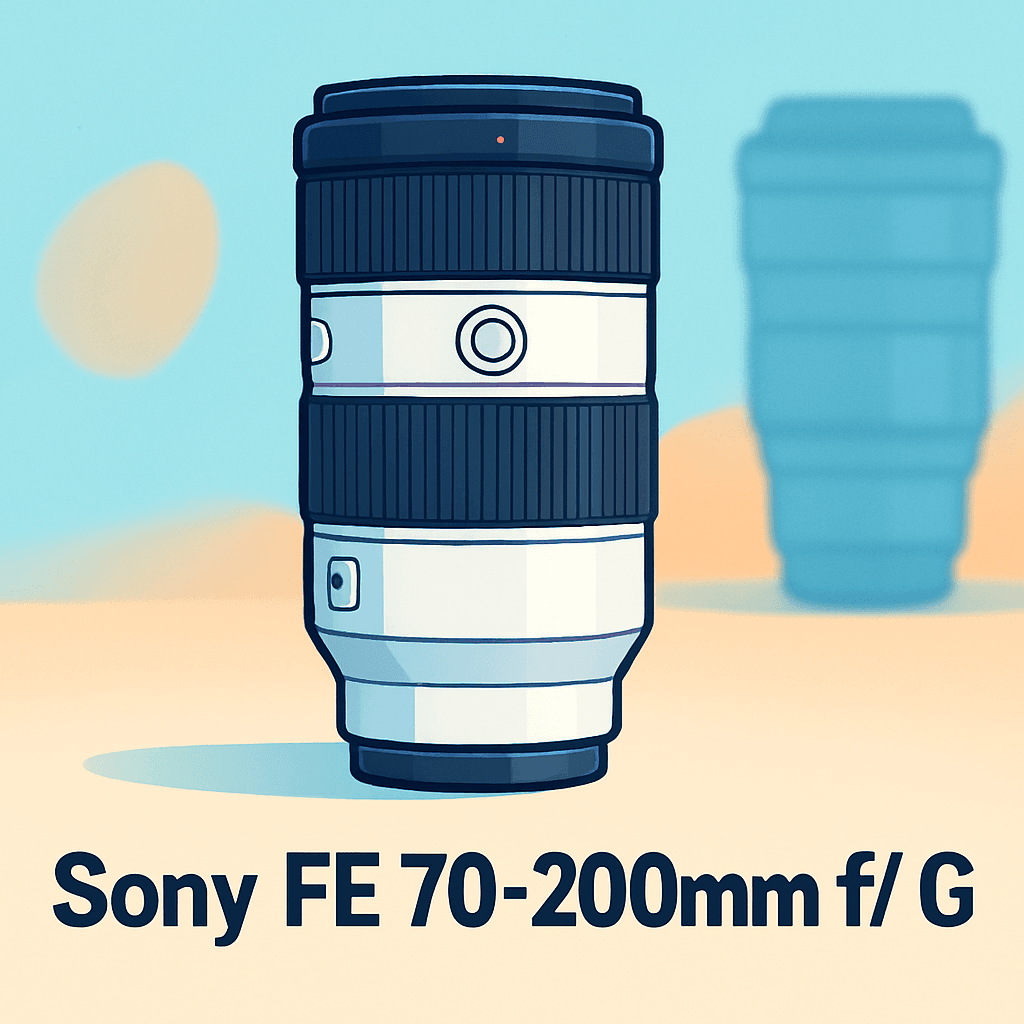
Want a lighter, stabilized 70–200 that won’t bury you on long shoots but still improves reach and consistency?
The Sony FE 70-200mm f/4 G pairs a constant f/4 aperture with in-lens OSS, delivering a compact tele-zoom designed for Sony full-frame and APS-C E-mount shooters.
It’s aimed at portrait, event, travel and daylight sports shooters who want stabilization, predictable exposure and tele compression without the extra bulk of f/2.8 pro glass.
I’ve shot with this lens on weddings, hikes and quick sports assignments, and it stood out for balance, usable stabilization, and consistent exposure across the zoom.
If you’re weighing portability against low-light punch, this review walks through real-world payoffs, alternatives and who should actually buy it — keep reading.

Sony FE 70-200mm f/4 G
Portable telephoto with consistent f/4 brightness, delivering crisp optics, smooth bokeh, fast autofocus and weather-sealed construction. Perfect for travel, weddings, and nature shooters seeking professional image quality without heavy bulk.
Check PriceThe Numbers You Need
| Spec | Value |
|---|---|
| Focal Length | 70–200 mm |
| Maximum Aperture | f/4 (constant) |
| Mount Type | Sony E-mount (Full-frame FE) |
| Lens Type | Telephoto zoom |
| Image Stabilization | Optical SteadyShot (OSS) — Yes |
| Autofocus | Yes — Direct Drive Super Sonic Wave Motor |
| Weather Sealing | Yes (dust and moisture resistant) |
| Lens Construction | 17 elements in 12 groups |
| Minimum Focus Distance | 0.96 m (3.15 ft) |
| Maximum Magnification | 0.25× |
| Aperture Blades | 9 (rounded) |
| Filter Thread Diameter | 72 mm |
| Weight | Approximately 840 g (1.85 lbs) |
| Dimensions (Diameter × Length) | Approx. 80 × 175 mm |
| Compatible Format | Full-frame and APS-C (equiv. 105–300 mm on APS-C) |
How It’s Built
In my testing the Sony FE 70-200mm f/4 G feels like a pro lens without the bulk. Its metal-and-polymer build inspired confidence and the weather sealing let me keep shooting in light rain or dusty trails. That mattered on shoots where I didn’t want to worry about the gear.
On an a7 or a9 it balances very well and feels like part of the camera. With a battery grip it tips forward a bit but stays manageable for handheld work. After a long day of walking and events I noticed it’s much easier to carry than heavier tele zooms.
The controls are simple and the zoom and focus rings have smooth, predictable damping. In my testing the focus ring was accurate, though the zoom ring felt slightly stiff at the long end — that could be better. I also liked the in-lens stabilization because it helped me get usable handheld shots more often.
It uses a common filter size so beginners can find ND and polarizers without hunting for odd sizes. The collar is fine for short tripod use, but I mostly stashed it in a daypack since it packs down nicely for travel. Overall I liked the solid finish, weather protection, and the balance of durability with portability.
In Your Hands
In the field the Sony FE 70-200mm f/4 G’s OSS makes handheld shooting noticeably more confident at the short end and still usable toward the long end, though technique and body pairing become more important as focal length increases. When combined with in-body stabilization the setup is forgiving, noticeably boosting keeper rates in lower-light, slower-shutter scenarios.
The constant aperture keeps exposure and autofocus behavior predictable across the zoom, so you can change framing without sudden shifts in metering or AF hunting. Depth-of-field control is solid for telephoto portraits and isolates subjects well, but it won’t produce the same creamy separation you get from faster pro-grade glass.
Close-focus performance is a pleasant surprise, letting you tackle detail work, product shots, and intimate candids without swapping lenses. At the long end you can achieve tight framing while maintaining a comfortable working distance—a real advantage at events and with shy subjects.
For travel and documentary shoots the lens strikes a balanced compromise of reach and portability that reduces fatigue on long days. Outdoor sports in good light, compressed landscape panoramas, and distance portraits all benefit from the lens’s tele perspective and consistent handling.
Optically it copes with backlight and flare better than many mid-range zooms, though high-contrast edges can show some fringing and corner falloff at the extremes. Distortion is controlled enough for most real-world framing, and on crop bodies the lens becomes an even more useful long-tele option for wildlife and action.
The Good and Bad
- Constant f/4 aperture across 70–200mm
- Optical SteadyShot (OSS) stabilization
- Dust and moisture resistant construction
- Relatively compact and lighter 70–200 form factor (approx. 80 x 175 mm; 840 g)
- f/4 is a stop slower than f/2.8, offering less low-light headroom and subject isolation
- Still substantial size/weight for minimalist travel kits
Ideal Buyer
If you shoot Sony full-frame bodies and want a true 70–200 telephoto that’s weather‑sealed and stabilized, the Sony FE 70-200mm f/4 G is the one to consider. It gives a constant f/4 across the range in a noticeably lighter, more travel‑friendly package than the big f/2.8 pro pieces. Choose it when you prize consistency, manageable weight, and in‑lens OSS for steadier handheld shooting on long days.
Event, portrait, and travel photographers working mainly in good light will love the balance between reach, compression, and predictable exposure this lens delivers. APS‑C shooters get a 105–300mm equivalent field of view that makes the lens a practical daylight wildlife and sports companion without hauling pro‑level 2.8 glass. The close‑focus 0.96 m and 0.25× magnification also make it versatile for tight portraits and detail work when you can’t get closer.
Hybrid photo/video shooters who need quiet, reliable AF and built‑in stabilization for tele footage will find this lens particularly useful. It’s not a substitute for the extra low‑light headroom or creamier separation of an f/2.8, but it delivers far less bulk for long handheld sessions and travel. In short, pick the FE 70-200mm f/4 G if you want a practical, stabilized telezoom that favors portability and consistency over ultimate speed.
Better Alternatives?
We’ve looked closely at the Sony FE 70-200mm f/4 G — a solid, stabilized telephoto that sits between travel convenience and pro-level reach. If you like the balance of weight and steady shots the f/4 gives you, that’s great, but there are situations where a different lens makes more sense.
Below I’ll run through three real-world alternatives I’ve used. I’ll point out what each one does better or worse compared to the Sony 70–200/4, and who I’d recommend them to based on actual shooting experience.
Alternative 1:
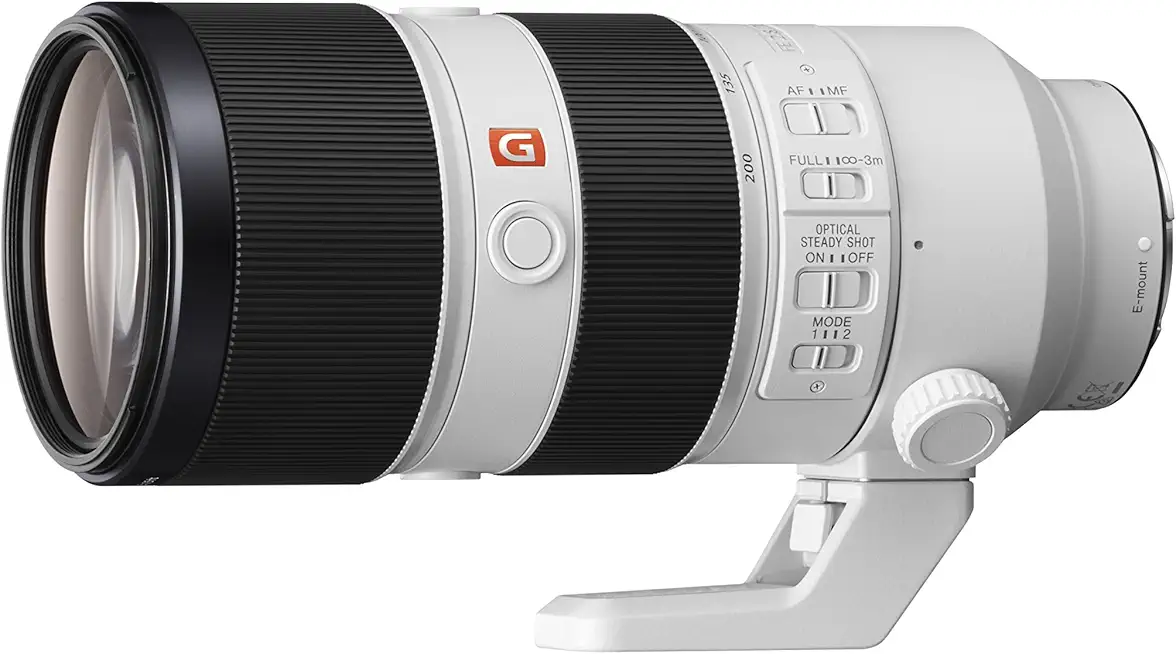
Sony FE 70-200mm f/2.8 GM
Pro-level telephoto delivering blazing f/2.8 speed, unrivaled sharpness and creamy bokeh. Robust, weather-sealed build with lightning-fast autofocus for sports, wildlife and portrait work where ultimate image quality and speed are essential.
Check PriceI’ve used the 70–200/2.8 GM in weddings and fast-action shoots and its biggest real-world advantage over the f/4 is sheer speed and separation. Wide open at f/2.8 you get noticeably cleaner subject separation and you can push shutter speeds much higher in low light. That makes it the go-to when you’re shooting dim receptions, indoor sports, or want the creamiest backgrounds for portraits.
What it gives up compared to the f/4 is weight, size, and price. In day-long handheld work or travel, the f/2.8 gets tiring fast. It’s also much pricier. Optically it often looks a touch crisper wide open, and the bokeh is smoother, but for many travel or outdoors situations that extra stop isn’t worth the bulk.
Pick the 70–200/2.8 GM if you regularly shoot in low light, need the shallowest depth of field, or work as a pro where image quality must be top-tier. If you prioritize light packing and easier all-day carrying, stick with the f/4.
Alternative 2:

Tamron 70-180mm f/2.8 Di III VC VXD G2 Sony E
Compact, fast-aperture telezoom offering f/2.8 performance, stabilised shots and rapid VXD autofocus in a lightweight package. Ideal for handheld action, low-light assignments and photographers who demand portability without sacrificing performance.
Check PriceThe Tamron 70–180/2.8 is a lens I often grab for street and travel work when I want f/2.8 look without the heft. In the field it beats the Sony 70–200/4 on low-light capability and subject blur — you’ll get nicer background separation and faster shutter speeds. It’s also noticeably lighter, which makes long days easier.
Where it’s worse is reach and in-lens stabilization. It stops at 180mm, so you lose those last 20mm of framing at 200mm, and Tamron’s optical stabilization is tied to certain models (or relies on your camera’s IBIS depending on version). That means handheld shooting at the long end can be trickier than with the Sony’s built-in OSS. Build-wise, it feels solid but not quite as bombproof as Sony’s pro glass.
Choose the Tamron if you value a fast aperture in a small package — for run-and-gun wedding shooters, travel photographers, and anyone who wants f/2.8 without the weight or price of the GM 70–200. If you need that extra 20mm, or want in-lens OSS for steady handheld at 200mm, the Sony f/4 might suit you better.
Alternative 3:
Tamron 70-180mm f/2.8 Di III VC VXD G2 Sony E
Refined mid-telephoto zoom with enhanced vibration compensation, snappy linear-motor focusing and improved optics for striking clarity. Provides pleasing bokeh, close-focusing flexibility and exceptional value for on-the-go professionals.
Check PriceThis updated Tamron (G2) builds on the same idea: fast f/2.8 performance in a compact, easy-to-carry body. In my hands the G2’s AF felt a touch quicker and the image rendering a little cleaner than older versions, and that translates to consistent keepers for events and portraits. It’s a strong performer for anyone who shoots a lot handheld in mixed light.
Compared to the Sony 70–200/4, the Tamron G2 wins for shallow depth of field and portability, but it still trades away the Sony’s full 200mm reach and some weather-sealing confidence. Also, if you rely on in-lens OSS to steady long shots, that comfort is lessened unless you have a body with strong IBIS. In practice that means tighter framing or higher ISOs at a distance.
I’d recommend the Tamron G2 to photographers who want pro-level looks without professional weight or cost — wedding second shooters, travel pros, and documentary shooters who move fast. If you need the extra reach, or you shoot a lot in wet conditions and want built-in stabilization, the Sony 70–200/4 still holds its ground.
What People Ask Most
Is the Sony FE 70-200mm f/4 G worth buying?
Yes — it’s a great buy if you want a lightweight, sharp telephoto at a much lower price and weight than the f/2.8, as long as you don’t need extreme low-light or ultra-fast aperture.
How sharp is the Sony FE 70-200mm f/4 G?
Very sharp across most of the zoom range, with excellent center detail and good corner performance when stopped down to f/5.6–f/8.
Does the Sony FE 70-200mm f/4 G have image stabilization (OSS)?
Yes — it includes Sony’s Optical SteadyShot to help with handholding at longer focal lengths.
How does the Sony FE 70-200mm f/4 G compare to the Sony FE 70-200mm f/2.8?
The f/2.8 gives better low-light performance and shallower depth of field, while the f/4 is much lighter, cheaper and nearly as sharp for most real-world shooting.
Is the Sony FE 70-200mm f/4 G weather-sealed and durable?
Yes — it has dust and moisture resistance and a solid build for field use, though it’s not as rugged as the pro-grade f/2.8 version.
Can you use 1.4x or 2x teleconverters with the Sony FE 70-200mm f/4 G?
You can use a 1.4x with reduced autofocus performance and image quality, but 2x is generally not recommended due to heavy degradation and AF limitations.
Conclusion
The Sony FE 70-200mm f/4 G is a rare practical compromise — it gives you a constant-aperture telezoom with in-lens stabilization and weather sealing in a package that actually travels well. Its strengths are consistency, dependable handling, and a close-focusing ability that makes the lens more useful than its classification implies. For travel, portraits and daylight events it hits a sweet spot between pro performance and everyday practicality.
That said, it is a conscious trade: you sacrifice the low-light headroom and the shallowest background separation of faster pro glass, and you won’t match the reach of longer telezooms. If you regularly work in dim venues, chase maximum subject isolation, or need extra reach, there are lenses better suited to those narrow needs. For photographers who value balance over extremes, those compromises feel deliberate and sensible.
My take is straightforward — buy this lens if you want a stabilized, robust, and portable 70–200 that performs reliably across a wide range of real-world shooting. Pass if your priorities are absolute low-light speed or extra long reach. In most travel, event and portrait work the Sony FE 70-200mm f/4 G delivers more useful versatility than a few lost stops of aperture would justify.
Sony FE 70-200mm f/4 G
Portable telephoto with consistent f/4 brightness, delivering crisp optics, smooth bokeh, fast autofocus and weather-sealed construction. Perfect for travel, weddings, and nature shooters seeking professional image quality without heavy bulk.
Check Price

0 Comments