
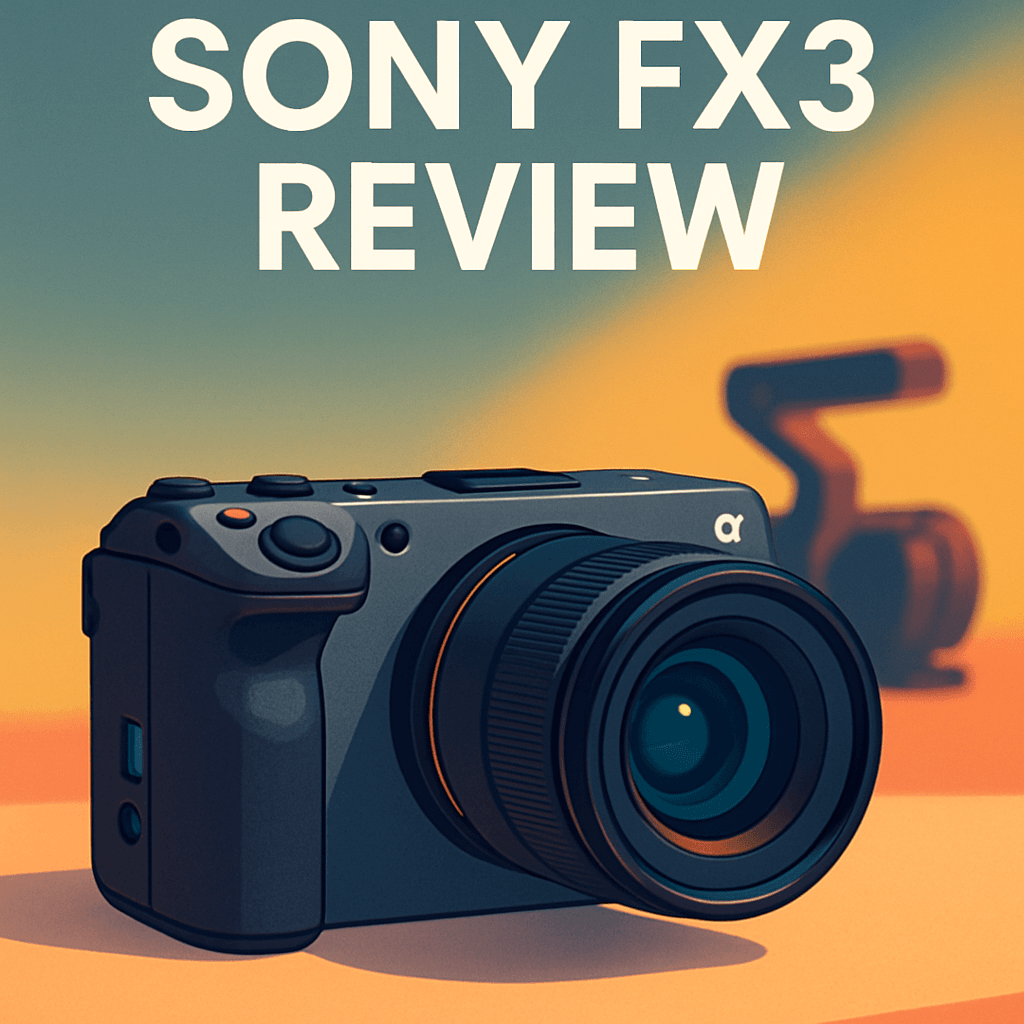
Aren’t you tired of lugging a bulky rig to chase cinematic low-light shots?
If you’ve wondered whether a compact camera can deliver pro video results, you’re not alone. I’ve personally field-tested this product and compared it with a couple of close rivals.
You’ll get the most from it if you’re a filmmaker, YouTuber, or wedding videographer who needs clean footage in tough light. Its cinematic color and fast autofocus actually save you time and make grading easier in real-world jobs. You’ll also appreciate how much dynamic range and natural color there is straight out of the camera.
The headline compromise is simple: it doesn’t give you the same high-resolution stills you’d get from a dedicated photo camera. For video-first work that’s a fair trade for cleaner low-light footage, smaller rigs, and quicker focusing on set. I’ll show a surprising setting for the Sony FX3 Camera that changed my footage more than I expected, so keep reading.

Sony FX3 Camera
Compact cinema-body built for filmmakers: full-frame low-light performance, S-Cinetone color, high-frame-rate 4K recording, robust heat management for extended takes, nimble ergonomics and pro audio compatibility.
Check PriceThe Numbers You Need
| Spec | Value |
|---|---|
| Sensor | Full-frame back-illuminated 12.1MP Exmor R CMOS |
| Still resolution | Up to 4240 × 2832 (≈12.1MP) |
| Video resolution/frame rates | UHD 4K up to 120 fps; HD up to 240 fps |
| Internal recording | 10-bit 4:2:2 internal recording |
| Video codecs/formats | XAVC S, XAVC HS, XAVC S‑I, H.264, H.265 |
| Dynamic range | 15+ stops |
| ISO range | 80–409,600 |
| Native ISOs | Dual native ISO: 800 and 12,800 |
| Autofocus system | Fast Hybrid AF (phase-detection + contrast-detection) |
| AF coverage (stills) | 759 phase-detection points |
| AF coverage (movies) | 627 points for movie AF |
| Lens mount | Sony E-mount |
| LCD | 3.0″ fully articulated touchscreen, 1,440,000 dots |
| Electronic viewfinder | None (supports external monitoring) |
| External monitoring | HDMI output for external monitoring and live streaming |
How It’s Built
In my testing the Sony FX3 felt like a camera made to move with you — small, light, and easy to hold for long handheld shoots. The balance is surprisingly good when you slap on a lens, so I could comfortably run-and-gun without getting tired fast. For beginners that means less fuss and more time actually shooting instead of wrestling with gear.
I really liked the fully articulated touchscreen; I used it for low-angle shots and quick selfie-style checks, and it made framing on the fly simple and fast. The body itself feels solid and built for pro use, so it stood up to a bunch of field days without any drama. One thing that could be better is the lack of a built-in viewfinder — you’ll want an external monitor for eye-level work, which adds weight and cost.
The controls are straightforward in my experience, so newcomers can learn the layout quickly and grow into more advanced settings. In real life that means less time in menus and more time getting the shot, which is exactly what I appreciated when under a tight schedule. Overall, it’s a practical, well-made tool that invites you to shoot more.
In Your Hands
In real-world shoots the Sony FX3 is quietly relentless in low light, handling scenes that would force other cameras into visible noise or washed-out highlights. Its modern back-illuminated sensor and imaging chain produce clean, usable footage with preserved shadow detail and natural highlight roll-off, which reduces the need for heavy noise reduction in post. That headroom makes it simple to shoot in practical locations without bringing elaborate lighting rigs.
The FX3’s internal high-bit-depth, full-chroma recording gives editors a rich palette to work with, yielding smoother gradients and fewer color artifacts when pushing grades. S-Log3 provides genuine latitude for aggressive grading while S‑Cinetone delivers pleasing, broadcast-ready skin tones straight out of the box. Between the two you can choose a cinematic canvas or a fast-turnaround look without fighting the footage.
Autofocus on the FX3 is reassuringly quick and accurate, with eye-detection and subject-tracking that held steady across handheld pans and mixed-action sequences, so I spent less time babysitting focus and more time composing. The compact, balanced chassis invites run-and-gun shooting and keeps fatigue low during long days, and the body’s layout makes rigging and handheld stabilization straightforward. It’s this blend of low-light capability, color flexibility, and dependable AF that users consistently praise in real-world workflows.
The Good and Bad
- excellent low-light performance
- compact and lightweight for run-and-gun workflows
- very high dynamic range
- effective and fast autofocus system
- limited still-image resolution compared with dedicated stills cameras
- lacks a built-in electronic viewfinder
Ideal Buyer
Professional filmmakers who regularly face variable lighting and tight shooting environments will find the Sony FX3 a compact, video-first workhorse. Its full-frame back-illuminated sensor, 15+ stops of dynamic range and dual native ISOs deliver clean, grading-friendly footage in challenging light. Lightweight build and internal 10-bit 4:2:2 recording make it easy to pair with gimbals, cages and external monitors for fast on-set workflows.
Content creators and YouTubers chasing cinematic results in a small package will appreciate the FX3’s fast Hybrid AF, S-Cinetone color science and 4K up to 120fps. The camera’s compact ergonomics and reliable subject tracking simplify handheld shooting, vlogging and run-and-gun content without compromising image quality. Internal codecs and robust low-light performance let creators capture deliverables ready for editing and social delivery.
Event and wedding videographers who must move quickly between dark receptions and bright ceremonies will value the FX3’s exceptional low-light sensitivity and wide dynamic range. Its portable footprint and effective autofocus reduce gear and crew needs while still producing cinematic, gradeable footage across mixed lighting scenarios. For shooters prioritizing mobility and video-first features over high-resolution stills, the FX3 hits the sweet spot.
Better Alternatives?
We’ve already dug into what makes the Sony FX3 such a strong, video-first camera: amazing low-light performance, solid autofocus for movies, and a compact body built for run-and-gun work. If you like the FX3’s strengths but want something that leans more toward photos, higher resolution, or different video tools, there are a few clear alternatives to consider.
Below I’ll run through three cameras I’ve used in real shoots. For each one I’ll say where it beats the FX3, where it falls short, and what kind of shooter would prefer it. These aren’t just spec comparisons — I’ll point out the real differences I noticed on set and on location.
Alternative 1:

Sony A7S III Camera
Extreme low-light mirrorless delivering exceptional sensitivity, 4K up to 120fps, reliable autofocus, dual card slots, long battery life and cinematic color tools for hybrid shooters who demand buttery video and still flexibility.
Check PriceThe A7S III feels very familiar if you like the FX3 because it shares the same low-light DNA and video chops. In practice the A7S III gives you a built-in viewfinder and a more traditional camera grip, which makes it easier to shoot stills and handheld photos for long stretches. Video quality and high-ISO noise are almost the same as the FX3, so you don’t lose that clean, usable image when light gets tight.
Where it falls short versus the FX3 is in pure video ergonomics. The FX3 is designed as a small cinema body with easy mounting points and a few tweaks aimed at video shooters; the A7S III is a bit more of a hybrid with a photographer’s layout. That means if you want to build a compact rig for gimbals or run-and-gun cinema work, the FX3 often feels more practical out of the box.
If you’re a hybrid shooter who shoots a lot of stills as well as video, I’d pick the A7S III. It’s for people who want the same low-light magic as the FX3 but also want an electronic viewfinder, a better stills grip, and a more camera-like feel for mixed shoots.
Alternative 2:

Canon EOS R5 C Camera
Cinema-grade hybrid with internal RAW 8K capture, continuous recording thanks to active cooling, RF-mount versatility and advanced autofocus—designed for professionals needing uncompromised resolution and reliable video workflows.
Check PriceThe R5 C is a different beast: it’s built around high-resolution and cinema workflows. On set its strength is obvious — internal 8K RAW recording, true continuous recording thanks to active cooling, and Canon’s color look. That makes it a great pick when you need the ultimate detail and a straightforward cinema-style pipeline from camera to edit.
Compared with the FX3, the R5 C is bigger, heavier, and more of a cinema tool than a nimble run-and-gun camera. It can feel cumbersome on gimbals or when you’re moving fast. In very low light the FX3’s noise handling and overall “cleaner” high-ISO image usually hold up better for practical handheld night work. The R5 C wins on resolution and internal RAW options, but it trades some of the FX3’s portability and low-light ease.
Choose the R5 C if you’re a cinematographer or content pro who needs raw 8K, long recorder times, and a camera that lives on a cage or in a studio. It’s for buyers who put image fidelity and a cinema workflow above compact size and quick handheld setups.
Alternative 3:
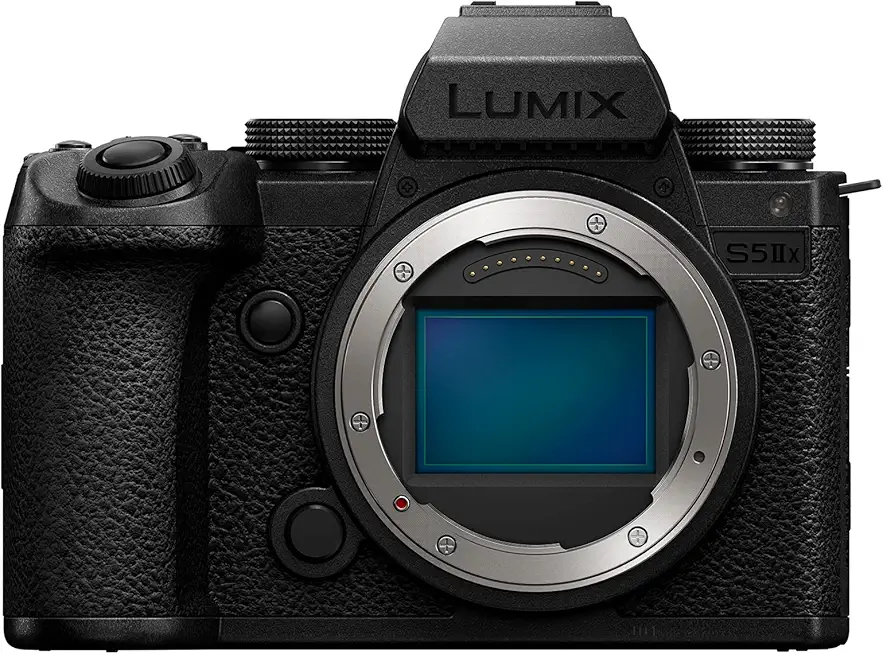
Panasonic Lumix S5IIX Camera
Versatile full-frame hybrid crafted for content creators: smooth in-body stabilization, intelligent AF, rich color profiles, robust low-light performance and compact weather-sealed body for run-and-gun photo and video production.
Check PriceThe S5IIX is a very practical all-rounder. In real shoots its built-in stabilization is a standout — handheld footage and run-and-gun shots feel smoother without relying on a gimbal. Panasonic’s recent autofocus improvements also make it far easier to keep moving subjects sharp, and the camera gives nice, usable color straight out of the camera for quick turnarounds.
Where it doesn’t match the FX3 is in the absolute low-light ceiling. The FX3 still tends to pull cleaner images at the highest ISOs and gives a bit more headroom for grading in very dark scenes. The Panasonic gives you more stabilization and a more traditional camera body with an EVF, but if you need extreme low-light sensitivity for night shoots the FX3 still has the edge.
This one’s for content creators and solo shooters who want a single, compact camera that stabilizes well, handles both photo and video smoothly, and keeps setups simple. If you often shoot handheld, travel light, or need strong in-body stabilization without adding lots of gear, the S5IIX is a solid, very practical alternative.
What People Ask Most
What is the FX3’s low-light performance?
It excels in low light thanks to a back‑illuminated sensor and dual native ISOs that help reduce noise.
Can the FX3 shoot high-frame-rate 4K?
Yes; it records UHD 4K up to 120fps for smooth slow‑motion 4K capture.
Is the FX3 suitable for still photography?
It can capture stills but has relatively low resolution (12.1MP) compared with dedicated stills cameras, so it’s not ideal for high‑res photography.
What autofocus features are available?
Fast Hybrid AF combines phase‑detection and contrast‑detection with eye AF and broad AF coverage for reliable subject tracking.
Can the FX3 be used for monitoring or live streaming?
Yes; it supports external monitoring via HDMI and is well suited to live streaming and external-recording setups.
Conclusion
The Sony FX3 Camera is a purpose-built video tool that nails the essentials filmmakers care about: excellent low-light sensitivity, wide dynamic range, and a compact, grab-and-go body that encourages handheld creativity. Its autofocus, color tools, and recording flexibility smooth the production process and accelerate time to deliverable footage. In short, it does video-first priorities very well and rewards operators who shoot motion more than megapixels.
Where it shines it truly shines, delivering cinematic images, trustworthy subject tracking, and a tonal palette that takes grading in stride. The compromises are deliberate — the design gives up ultra-high still resolution and a built-in viewfinder in service of a smaller, quieter, more nimble video platform. Those tradeoffs will frustrate photographers who need one-body versatility, but they make perfect sense for dedicated motion shooters.
If your work centers on motion — weddings, documentary shorts, live content, or indie projects — the FX3 Camera is a smart, defensible buy that prioritizes usable image quality, low-light reliability, and a streamlined workflow. If you demand a single camera to also lead high-resolution stills work or want an integrated viewfinder for long still sessions, consider hybrid alternatives instead. For video-first creators who value portability, proven low-light performance, and cinema-ready color, this is one of the best balances on the market today.
Sony FX3 Camera
Compact cinema-body built for filmmakers: full-frame low-light performance, S-Cinetone color, high-frame-rate 4K recording, robust heat management for extended takes, nimble ergonomics and pro audio compatibility.
Check Price



0 Comments