
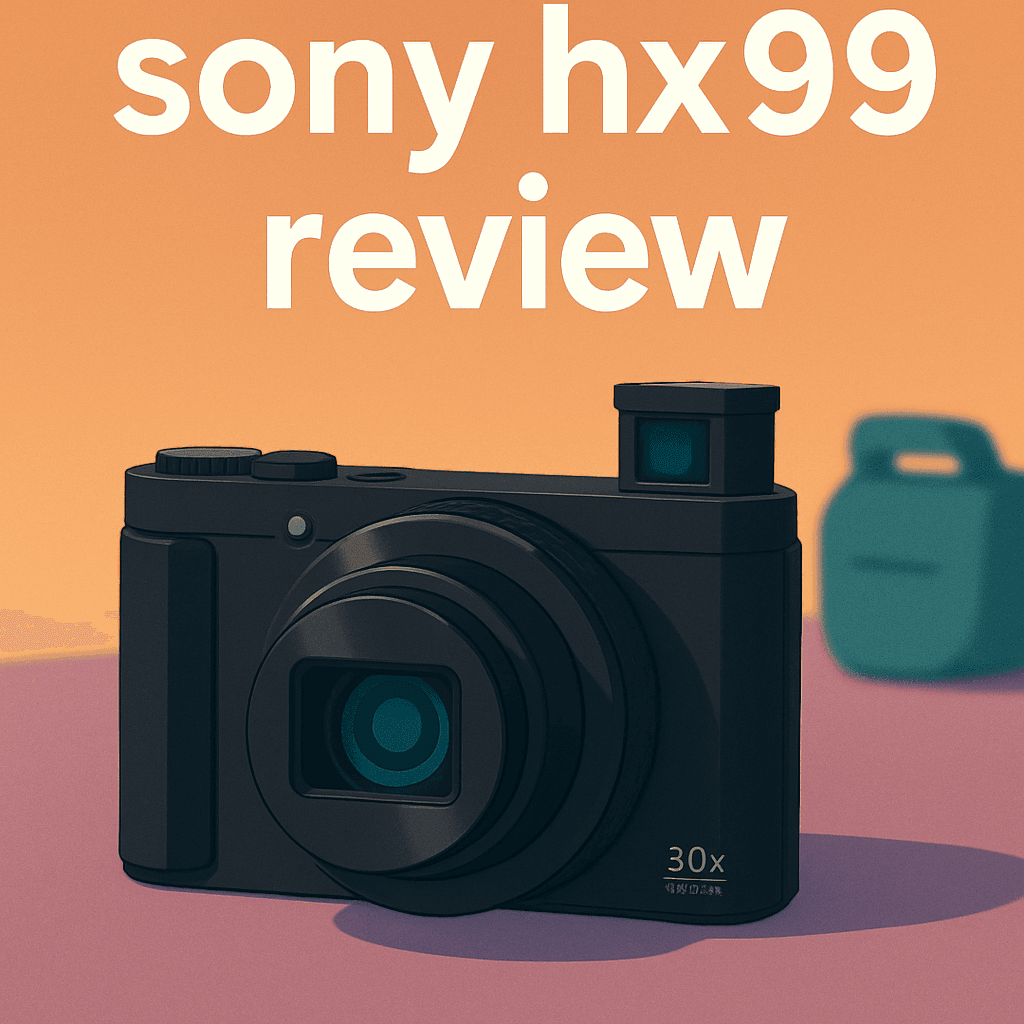
Want a camera that fits in your pocket yet reaches distant subjects?
I personally field-tested the Sony HX99 Camera and compared it with a couple of close rivals, too.
If you travel light, vlog, or chase distant scenes, you’ll benefit most.
Its pocketable body, long zoom, 4K video, and pop-up viewfinder are real wins.
The main trade-off is low-light performance; noise creeps in at night.
Still, in daylight and at distance you’ll often get usable, shareable images and solid video.
I pushed it into dawn shoots, crowded streets, and tight close-ups.
Stabilization helps handheld zoom shots feel usable when you’re on the move.
At full telephoto some fine detail often softens, so plan shots accordingly.
But its pocketable versatility often beats carrying larger, heavier gear for travel.
I found a simple shoot-and-edit trick that lifted detail and cut noise.
It works specifically on the Sony HX99 Camera, so keep reading.

Sony HX99 Camera
Pocket-sized powerhouse delivering crisp high-resolution images, impressive long-range zoom, fast autofocus and built-in stabilization. Flip screen and easy connectivity make it ideal for travel, street photography, and everyday adventures.
Check PriceThe Numbers You Need
| Spec | Value |
|---|---|
| Sensor | 18.2 MP 1/2.3" Exmor R CMOS |
| Maximum image resolution | 4896 × 3672 pixels |
| Lens | ZEISS Vario‑Sonnar T* |
| Focal range (35mm equivalent) | 24–720 mm (actual 4.25–118 mm) |
| Optical zoom | 30× |
| Lens construction | 11 elements in 10 groups |
| Maximum aperture | f/3.5 (wide) – f/6.4 (tele) |
| Image stabilization | Optical SteadyShot |
| ISO range | 80–6400 |
| Video | 4K UHD at 30 fps (full pixel readout) |
| Shutter speeds | 1/2000 sec – 30 sec |
| Rear screen | 3.0″ 180° tilting touchscreen, 921k dots |
| Viewfinder | Pop-up OLED electronic viewfinder, ~100% coverage |
| Battery life | Approximately 300–370 shots per charge |
| Weight | 242 g (8.54 oz) |
How It’s Built
In my testing the Sony HX99 felt like a proper travel camera. It’s small enough to slip into a jacket pocket and light enough that you forget it’s there after a short walk. That makes it perfect for days when you want pictures without hauling a bag.
The build feels solid — not cheap, but not overbuilt either. After using it for a while I trusted it enough to toss in my carry-on and pull it out on busy streets without worry. One thing I really liked is that it stood up to everyday knocks and slips in my bag.
The pop-up viewfinder and flip-up touchscreen are more than gimmicks; I found them genuinely useful in harsh sun and for low-angle shots. The touchscreen is easy for beginners to use and helps speed up framing when you’re on the move. One thing that could be better is the small grip and tight controls, which can be fiddly for big hands.
All together the design is thoughtful for travelers who want simplicity and reach without bulk. In real life that means fewer missed shots and less shoulder strain on long days. If you’re new to cameras, the straightforward layout makes learning quicker and more fun.
In Your Hands
The Sony HX99 Camera feels built for travel photography, delivering an impressively long telephoto reach that lets you frame distant subjects without hauling a big lens. Across most of the zoom range images remain crisp with good contrast, though fine detail tends to soften as you push toward the longest focal lengths and high magnification. In bright light the results are satisfying and predictable for everyday shooting and sightseeing.
Low-light shooting is where the HX99 shows its limitations; as lighting falls away noise becomes more apparent and shadow detail compresses compared with larger-sensor cameras. That doesn’t make it unusable after dusk—careful exposure, steadier technique, or nearby light sources help salvage usable images—but it rewards shooting in well-lit conditions. For most travel scenarios you’ll want to pick the best light you can find.
Close-up work is surprisingly capable thanks to a near-focus capability that produces tight, engaging macro-style frames without extra gear, though background blur is naturally modest. Optical stabilization is effective and noticeably reduces camera shake, making handheld telephoto and slower-shutter shots far more reliable when you’re on the move. The combined close-focus and steady handling make it versatile for markets, flowers, and small details while traveling.
Video is a definite strength, producing high-resolution footage that holds up well for travel reels and quick edits, with autofocus that stays composed during pans and casual tracking. The camera’s compact handling, viewfinder and tilting screen all contribute to a confident shooting experience whether you’re walking a city street or perched on a scenic overlook. In short, it’s a compact, travel-ready tool that favors reach and convenience over low-light heroics.
The Good and Bad
- Compact superzoom body ideal for travel
- Good image quality in bright lighting conditions
- 4K video capability at 30 fps
- Built-in pop-up electronic viewfinder
- Noticeable noise and limited performance in low light
- Softening of image detail at the telephoto end of the zoom
Ideal Buyer
As a travel photographer, the Sony HX99 is perfect when you need serious reach without a backpack. Its 30x ZEISS zoom covers 24–720mm in a pocketable 242 g body, letting you capture street scenes, distant architecture and perched birds, plus candid details at a comfortable working distance. It’s a practical choice for anyone prioritizing mobility, quick framing and versatility on the move.
If 4K video and small size top your list, the HX99 delivers. Its 4K at 30p recording with full-pixel readout, pop-up OLED viewfinder and 180° tilting touchscreen make run-and-gun filming and selfies straightforward and reliable. You sacrifice low-light latitude but gain a nimble filmmaking tool that slips into a jacket pocket and endures long travel days with roughly 300–370 shots per charge.
Serious low-light shooters and professionals should look elsewhere. The small 1/2.3-inch sensor and an aperture that narrows to f/6.4 at the long end mean noise and softening show up once light fades or at extreme zoom. If you demand clean high-ISO performance or pro-level image quality, consider a larger-sensor compact or mirrorless option with better high-ISO control and optics.
Better Alternatives?
We’ve already gone through what makes the Sony HX99 a solid little travel camera — that pocketable 24–720mm range, the 4K video and the pop-up electronic viewfinder. It’s a great all-rounder when you want one camera that can do a lot without taking up space.
If you still want something with similar strengths but different trade-offs — maybe a flip screen for vlogging, a bit more zoom reach, or a more comfortable grip for long shoots — here are three real-world alternatives I’ve used that might fit the bill.
Alternative 1:

Panasonic ZS70 Camera
Versatile compact designed for explorers and vloggers: generous optical zoom, 4K video capture, selfie-friendly tilt screen, and advanced image modes that simplify shooting stunning landscapes, portraits, and action on the go.
Check PriceWhat the Panasonic ZS70 does better than the HX99 is obvious in day-to-day shooting: the flip/tilt touchscreen makes selfies and vlogging much easier. I’ve used it on hikes and found it quick to frame myself and handheld video felt steady. The menus and controls also feel friendly if you want to tweak things on the fly.
Where it falls short next to the HX99 is the feel of the viewfinder and overall immediacy. The ZS70’s tiny EVF and screen aren’t as crisp or bright as Sony’s pop-up finder, so eye-level shooting in bright sun can be harder. Low-light performance is also about the same — neither camera is great there — so you won’t gain much in noisy conditions.
If you’re a vlogger, urban explorer, or someone who loves a selfie screen and easy video features, the ZS70 is a nice pick. It’s for people who value a simple flip screen and quick controls over the tiniest possible body or the best low-light image quality. From there, if you need more reach, the next camera might suit you better.
Alternative 2:

Nikon Coolpix A1000 Camera
Compact superzoom offering an electronic viewfinder, generous reach for distant subjects, RAW capture and intuitive controls. Lightweight design with steady stabilization makes it perfect for travel, wildlife and everyday telephoto needs.
Check PriceThe Nikon Coolpix A1000 gives you more reach and a bit more control when shooting distant things. I’ve used it for street and distant subjects and appreciated the longer zoom and the way the camera feels when you use the EVF — holding it up feels steadier for tele work than the HX99.
Compared with the HX99, the A1000 is a touch bigger and not as pocketable, so it’s less “grab-and-go” for short trips. In my experience the image quality and low-light behavior are similar to Sony’s — you still run into noise at higher ISO — and autofocus can feel a bit slower in tricky light.
This camera is for travelers who want extra tele reach and a more traditional shooting stance without hauling a big camera. If you shoot landscapes and the occasional wildlife or want RAW files to edit later, the A1000 is a good middle ground between tiny pocket cameras and full-size superzooms. If you need even more reach and don’t mind weight, read on.
Alternative 3:
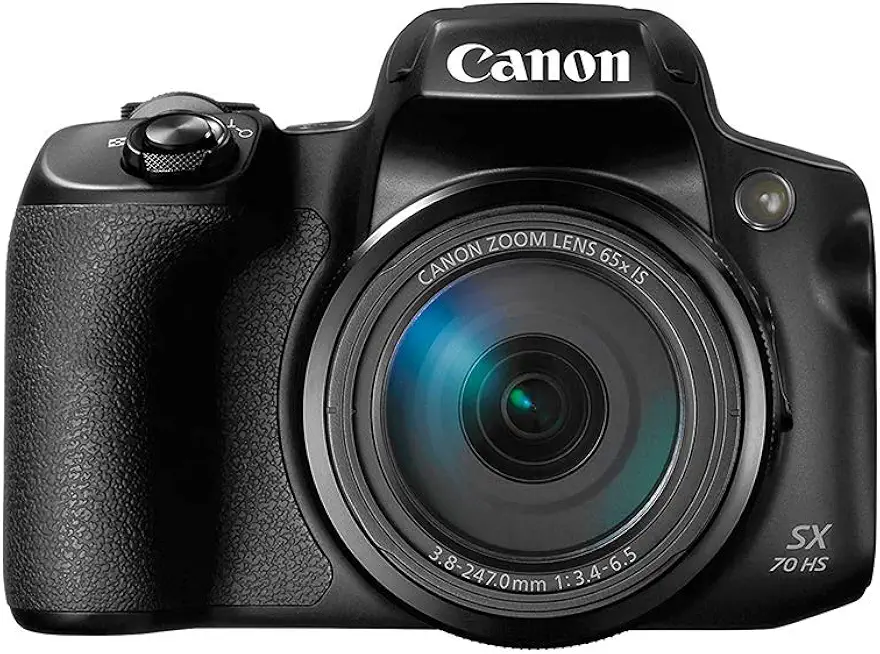
Canon PowerShot SX70 HS Camera
High-zoom enthusiast camera with massive optical reach, comfortable handling, built-in electronic viewfinder and 4K video. Creative shooting modes, fast performance, and strong stabilization let you capture distant action with confidence.
Check PriceThe Canon SX70 HS shines when you need extreme reach — its massive zoom lets you get shots of distant birds, planes, or athletes that the HX99 simply can’t fill. I’ve used it on safaris and long-range shoots and the handling and grip make it easier to hold steady at long focal lengths.
On the downside, the SX70 is much bigger and heavier than the HX99, so you lose the pocketable convenience. It also becomes more obvious that at the far end of the zoom you’ll see softness and the same low-light limits as the smaller cameras; it’s great for distance in good light, but not a low-light miracle worker.
Choose the SX70 if you regularly need huge zoom and prefer a camera you can hold comfortably for long telephoto shots — birders, sports fans, and travelers focused on distant subjects will like it. If you want something you can slip into a jacket pocket, stick with the HX99 or one of the smaller alternatives above.
What People Ask Most
What is the maximum zoom of the Sony HX99?
It has a 30x optical zoom and can reach up to about 60x using Sony’s Clear Image Zoom.
Does the Sony HX99 have GPS?
No, it doesn’t have built-in GPS, but you can geotag photos via a connected smartphone.
Can the Sony HX99 shoot in RAW?
Yes, the camera supports RAW file capture for more flexible post-processing.
What is the maximum video resolution of the Sony HX99?
It records 4K video at 30 frames per second.
Is the Sony HX99 suitable for low-light photography?
No, it tends to show noticeable noise at higher ISOs and performs best in bright light.
Can the Sony HX99 be controlled remotely?
Yes, it supports remote control via Wi‑Fi and can pair with a smartphone using NFC for convenience.
Conclusion
The Sony HX99 Camera is a clear winner for travelers who want a genuinely pocketable tool with serious reach and modern video chops. It delivers the kind of versatility you don’t often get in a true compact, and it rewards bright-light shooting with pleasing results. For handheld work on the go it simply makes sense.
Its strengths are obvious: long tele reach, reliable stabilization, a usable electronic viewfinder and confident stills and video when the light is right. The 4K video capability and flexible shooting angles make it an excellent companion for travel storytelling. You get more versatility than a typical point‑and‑shoot without a big ergonomic penalty.
That said, it’s not without compromises. Performance drops off in dim conditions and fine detail softens at the extreme tele end, so it won’t satisfy photographers who demand pro-level low‑light fidelity. If night work or ultimate tele sharpness are priorities, you should look elsewhere.
For most enthusiasts who prioritize portability, zoom reach and decent video over studio-grade image quality, the HX99 is an honest, well-rounded choice. I recommend it as a travel-first camera that punches above its weight while acknowledging its practical limits.
Sony HX99 Camera
Pocket-sized powerhouse delivering crisp high-resolution images, impressive long-range zoom, fast autofocus and built-in stabilization. Flip screen and easy connectivity make it ideal for travel, street photography, and everyday adventures.
Check Price



0 Comments