
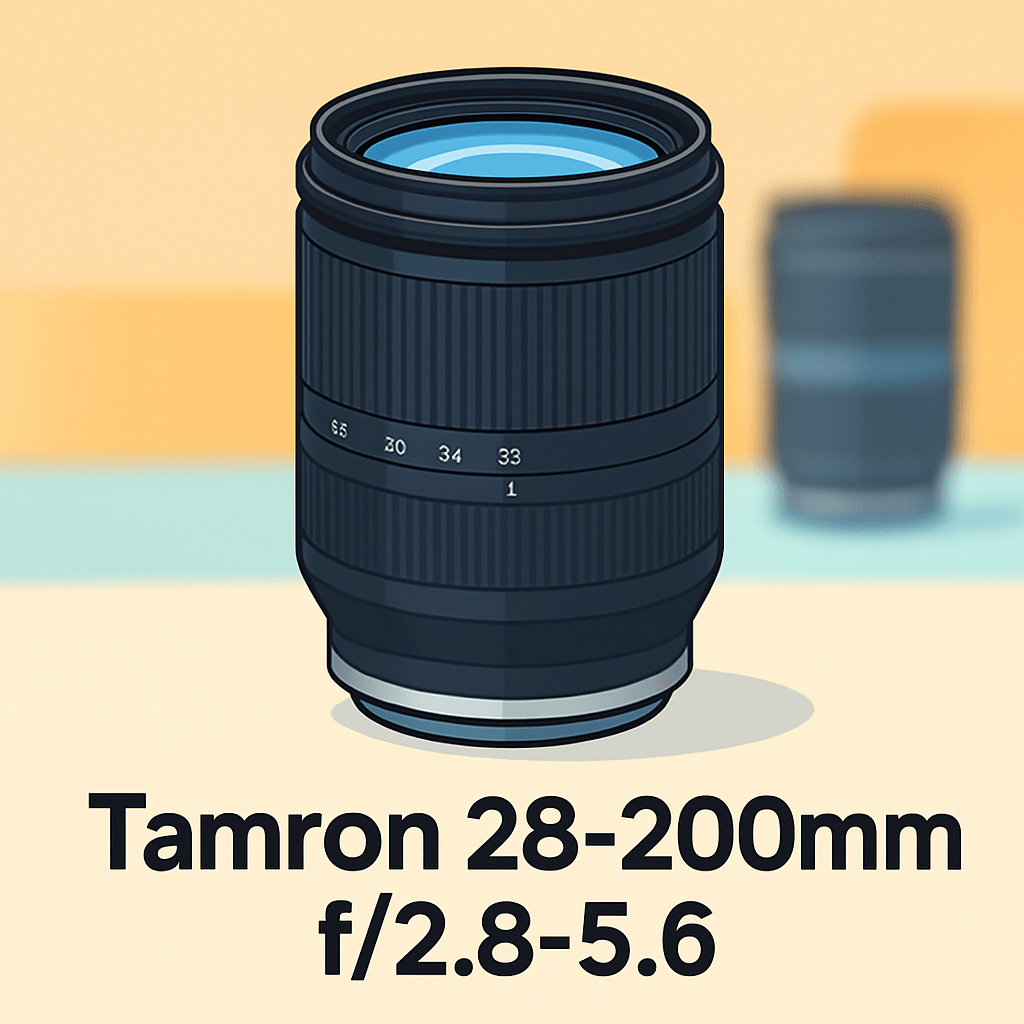
Looking for one lens that can cover morning streets, impromptu portraits, and distant subjects without swapping glass?
The Tamron 28-200mm f/2.8-5.6 Di III RXD Sony E Mount wants to be that all-in-one travel zoom, and it’s built to be compact and carry-friendly.
It also brings close-focus capability and a quiet RXD AF that’s useful for food, texture, and low-profile street work.
There are trade-offs: the aperture narrows at the telephoto end, and the lens leans on your camera’s IBIS; it’s moisture-resistant but not fully sealed.
Having shot plenty of travel zooms, I was keen to try this in the field; I’ll dig into handling, AF, and sharpness across the range — make sure to read the entire review — keep reading.

Tamron 28-200mm f/2.8-5.6 Di III RXD Sony E Mount
Bright, travel-friendly all-in-one zoom delivering f/2.8 wide aperture, sharp optics, and fast, quiet stepping autofocus. Compact and lightweight solution for portraits, landscapes and telephoto reach without lens changes.
Check PriceThe Numbers You Need
| Spec | Value |
|---|---|
| Focal length | 28–200 mm |
| Maximum aperture | f/2.8–5.6 |
| Lens mount | Sony E-mount (full-frame) |
| Lens type | Di III (designed for mirrorless full-frame) |
| Autofocus motor | RXD (Rapid eXtra‑silent stepping Drive) |
| Minimum focus distance | Approx. 0.19 m (wide) to 0.8 m (telephoto) |
| Maximum magnification ratio | 1:3.1 (macro capability) |
| Optical design | 18 elements in 14 groups |
| Special elements | 3 LD (Low Dispersion) elements; 4 aspherical elements |
| Filter size | 67 mm |
| Image stabilization | None (relies on camera body stabilization) |
| Weight | Approx. 575 g |
| Dimensions | Diameter 73 mm × Length 117.8 mm |
| Diaphragm blades | 7 (rounded aperture for smooth bokeh) |
| Weather sealing | Moisture‑resistant construction; not fully weather‑sealed |
How It’s Built
In my testing the Tamron 28-200mm f/2.8-5.6 Di III RXD felt like a friendly, no-fuss lens to carry all day. It sits nicely on full-frame Sony bodies without pulling the camera forward, so walking around and shooting for hours doesn’t wear you out. I really liked how light and balanced it is — that matters more than you think when you’re traveling or doing street work.
The control layout is simple and sensible. The zoom ring moves smoothly with just enough resistance to avoid creep, and the focus ring lets you make quick, small adjustments when you need them. I found the common 67 mm filter size handy — you can share polarizers and NDs with other lenses without buying extra gear, which beginners will appreciate.
After using it for a while the build feels solid, with moisture-resistant construction that handled a few damp mornings fine. One downside is it isn’t fully weather sealed, so I’d be careful in heavy rain or dusty conditions. Overall it’s a well-made, everyday lens that’s forgiving for beginners and reliable in real-world use.
In Your Hands
The Tamron 28-200mm f/2.8-5.6 Di III RXD proves its travel-lens promise in day-to-day shooting, slipping into a bag without feeling like a compromise. At the wide end the bright aperture makes dusk streets and museum interiors manageable without dragging ISO into unpleasant territory, while the mid-range sits comfortably for portraits and event coverage with natural subject separation.
The lens’ ability to get in close turns it into a useful tool for food, product shots and textural studies, where tight framing and a forgiving background help craft images that read well on social feeds and editorial spreads. Bokeh is smooth enough for casual portraits, and the close-focus behavior invites experimentation without swapping lenses.
Because there’s no optical stabilization, handheld work leans on in-body stabilization in Sony bodies; in practice that combination keeps handheld tele shooting usable for everyday moments, though longer focal lengths benefit from a steadier shutter or tripod when precision is critical. For run-and-gun videography the RXD AF and IBIS pairing give mostly clean, quiet focus transitions and steady framing.
Zoom and focus rings are sensibly weighted for walk-around use, making rapid focal changes feel deliberate rather than fussy during fast-paced shoots. All told, it’s a compact, capable one-lens solution that rewards photographers who prioritize freedom of movement and versatility over having specialized glass for every scenario.
The Good and Bad
- 28–200mm coverage in a compact, approx. 575 g package
- Bright f/2.8 at 28mm for low light and subject separation
- Close focusing (approx. 0.19 m wide) and 1:3.1 magnification for macro-like shots
- Quiet RXD AF suitable for stills and video
- No optical stabilization; relies on camera IBIS or higher shutter speeds
- Variable aperture down to f/5.6 at 200mm reduces light at the long end
Ideal Buyer
The Tamron 28-200mm f/2.8-5.6 Di III RXD is aimed at photographers who want one lens for travel, street and everyday work without hauling a bag of primes. It’s particularly useful for couples, city explorers and content creators chasing fast, adaptable gear. Its 28mm f/2.8 wide end gives real low-light flexibility and helps tame busy backgrounds for cleaner storytelling.
This lens suits Sony shooters whose bodies offer effective IBIS, because there’s no optical stabilization in the barrel. Close-focus ability and 1:3.1 magnification make it a great pick for food, product detail, nature textures and tight environmental portraits. The RXD AF is quiet and unobtrusive for hybrid stills and run-and-gun video, especially when you’re recording on-camera audio.
It’s not the choice for photographers who need built-in OSS, the longest tele reach, or absolute native-lens AF integration; those users will prefer alternatives with in-lens IS or brand-native glass. Choose the Tamron when compactness, broad focal-range versatility and a bright wide end matter more than maximum reach or added stabilization. For many travelers and generalists it’s the sensible single-lens solution that simplifies packing, cuts weight and reduces decision fatigue on long trips.
Better Alternatives?
We’ve already dug into the Tamron 28-200mm f/2.8-5.6 and what makes it such a handy all-in-one for Sony shooters — the bright 28mm wide end, close-focus chops, light weight and quiet AF. It’s a great one-lens kit if you lean on your camera’s built-in stabilization and want a lot of reach without carrying much.
But no single zoom is perfect for everyone. Below are a few real-world alternatives I’ve used that trade some of the Tamron’s strengths for different gains — more reach, in-lens stabilization, or tighter brand integration — and who I’d recommend each to.
Alternative 1:

Sony FE 24-240mm f/3.5-6.3 OSS E Mount
Versatile superzoom covering wide to long telephoto range with built-in optical stabilization, reliable autofocus and compact design—ideal for travel photographers seeking one-lens convenience across landscapes, events and everyday shooting.
Check PriceI’ve shot with the Sony 24-240 on several trips and the obvious win over the Tamron is reach and stabilization. The extra 24mm wide angle is nice for tight interiors and the 240mm telephoto gives you a little more reach for distant subjects. The built-in OSS (optical stabilization) really helps when I’m shooting handheld on bodies without strong in-camera stabilization or when I’m making run-and-gun video.
Where it loses to the Tamron is in low light and near-focus fun. That Sony is slower at the wide end (f/3.5 vs the Tamron’s f/2.8), so I need higher ISO or slower shutter speeds indoors. I also found the Tamron’s close-focus and wide-end sharpness give cleaner shots of food and small details; the 24-240 can be softer in the corners and doesn’t pull as close for macro-style shots.
If you want one lens that covers 24–240mm and you value in-lens stabilization and seamless Sony body integration, pick the 24-240. If you need brighter wide-angle performance or closer focusing for product and portrait work, the Tamron will serve you better.
Alternative 2:
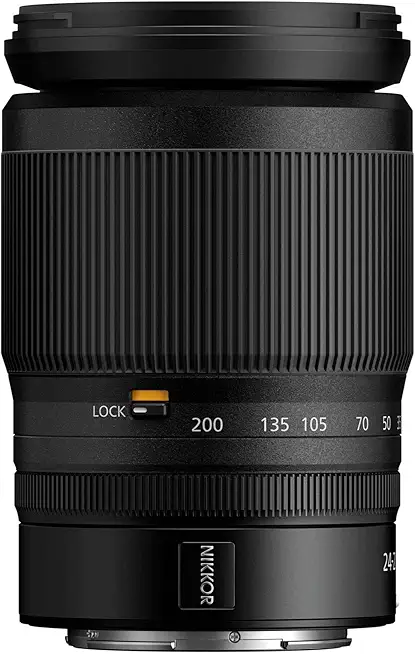
Nikon NIKKOR Z 24-200mm VR Z Mount
All-purpose travel zoom offering steady Vibration Reduction, sharp optics and smooth autofocus in a compact package. Perfect for full-frame mirrorless shooters who want flexible framing from wide to telephoto.
Check PriceI’ve used the Nikkor Z 24-200mm on Nikon Z bodies and it feels like a native travel lens — balanced on the camera, quick to focus, and the VR (vibration reduction) makes handheld tele work very usable. In real life that VR plus Nikon body handling means I can comfortably shoot at longer focal lengths without a tripod more often than with the Tamron when I’m away from a stabilised Sony body.
That said, the Tamron still beats it where wide-angle speed matters. The Nikkor’s wide end is slower, so in dim light you’ll notice less background separation and may need to push ISO. I also found the Tamron a touch better for intimate close-ups because of its closer minimum focus and brighter wide aperture — the Nikon is more of a generalist and doesn’t give the same shallow-depth look or macro-like reach.
Pick the NIKKOR Z 24-200mm if you shoot on Nikon Z bodies and want a well-balanced, stabilized all-purpose lens that feels totally at home on the camera. If you need the Tamron’s brighter 28mm and closer focusing for low-light work or detail shots, stick with the Tamron.
Alternative 3:
Nikon NIKKOR Z 24-200mm VR Z Mount
Compact, versatile travel optic combining a broad focal range with effective image stabilization and crisp rendering. Delivers dependable autofocus and handling for landscapes, portraits, street scenes and distant subjects.
Check PriceOn another trip I used the same Nikkor as my one-lens kit for a week of street and landscape work. What stands out versus the Tamron is how consistent and predictable the handling is — zooming and focusing felt smooth, and the in-lens VR made slow-shutter landscape brackets and handheld twilight shots less stressful. For travel where you can’t always set up a tripod, that stability is very practical.
Where it falls short compared to the Tamron is personality and low-light punch. The Tamron’s f/2.8 at the wide end gives a more immediate low-light advantage and a nicer look for environmental portraits. I also noticed the Tamron holds up a bit better for edge-to-edge detail at 28mm in scenes where I wanted crisp corners; the Nikkor is very usable, but nitpicky image lovers might prefer the Tamron’s wide-end character.
Buy the Nikkor Z 24-200mm if you want a compact, reliable travel zoom for Nikon Z bodies where VR and balance matter more than the brightest wide aperture. If you’re on Sony and prize the extra wide-end speed and closer focus for low-light and close work, the Tamron still wins those specific scenarios.
What People Ask Most
Is the Tamron 28-200mm f/2.8-5.6 a good all-in-one lens for full-frame mirrorless cameras?
Yes — it’s a very convenient, lightweight travel all-in-one that covers a huge focal range, but it’s a compromise lens with some optical trade-offs versus primes or pro zooms.
How sharp is the Tamron 28-200mm f/2.8-5.6 across the zoom range?
Center sharpness is solid for everyday use, but corners and the extreme wide/tele ends are softer and improve noticeably when stopped down.
Does the Tamron 28-200mm f/2.8-5.6 have image stabilization (VC/OSS)?
No — this model does not have built-in optical stabilization, so you’ll want a camera with good IBIS or use higher shutter speeds/ISO.
Is the Tamron 28-200mm f/2.8-5.6 weather-sealed?
It features moisture-resistant construction and a weather-sealed mount area, but it isn’t fully weatherproof, so avoid heavy rain without extra protection.
What camera mounts and bodies is the Tamron 28-200mm f/2.8-5.6 compatible with?
It was released primarily for full-frame Sony E-mount mirrorless bodies; check Tamron’s site for other mount versions and it also works on APS-C bodies with a crop factor.
Is the Tamron 28-200mm f/2.8-5.6 good for portraits and low-light photography?
It’s fine for casual portraits but won’t give the same background blur as longer f/2.8 or prime lenses, and low-light performance is limited at the tele end unless your camera has strong IBIS and high-ISO capability.
Conclusion
The Tamron 28-200mm f/2.8-5.6 Di III RXD Sony E Mount is the most convincing single-lens travel solution I’ve used in this focal class. It pairs genuinely useful wide-end speed for low-light shooting with broad reach and close-focus flexibility, making it ideal for street work, landscapes and product-detail shots. The RXD autofocus stays quiet and unobtrusive for stills and video, and the lens balances well on Sony full-frame bodies for comfortable all-day carry.
Those strengths carry trade-offs you should weigh before you buy. The aperture narrows as you zoom toward the long end and there’s no in-lens stabilization, so longer-reach handheld shooting benefits strongly from a body with good IBIS or faster shutter speeds. Build and weather resistance are solid for travel, but it isn’t fully sealed and the tele end shows the usual superzoom compromises in extreme shots.
Given that mix, I recommend it without hesitation to travelers, everyday shooters and content creators who want one lightweight lens that covers most scenes and still performs well in low light at the wide end. If your work demands stabilized long-tele performance, absolute corner-to-corner perfection, or pro-level subject tracking, you’ll want to consider alternatives. For most Sony users who value versatility and minimal kit weight, the Tamron 28-200mm f/2.8-5.6 Di III RXD Sony E Mount is a smart, practical pick that earns its place in a carry-on bag.
Tamron 28-200mm f/2.8-5.6 Di III RXD Sony E Mount
Bright, travel-friendly all-in-one zoom delivering f/2.8 wide aperture, sharp optics, and fast, quiet stepping autofocus. Compact and lightweight solution for portraits, landscapes and telephoto reach without lens changes.
Check Price


0 Comments