
Whats a half frame camera? Could it double the number of photos you get on a roll and change how you shoot?
It uses regular 35mm film but exposes a smaller frame, so one roll often gives about twice the shots. This intro will give a simple, clear start to the topic.
In the article you will find a plain definition, the technical differences from full‑frame 35mm, and the main pros and cons. You will also get practical shooting, film handling, and lab/scanning tips.
We’ll include annotated diagrams, example photos, creative project ideas, and a short buying checklist (think classic Olympus Pen and similar models). By the end you’ll know if a half‑frame camera fits your style and how to begin.
What is a Half-Frame Camera?
If you have ever wondered “whats a half frame camera,” here is the short answer. A half‑frame camera uses normal 35mm film but exposes only half the area of a standard 35mm frame. The image area is about 18 × 24 mm, so a 36‑exposure roll yields roughly 72 photos.
The format’s aspect ratio is 4:3 rather than the usual 3:2. Because the film runs sideways, many half‑frame photos are portrait by default when you hold the camera in a typical horizontal grip. Rotate the camera if you want a landscape‑oriented half‑frame shot.
Half‑frame rose to fame because it was economical and portable. Olympus defined the category with the Pen series, beginning in 1959, and later the Pen F half‑frame SLR in 1963 brought swappable lenses and pro‑level control to the small format. Canon and others followed, offering compact, travel‑ready bodies.
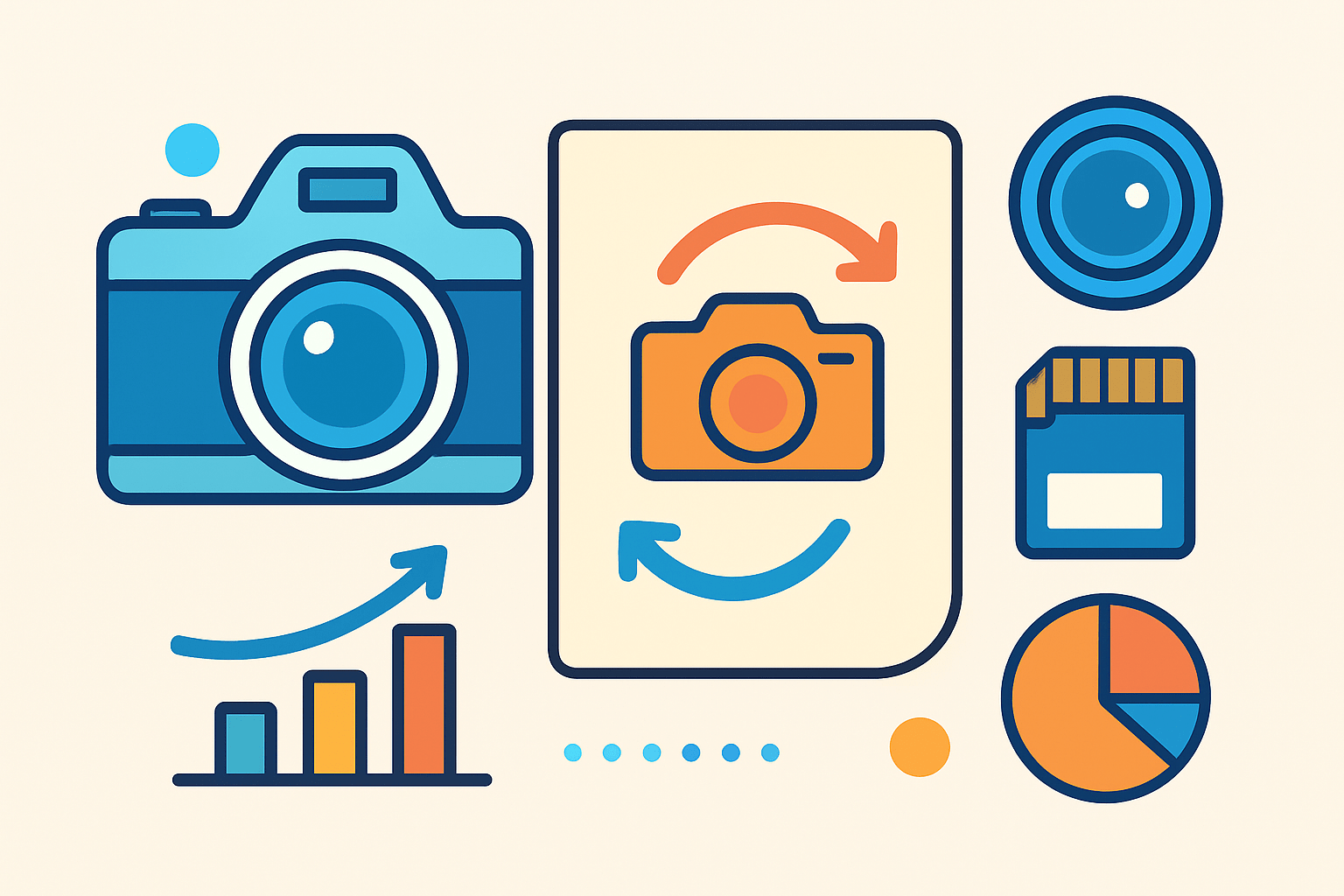
To picture the size difference, imagine a standard 35mm negative divided into two equal rectangles. The diagram above shows how a full 24 × 36 mm frame compares to the 18 × 24 mm half‑frame. The smaller window is what each half‑frame exposure uses.
Once you grasp that basic idea, the rest falls into place. You get double the pictures per roll, a slightly squarer 4:3 look, and a camera that often feels light and quick. The next step is understanding how it differs from a full‑frame 35mm setup in practice.
How a Half-Frame Camera Differs from a Full-Frame Camera
The technical numbers come first. A full‑frame 35mm image is 24 × 36 mm with a 3:2 aspect ratio, while a half‑frame image is 18 × 24 mm at 4:3. For field of view, think of a rough 1.44× crop factor, so a 28 mm lens behaves more like a 40 mm view on half‑frame.
That framing shift changes how you compose. The 4:3 shape is a touch taller and friendlier to vertical subjects, portraits, and paired sequences. Many half‑frame shooters lean into this by shooting two frames back‑to‑back that connect as a diptych, like steps in a story.
Image quality is the main tradeoff. Because each half‑frame negative is smaller, grain appears more obvious at the same print size, and resolving fine detail becomes harder. Modern high‑dpi scanning softens the blow, and careful exposure helps, but very large prints will show the limits sooner.
Ergonomics and handling are a delight on many models. Half‑frame cameras are often smaller and lighter, with simple zone‑focus or fixed‑focus lenses, easy selenium or CdS meters, and bright viewfinders that may include frame lines. Some viewfinders display a vertical frame by default, so check before shooting.
Choosing the format comes down to intent. Pick half‑frame for travel, street, casual diaries, or when you want to practice a lot without burning through film. Choose full‑frame 35mm for landscapes, low‑light work, and when you need clean, big prints with maximum detail and smoother grain.
If you want a deeper technical primer before you buy, this concise more background overview lays out the sizes and use cases in simple terms. It pairs nicely with the tips you’ll find below.
Advantages and Downsides of Half-Frame Cameras
The headline advantage is simple math: twice the exposures per roll. A 36‑shot roll becomes about 72 frames, which lowers your cost per image and encourages you to shoot more. That is perfect for experiments, long trips, and learning by doing without worrying about the next reload.
Most half‑frame bodies are compact and often affordable on the used market. You can slip a Pen‑style camera into a jacket pocket and carry it all day. The small size and light weight make it a natural fit for quick, candid work and unobtrusive street photography.
The 4:3 aspect ratio nudges you toward storytelling. Two consecutive frames can form a neat diptych, like “wide then close,” “before and after,” or “movement across time.” Many photographers fill a roll this way and present the pairs as a sequence that flows from left to right.
There is also a playful, experimental feel to half‑frame. The format sings with lomography‑style shooting, daily documentary, and casual portraits. The look is distinct, with a slightly denser grain structure and charming imperfections that often read as character, not flaws.
The main downside is the smaller negative area. Grain and limited resolving power show sooner at larger sizes, especially if the film is fast or underexposed. If your goal is a wall‑sized print with razor‑sharp detail, full‑frame 35mm or a larger format will make your life easier.
Processing sometimes adds friction. Some labs and scanners misread half‑frame, either cropping too tightly or merging two frames into one scan. Printing options can be limited if the operator is not familiar with the format, so clear instructions become part of your workflow.
Vintage realities apply as well. Accessories and parts can be scarce, and older cameras may need a CLA to run reliably. Certain models have viewfinder parallax quirks or limited focusing aids, and that can slow you down until you learn how your specific camera behaves.
If you want economical, fast, creative shooting, try half‑frame; if maximum image quality and large prints come first, choose full‑frame 35mm. That single sentence is the best quick answer to anyone asking “whats a half frame camera” in practical terms.
Practical Shooting, Film Handling and Development Tips
Exposure works exactly like normal 35mm because the film is the same. ISO 100–400 is a safe range for most half‑frame cameras, with ISO 100–200 favored if you plan larger prints. If you are unsure about a lighting situation, bracket two frames to keep your sequence intact.
Aperture choices matter more than people think. For crisp results across the frame, try f/5.6–f/11 in good light and focus carefully, especially with zone‑focus models. The smaller negative and shorter focal lengths often suggest deeper perceived depth of field, but bokeh is still a creative option at wider apertures.
Use sensible shutter speeds to avoid blur. Follow the reciprocal rule as usual, so a 1/60 s minimum for a 50 mm‑equivalent field of view is a good baseline. Some half‑frame compacts have limited shutter speeds or program automation, so read your manual and test a short roll before important work.
Film advance and frame counting deserve attention. Many half‑frame cameras have unique advance strokes and counters that show up to 72 or more frames. Learn how your camera advances, and do not panic if the counter passes 36, because that is exactly what should happen.
Flash can be handy indoors, but check sync speed and guide numbers. Older bodies may have low sync speeds and weaker flashes, so do a quick test in a controlled setting. If your camera uses a hot shoe adapter or PC socket, confirm connections before a big night out.
Developing is standard 35mm, with no special chemistry or timings required. The key is communication with your lab, because you want individual half‑frame scans rather than merged pairs. A trusted lab guide can help you explain exactly what you need when you drop off your roll.
When ordering scans, ask for 3000–4000 dpi or higher and request “do not crop or merge frames.” At 4000 dpi, a half‑frame yields roughly 2835 × 3780 pixels, which prints nicely up to about 9 × 12 inches at 300 dpi. Choose TIFF for heavy editing or high‑quality JPEG for smaller files.
Pro tip: ask the lab for “72‑frame scans” by name, because many auto‑scanners miss half‑frames and either cut them off or combine two into one image. Label your roll as half‑frame when you hand it over, and repeat the note clearly in any online order form.
Home processing stays simple too. Develop and fix as usual, then be careful when cutting the negatives so you do not slice through a half‑frame. Label sleeves with frame ranges, because it is easy to lose track when you suddenly have twice as many images per roll.
If you enjoy printing, set expectations for size and clarity. For web and small prints, 2400 dpi scans are usually enough; for larger prints, push to 3500–4000 dpi. Cropping reduces your final print size, so compose tightly and level in camera to preserve as many pixels as possible.
Maintenance saves headaches with vintage gear. Check light seals for goo or gaps, listen for even shutter sounds, and inspect the lens for haze or fungus. Quick check: confirm smooth film advance and rewinding, and ask a seller about recent CLA work if the camera feels stiff.
Quick start: load one roll of ISO 200 or 400, set daylight aperture around f/8, and shoot a simple sequence of pairs like “wide and close” for twenty scene changes. That fills a 36‑exposure roll with roughly 72 linked frames and gives you a clear baseline to judge sharpness and exposure.
If friends ask “whats a half frame camera” while you are shooting, show them the counter drifting past 36 and explain the smaller 18 × 24 mm window. It is the easiest way to make the format click in their mind before they see the scans.
Creative Uses, Projects and Recommended Half-Frame Cameras
Diptychs are the half‑frame superpower. Shoot two back‑to‑back frames that connect, such as a wide establishing shot followed by a detail, or a subject turning from left to right. Present the pair side by side to create a single, cinematic moment made of two squares.
A 72‑image diary is another great project. Carry the camera for a month and shoot two frames per day, morning and evening. The contact sheet will read like a flipbook of your life, with repeating motifs and patterns that are hard to see when you only shoot a handful of frames.
Try a comparison project to learn the strengths fast. Photograph the same subject on half‑frame and full‑frame 35mm, then print both at the same size. You will see how grain, aspect, and framing change the feeling, and you will know exactly where each format shines.
For camera picks, the classics are hard to beat. The Olympus Pen EE series are simple and reliable compacts, while the Pen F and FT (1963 and 1966) are half‑frame SLRs with interchangeable lenses and precise control. Canon’s Demi and the bright‑lens Demi EE17 are lovely pocketable options, and the quirky Yashica Samurai X3.0 from the late 1980s is a half‑frame SLR that feels like a camcorder.
If you want something modern, the Kodak Ektar H35 and H35N bring the format back in a lightweight, affordable package. When buying used, check light seals, lens clarity, smooth advance, and shutter accuracy, and walk away from bodies with persistent haze or sticky shutters. For more project ideas and technique tweaks, browse these practical half‑frame tips and adapt them to your style.
Supplies are easy to source from reputable film stores, and communities on film forums, lomography groups, and social platforms will keep you inspired. Share contact sheets, diptychs, and side‑by‑side grain comparisons to learn from others and refine your own approach. Feedback is faster when you post pairs that tell a clear story.
Starter plan: buy one tested half‑frame body, grab a roll of ISO 200–400 film, shoot a roll in linked pairs, and order high‑res scans with no cropping or merging. Once the images land in your inbox, you will understand not just “what’s a half‑frame camera,” but also why the format is so addictive. And the next time someone asks “whats a half frame camera,” you can show them a diptych that says it all without words.
What People Ask Most
whats a half frame camera?
A half frame camera uses frames that are half the size of a standard film frame, so you can shoot about twice as many photos on a roll.
How is a half frame camera useful for beginners?
It lets you take more practice shots per roll, which lowers film waste and helps you learn faster without spending more money.
Can I mix vertical and horizontal shots with a half frame camera?
Yes, many people use half frame cameras to combine portrait and landscape photos on the same roll for creative storytelling.
Does a half frame camera mean worse image quality?
Not necessarily; images may show more grain or be smaller when enlarged, but for casual use and sharing they often look perfectly fine.
Are half frame photos easy to print or scan?
Most labs and scanners can handle half frame negatives, but it helps to tell the lab you used half frame so they process them correctly.
What common mistakes do beginners make with half frame cameras?
Beginners often forget which way they held the camera, don’t compose for the smaller frame, or forget to note exposures when shooting quickly.
Is a half frame camera good for travel and street photography?
Yes, the extra shots per roll and quick, compact shooting style make half frame cameras great for travel and street scenes.
Final Thoughts on Half‑Frame Cameras
Remember that opening question—could a smaller camera double your images without doubling the fuss? Half‑frame bodies do exactly that: they let you squeeze roughly twice the shots from a roll, and an enthusiastic month of diary shooting could easily net 270 frames, giving you more practice, more variety, and lower cost per image. They’re compact, playful, and encourage storytelling in ways full‑frame rarely does.
Keep in mind there’s a tradeoff: the smaller negative makes grain and fine detail more apparent at large print sizes, and some labs still trip up on half‑frames. For travelers, street shooters, students, and anyone who loves shooting lots, this format’s economical, portable strengths are a great match.
We defined what a half‑frame is, compared the technical differences, weighed pros and cons, and offered hands‑on tips and project ideas so you can shoot confidently. Take a roll, enjoy the experiment, and see where the extra frames lead you next.


0 Comments