
Why does my camera keep turning off? It can ruin a shoot and cause stress.
This short guide gives a direct answer and a clear checklist you can use right away. You’ll learn whether it’s the battery, overheating, firmware bugs, or a hardware fault.
We’ll cover common causes, battery and charging issues, thermal shutdowns, and step-by-step troubleshooting. Expect quick tests, pro tips, and advice on when to call a repair tech.
Follow the simple steps to diagnose the problem fast and save your next shoot. Read on for easy fixes and a printable checklist.
Why Does My Camera Keep Turning Off?
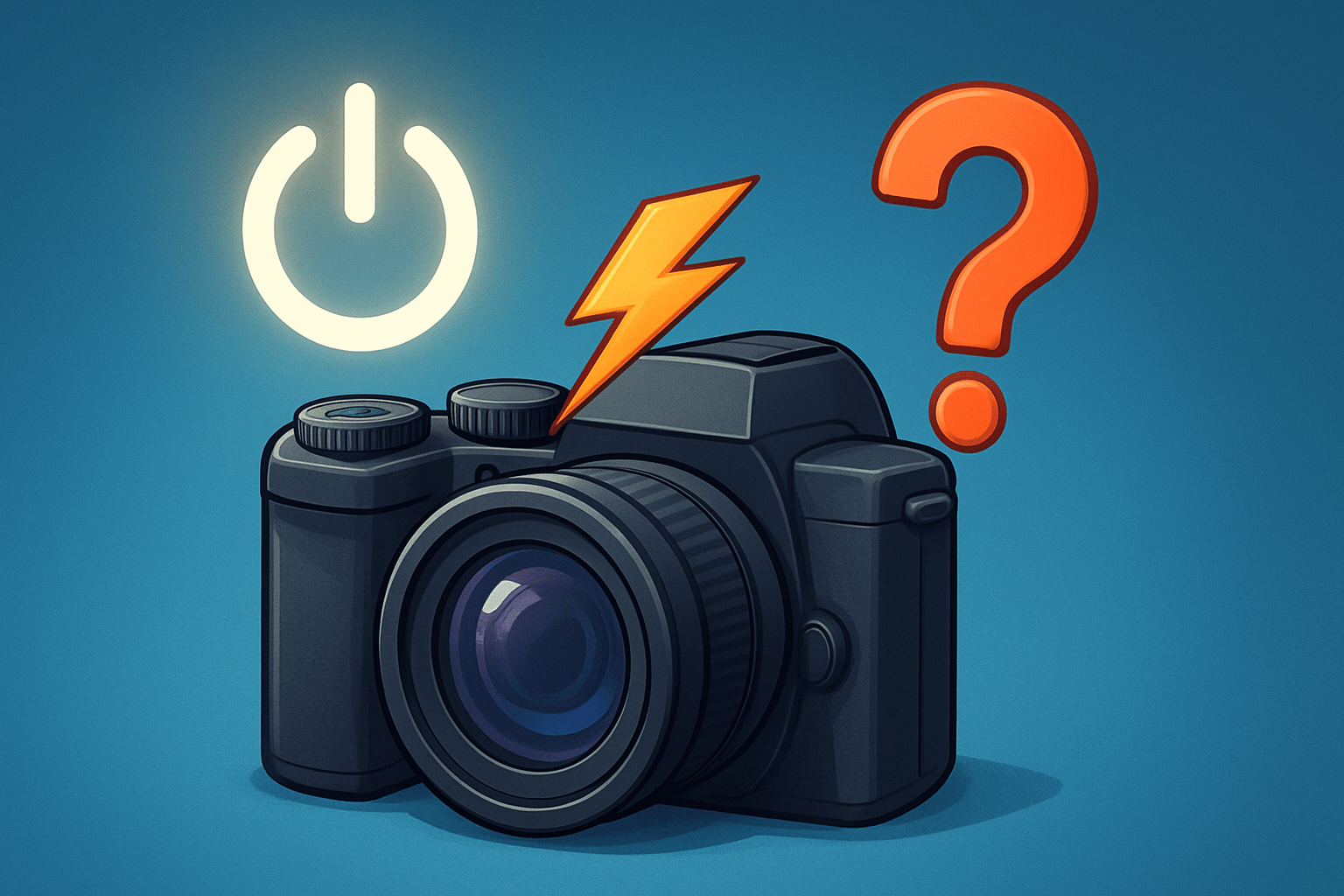
Camera shutdowns are usually caused by power loss, thermal protection, software crashes, or faulty hardware. Here’s how to spot which one you have so you can get back to shooting fast.
Ask a few quick questions: does it happen only during video or also with stills, and does the body feel hot first. Is the cut abrupt with no warning, or after several minutes with an error message appearing.
Think of this quick flow: abrupt cut → power or battery; minutes with heat → thermal; random after a menu tap, card change, or tethering → firmware, card, or accessory; only when tethered → USB power. Keep those clues in mind as you read.
If you’ve been googling why does my camera keep turning off, the next sections turn that question into a clear plan. We’ll map symptoms to fixes you can try today.
Common Causes of Camera Shutdown
Weak or aging batteries sag under load and trigger a sudden black screen, especially when the flash fires or autofocus hunts. Dirty contacts or a loose battery door can mimic the same symptom by interrupting power for a split second. It’s the most common answer when you ask why does my camera keep turning off.
Power-saving settings shut cameras down right on schedule, so a shutdown exactly at 30 or 60 seconds is a big clue. USB power-management can also sleep a tethered body when the computer suspends the port, explaining a mirrorless that shuts off mid-shoot only when tethered via USB.
Overheating appears after 10–20 minutes of high‑bitrate video or in hot sun; the body gets warm and a temperature icon may flash before the camera turns off. Firmware glitches, corrupt settings, or a bad accessory can crash the system right after a menu change, lens swap, HDMI connect, or remote trigger. For more context on recurring photography problems, these symptoms are very familiar.
A corrupt SD card can crash the camera during writes; remove the card and the issue may vanish. External AC adapters, dummy batteries, or loose cables can cause flickers when the cord is touched, while cold or condensation robs batteries of capacity outdoors and can trigger random shutdowns.
Battery Life and Charging Problems
Lithium‑ion cells lose both capacity and peak current as they age, so a battery can show 40% and still die the moment you hit record. That’s the difference between low charge and a battery that can’t deliver enough current under load.
Third‑party or counterfeit packs and chargers vary in quality and may affect warranties. Use originals for critical jobs, and replace any swollen or hot battery immediately for safety. These are issues many camera owners face when problems strike during real shoots.
Charging problems are common too: a failing charger, bad cable, or dirty contacts leads to “full” lights that aren’t real. Quick tests include swapping in a known‑good battery, trying an original charger and outlet, inspecting contacts, or checking voltage with a meter if you have one.
During a wedding I photographed, a camera died every time the couple kissed because an old cell sagged under flash and AF bursts; a fresh OEM pack solved it instantly. If your camera keeps turning off when recording long interviews, consider a grip, spare packs, or an AC/dummy adapter to stabilize power.
Overheating and Thermal Issues
Thermal shutdown protects the sensor and electronics, and it’s common with 4K/60p, long exposures, time‑lapsing, or high ambient temperatures. Typical signs are a hot body, on‑screen overheat warnings, and each successive clip getting shorter.
Mitigate by dropping resolution or frame rate, using the EVF instead of the rear LCD, and giving the camera shade and airflow. On a recent doc shoot, a videographer lost takes in midday sun until we shaded the rig and used an external recorder; the camera then ran all afternoon. Always check firmware notes for model‑specific thermal improvements and limits.
Troubleshooting Steps for Camera Shutdown
Start by noting the exact symptom and context, then reproduce it on purpose. Swap to a fully charged spare, try the original charger on a different outlet, and lightly clean the battery contacts; snap a photo of your power settings screen and battery terminals for reference.
Disable auto power‑off, Wi‑Fi, GPS, and other extras, and test with minimal settings to remove variables. Pull the memory card and shoot without it to rule out corruption, then try AC power with a dummy battery to isolate the battery from camera electronics.
Update firmware and reset settings to factory defaults, then test in a cool room to exclude heat. Think of a simple flow: symptom → quick test → likely cause, and capture error messages or codes for support. For quick perspective, these are among the common problems that strike across brands.
If you’re still asking why does my camera keep turning off, especially why does my camera keep turning off when recording or if your mirrorless shuts off mid‑shoot while tethered, focus on USB power options, ports, and cables. Persistent abrupt cuts after these tests, any sign of water ingress, or physical damage mean it’s time to document serials and contact service. Don’t open the camera yourself, and remember some third‑party batteries or modifications can affect warranty decisions.
Pro tips: carry two or three charged OEM batteries, use the original charger, and keep batteries warm in cold weather. Before big jobs, check firmware, inspect for swollen cells, and consider a battery grip or AC adapter for long sessions.
What People Ask Most
Why does my camera keep turning off unexpectedly?
It often happens from low battery, overheating, or power-saving settings, so check the battery charge, ventilation, and auto-off options first.
Could my battery be why my camera keeps turning off?
Yes, a weak or worn battery commonly causes shutdowns, so try fully charging, reseating, or testing with a spare battery to see if it fixes the issue.
Can my camera keep turning off because it gets too hot?
Overheating can trigger automatic shutdowns to protect the electronics, so give the camera breaks and avoid direct sun or hot environments during long shoots.
Is sleep mode the reason my camera keeps turning off?
Sometimes the camera is simply entering a power-saving sleep mode, so increase the auto-off timer in settings if you want it to stay on longer.
Could a damaged memory card make my camera keep turning off?
Yes, a faulty or incompatible memory card can cause crashes and shutdowns, so try removing or replacing the card to see if the problem stops.
Will using third-party accessories cause my camera to keep turning off?
Poor-quality batteries, chargers, or cables can cause unstable power and shutdowns, so use reliable accessories or test without them first.
How can I stop my camera from turning off during shoots?
Keep batteries charged or swapped, adjust sleep and power settings, and avoid overheating to reduce unexpected shutdowns while shooting.
Final Thoughts on Why Your Camera Keeps Turning Off
If you came here asking “Why does my camera keep turning off?” you now have a compact roadmap: batteries, thermal protection, firmware quirks, or failing components are the usual suspects, and the guide showed how to spot each one. Jot down any error codes (even a simple “270”) and note the exact symptom and context so your troubleshooting points straight at the problem. That level of clarity cuts the guesswork, reduces shoot interruptions, and gets you back to making images with more confidence.
Keep one caution in mind: don’t lean on cheap third‑party batteries or ignore overheating signs — they can be unsafe and may void warranties. These steps will help most photographers and videographers who shoot long sessions, tethered work, or in hot/cold conditions. You asked the practical question at the top, and the piece delivered step‑by‑step checks, model tips, and a clear when‑to‑call‑a‑tech rule, so you’ll be better prepared for whatever your next shoot brings.



0 Comments