
Tired of lugging a bulky camera to get huge, detailed prints?
You want top image quality without sacrificing travel lightness. I’ll show you why that balance matters in real shoots.
I’ve personally field-tested the Sony A7CR Camera and compared it with a couple of close rivals. The hands-on results surprised me in a few key ways. More on that below.
Landscape, studio, and travel shooters will get the biggest payoff. You’ll love the razor‑sharp detail, strong stabilization, and compact body. But it does trade off video flexibility and dual‑card redundancy.
I’ll show you exactly what really matters for images. So keep reading as I’ll reveal something truly shocking about the Sony A7CR Camera that might change your photo quality drastically.
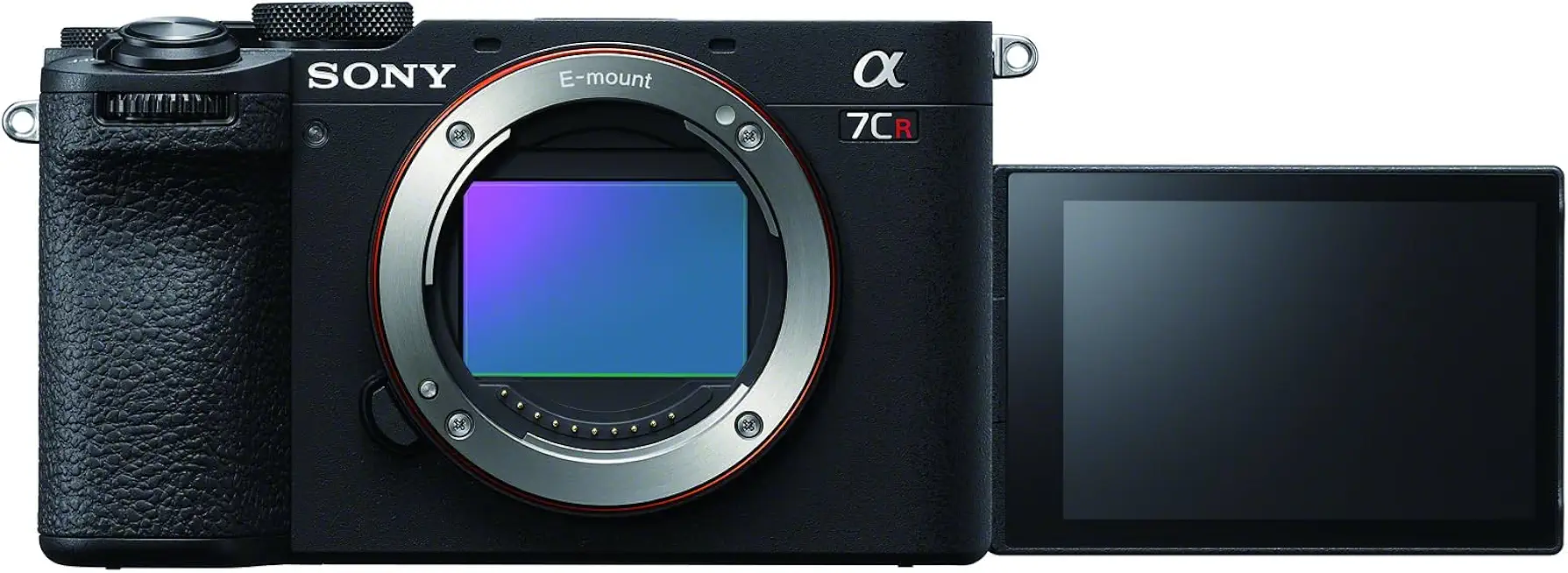
Sony A7CR Camera
Compact full-frame mirrorless delivering high-resolution stills, responsive autofocus, in-body stabilization, and clean 4K video. Lightweight build and robust connectivity make it ideal for travel, portraits, and professional content creation.
Check PriceThe Numbers You Need
| Spec | Value |
|---|---|
| Sensor | 61.0‑megapixel full‑frame BSI Exmor R CMOS (35.7 x 23.8 mm), ~62.5 MP total pixels |
| Image processor | BIONZ XR |
| ISO range | 100–32,000 native; expandable to 50–102,400 |
| Autofocus | 693‑point Hybrid AF with Real‑Time Eye AF and subject tracking (humans, animals, vehicles, aircraft) |
| Shutter speeds | Mechanical 1/4000–30s; Electronic 1/8000–30s |
| Continuous shooting | 8 fps (mechanical); 7 fps (silent) |
| In‑body image stabilization | 5‑axis sensor‑shift IBIS, rated up to 7 stops CIPA (pitch/yaw only) |
| Video recording | 4K UHD up to 60p (1.2x crop); 4K30p full‑frame (line skipping); Super35 6.2K oversampled to 4K30p; 10‑bit 4:2:2 internal; HDMI 16‑bit RAW output |
| Viewfinder | 2.36M‑dot OLED EVF, 0.7x magnification, 60/120Hz refresh |
| Rear screen | 3.0″ 1.03M‑dot fully articulating touchscreen |
| Storage | Single SDXC UHS‑II card slot |
| Connectivity | Wi‑Fi (2.4/5 GHz), Bluetooth 4.2, USB‑C (Power Delivery), micro HDMI |
| Body material | Magnesium alloy chassis |
| Weather sealing | Yes (weather‑sealed) |
| Weight | 515 g (with battery and card) |
How It’s Built
In my testing the Sony A7CR felt strikingly compact and easy to carry all day. The metal chassis gives it a solid, confident feel instead of something toy-like. For real-world use that means you can hike, travel, or walk around the city without your neck crying for mercy.
After using it in wind and light rain the weather sealing held up well and kept grit out of the important bits. I liked that it stood up to sloppy outdoor shoots without me worrying every time a cloud opened up. For beginners this means you can focus on framing and light, not babysitting the camera.
The electronic viewfinder is clean and responsive, which makes eye-level shooting quick and comfortable. The fully articulating touchscreen is a genuine pleasure for awkward angles, vlogging, and selfies. I found it speeds up getting creative shots and makes composing from low or high positions far less awkward.
Ergonomics are a trade-off: the small grip helps keep the body light, but it doesn’t give a big, secure hold for larger hands. One thing I really liked was that pocketable, travel-ready size. One thing that could be better is the single card slot and the modest grip — bring spare cards and a simple hand strap if you plan long days shooting.
In Your Hands
The Sony A7CR Camera delivers stunning detail and natural color rendition that brings textures and fine subjects to life. Its image files reward careful composition and are a joy for landscape, portrait, and studio work.
At base sensitivities images are impressively clean, but noise becomes more apparent as sensitivity rises, so exposure discipline and restrained post‑processing pay dividends. In practice this means protecting highlights and keeping shadows lifted rather than relying on aggressive noise reduction.
Multiple lossless RAW resolution options let you balance file size and finishing flexibility without changing bodies, and a built‑in cropped shooting mode provides the equivalent of added reach when you need tighter framing. That versatility makes the camera especially useful on travel and editorial assignments where packing light matters.
Autofocus feels fast and unfazed across varied scenarios, with eye‑detection that reliably locks onto people and animals to produce more keepers in the bag. The in‑body stabilization is impressively effective, enabling handheld low‑light work and steadier telephoto frames that would otherwise demand a tripod.
Video performance covers many run‑and‑gun needs but exhibits rolling‑shutter and cropped framing at higher frame rates, so operators should plan accordingly. Continuous burst speeds are modest and battery life is average, though USB‑C charging smooths longer shoots — overall the A7CR shines where ultra‑high resolution and portability are priorities.
The Good and Bad
- Outstanding 61MP full‑frame sensor detail
- Compact, lightweight, and weather‑sealed body
- Excellent 5‑axis IBIS with up to 7 stops compensation
- Versatile RAW options including APS‑C cropping at 26MP
- 4K60p video uses a 1.2x crop and exhibits rolling‑shutter artifacts
- Single SD card slot limits redundancy and media security
Ideal Buyer
The Sony A7CR Camera is a dream for landscape, fine‑art, and studio photographers who demand ultra‑high resolution in a compact, weather‑sealed body. Its 61MP sensor delivers remarkable tonal richness and detail those shooters prize for large prints and commercial work.
Travel and adventure photographers will appreciate the A7CR’s light weight and tough magnesium alloy chassis for long days on the road or in the field. You get full‑frame image quality without hauling a heavy kit.
Photographers who want flexibility will value the selectable RAW resolutions and the APS‑C 26MP crop mode that acts like a built‑in teleconverter. That versatility lets you adapt quickly without changing lenses or carrying a second camera.
If your work is primarily stills with occasional video, the A7CR is a strong fit thanks to reliable autofocus and class‑leading in‑body stabilization. Both features make handheld high‑resolution shooting more practical across varied conditions.
Videographers who require uncropped 4K60p, action photographers needing higher burst rates, and pros who insist on dual‑card redundancy should look elsewhere. The single SD slot and 4K60p crop are the main compromises to consider.
Better Alternatives?
We’ve gone through the Sony A7CR and what makes it a great choice for high‑resolution stills in a small, weather‑sealed body. If you like the idea of 61MP detail but want different strengths—better video, faster drive modes, dual card slots, or a different handling style—there are a few clear alternatives worth considering.
Below I’ll walk through three cameras I’ve used in the field and how each compares to the A7CR in real shooting situations, so you can match the camera to the way you work.
Alternative 1:

Sony A7R V Camera
Flagship high-resolution mirrorless engineered for maximum detail, superior dynamic range, and refined color reproduction. Advanced autofocus and AI-powered processing enable confident professional workflows for studio, landscape, and commercial photographers.
Check PriceI’ve used the A7R V as my studio backup when I need the same 61MP detail but with more pro features. Compared to the Sony A7CR Camera, the A7R V gives you stronger autofocus in tricky motion, better live view stability, and more video flexibility with fewer crops. It also feels more solid in hand and has dual card slots for peace of mind on big shoots.
What it loses versus the A7CR is size and weight—it’s noticeably bigger and heavier, so it’s less pleasant on long hikes or travel days. Battery life and heat control in long video runs are slightly better than the A7CR, but you still need to manage long cinema sessions. For pure portability and day‑long handheld travel, the A7CR still wins.
If you’re a studio, commercial, or landscape pro who wants the same ultra‑high detail but needs added reliability and stronger AF for moving subjects, the A7R V is the pick. If you prioritize a tiny, light body for travel and want the absolute simplest carry, stick with the A7CR.
Alternative 2:

Nikon Z 8 Camera
Hybrid pro-level mirrorless balancing high-speed capture and cinema-grade video, with reliable autofocus, durable build, and intuitive controls. Designed for storytellers who demand performance across photos and motion.
Check PriceThe Nikon Z8 is a very different feel from the A7CR: it’s built for people who shoot both fast action and long video. In the field I appreciated its snappy continuous shooting and very steady tracking—better for weddings, events, or wildlife than the A7CR’s modest burst rate. Video feels more flexible and less cropped in many modes, which matters if you switch between stills and motion a lot.
Where it’s worse than the Sony A7CR is in sheer resolution and pocketability. The Z8’s files don’t match the A7CR’s 61MP detail, so when I needed huge prints or extreme cropping the A7CR came out ahead. The Z8 is also larger, so you trade the A7CR’s travel‑friendly size for a more substantial grip and button layout.
Choose the Z8 if you’re a hybrid shooter who needs speed and reliable tracking—wedding shooters, run‑and‑gun documentarians, and many wildlife shooters will prefer it. If your work is mostly ultra‑high‑res stills and you carry your camera long distances, the A7CR still makes more sense.
Alternative 3:

Canon EOS R5 Camera
Versatile pro hybrid delivering stunning still resolution and blockbuster video capability, paired with fast autofocus and in-body stabilization. Seamless workflow tools accelerate creative production for studios and on-location shoots.
Check PriceThe R5 is a camera I reach for when I need a fast, confident hybrid tool. In real shoots it gives beautiful color straight from camera and very smooth autofocus for people and animals. Compared to the Sony A7CR Camera, the R5 usually feels quicker overall for action and video, and it has dual card slots so you don’t worry about losing files during an important job.
On the downside, the R5 doesn’t match the A7CR’s 61MP resolution, so it’s not the top choice if your main goal is maximum detail for huge prints. Also, long continuous video sessions can require attention to heat and power—plan for that. The Canon’s body is comfortable and well built, but it’s not as small and light as the A7CR for travel work.
If you shoot a mix of studio portraits, commercial work, and a lot of video, the R5 is an attractive all‑rounder and worth considering. If you need the absolute highest still resolution in the smallest full‑frame package, the A7CR still has a clear advantage.
What People Ask Most
Does the A7CR have a full‑frame sensor?
Yes — it uses a 61MP full‑frame BSI Exmor R CMOS sensor (about 62.5MP total pixels).
How many memory card slots are available?
One — a single SDXC UHS‑II card slot.
Is the body weather‑sealed?
Yes — it has a magnesium alloy chassis with weather sealing for use in challenging conditions.
What stabilization does it offer?
It has 5‑axis in‑body sensor‑shift IBIS rated up to 7 stops of compensation (pitch/yaw only).
Can it record uncropped 4K60p?
No — 4K60p uses a 1.2x crop; 4K30p can be recorded full‑frame but uses line skipping.
Conclusion
The Sony A7CR Camera delivers class‑leading high‑resolution stills in a remarkably compact, weather‑sealed body that makes it genuinely travel‑friendly. Its in‑body stabilization and autofocus are among the most reliable I’ve used in a camera this size, and the flexible RAW and crop options give practical control over file size without sacrificing detail.
That said, it isn’t a no‑compromise tool. Video work at higher frame rates shows limitations and visible rolling‑shutter artifacts, and the single memory card slot plus modest burst and battery performance will give pause to demanding pro shooters who need redundancy and speed.
Put bluntly: if your primary mission is ultra‑high‑resolution stills—landscape, fine‑art, studio, and travel photography—the A7CR is a compelling, well‑balanced option that I’d reach for in the field. If you rely on uncropped high‑frame‑rate video or require dual‑slot security and blistering continuous shooting, this isn’t the body to bet your workflow on.
Overall, the A7CR represents excellent value for photographers who prioritize image quality and portability while accepting a few real‑world compromises; it’s a specialist’s tool that earns its keep rather than a do‑everything flagship.
Sony A7CR Camera
Compact full-frame mirrorless delivering high-resolution stills, responsive autofocus, in-body stabilization, and clean 4K video. Lightweight build and robust connectivity make it ideal for travel, portraits, and professional content creation.
Check Price



0 Comments