
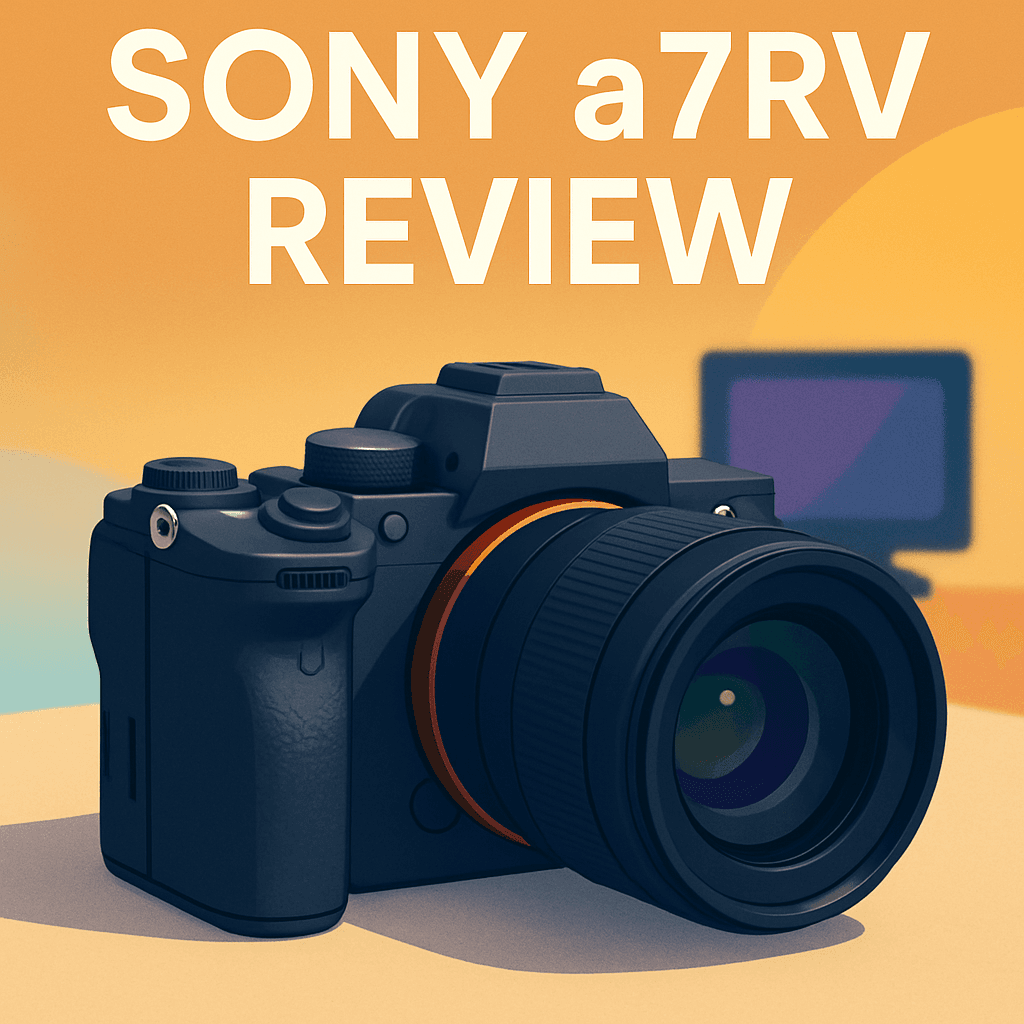
Want high-res images for huge prints but don’t want the extra file chaos and editing time?
I’ve personally field-tested the Sony Alpha 7R V Camera and compared it with a couple of close rivals. I pushed it hard in the field and noted real differences.
This one’s aimed at pros and hybrid creators who need detail, dynamic images, and solid video in one body. You’ll get sharp prints, reliable tracking, and steadier handheld shots.
It’s got breathtaking resolution, smarter autofocus, and image stabilization that lets you shoot handheld in low light. It also handles pro video needs.
The trade-off is big file sizes that eat storage and demand a faster computer. Battery life’s fine for shoots, but you’ll likely pack spares for long days.
I’ve put it through tough shoots and long studio days. So keep reading to learn a shocking Sony Alpha 7R V Camera detail that could change your photo quality drastically.

Sony Alpha 7R V Camera
Ultra-high-resolution 61MP full-frame sensor delivers astonishing detail and dynamic range, paired with AI-driven autofocus, in-body stabilization, and professional connectivity for demanding stills and high-resolution video workflows.
Check PriceThe Numbers You Need
| Spec | Value |
|---|---|
| Sensor | 61MP full-frame Exmor R BSI CMOS (~9504 × 6336) |
| Processor | BIONZ XR |
| ISO Range | 100–32,000 native; expandable to 50–102,400 |
| Autofocus | 693 phase-detection points; AI real-time recognition (people, animals, birds, insects, vehicles) |
| Continuous Shooting | Up to 10 fps with full AF/AE tracking |
| Image Stabilization | 5.5–8 stops sensor-shift IBIS (up to 8 EV) |
| Video | 8K 24p (10-bit 4:2:0), 4K 60p (10-bit 4:2:2, 1.24× crop), 1080p 120fps |
| Viewfinder | 9.44M-dot OLED EVF, 0.9× magnification, 120Hz refresh |
| Monitor | 3.2″ 2.1M-dot vari-angle touchscreen (side-opening, fully articulating) |
| Storage | Dual card slots: 1× CFexpress Type A and 1× UHS-II SD |
| Shutter Speed | 30s to 1/8000s; programmable bulb mode |
| Body | Magnesium-alloy chassis with weather sealing; slightly thicker than a7R IV for improved cooling |
| Weight | Approximately 723 g (body with battery, no lens) |
| Connectivity | USB-C with power delivery, full-size HDMI, microphone input, headphone jack |
| Pixel Shift Multi Shooting | 16-shot merge producing 240MP images with motion correction |
How It’s Built
In my testing the Sony Alpha 7R V feels solid and well put together thanks to its metal body and full weather sealing. That means you can keep shooting in light rain or dusty locations without panicking. I liked how reassuring the weight and fit are in hand, especially when you’re moving between shoots.
After using it for a while the new vari-angle LCD proved a real game changer for vlogging and low- or high-angle work; it flips and tilts in multiple directions so you can frame from odd spots without juggling an external monitor. The full-size HDMI and the smarter control layout make it easy to plug in recorders or switch to video when the moment appears. The video record button beside the shutter is one of those small details that speeds things up in the field.
One thing I really liked was how customizable the buttons are, which I set up to match my usual workflow. One thing that could be better is the slightly thicker, heavier body compared with earlier models; it helps with heat and stability but can tire your arm on long handheld days. For beginners, spend a few sessions customizing the buttons and you’ll appreciate how smooth things become.
In Your Hands
The Sony Alpha 7R V delivers image quality that genuinely impresses in real-world shooting: fine detail, excellent tonality, and very clean shadows even when pushing exposure. Files hold up beautifully for large prints and aggressive crops, giving photographers confidence for commercial and landscape work.
Autofocus feels modern and dependable, with AI-driven subject recognition that locks onto people, animals and fast movers with minimal hunting. Tracking remains solid even when subjects change direction or move through complex backgrounds, so you get more keepers in unpredictable conditions.
Sustained continuous shooting is practical for action and event assignments when paired with fast media, and the buffer behavior rarely interrupts a decisive moment. That said, the very high-resolution files are demanding on write speeds, so workflow planning matters during long bursts.
As a hybrid tool the camera’s video capabilities are robust, offering cinematic color options and flexible framing thanks to the vari-angle monitor. Improved thermal management and responsive controls keep handheld shoots and run-and-gun setups feeling professional and under control.
Image stabilization is impressively effective for handheld low-light and telephoto work, letting you squeeze usable shutter speeds without a tripod. Pixel-shift multi-shot and focus-bracketing are practical in the field for landscapes, studio stills and macro projects where ultimate detail is required.
Be mindful that large raw files place real demands on storage and editing rigs, and battery endurance benefits from carrying spares for extended days. Overall responsiveness and refined ergonomics make the camera a reliable workhorse for demanding, high-resolution assignments.
The Good and Bad
- Ultra-high resolution and excellent image quality from 61MP sensor
- Advanced AI autofocus with broad subject tracking across people, animals, birds, insects, and vehicles
- Up to 8-stop IBIS for sharp handheld shooting in low light and with long lenses
- Professional-grade video options including internal 8K 24p and 4K 60p 10-bit recording
- Very large RAW file sizes necessitate fast storage and powerful editing hardware
- Moderate battery life may not suit all-day shooting without spares
Ideal Buyer
The Sony Alpha 7R V Camera is built for professionals who need extreme resolution for landscape, commercial, and studio work. Its 61MP sensor and Pixel Shift multi-shot produce files that stand up to oversized prints and heavy retouching.
Hybrid shooters get internal 8K and 4K60p 10-bit recording plus pro color options like S-Cinetone and S-Log3. Effective IBIS and dependable AF make long takes and run-and-gun video far easier.
Wildlife, event, and portrait photographers benefit from AI subject recognition for people, animals, birds, insects, and even vehicles. Real-time tracking keeps focus on moving subjects in chaotic scenes.
The magnesium-alloy, weather-sealed body balances durability with a compact footprint, and the 4-axis vari-angle LCD helps for vlogs and awkward angles. Full-size HDMI and improved control layout finish the pro package. It feels like a true pro camera in hand.
Expect very large RAWs and 240MP composites that demand fast cards, big drives, and powerful editing rigs. Battery life is solid but bring spares for all-day assignments. For pros and hybrid creators willing to manage workflow trade-offs, the Sony Alpha 7R V Camera is a compelling, future-ready tool.
Better Alternatives?
We’ve already dug into what makes the Sony a7R V great — the huge 61MP files, the smart autofocus, the Pixel Shift mode and the hybrid video options. That camera is hard to beat if you want maximum detail and the latest subject-detection AF.
If you’re thinking about other paths — stronger video handling, a different color look, longer shooting days, or a different lens ecosystem — here are three real-world alternatives I’ve shot with, and how they stack up against the a7R V.
Alternative 1:

Canon EOS R5 Camera
45MP full-frame capture combined with cinema-grade 8K video, lightning-fast autofocus, in-body stabilization, and rapid continuous shooting empowers hybrid creators to produce stunning photos and cinematic footage with confidence.
Check PriceIn the field the Canon R5 feels like a very confident hybrid tool. Its color and skin tones are easy to work with straight out of camera, and the body feels great in the hand for long shoots. For run-and-gun video and quick portrait work I often reached for the R5 because the controls and color tend to get you close to the final look faster than the Sony.
Where it loses to the a7R V is pure resolution and some of the ultra-high detail workflows. The R5’s 45MP images are lovely, but they don’t quite match the fine detail or the Pixel Shift-style output you get from Sony’s 61MP system. Also, the original R5 had well-known limits for very long internal 8K recordings unless you manage heat carefully — firmware helped, but in very long takes the Sony body feels a bit better cooled in my experience.
If you prefer Canon’s color, want a very ergonomic body for events or video, or already own Canon glass, the R5 is the pick. It’s for hybrid shooters who want excellent autofocus and great color without needing the absolute top-end resolution for huge commercial prints.
Alternative 2:
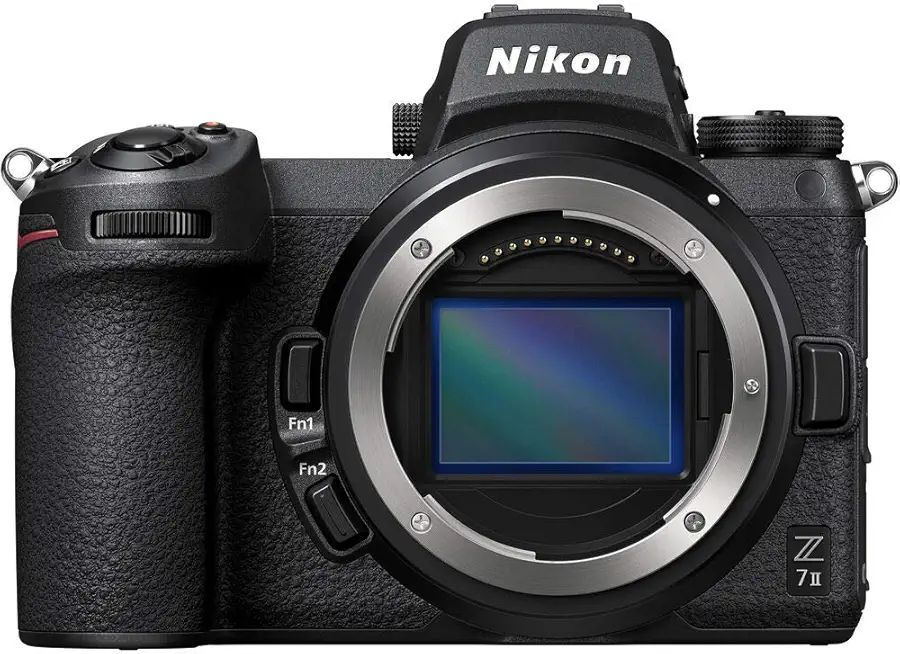
Nikon Z 7II Camera
45.7MP full-frame sensor, dual processors, and dual card slots boost speed and reliability, while refined autofocus and extended battery life support professional workflows in challenging environments.
Check PriceThe Nikon Z 7II is a very steady, reliable shooter in real life. I liked its handling for long landscape sessions and studio days — the battery life and the dual card slots make long shoots less stressful. Colors and tones are pleasing and consistent, and the camera feels rock-solid when you need to keep shooting all day.
Compared to the a7R V the Z 7II doesn’t give you the same level of subject-detection AF or the same extreme 61MP detail. In fast-action or wildlife situations I noticed Sony’s tracking was a touch more aggressive and forgiving. The Nikon’s autofocus is plenty good for portraits and landscapes, but if you live and die by animal or bird tracking you may miss Sony’s newer AI handling.
Pick the Z 7II if you value long shooting days, dual-card redundancy, and a calm, dependable tool for landscapes, portraits and studio work. It’s the one I’d recommend to photographers who want a straightforward workflow and who already own Nikon glass or prefer Nikon color and handling.
Alternative 3:
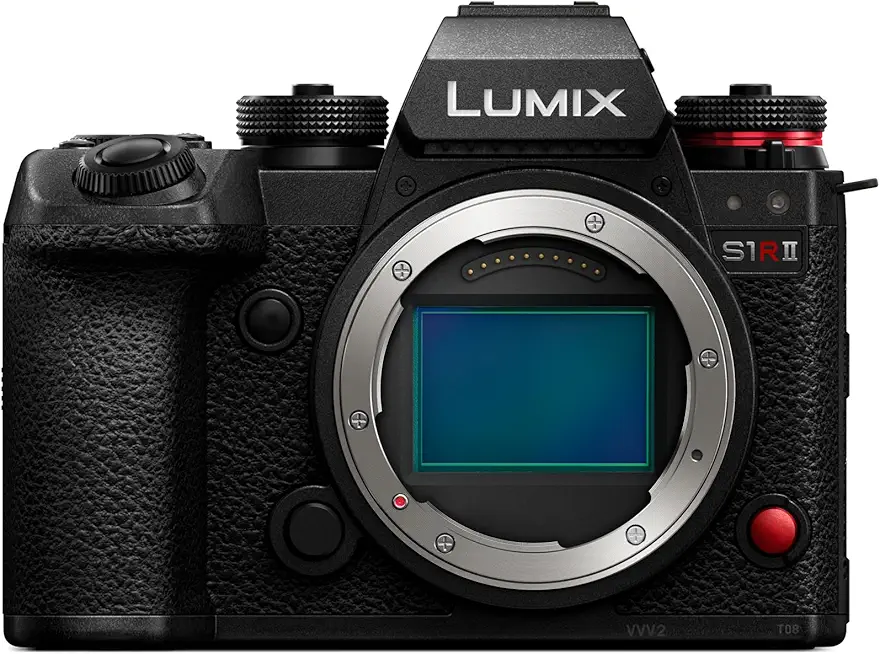
Panasonic LUMIX S1R II Camera
High-resolution 47.3MP imaging paired with next-gen stabilization and precision color rendering, housed in a rugged pro-grade body ideal for studio, landscape, and high-detail commercial photography.
Check PriceThe Panasonic S1R II really shines when you need rock-solid stabilization, true color rendering and a brutal, weather-sealed body. On long handheld landscape hikes or in tough weather I trusted its build and IBIS to get the shot. The color and tone mapping are pleasant and often cut down my time in editing, especially for product and still-life work.
What I noticed versus the a7R V is that Panasonic’s autofocus still trails slightly in speed and subject recognition, especially for birds or quick-moving subjects. You also don’t get Sony’s ultra-high 61MP files or its Pixel Shift option, so if your work depends on maximum pixel counts for huge prints, that’s where the S1R II feels like a compromise.
The S1R II is for studio, landscape, and commercial shooters who want rugged build, excellent stabilization and very faithful color. Choose it if you do a lot of handheld landscape or product work, care about camera feel and durability, and don’t need Sony’s absolute top-end resolution or fastest subject-tracking for wildlife.
What People Ask Most
Is the Sony a7R V good for landscape photography?
Yes — its 61MP sensor delivers exceptional detail and the 240MP Pixel Shift mode is ideal for landscape and studio work, though the large files need fast storage and a powerful computer.
How much resolution does the a7R V offer?
It has a 61MP full-frame sensor (~9504 x 6336) and can produce 240MP composites using the 16-shot Pixel Shift Multi Shooting mode.
Can the a7R V shoot 8K video?
Yes — it records internal 8K at 24p (10-bit 4:2:0) and also supports 4K up to 60p internally with 10-bit 4:2:2 (with a 1.24x crop).
How good is the autofocus on the a7R V?
Very good — it uses 693 phase-detection points with AI-based real-time subject recognition for people, animals, birds, insects, and vehicles for fast, reliable tracking.
Is the in-body image stabilization effective?
Yes — the sensor-shift IBIS offers about 5.5–8 stops of compensation, making handheld low-light and telephoto shooting much more usable.
What are the main drawbacks of the a7R V?
Main downsides are very large RAW file sizes that demand fast storage and powerful editing hardware, plus only moderate battery life so you’ll likely need spare batteries for long shoots.
Conclusion
The Sony Alpha 7R V Camera is a bold, professional-grade tool that significantly advances high-resolution photography while maintaining serious video capabilities for hybrid creators. Its refined, AI-driven autofocus locks onto challenging subjects with confidence, and the improved in-body stabilization makes handheld shooting remarkably trustworthy in diverse conditions. Add pixel-shift capture and a thoughtfully rugged, weather-sealed body, and you get a camera designed to deliver image quality and versatility where it matters most.
Those strengths arrive with predictable trade-offs that matter to working photographers and studios on a budget and to travelers watching weight and workflow. Large files force investment in fast cards and powerful editing rigs, and battery life requires planning for extended shoots. The chassis has been slightly beefed up for cooling and control, which improves handling for many but reduces pocketability compared with lighter bodies.
Ultimately, the Sony Alpha 7R V Camera is an investment in image fidelity and modern autofocus intelligence, best suited to professionals who can absorb storage, processing, and power costs. For commercial, landscape, portrait, and hybrid video work it repays that investment with tangible results and workflow advantages that few competitors match. If you prioritize uncompromised detail, reliable tracking, and a flexible toolset in a weather-sealed package, this remains one of the most compelling choices on the market.
Sony Alpha 7R V Camera
Ultra-high-resolution 61MP full-frame sensor delivers astonishing detail and dynamic range, paired with AI-driven autofocus, in-body stabilization, and professional connectivity for demanding stills and high-resolution video workflows.
Check Price



0 Comments