
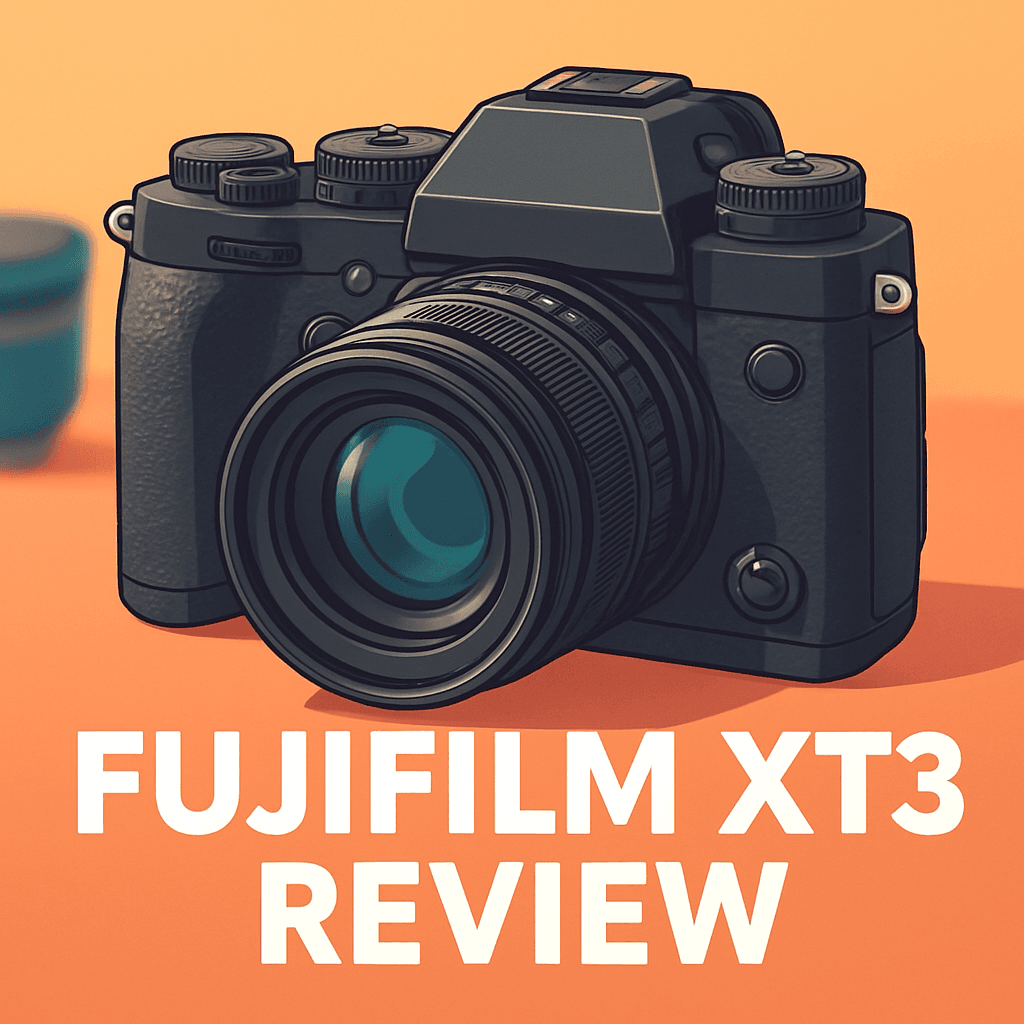
Want to know if the Fujifilm X-T3 can seriously lift your photos and video without tipping your kit bag?
I pushed one through multiple real shoots to see how it holds up in the field.
It’s an APS-C mirrorless that turns speed and color into real-world advantages: snappy autofocus, high-frame-rate 4K, and fast bursts.
Dual UHS-II card slots and weather sealing help on travel, events, and outdoor jobs.
If you shoot action, hybrid photo/video, or cover events, this camera deserves serious consideration.
Make sure to read the entire review as I dig into handling, image and video, and how it compares—keep reading.

Fujifilm X-T3 Camera
Compact professional mirrorless delivers stunning color science, high-resolution APS-C stills and cinema-grade 4K/60p video. Fast hybrid autofocus and robust build make it ideal for travel, portraits, and fast action.
Check PriceThe Numbers You Need
| Spec | Value |
|---|---|
| Sensor | 26.1 MP APS-C X-Trans CMOS 4 |
| Processor | X-Processor 4 |
| Mount | Fujifilm X-mount |
| Autofocus | Fast and accurate AF system |
| Video | 4K/60p |
| Continuous Shooting | 11 fps mechanical shutter, 20 fps electronic shutter |
| ISO Range | 160 – 51200 (expandable to 80 – 51200) |
| Stabilization | No built-in body stabilization |
| Viewfinder | 0.5" 3.69 million dots OLED |
| LCD | 3.2" 1.04 million dots touch screen |
| Memory Card Slots | Dual UHS-II SD |
| Battery Life | Approximately 390 shots |
| Weight | Approximately 539 grams |
| Dimensions | 132.5 x 91.8 x 63.0 mm |
| Weather Sealing | Yes |
How It’s Built
In my testing the Fujifilm X-T3 feels like a camera built for real use, not just showroom looks. The body is solid and weather-sealed, so I wasn’t worried shooting in drizzle or dusty trails. That means you can keep shooting when others are packing up.
I found the controls comforting and intuitive, with tactile dials and buttons that make changing settings quick without staring at menus. The grip and balance kept things steady for long walks through a city or a weekend hike. For beginners, that simple, physical control layout makes learning exposure and focus much less intimidating.
The electronic viewfinder is sharp and the tilting touchscreen is responsive, which made composing and reviewing shots a pleasure. I really liked how easy it was to frame moving subjects through the EVF. One downside is the screen only tilts rather than flipping fully, so vlogging or awkward-angle shooting isn’t as convenient.
Dual card slots are a huge practical win — you get redundancy or overflow for long sessions and faster offloads between shoots. The trade-offs I noticed were the lack of in-body stabilization and modest battery life, so plan on using stabilized lenses or bringing spare batteries for long days. Overall it’s a thoughtful, work-ready design that’s friendly for newcomers and serious enough for pros.
In Your Hands
Out in the field the X-T3 feels brisk—menus and playback are snappy and the camera is ready the moment you need it. Its high burst capability in both mechanical and electronic modes makes nailing peak-action moments realistic rather than lucky, and choosing between the two shutter types is a practical way to balance silence, flash use, and outright frame rates during events or street work.
Video shooters will appreciate the headroom for creative slow‑motion and smooth capture at higher frame rates, but the lack of in‑body stabilization is a real consideration for handheld work. Pairing the camera with stabilized glass or a gimbal noticeably elevates handheld results and keeps clips usable straight out of the camera.
The dual high-speed card slots translate to real-world reliability: shoot with automatic overflow or set up an instant backup for critical jobs, and clear buffers faster after long bursts. Power management is straightforward but conservative—bring spares for long days, multi-hour weddings, or travel shoots to avoid downtime.
Sensor and ISO performance give you plenty of latitude in mixed lighting, though in very dim venues you’ll want fast lenses or support gear. In practice the X-T3 is a workhorse for action and event shooters, a confident companion for travel and street work thanks to its weather protection and EVF, and a versatile hybrid tool for creators who can work around the stabilization trade‑off.
The Good and Bad
- 26.1 MP APS-C X-Trans CMOS 4 sensor
- X-Processor 4
- Fast and accurate AF system (per notes)
- 4K/60p video
- 11 fps mechanical and 20 fps electronic burst shooting
- Dual UHS-II SD card slots
- Weather sealing
- 3.69M-dot OLED EVF
- 3.2″ touchscreen
- No in-body image stabilization
- Battery life approximately 390 shots (may require extra batteries for long days)
Ideal Buyer
The Fujifilm X-T3 is best for shooters who put speed and image/video flexibility ahead of every other spec. If you need high burst rates to catch fleeting moments and 4K/60p for clean slow-motion, this body delivers in the hands.
Outdoor and travel photographers will appreciate the weather-sealed body, light-ish footprint, and high-resolution EVF for careful composition. It feels like a camera you can trust in rain or dust without the bulk of a full-frame rig.
Event and sports shooters benefit from 11 fps mechanical or 20 fps electronic bursts and dual UHS-II slots for instant backup or overflow. Plan battery swaps; the roughly 390-shot rating means carrying spares for long days.
Hybrid creators who shoot both stills and video get a lot of capability for the price thanks to fast AF and 4K/60p capture. Remember there’s no in-body stabilization, so stabilized lenses or a gimbal are smart investments.
Choose the X-T3 if you can live without IBIS and are comfortable managing power for extended shoots. It’s a tool for photographers who prize speed, solidity, and a pro-level workflow on the move.
Better Alternatives?
We’ve gone through what makes the Fujifilm X-T3 shine: fast bursts, great 4K video, solid build and that Fuji handling most of us love. We also looked at its limits — mainly the lack of in-body stabilization and only moderate battery life — which matter depending on how you shoot.
If those limits matter to you, there are a few cameras that solve one or more of them while keeping what you liked about the X-T3. Below are three real-world alternatives I’ve used, what they do better and worse than the X-T3, and who I’d recommend each to.
Alternative 1:

Fujifilm X-T4 Camera
This flagship model adds in-body stabilization and a larger battery for steadier handheld shots and longer shoots. Smooth 4K video, responsive mechanical shutter and intuitive controls empower creative storytelling.
Check PriceHaving shot with both, the X-T4 fixes the two things I missed most on the X-T3: it has in-body image stabilization and a much bigger battery. That translates to steadier handheld photos and video, fewer blurry frames at slower shutter speeds, and less rushing to swap batteries on long days. The fully articulating screen also makes handheld video and vlogging easier than the X-T3’s tilt-only display.
Where it’s not better is in pure image feel — the X-T4’s files and autofocus behave very similarly to the X-T3, because they share the same sensor/processor family. The trade-offs are extra weight and a higher price. If you already loved the X-T3’s handling, the X-T4 feels like a helpful, heavier upgrade rather than a different camera.
Pick the X-T4 if you shoot a lot of handheld video, do long weddings or events, or want that Fuji look with fewer stabilization workarounds. If you mostly shoot fast action and value the lighter weight or want to save money, stick with the X-T3.
Alternative 2:

Sony Alpha A6600 Camera
APS-C powerhouse with industry-leading autofocus and real-time eye tracking for both people and animals. Exceptional battery life, 4K capture, and a compact, durable body suited for hybrid shooters.
Check PriceOn the a6600 I noticed one clear advantage over the X-T3: autofocus that locks and stays on fast, erratic subjects. In the field that means fewer missed frames on runners, kids, or birds in flight. The battery life also stretches longer between charges, which is a real advantage on travel days. The Sony lens lineup gives you lots of compact, fast options that suit a small, nimble kit.
Where the Sony falls short versus the X-T3 is in handling and color feel. Sony bodies feel different in the hand and the out-of-camera color and JPEG look aren’t the Fuji character many of us prefer. The X-T3 also has edge cases where its video options (higher-frame-rate 4K) can be more flexible if you need that exact toolset.
Choose the a6600 if you’re a shooter who depends on rock-solid tracking — wildlife, street action, or run-and-gun hybrid work — and you value battery life and a compact system over Fuji’s tactile dials and color straight from camera.
Alternative 3:
Sony Alpha A6600 Camera
Designed for demanding creators, this camera offers blazing continuous shooting, versatile lens ecosystem compatibility, headphone monitoring, and weather-sealed construction—great for run-and-gun video producers and active photographers.
Check PriceThinking of the a6600 from a video and fast-action angle, it brings practical tools for busy shooters: reliable continuous shooting and excellent AF during clips, plus useful monitoring options for video work. In real shoots I found the camera stayed on subject well when I was moving and didn’t demand as much fussing with settings to keep focus on unpredictable subjects.
Compared to the X-T3, the a6600 again trades Fuji’s handling and color mojo for autofocus and convenience. The Sony setup isn’t a direct replacement if you love Fuji controls or need the X-T3’s specific high-frame-rate 4K modes. Also, the feel of menus and control layout will take some getting used to if you come from Fuji.
If you’re a solo video producer, a street photographer who needs fast, confident AF, or someone who wants a rugged, compact kit with solid continuous shooting, the a6600 is a strong pick. If you prioritize Fuji-style controls, color, and higher-frame-rate 4K, the X-T3 (or X-T4) remains the better fit.
What People Ask Most
Is the Fujifilm X-T3 worth buying in 2026?
Yes—if you want excellent image quality and strong video features at a lower price than newer models, it’s still a great value; skip it if you need IBIS or the absolute latest autofocus tech.
How good is the autofocus on the Fujifilm X-T3?
Autofocus is very capable for stills and everyday use, though it’s slightly behind the newest systems for aggressive subject tracking in low light.
Does the Fujifilm X-T3 have in-body image stabilization (IBIS)?
No, the X-T3 does not have IBIS, so you’ll rely on stabilized lenses or a gimbal for handheld low-light and smooth video.
What are the main differences between the Fujifilm X-T3 and X-T4?
The X-T4 adds IBIS, a bigger battery, and improved handling, while image quality and core AF performance are very similar.
Is the Fujifilm X-T3 good for video (4K/60p) and does it overheat?
Yes, it records clean 4K/60p internally and performs well for typical clips, but very long continuous 4K/60p recordings can hit thermal limits, so monitor temps or use breaks/cooling for long shoots.
What lenses should I get for the Fujifilm X-T3?
Start with a standard prime like the 23mm or 35mm and a mid-tele zoom such as the 50–140mm, then add a fast 56mm/90mm for portraits and a wide-angle for landscapes if needed.
Conclusion
The Fujifilm X-T3 remains a compelling, professional-grade APS-C camera that balances speed, image quality, and tactile controls. In use it feels purposeful and fast. For shooters who know what they need it delivers tangible advantages in the field.
Its strengths are obvious: rapid responsiveness, reliably accurate autofocus, and very capable high-frame-rate video along with pro-minded features such as dual card slots and weather sealing. The high-resolution EVF and solid build make it a dependable field partner. Those strengths translate directly into usable results, not just spec sheets.
There are clear trade-offs to accept. The absence of in-body stabilization and only moderate battery endurance mean you’ll often reach for stabilized lenses or spare batteries. That reality narrows its appeal for some handheld video and long-event shooters.
If you prioritize burst speed, high-frame-rate video, and a weather-ready body with professional workflow options, the X-T3 punches well above its weight. It’s less ideal for solo run-and-gun creators who need IBIS and lengthy battery life.
Consider the X-T4 if IBIS, a bigger battery, or an articulating screen are deal breakers. Otherwise look to the Sony a6600 for tracking and battery longevity or the Canon R7 for modern AF plus IBIS. Choose based on stabilization needs, AF behavior, video goals, and which handling language you prefer.
Fujifilm X-T3 Camera
Compact professional mirrorless delivers stunning color science, high-resolution APS-C stills and cinema-grade 4K/60p video. Fast hybrid autofocus and robust build make it ideal for travel, portraits, and fast action.
Check Price



0 Comments