
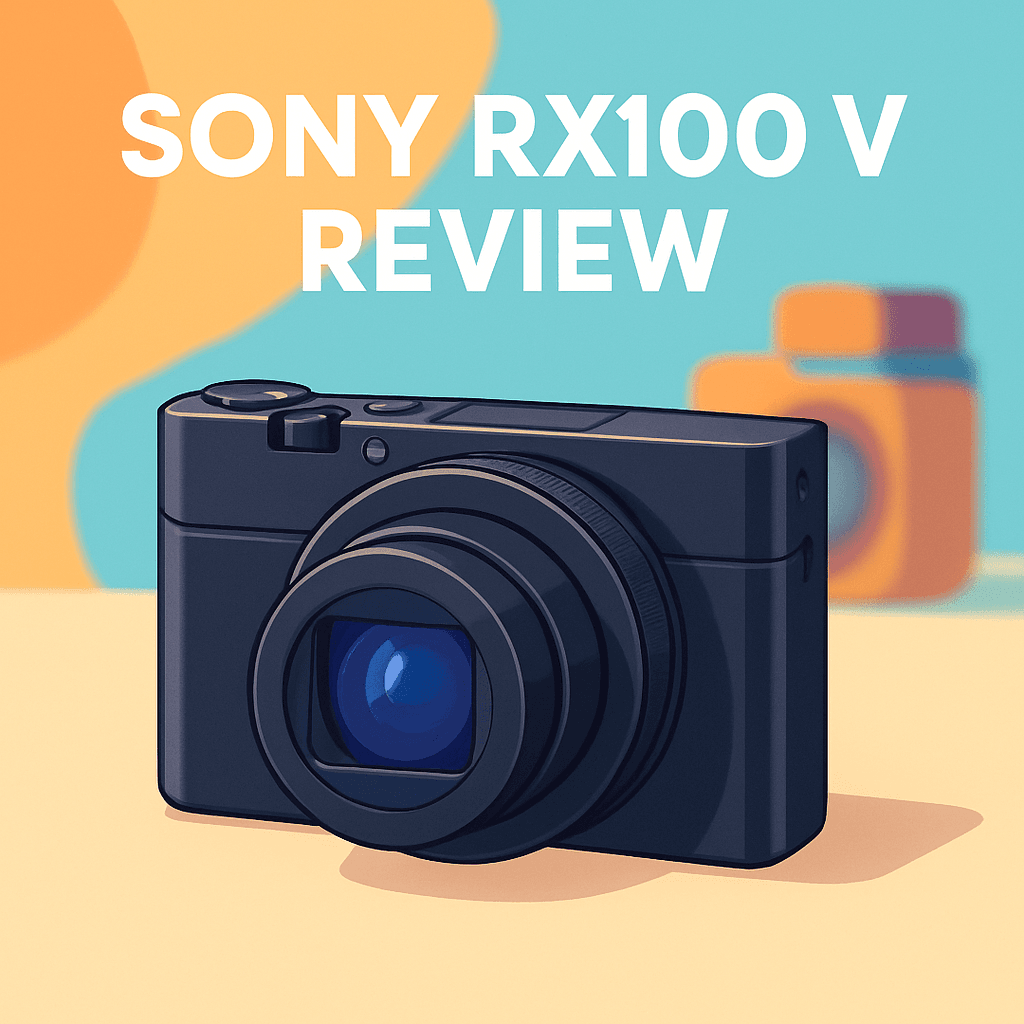
Want pro-level image quality and speed from a camera that actually fits your pocket?
The Sony RX100 V Camera promises that mix with a 1‑inch stacked sensor, a bright 24–70mm zoom, a pop‑up EVF and blistering burst performance — it’s built for grab‑and‑go shooting.
I’ve carried this little rig on street, travel and family shoots to see how it performs where it matters most.
If you’re a street, travel, family or action-minded shooter who wants EVF, speed and great low-light results from a truly pocketable body, this review is for you.
I’ll unpack real-world payoffs — image quality, AF, video and practical tradeoffs like battery life and zoom reach.
Make sure to read the entire review as I compare the RX100 V to newer rivals and reveal where it truly shines — keep reading.

Sony RX100 V Camera
Compact travel-ready camera with a 1-inch sensor, blazing autofocus, and rapid burst shooting. Delivers detailed images, smooth full-HD video, and pocketable versatility for street, travel, and everyday photography.
Check PriceThe Numbers You Need
| Spec | Value |
|---|---|
| Sensor | 1.0-inch stacked CMOS |
| Resolution | 20.1 MP |
| Lens | Zeiss 24–70mm f/1.8–2.8 |
| LCD | 3.0″ tilting |
| Viewfinder | Pop-up OLED, 2.36M dots |
| Continuous shooting | 24 fps with AF/AE |
| Autofocus points | 315 phase-detect, 25 contrast-detect |
| Video | 4K (3840×2160) |
| Slow motion | Full HD (1920×1080) up to 960 fps |
| ISO range | 125–12800 (expandable to 80–25600) |
| Built-in flash | Yes |
| Wi-Fi/NFC | Yes |
| Weight | 299 g (with battery/memory card) |
| Dimensions | 102 x 58 x 41 mm |
| Battery life | Approx. 220 shots (CIPA) |
How It’s Built
In my testing the Sony RX100 V felt like a real pocket camera—small enough to carry every day yet substantial enough to not feel toy-like. That means you’re more likely to have it with you when moments pop up, which is huge for street and travel work. For beginners this simply lowers the barrier to shooting more often.
I found the pop-up electronic viewfinder surprisingly useful in bright sun, letting me compose without chasing glare on the LCD. The tilting screen makes low-angle shots and quick framing easy, though it doesn’t swivel for full selfie-style use. In practice that combination keeps you shooting in most light and angles.
The Zeiss zoom on the front punches well above its size, giving bright apertures that help with low-light shots and subject separation. After using it for a while I appreciated how much character and sharpness Sony squeezed into that tiny lens. For everyday portraits and scenes it’s a real joy.
The body is minimalist and the controls are compact, which is great for pockets but can be fiddly if you have big hands. I found learning the button layout paid off quickly, but beginners should expect a short adjustment period. A slightly larger grip would make longer shoots more comfortable.
Built-in flash is handy for fill-in emergencies and the Wi‑Fi pairing made quick sharing and remote shots simple in my tests. That means fewer missed social moments and easy hands-free selfies when you want them.
What I really liked was the combo of true pocketability with a proper EVF and a bright zoom—perfect for carrying and capturing fast moments. One thing that could be better is the small control layout and grip, so plan to practice handling or use a small thumb rest for longer days.
In Your Hands
The RX100 V’s stacked sensor design paired with a responsive processing engine gives the camera a lively, instant feel in the hand; shutter lag is minimal and the viewfinder refresh keeps pace with fast scenes so framing feels natural. Image capture is consistently snappy from first press to write, which makes shooting in bursts and reacting to fleeting moments genuinely satisfying.
Its bright zoom really shines when light levels drop, allowing you to hold lower shutter speeds and maintain cleaner results without resorting to extreme sensitivity. The lens also delivers pleasing subject separation at the wide end, giving compact-camera images a more three-dimensional look than you might expect.
The focal range is a very practical everyday toolset for street, travel, and casual portraits, letting you move from wide scenes to tighter head-and-shoulders framing without swapping glass. That versatility comes with the tradeoff of limited long reach, so distant wildlife or stadium sports will demand getting closer or accepting heavier cropping.
Continuous shooting with AF/AE keeps up with kids, pets, and sudden street action, increasing your keeper rate when moments evaporate in an instant. Autofocus coverage across the frame supports off-center compositions, though tracking can be challenged in very flat or strongly backlit conditions.
Expect solid endurance for most outings, but plan on a spare cell for truly long days; buffer and card speed will dictate how aggressively you can lean on high-rate bursts. Smooth connectivity and a predictable file pipeline mean the RX100 V is fast to work with in real-world travel and documentary situations.
The Good and Bad
- 1.0-inch stacked CMOS sensor with 20.1 MP
- Zeiss 24–70mm f/1.8–2.8 lens, bright zoom in a compact body
- 24 fps burst with AF/AE for action and fleeting moments
- 4K video plus Full HD slow motion up to 960 fps
- Battery life around 220 shots (CIPA)
- 24–70mm zoom range limits telephoto reach for travel and wildlife
Ideal Buyer
If you crave a truly pocketable camera that still feels like a serious tool, the Sony RX100 V Camera fits the bill. It pairs a bright Zeiss 24–70mm f/1.8–2.8 zoom with a built‑in EVF for compose‑and‑shoot confidence in bright light. The compact footprint means you actually bring it everywhere, not just on planned shoots.
Action‑minded shooters who live for split‑second moments will appreciate its speed. The stacked 1‑inch sensor, dense AF array and 24 fps AF/AE burst turn fleeting expressions, kids at play, and street chaos into keepers. You’ll get a higher hit rate than most other compacts when timing matters.
Hybrid creators who want strong stills and serious video in one small body will also find value. 4K capture and Full HD slow motion up to 960 fps unlock creative options without lugging a separate rig. For travel days when you want both decisive photo moments and cinematic clips, it’s a rare compromise-free companion.
This camera suits photographers who are willing to trade long tele reach and marathon battery life for peak image quality, speed, and portability. If you prioritize pocketability, a bright zoom and rapid AF above extended zooms or all‑day endurance, the RX100 V Camera is a smart, joyfully fast choice.
Better Alternatives?
We’ve already dug into what makes the Sony RX100 V Camera a great pocket zoom: the bright 24–70mm lens, the speed, the EVF, and the 24 fps burst that helps you catch fleeting moments. That camera is a great all-rounder, but no single pocket camera fits every shooter’s needs.
If you need more reach, more vlogger-friendly features, or a different handling feel, there are a few compact rivals worth thinking about. Below are three alternatives I’ve used in the field and how they compare to the RX100 V Camera.
Alternative 1:
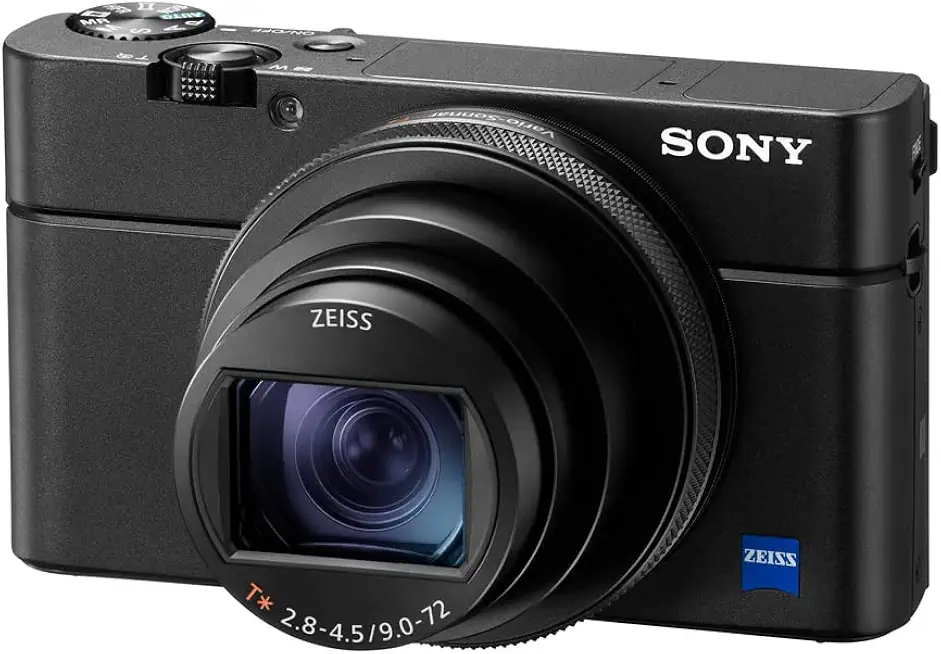
Sony RX100 VII Camera
Pocket powerhouse offering extended zoom, pro-grade autofocus, and lightning-fast continuous shooting. Perfect for vloggers and travelers needing 4K video capture, reliable tracking, and crisp images without bulky gear.
Check PriceI used the Sony RX100 VII on a week of city travel and noticed the first thing that stands out is the reach. Compared to the Sony RX100 V Camera, the RX100 VII gives you a much longer zoom, which is handy when you want tight shots of architecture or distant street scenes without carrying a big camera.
Where it’s different from the Sony RX100 V Camera is in tradeoffs: the lens at the long end is slower, so you don’t get quite the same shallow background blur in dim light as the RX100 V does at its widest. That said, the autofocus and subject tracking feel newer and more reliable in real-world moving scenes—fewer missed shots on kids and dogs running around.
If you travel a lot or want the extra reach and newer AF tech, the RX100 VII is for you. I’d pick it when I need a pocketable camera that covers more focal length without giving up too much on image quality; if you mainly shoot low-light portraits or rely on the fastest burst and widest aperture, the RX100 V Camera still has its edge.
Alternative 2:
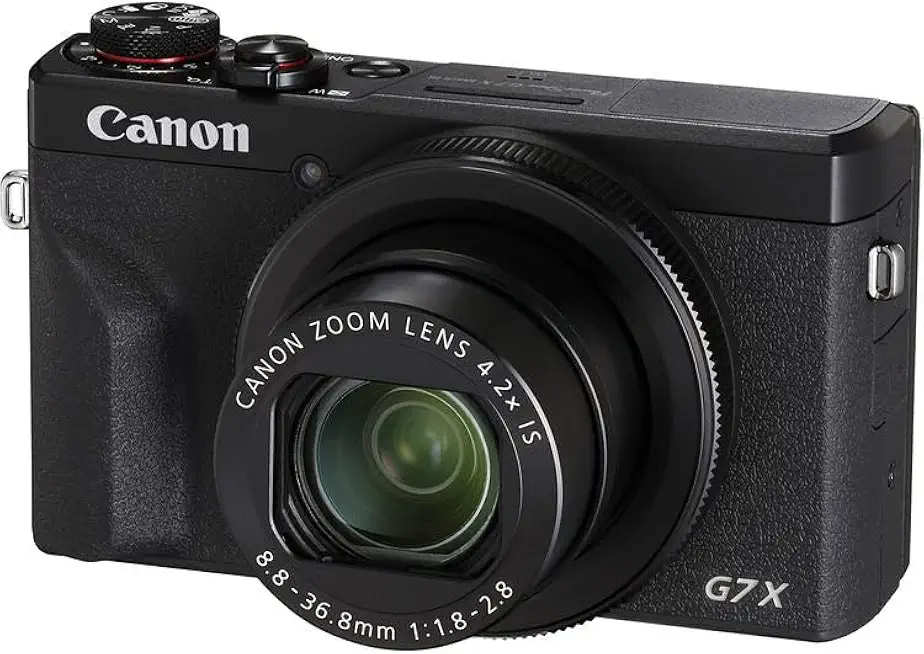
Canon PowerShot G7 X Mark III Camera
Bright lens and large sensor pair with livestream-capable connectivity to deliver stunning low-light stills and 4K video. Tailored controls and flip screen make content creation effortless for creators.
Check PriceI’ve used the Canon G7 X Mark III for quick vlogs and social clips, and its strengths are clear: the flip screen, the color rendering, and the features built for streaming make life easy. Compared to the Sony RX100 V Camera, the G7 X Mark III feels more tuned to creators who want to stream or record straight to social with pleasing skin tones right out of camera.
What it does worse than the Sony RX100 V Camera is speed and tracking—when I tried to follow fast-moving subjects, I got fewer keepers than with the RX100 V Camera’s fast burst and dense AF. Also, the G7 X Mark III lacks a built-in EVF, which makes framing in bright sun a challenge compared to the RX100 V Camera’s pop-up viewfinder.
This Canon is the pick for vloggers and streamers who value easy live features and a friendly color look. If you shoot people, talk to camera, or need vertical/stream-ready options, the G7 X Mark III will save time in your workflow; if you need fast action capture or an EVF for sunny days, the Sony RX100 V Camera remains stronger.
Alternative 3:
Canon PowerShot G7 X Mark III Camera
Compact creator-focused camera with fast aperture, clean HDMI output, and intuitive touchscreen. Capture vertical video, smooth autofocus, and excellent color reproduction—ideal for on-the-go streaming, vlogs, and social posts.
Check PriceLooking again at the Canon G7 X Mark III but from a slightly different angle: I used it for a few client social shoots and liked the clean HDMI output and vertical video handling for phone-ready clips. Against the Sony RX100 V Camera, the G7 X Mark III wins for creator tools—it makes getting footage straight into your phone or streaming setup easier and faster.
On the downside, the G7 X Mark III still doesn’t match the Sony RX100 V Camera for raw shooting speed and AF reliability on moving subjects. In bright sun you’ll miss having an EVF for tight composition, and if your work often involves chasing action or fast bursts, the RX100 V Camera keeps a practical edge.
If your work is mostly vlogs, social posts, or live streams where color and easy connections matter, you’ll prefer this Canon. For photographers who put action, burst shooting, or EVF use first, the Sony RX100 V Camera is the better tool, but the G7 X Mark III is a very strong choice for content creators who want a simpler, faster path to finished clips.
What People Ask Most
Is the Sony RX100 V worth buying?
Yes — it’s an excellent pocket camera if you want top compact image quality, blazing AF and 4K in a tiny body; buy used or on sale for best value. If you need larger-sensor low-light performance or long battery life, consider a mirrorless camera instead.
How good is the image quality on the Sony RX100 V?
Very good for a 1‑inch sensor: sharp files with solid dynamic range and clean results up to about ISO 800–1600. It won’t match APS‑C or full‑frame bodies in extreme low light.
What are the main differences between the Sony RX100 IV and RX100 V?
The RX100 V adds a 315‑point phase‑detect AF, much faster and more reliable autofocus and deeper continuous‑shooting buffer; otherwise sensor, lens and 4K capabilities are largely similar. Video features and image quality remain close between the two.
Is the Sony RX100 V good for video and 4K recording?
Yes — it records high‑quality 4K and handles AF well during video, but long continuous clips can be limited by heat and battery life. For run‑and‑gun or travel video it’s very capable, but not ideal for extended studio takes.
How fast is the autofocus on the Sony RX100 V?
Very fast — Sony advertises roughly 0.05s AF with 315 phase‑detect points and reliable subject tracking, plus up to 24 fps AF/AE burst shooting. It’s one of the quickest AF systems in a pocket camera.
How long does the battery last on the Sony RX100 V?
Battery life is modest — expect roughly 200–250 shots per charge (CIPA) or limited continuous video time, so carry at least one spare battery for day shoots.
Conclusion
The Sony RX100 V Camera is a pocketable powerhouse that prioritizes speed, image quality and creative flexibility. Its bright zoom, stacked sensor architecture and blistering burst performance make it a go‑to for street, travel and action moments where every split second counts, and they deliver consistently responsive autofocus. Add high‑resolution video and very high‑frame‑rate slow motion that invite creative experimentation and you have a small camera with big ambitions.
Those strengths come with practical trade‑offs you should accept upfront. The zoom range limits long‑reach shooting and the battery life will push you to carry a spare for full days out, forcing you to plan swaps or pack a small external battery. Autofocus and video are excellent for the class, but they no longer lead the pack against Sony’s latest models.
If you prize pocketability, an EVF and punchy low‑light performance, the RX100 V Camera is hard to beat as a do‑everything compact. Choose the RX100 VII if you want extra reach and newer tracking, the G7 X Mark III for vlogger conveniences, or the G5 X Mark II if you prefer EVF‑centric ergonomics. For many shooters, though, the RX100 V remains the most balanced, fun and capable pocket camera, nailing the sweet spot between image quality, speed and true pocketability.
Sony RX100 V Camera
Compact travel-ready camera with a 1-inch sensor, blazing autofocus, and rapid burst shooting. Delivers detailed images, smooth full-HD video, and pocketable versatility for street, travel, and everyday photography.
Check Price

0 Comments