
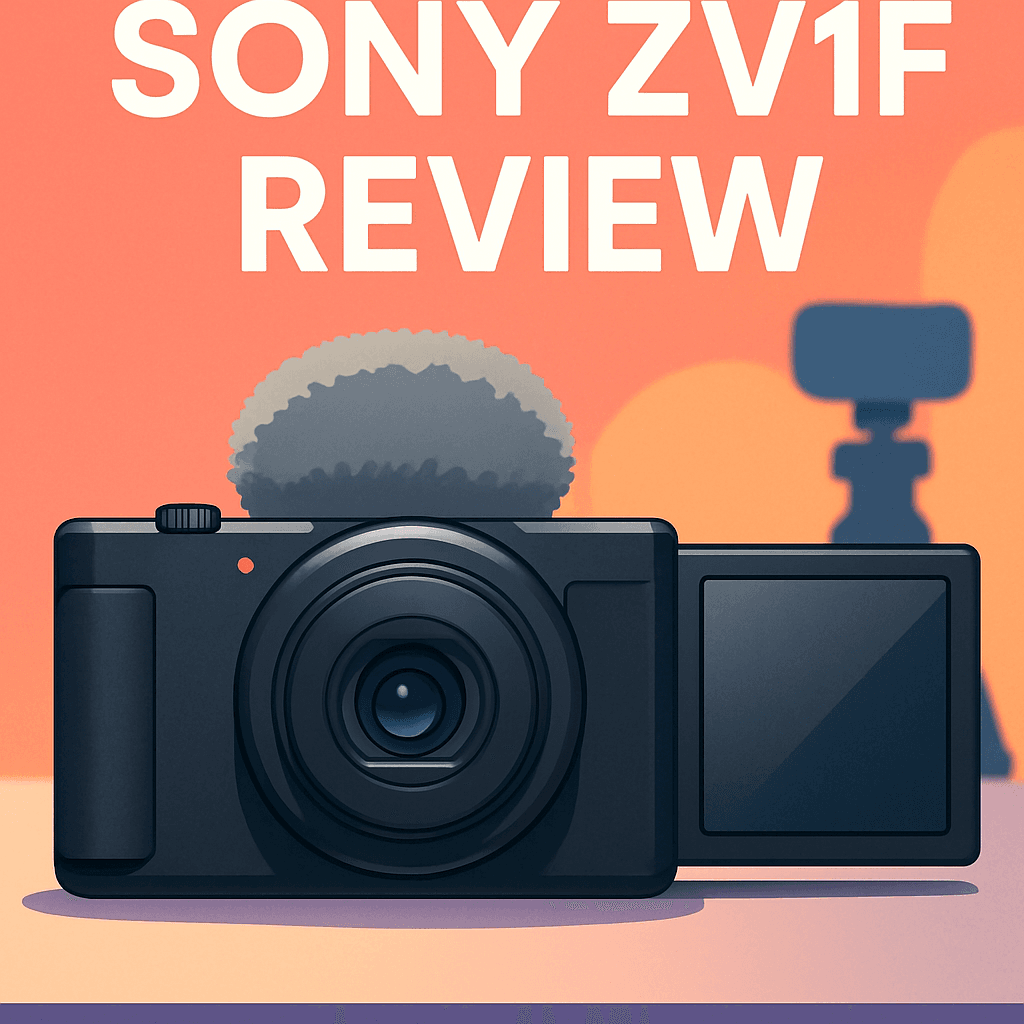
Want a pocket camera that finally makes your selfie videos look cinematic?
I personally field-tested the Sony ZV-1F Camera and compared it with a couple of close rivals. I used it in streets, cafes, and a windy beach to judge real-world use.
It’s built for vloggers and creators who want better results than a phone without the fuss. Beginners and intermediate shooters will love how simple it feels.
It gives you wide framing, quick autofocus, and a flip-out screen that makes framing effortless. Those payoffs mean more usable clips and less time fixing bad shots.
The headline compromise is simple: there’s no external mic jack, so advanced audio rigs won’t plug in. You’ll still get decent onboard sound for everyday posts, though.
I found a tiny shooting trick that squeezed much better images than you’d expect. So keep reading—I’ll reveal a Sony ZV-1F Camera tweak that may change your photo quality drastically.

Sony ZV-1F Camera
Compact vlogger-ready camera with fast autofocus, crisp 4K video, built-in directional mic, background defocus, and intuitive controls—designed for easy handheld recording and instant shareable content creation.
Check PriceThe Numbers You Need
| Spec | Value |
|---|---|
| Sensor | 1.0-type Exmor RS CMOS (13.2 x 8.8 mm), approx. 20.1 effective MP |
| Lens | ZEISS Tessar T* fixed prime 7.6 mm (20 mm equiv.), F2.0, 6 elements/6 groups, ~94° FOV |
| Image stabilization | Electronic stabilization with Active mode for video |
| Video | 4K UHD up to 30p; XAVC S (MP4, H.264), internal 8-bit 4:2:0; LPCM 2ch audio |
| Screen | 3.0-inch fully articulating touchscreen LCD, ~921,600 dots, flips/rotates for selfies |
| Autofocus | Contrast-detection AF with 425 focus points; subject tracking, face & eye detection |
| Microphone | Built-in directional 3-capsule microphone with windscreen |
| External microphone input | None (no external mic input reported) |
| Battery | NP-BX1 rechargeable; recording time typically ~1h50m to 4h depending on format and card |
| Storage | Single SD card slot; supports SDHC and SDXC |
| Size & Weight | Pocketable compact body; approx. 267 g including battery and card |
| Zoom | No optical zoom; digital zoom ~4x for video; Clear Image Zoom up to 2x for stills (up to 8x depending on resolution) |
| Built-in ND filter | None |
| Body | Plastic construction with matte finish, lightweight yet solid feel |
| Built-in flash | None |
How It’s Built
In my testing the Sony ZV-1F felt like a true pocket camera, light and easy to grab between shoots. The shape and matte plastic finish made it comfortable for long handheld sessions.
One thing I really liked was the fully articulating touchscreen. Flipping the screen and tapping to set focus made selfie vlogs and run-and-gun clips way less fussy. For beginners that means you can get the shot fast without digging through menus.
The button layout is intentionally simple and that helps when you’re new to dedicated cameras. I found fewer controls speed you up, but it also means less room to tweak settings on the fly.
One thing that could be better is the lack of an electronic viewfinder and no built-in ND filter. When I shot in bright sun I missed a viewfinder for steady framing, and the missing ND made it harder to keep motion looking natural without changing shutter or aperture. You’ll often end up shading the screen with your hand or carrying an external ND for daylight filming.
The plastic body doesn’t feel cheap — it’s light but not flimsy in my hands. For travel and daily vlogging that balance makes the ZV-1F an easy camera to live with.
In Your Hands
Out of the box the Sony ZV-1F’s autofocus is remarkably reliable for run-and-gun video; it locks on faces and keeps eyes tracked even while I move through busy scenes. That consistency makes framing feel almost effortless when vlogging on the go.
The fixed ultra-wide lens makes group selfies, talking-head vlogs and environmental shots feel natural without constant repositioning. The bright aperture helps in dim interiors, yielding usable low-light images and subtle subject separation that elevates casual content.
Footage is sharp with punchy, camera-ready color, and stabilization smooths handheld walks better than you’d expect from such a small body. However, the lack of log profiles and limited manual exposure options keeps a ceiling on intensive color grading and cinematic workflows.
The built-in directional mic with its little windscreen records clear on-camera audio for run-and-gun shoots, but no external mic input limits advanced sound setups. Battery life on long shooting days pushes you to carry spares or a power bank, and wireless connectivity can be temperamental in weak-signal areas. Sony’s familiar menu layout keeps adjustments quick so you spend more time shooting.
The Good and Bad
- Bright ultra-wide fixed lens (F2.0, 20mm)
- Strong video autofocus
- Fully articulating touchscreen
- Compact and lightweight design
- No external mic input
- No built-in ND filter
Ideal Buyer
The Sony ZV-1F Camera is perfect for beginner to intermediate vloggers and creators who want a simple, pocketable step up from a smartphone. Its ultra-wide 20mm-equivalent lens and flip-out touchscreen make framing selfie video and run-and-gun shoots effortless. You get 4K video and strong autofocus without a steep learning curve.
Ideal users are those who prioritize an ultra-wide fixed focal length—think lifestyle clips, group selfies, and environmental b-roll. The bright F2.0 aperture helps in dim interiors and golden-hour shooting. Lack of zoom means you commit to a wide look, which many creators prefer.
This camera suits creators who want reliable video autofocus and clear onboard audio without juggling manual settings or external rigs. The directional three-capsule mic with windscreen delivers usable sound for most social platforms. If you crave plug-in mics or advanced exposure control, look elsewhere.
Perfect for travelers, students, and social-first creators who need fast setup, light weight, and consistent results. Keep spare batteries and be aware there’s no built-in ND or LOG profiles for heavy grading. Overall, the ZV-1F is a focused, friendly tool for storytelling on the go.
Better Alternatives?
We’ve covered what the Sony ZV‑1F does best: an ultra‑wide, simple-to-use vlogging camera with great autofocus and a flip-out screen built for selfie work. If that fixed wide lens and the easy video features are exactly what you need, the ZV‑1F is hard to beat. But not every shooter wants a 20mm field of view or the same tradeoffs it makes.
Below are a few real-world alternatives I’ve used that shift the balance in different ways — more reach, a viewfinder, or richer image quality. I’ll point out where each one beats the ZV‑1F and where it falls short, and who I’d pick each for in the field.
Alternative 1:

Canon PowerShot G7 X Mark III Camera
High-performance compact ideal for creators: large 1-inch sensor for low-light shots, flip-up touchscreen, vertical video support, live-stream capability, and fast lens for sharp stills and smooth video.
Check PriceI carried the G7 X Mark III as a pocket camera on a city trip and liked having a real zoom instead of a fixed wide lens. Where the ZV‑1F gives you a roomy 20mm look for selfies and wide scenes, the G7 X III lets you tighten the frame when someone’s farther away — useful for street shots or framed portraits without moving. The zoom makes it more flexible for travel and everyday stills.
On the flip side, the G7 X III isn’t as wide for selfie vlogging and its autofocus for video doesn’t feel as snappy as Sony’s. The flip‑up screen works well for face‑forward filming, but it’s not as flexible for creative angles as the ZV‑1F’s fully articulating display. Audio and overall video ergonomics are fine, but I felt the ZV‑1F’s video AF and on‑screen friendliness gave faster, more reliable results for run‑and‑gun content.
If you want one camera that can be a compact travel shooter and a creator camera when needed, the G7 X Mark III is a solid pick. Choose it if you value zoom reach and occasional stills more than the ZV‑1F’s ultra‑wide selfie framing and the simplest possible video workflow.
Alternative 2:

Canon PowerShot G5 X Camera
Premium pocketable shooter with built-in electronic viewfinder, bright zoom lens, 1-inch sensor, versatile manual controls, and snappy autofocus—perfect for travel photographers seeking image quality in a compact body.
Check PriceThe G5 X puts a small viewfinder in a compact body, and that changes how you shoot in bright sun. I used it on a bright beach day and having the EVF made framing and steadying shots much easier than putting my face right up to an LCD. Compared to the ZV‑1F, the G5 X feels more like a stills camera for travel and street work — the zoom and finder help you compose tighter, more precise images.
However, that extra control comes at the cost of the ZV‑1F’s vlogger-first layout. The G5 X’s screen tilts but doesn’t offer the same selfie‑friendly angles, and its video autofocus and onboard mic performance aren’t as forgiving for talking‑to‑camera content. If you make a lot of seated, face‑forward vlogs on the move, the ZV‑1F will often be quicker to use and more consistent for video tracking.
Pick the G5 X if you’re a travel photographer who still wants a compact body but needs a viewfinder and a flexible zoom. It’s for people who care about framing and image control more than an ultra‑wide selfie lens and the simplest vlogging setup.
Alternative 3:

Panasonic Lumix LX100 II Camera
Micro Four Thirds sensor and fast Leica-branded lens deliver rich detail and creamy bokeh, while tactile controls and 4K video/photo modes offer creative flexibility in a stylish carry-anywhere package.
Check PriceThe LX100 II felt more like a small camera for people who care about image look. Its larger Micro Four Thirds sensor and fast lens give richer tones and shallower background blur than the ZV‑1F, so photos and cinematic stills look more polished straight out of the camera. For low‑light shooting and portraits where you want a softer background, the LX100 II wins in real use.
That said, the LX100 II isn’t designed around selfie vlogging. It’s a bit bigger in your pocket and the lens isn’t as wide as the ZV‑1F’s 20mm angle, so you’ll have to step back for group shots. Also, Panasonic’s continuous autofocus for video is less smooth than Sony’s in my experience — it can hunt a bit when you move around. So for quick, on‑the‑move talking heads, the ZV‑1F remains the easier tool.
Choose the LX100 II if you’re a photographer who wants richer images and manual feel in a compact body, and you don’t rely on the widest selfie framing or the most hands‑off video AF. It’s great for travel photographers and creators who lean toward stills and cinematic looks rather than pure vlogging convenience.
What People Ask Most
Is this camera good for vlogging?
Yes — it’s built for vloggers with a 20mm-equivalent F2.0 ultra-wide lens, a fully articulating touchscreen, and strong video autofocus.
Does it shoot 4K video?
Yes — it records 4K UHD up to 30p with electronic stabilization and an active mode for smoother footage.
Can I attach an external microphone?
No — it has a built-in directional 3-capsule microphone with windscreen but no external mic input.
How long does the battery last?
It uses an NP-BX1 battery and recording time varies roughly from about 1 hour 50 minutes up to around 4 hours depending on format and card.
Does it have image stabilization?
Yes — it uses electronic image stabilization with an active mode for video, but there’s no optical stabilization listed.
Is there optical zoom or interchangeable lenses?
No — the camera has a fixed ZEISS Tessar T* 7.6 mm (20 mm equiv.) prime lens with no optical zoom or interchangeable-lens option.
Conclusion
The Sony ZV-1F Camera is a focused tool for creators who value portability and simplicity. It makes wide-angle vlogging effortless, approachable, and keeps the learning curve low. For anyone prioritizing ease of use over tinkering, it’s a strong pick.
In the field it shines where it matters: fast autofocus, intuitive touchscreen control, and clear onboard audio let you capture confident footage quickly. The fixed wide view encourages storytelling that includes context and people and produces natural, cinematic-looking shots without fuss. Its pocketable size means you actually bring it along everywhere.
That convenience comes with trade-offs. Advanced users will miss external audio options, neutral density filtering, variable focal control, and deeper manual profiles for heavy grading. Battery endurance and occasional wireless quirks also remind you this is a consumer-first design that favors convenience over endurance.
Overall the ZV-1F Camera is an easy recommendation for beginner to intermediate vloggers who want better image quality than a phone without added complexity. It’s not for power users chasing full creative control, but it delivers exceptional value within its intent and it nails the brief for on-the-go creators. Buy it if you want a simple, reliable step up for everyday content that elevates your uploads.
Sony ZV-1F Camera
Compact vlogger-ready camera with fast autofocus, crisp 4K video, built-in directional mic, background defocus, and intuitive controls—designed for easy handheld recording and instant shareable content creation.
Check Price

0 Comments