
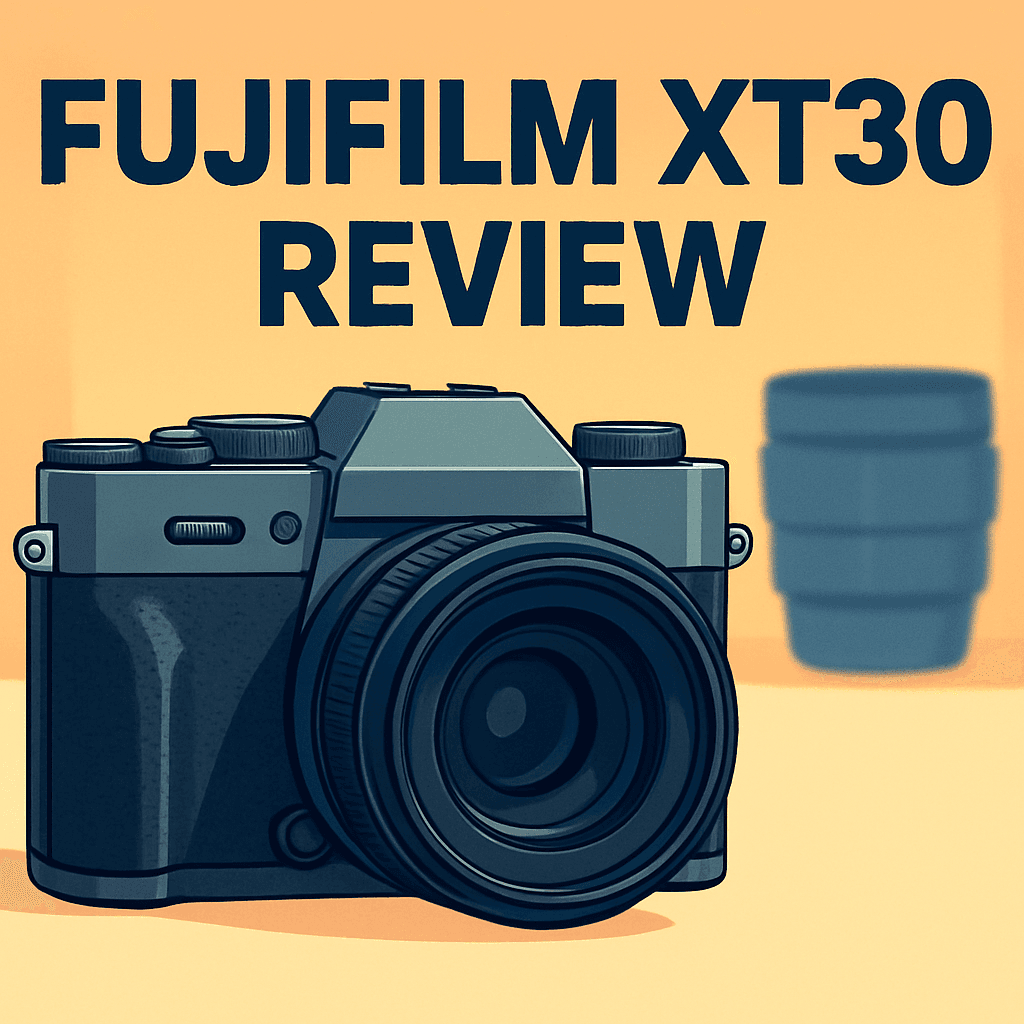
Want better image quality and faster handling without hauling a full-frame rig?
The Fujifilm X-T30 Camera promises pocketable performance for travel, street, family, and hybrid shooters who want striking straight-out-of-camera color and responsive controls.
After field-testing the X-T30 across urban streets and short trips, I’ve focused on handling, AF feel, JPEG color, and video usability, and found lens choice really changes stabilization and AF sensation.
It’s aimed at photographers who value portability, speed, and Fuji’s film-like colors over built-in stabilization. Make sure to read the entire review as I’ll unpack real-world strengths, compromises, and who should buy it — keep reading.

Fujifilm X-T30 Camera
Compact mirrorless packed with a 26MP APS-C X-Trans sensor, fast hybrid autofocus, film-simulation color profiles, tactile retro controls, and lightning-quick performance—perfect for photographers who crave premium image quality on the go.
Check PriceThe Numbers You Need
| Spec | Value |
|---|---|
| Sensor | 26 MP APS-C |
| Mount | Fujifilm X |
| Autofocus | Fast AF |
| Video | 4K resolution |
| Shutter Speed | Up to 1/8000 sec |
| ISO Range | 160–51200 |
| Continuous Shooting | Up to 11 fps |
| Image Stabilization | Optional (via lens) |
| Screen | 3-inch LCD |
| Viewfinder | 2.36M-dot OLED |
| Film Simulations | Yes |
| Weight | Approximately 383 grams |
| Dimensions | 118.4 x 82.8 x 46.8 mm |
| Battery Life | Up to 380 shots |
| Memory Cards | SD / SDHC / SDXC |
How It’s Built
In my testing the Fujifilm X-T30 feels pleasantly small and surprisingly sturdy in the hand. Its compact body makes it easy to carry all day, so you actually use it for street and travel shoots. That pocketable nature means you’re less likely to leave it at home when a moment pops up.
The EVF is sharp and steady, so framing fast-moving subjects felt natural and confidence-inspiring. The tilting LCD is handy for low and high angles, but it’s not ideal if you plan to vlog face-to-camera often. In bright sun the EVF is where I relied most for accurate framing and focus checks.
I really liked the tactile exposure and shutter dials — they make changing settings feel intuitive and fun, especially if you’re learning manual control. The trade-off is the smaller grip, which can feel a bit unstable with longer lenses and could be better for heavy setups. After using it for a while I found you shoot more deliberately, which is great for learning but less so for long telephoto sessions.
It takes standard SD cards and the battery will easily get you through a solid day of stills. For beginners that means simple card swaps and one spare battery keeps you shooting without stress. Overall it’s a friendly, well-built camera that asks you to match it with the right lenses and a spare battery for long days.
In Your Hands
The Fujifilm X-T30 Camera turns in stills with crisp micro-contrast and the kind of color rendition that makes images sing straight out of the camera. Fujifilm’s film simulations are more than a gimmick — they deliver polished SOOC JPEGs that meaningfully cut down editing time while preserving usable highlight and shadow detail across varied lighting. For photographers who favor a pleasing starting point, the X-T30 rarely disappoints.
Responsiveness is one of the camera’s strong suits: AF snaps into place for singles and feels confident during everyday burst shooting, making it a natural choice for street and family work. The camera handles fast primes wide open without fuss, so freezing motion or isolating subjects is intuitive and enjoyable in real-world use. For casual action and fleeting moments it’s satisfying rather than overbuilt.
As a hybrid tool, 4K footage looks clean and detailed for client clips or social use, though quick pans reveal some rolling-shutter character you’ll want to avoid. The tilting rear screen helps with low-angle shots and casual self-framing, but serious vloggers will miss a fully articulating display; handheld video benefits noticeably from OIS glass or a gimbal.
Lacking in-body stabilization means shooting strategy matters: faster shutter speeds, stabilized lenses, or supports become part of the workflow for low-light and run-and-gun video. Pairing the X-T30 with OIS optics restores a lot of handheld confidence, while unstabilized setups require more attention to technique.
Battery life easily carries a day of mixed stills and occasional video, but heavy video days will push you toward a spare. SD media handling is simple and reliable, keeping image transfer and on-location culling straightforward for travel and editorial shoots.
The Good and Bad
- 26 MP APS-C sensor delivers detailed stills
- 4K video capability for hybrid workflows
- Fast AF with solid responsiveness for everyday shooting
- Fujifilm Film Simulations for strong SOOC JPEGs
- No in-body stabilization; stabilization depends on OIS lenses or supports
- Tilting screen is less vlog-friendly than fully articulating designs
Ideal Buyer
If you prize small size, classic controls, and image quality, the Fujifilm X-T30 Camera is built for you. It packs a 26MP APS-C sensor and tactile exposure/shutter dials into a pocketable body, weighing roughly 383 g so it slips easily into a jacket or daypack. Shooting feels deliberate and fast without the bulk.
Shooters who want strong straight-out-of-camera color and fewer post-processing headaches will love the Film Simulations, which reduce editing and speed delivery to clients or social feeds. Weddings, street scenes, and travel albums come alive with Fuji’s JPEG look. You still get fast AF and 11 fps for candid moments.
Travel, street, and everyday documentary photographers who accept no IBIS will find the X-T30 an excellent companion. Pairing OIS lenses or choosing faster shutter speeds keeps handheld results sharp, and the camera is nimble for run-and-gun days. Battery life and the tilting screen mean planning a spare for long shoots.
Hybrid creators who need 4K but don’t rely on a flip-out screen or class-leading subject tracking will appreciate the balance here. If you want the most robust AF or built-in stabilization, consider the X-S10, Sony a6400, or Canon R10 instead. For photographers who favor portability, craftsmanship, and Fuji color, the X-T30 hits a sweet spot.
Better Alternatives?
We’ve gone through the X-T30 and how it handles with the lenses you’ll actually use in the field. That gives a clear idea of its little body, great JPEG colors, and the limits you hit when you need steadier hand-held shots or tougher AF tracking.
If you like the X-T30 but want something that handles video, low light, or fast-moving subjects differently, here are a few real-world alternatives I’ve used and what each one brings to the table.
Alternative 1:
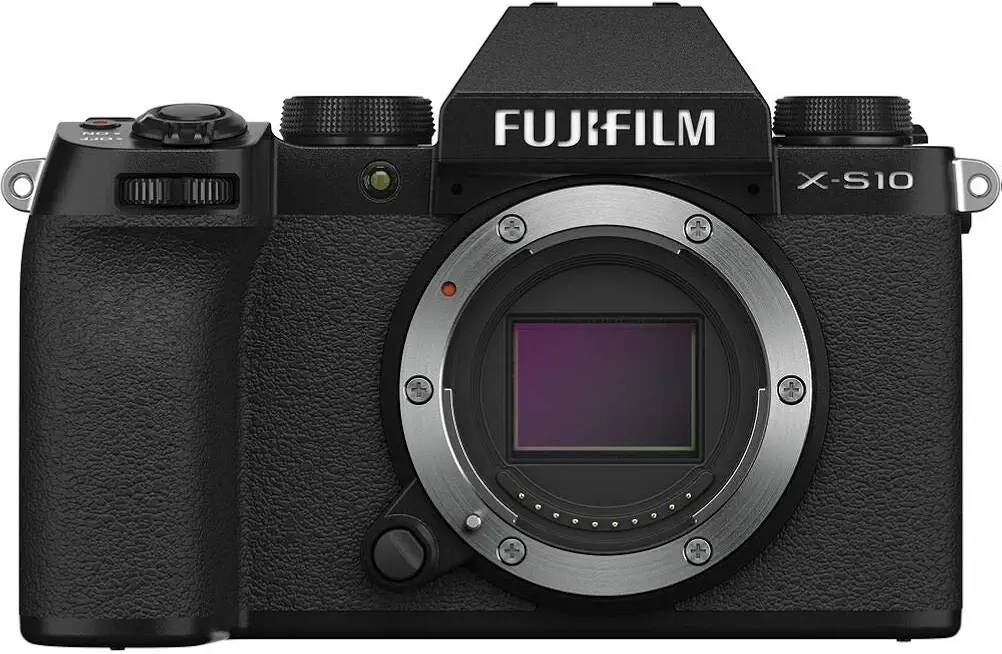
Fujifilm X-S10 Camera Body
Ergonomically designed mirrorless body featuring in-body image stabilization, a deep comfortable grip, vari-angle touchscreen, powerful autofocus, and robust movie tools—ideal for handheld shooting, vloggers, and hybrid photo-video creators.
Check PriceThe X-S10 improves on the X-T30 where it really counts for run-and-gun shooting: it has in-body image stabilization (IBIS) and a fully articulating screen. In practice that means steadier hand-held shots at slower shutter speeds and smoother handheld video without having to rely on OIS lenses or a gimbal. The bigger grip also makes it easier to hold heavier lenses for longer sessions.
What it gives up versus the X-T30 is some of the small, classic Fuji feel. The body is a bit larger and heavier, and Fuji swapped some of the top-plate tactile dials for a slightly different control layout. Image quality and colors are very close, but if you loved the X-T30 for its compact size and old-school dial setup, the X-S10 will feel more modern and less pocketable.
If you mostly shoot handheld events, travel with little support gear, or make videos and vlogs, the X-S10 is the better pick. If you prioritize the smallest possible Fuji with that traditional dial feel for street work, stick with the X-T30.
Alternative 2:

Sony Alpha a6400 Camera
Lightweight APS-C shooter delivering 24.2MP stills, ultra-fast real-time autofocus with eye tracking, 4K video capture, flip-up LCD for self-recording, and rapid continuous shooting for action and content creation.
Check PriceThe Sony a6400 shines where the X-T30 can feel held back: autofocus tracking. In real use the Sony locks on faces and moving subjects more aggressively and keeps focus in continuous bursts better than the X-T30. The lens options for Sony are also wider—so when you need a very specific lens for action or long reach, Sony’s ecosystem often gets you there faster.
On the downside, the a6400 doesn’t have IBIS either, so it matches the X-T30 in that shortcoming. Sony colors straight out of camera also need more work if you’re after the warm, film-like Fuji look. The menu system and control layout are less intuitive than Fuji’s for quick changes while shooting, so there’s a small adjustment if you like tactile dials and quick muscle memory.
Choose the a6400 if you shoot a lot of moving subjects—sports, kids, street action—or if you want the widest lens choices and top-notch subject tracking. If you value Fuji’s color and a small classic control feel more than absolute AF speed, the X-T30 still wins.
Alternative 3:
Sony Alpha a6400 Camera
Versatile compact camera offering responsive AF performance, silent electronic shutter, extensive lens compatibility, customizable controls, excellent low-light sensitivity, and dependable tracking—built for travelers, vloggers, and ambitious hybrid shooters.
Check PriceAnother way to look at the a6400 is as a compact, quiet shooter compared with the X-T30. The silent electronic shutter is a real benefit on quiet weddings or discreet street work. The flip-up screen is useful for self-recording and quick framing, even though it’s not a full side-flip like some vlog-specific bodies.
Where it falls short next to the X-T30 is the Fuji color and JPEG look. If you rely heavily on SOOC JPEGs and film simulations, the Sony will need more tweaking in post to match that Fuji look. Also, while the a6400 is comfortable and compact, some people find Fuji’s button layout and top dials faster for making exposure changes on the fly.
I’d recommend this take on the a6400 for travelers or vloggers who want a small, quiet camera with excellent AF and a big lens choice. If you prefer Fuji’s straight-from-camera color and a more tactile control scheme, the X-T30 remains the more satisfying daily shooter.
What People Ask Most
Fujifilm X-T30 vs X-T30 II — which should I buy?
The X-T30 II has faster processing and slightly improved autofocus, but the original X-T30 offers almost the same image quality for less money — buy the II for newer features or the original for better value.
Fujifilm X-T30 vs Sony a6400 — which is better?
The a6400 has stronger autofocus tracking and battery life, while the X-T30 shines with color, film simulations and handling; choose based on autofocus needs and which lens system you prefer.
Is the Fujifilm X-T30 good for beginners?
Yes — it’s compact with intuitive controls and great in-camera JPEGs, making it easy to learn while still powerful enough as you advance.
What is the image quality like on the Fujifilm X-T30?
Image quality is excellent from the 26MP sensor, delivering sharp detail and rich, film-like colors especially with Fujifilm’s film simulations.
Does the Fujifilm X-T30 have in-body image stabilization (IBIS)?
No — the X-T30 does not have IBIS, so use stabilized lenses or a tripod for low-light and steady video.
What is the battery life of the Fujifilm X-T30?
Expect around 350–380 shots per charge in typical use, so bring a spare battery for long shoots or travel.
Conclusion
The Fujifilm X-T30 Camera is a compact, stills-first mirrorless that punches above its weight. Its color science and film simulations produce JPEGs that often need little editing, and the camera’s responsiveness keeps pace with fast-paced street and travel work. That said, video, stabilization and vlogging ergonomics are secondary to its strengths and shape realistic expectations.
Photographers who prize portability, tactile exposure dials, and immediate, pleasing color will find tremendous value here. Hybrid creators will appreciate its video capabilities, but should plan to use stabilized lenses or support systems for smooth handheld work and accept the tilting screen’s limits. If you routinely need best-in-class AF tracking or in-body stabilization, this body is not the ideal one.
Compare before you buy: the X-S10 adds in-body stabilization and friendlier video ergonomics, Sony’s a6400 raises the bar on tracking and lens choice, and Canon’s R10 offers modern subject-detection AF if that’s your priority. For many shooters, though, the X-T30 Camera remains a compact, joyful tool that delivers striking stills and efficient workflows when used on its terms. Paired with the right lenses it’s hard to beat for travel, street and everyday photography.
Fujifilm X-T30 Camera
Compact mirrorless packed with a 26MP APS-C X-Trans sensor, fast hybrid autofocus, film-simulation color profiles, tactile retro controls, and lightning-quick performance—perfect for photographers who crave premium image quality on the go.
Check Price

0 Comments