
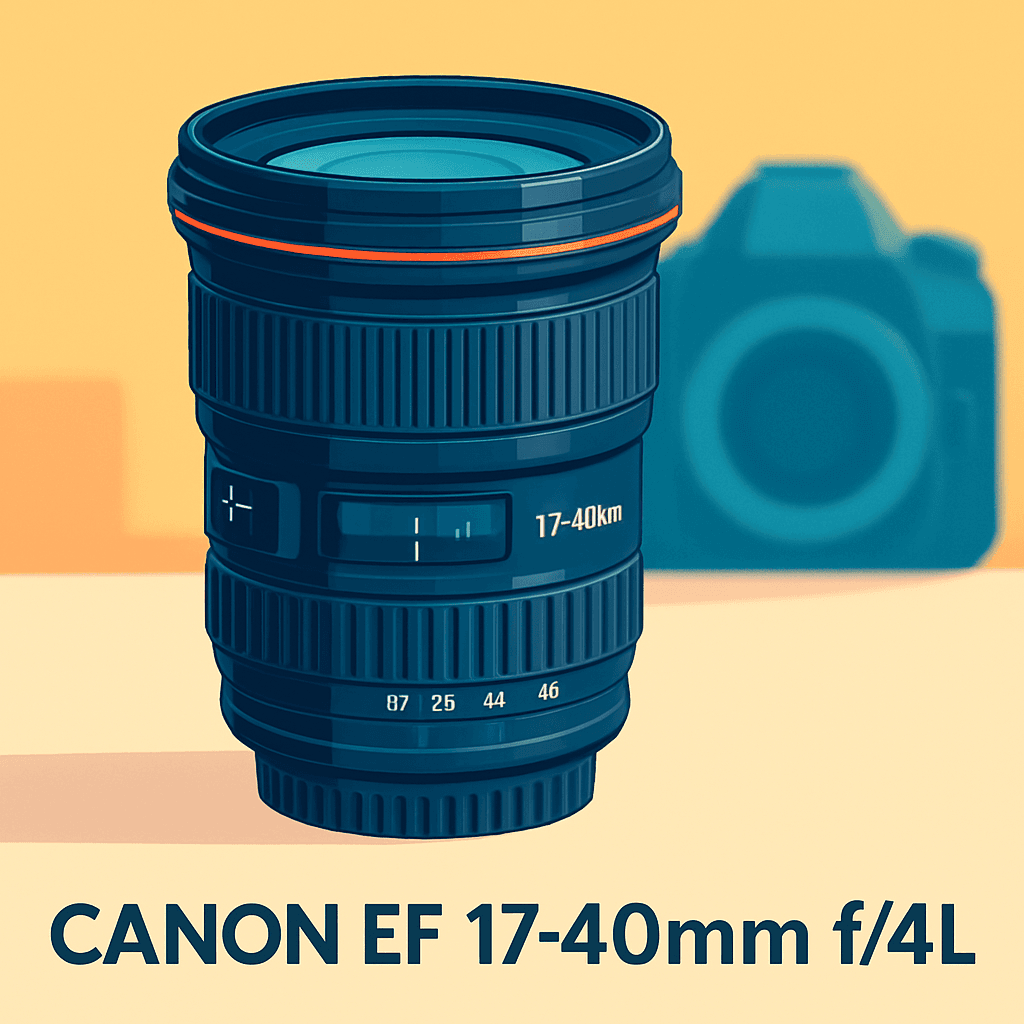
Want to know if the Canon EF 17-40mm f/4L is the versatile wide zoom that’ll actually improve your landscape, travel, or architecture images?
I’ve spent time shooting it in fog, city light, and coastal sunsets, so this intro comes from hands-on use rather than bench numbers.
It aims to deliver weather-resistant build, a consistent aperture, and straightforward filter handling—real-world traits that affect your shoot more than a spec sheet.
If you shoot landscapes, interiors, or travel and care about dependable handling and predictable results, this review is for you; I’ll cover handling, sharpness, pros and cons—keep reading.

Canon EF 17-40mm f/4L
Versatile wide-angle zoom offering consistent f/4 performance, outstanding edge-to-edge sharpness, and weather-sealed durability. Ideal for landscapes and architecture; lightweight design makes it a travel-friendly L-series workhorse.
Check PriceThe Numbers You Need
| Spec | Value |
|---|---|
| Mount | Canon EF |
| Focal Length | 17-40mm |
| Maximum Aperture | f/4 (constant) |
| Lens Type | Ultra-wide to wide-angle zoom |
| Format Compatibility | Full-frame (35mm) |
| Optical Construction | 12 elements in 9 groups |
| Diaphragm Blades | 7, rounded |
| Minimum Focus Distance | 0.28 meters (28 cm) |
| Autofocus | Ultrasonic Motor (USM) |
| Filter Size | 77mm |
| Image Stabilization | No |
| Weather Sealing | Yes (dust and moisture resistant) |
| Dimensions | Approximately 83.5 mm diameter × 98.5 mm length |
| Weight | Approximately 525 grams |
| Lens Hood | Included (flower-shaped) |
How It’s Built
In my testing the Canon EF 17-40mm f/4L feels solid and trustworthy in the hand. The metal mount and weather seals give you confidence to shoot in drizzle or dusty trails without worrying. I really liked that it encourages you to keep shooting when the weather turns messy.
The controls are straightforward and well placed. The ring-type USM makes autofocus quick and quiet, and the focus ring is smooth enough for gentle manual tweaks. One thing that could be better is the zoom action — it can feel a touch stiff around one part of the range.
The included petal hood fits snugly and actually helps when shooting into bright light. Front filters screw on easily and I had no trouble using a polarizer at the wide end without obvious darkening in the corners. For a beginner that means easy filter work and fewer surprises in the field.
Build tolerances are tight and I didn’t notice any mount play after lots of swapping and packing. Paired with a full-frame DSLR it balances nicely and doesn’t tire your wrist on long walks.
After using it for a while the overall takeaway is simple: it’s a sturdy, well-thought-out lens that’s easy to live with day to day. If you want a solid, weather-ready wide zoom that behaves like a pro tool, this one makes that an easy choice.
In Your Hands
Autofocus from the Canon EF 17-40mm f/4L feels purposeful and punchy on stills—USM drives deliver quick, quiet locks and generally reliable acquisition even when light drops. In very low-contrast or heavily backlit scenes it can hesitate a beat before settling, and video shooters will notice modest hunting during extended pulls.
The constant f/4 aperture keeps exposure steady through the zoom and makes the lens predictable for handheld shooting in good light, but it doesn’t offer the shallowest background separation for portraits. Stopping down cleans up landscapes and architecture, where depth of field control and edge-to-edge detail benefit from a few clicks of aperture.
There’s no optical stabilization, so practical handheld shooting depends on shutter discipline and technique; in dim interiors or at night a tripod or monopod becomes the sensible choice. In daylight travel scenarios the balance and size make it easy to carry and steady for grab-shot work without much fuss.
Close-focus capability is surprisingly useful for environmental details, food, and venue inserts, letting you get tight without changing lenses. The included hood suppresses flares well, though severe backlighting can still soften contrast; color rendering is neutral with pleasing microcontrast that keeps scenes looking natural.
For video, focus breathing is noticeable on dramatic racking but manual focus throw is serviceable for controlled pulls and AF transitions are smooth enough for run-and-gun work. Use it wide for immersive interiors and landscapes, mid-range for streets and editorial, and at the long end for tighter compositions and environmental portraits.
The Good and Bad
- Ultra-wide to wide 17–40mm range on full-frame
- Constant f/4 aperture
- Weather sealing (dust and moisture resistant)
- Ring-type USM autofocus
- No image stabilization
- f/4 is not a fast aperture for low light or shallow depth-of-field needs
Ideal Buyer
The Canon EF 17-40mm f/4L is ideal for photographers who prize a compact, weather‑sealed ultra‑wide for their Canon full‑frame bodies. Landscape, travel, and architecture shooters will appreciate its manageable weight, solid build, and the convenience of a common 77mm filter thread that keeps polarizers and NDs simple to use. If you spend your days composing horizons, interiors, and converging lines rather than chasing ultra‑shallow depth of field, this lens fits the bill.
It’s also a smart pick for photographers who shoot on tripods or use steady‑hand techniques and don’t need image stabilization or an f/2.8 aperture. Close‑up capability to 0.28 m and the 17–40mm range make it versatile for environmental details, travel reportage, and tight interiors. Autofocus is fast and reliable for stills, and the lens balances well on most full‑frame DSLRs for long days in the field.
Consider alternatives if your work demands the absolute best corner sharpness on high‑megapixel bodies, faster low‑light performance, or built‑in IS for handheld video. But for shooters who value consistent handling, weather resistance, and filter‑friendly design without a heavy price or bulk penalty, the 17‑40mm remains a practical, battle‑tested choice. It’s the kind of lens you pack first when travel weight, durability, and reliable wide‑angle reach matter more than maximum aperture.
Better Alternatives?
We’ve already gone through what the Canon EF 17-40mm f/4L does well — a light, weather-sealed wide zoom with consistent handling and good real-world results for landscapes and travel. It’s a smart, compact choice when you want decent image quality without the weight or price of faster pro glass.
If you need more reach at the wide end, better corner performance, or faster glass for low light, there are a few clear alternatives worth considering. Below I’ll walk through three lenses I’ve used in the field and explain where each one beats the 17-40 and where it gives things up.
Alternative 1:

Canon EF 16-35mm f/4L
Compact ultra-wide zoom delivering crisp detail and balanced color across the frame. Constant f/4 performance and rugged L-series construction make it perfect for travel photographers seeking versatility and reliable results.
Check PriceThe 16-35mm f/4L is the most natural step up from the 17-40mm for everyday shooters. On the street and when hiking, that extra millimetre at the wide end makes compositions feel noticeably airier, and I found edges and corners a touch crisper compared with the 17-40 — especially on high-resolution bodies. Colors and contrast also look a bit cleaner in backlit scenes, so you get fewer surprises when shooting into the sun.
Where it doesn’t beat the 17-40 is in price and, depending on the exact model, weight — the 16-35 can be slightly heavier and pricier. If you own the original 17-40 for its compact feel, you’ll notice the 16-35 trades a bit more bulk for that small jump in image quality and build. It also keeps the same constant f/4, so it won’t help much in very low light compared with f/2.8 options.
If you’re a travel or landscape shooter who wants a slightly wider field of view and cleaner corners without moving up to a heavier f/2.8 pro lens, the 16-35 f/4L is a good pick. It’s for photographers who value better sharpness and color rendering but still want a lens that’s comfortable to carry all day.
Alternative 2:
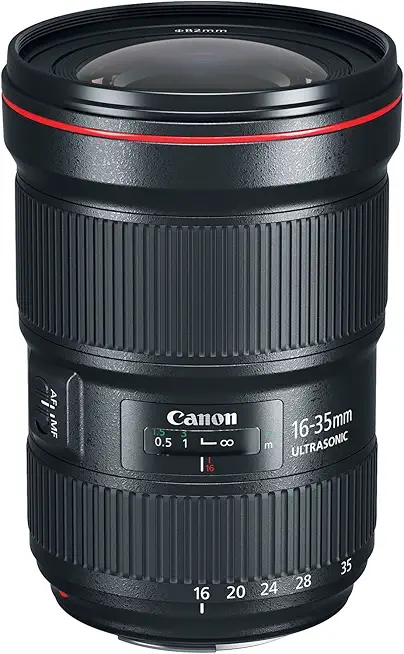
Canon EF 16-35mm f/2.8L III
Professional-grade ultra-wide zoom with fast f/2.8 aperture for low-light shooting and creamy bokeh. Enhanced optics and precise autofocus produce outstanding corner-to-corner sharpness for landscapes, events, and astrophotography.
Check PriceThe 16-35mm f/2.8L III is a real step up in real-world shooting. I’ve used it at night, in churches, and under stars — the f/2.8 aperture makes a visible difference for low-light hand-held shots and for getting cleaner star fields without pushing ISO too hard. Its modern optics deliver stronger center and corner sharpness, and images feel punchier straight out of the camera compared with the 17-40.
The trade-offs are obvious in the field: it’s heavier and more expensive, and you’ll feel that bulk after a long shoot. There’s no image stabilization, so handheld low-light work still benefits from careful technique or higher ISO, although the faster aperture helps. For run-and-gun travel where every ounce counts, the 17-40 may still be the easier carry.
Buy the 16-35 f/2.8L III if you shoot events, weddings, astro, or any low-light work where letting in more light and having better edge-to-edge sharpness matters. It’s aimed at pros or enthusiasts who want top image quality and don’t mind the extra size and cost for those gains.
Alternative 3:

Canon EF 16-35mm f/2.8L II
Robust, fast-aperture wide-angle zoom built for pro use, offering excellent contrast and dependable autofocus. Rugged construction and bright aperture enable dramatic perspectives for landscapes, interiors, and low-light scenes.
Check PriceThe 16-35mm f/2.8L II is an older pro lens I’ve used a lot when renting on assignment. It gives you that useful f/2.8 speed for low light and shallower depth of field compared with the 17-40, and it’s built like a tank — you can toss it in a bag and not worry too much. In good light it still produces strong images, and you’ll notice a jump in creative options versus the f/4 17-40.
Compared to the newer 16-35 III and the 17-40, the II is a bit behind on microcontrast and flare control. In harsh backlight I saw more flare and slightly softer corners than the III; it still beats the 17-40 in speed, but not always in the absolute clarity the newer designs deliver. Autofocus is reliable, but it feels a touch older in speed and refinement.
This one is for shooters who want f/2.8 performance without paying top dollar for the newest version. If you buy used or rent it, you get lots of low-light power and tough build — a good choice for budget-conscious pros, wedding shooters starting out, or anyone who values aperture speed more than the last bit of corner sharpness or flare resistance.
What People Ask Most
Is the Canon EF 17-40mm f/4L a good lens?
Yes — it’s a solid, affordable L-series wide-angle with good build and reliable image quality, especially for landscapes and architecture.
How does the Canon 17-40mm f/4L compare to the 16-35mm f/2.8L?
The 16-35mm f/2.8 is faster and generally sharper, while the 17-40mm is lighter, cheaper, and still excellent for everyday wide-angle work.
Is the Canon EF 17-40mm f/4L sharp across the frame?
Center sharpness is good, but corners can be softer wide-open at the extremes and improve noticeably when stopped down to f/8–f/11.
Does the Canon EF 17-40mm f/4L have image stabilization?
No, it does not include image stabilization, so use a tripod or higher ISO for long exposures.
Is the Canon EF 17-40mm f/4L worth buying used?
Yes — it’s commonly available used at attractive prices and is a great value if the optics and focus feel are clean; check for fungus, scratches, and smooth focus action.
Will the Canon 17-40mm f/4L work on Canon mirrorless bodies with an adapter?
Yes — it works on Canon mirrorless with an EF adapter (EF-to-R or EF-to-EF-M) and retains autofocus and metering, though AF performance can vary by camera.
Conclusion
After extensive field use the Canon EF 17-40mm f/4L proves itself as a reliable, travel-friendly ultra-wide that balances reach and portability. Handling is confident and autofocus is quick and unobtrusive. Weather resistance and compact footprint make it a practical companion.
Optically it delivers strong center performance and useable corners that reward modest stopping down. Contrast and color rendering sit on the neutral side, so files are forgiving and easy to grade. The hood and coatings keep flare in check for most backlit situations.
Its chief compromises are obvious: no image stabilization and a modest maximum aperture. That limits handheld low-light work and shallow-depth creative choices, pushing long exposures or higher ISO when light fades, so it rewards careful technique. If you rely on handheld video or night shooting often, plan to step up.
For landscape, architecture and travel photographers who value weight, weather sealing and filter compatibility, this lens remains a smart, cost-conscious choice. If low-light versatility or in-body/optical stabilization matters more, consider the f/4 IS or faster f/2.8 alternatives instead. In short — sensible, solid, and purpose-built for shooters who prioritize robustness and portability over maximum speed, making travel and landscape shooting less fussy.
Canon EF 17-40mm f/4L
Versatile wide-angle zoom offering consistent f/4 performance, outstanding edge-to-edge sharpness, and weather-sealed durability. Ideal for landscapes and architecture; lightweight design makes it a travel-friendly L-series workhorse.
Check Price



0 Comments