
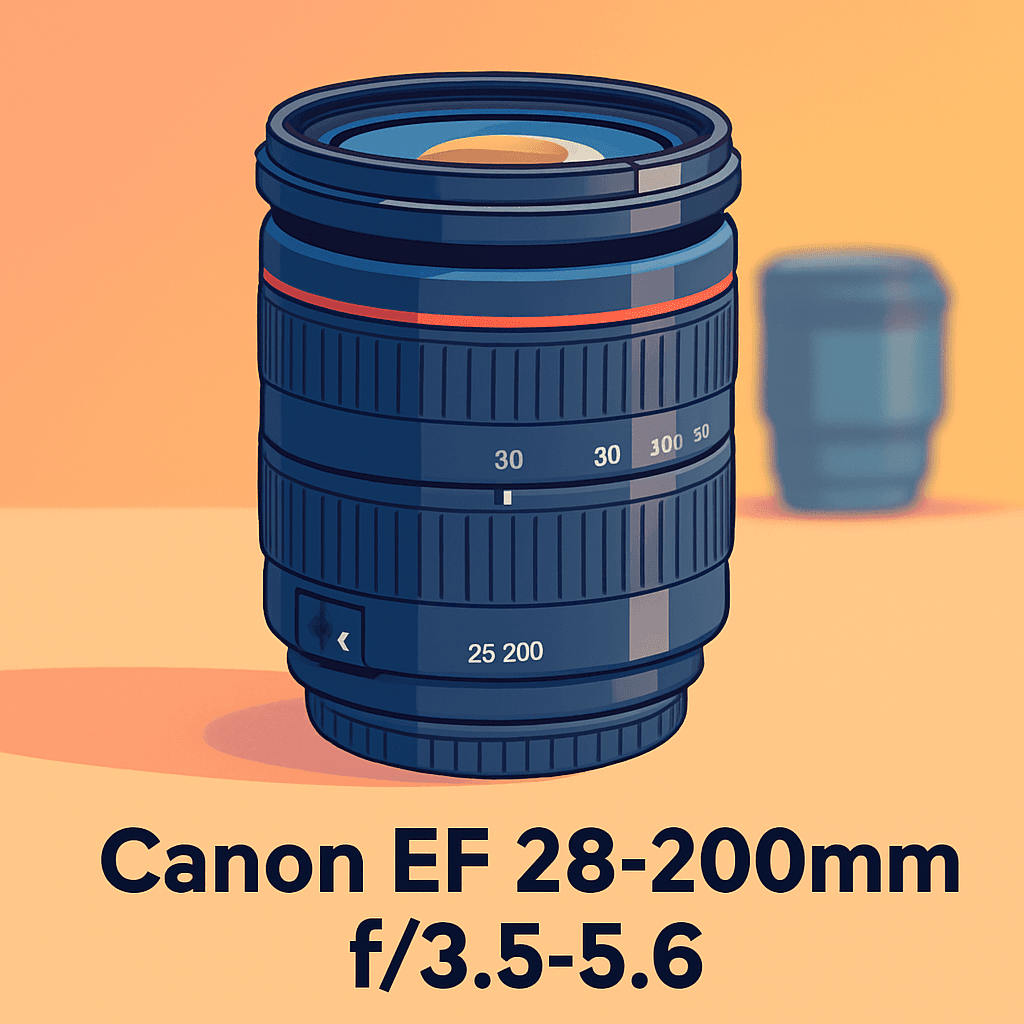
Want one lens that can replace a handful of glass on your next trip and still deliver usable results from wide to tele? The Canon EF 28-200mm f/3.5-5.6 USM promises that kind of all-in-one convenience for EF shooters who value range and simplicity.
It’s a full-frame compatible superzoom with a variable aperture and USM autofocus, but no optical stabilization, so there are real-world trade-offs for low-light shooting and telephoto handholding. Those compromises matter if you shoot travel, street, or daylight-heavy assignments.
After taking this lens into the field, I’ll walk you through handling, image behavior without IS, and how the AF performs across the zoom range. Make sure to read the entire review as I break down what works, what doesn’t — keep reading.

Canon EF 28-200mm f/3.5-5.6 USM
Versatile travel zoom covering wide-angle to telephoto, with fast ultrasonic autofocus for quick, silent focusing. Compact and lightweight design makes it ideal for everyday shooting, portraits, and landscapes on the go.
Check PriceThe Numbers You Need
| Spec | Value |
|---|---|
| Lens mount | Canon EF |
| Focal length | 28–200 mm |
| Maximum aperture | f/3.5–5.6 |
| Lens type | Superzoom (all-in-one) |
| Format compatibility | Full-frame (35mm) |
| Optical construction | 16 elements in 12 groups |
| Minimum focusing distance | 0.5 m (approx.) |
| Filter size | 72 mm |
| Image stabilization | No (no optical stabilization) |
| Autofocus | Yes, USM motor |
| Weight | Approx. 540 g |
| Maximum magnification | 0.27× |
| Aperture blades | 7 rounded |
| Lens diameter × length | Approx. 78 × 124 mm |
| Mount compatibility note | Canon EF mount only (not native RF) |
How It’s Built
In my testing the Canon EF 28-200mm f/3.5-5.6 USM feels like an honest, no-nonsense travel lens. The EF mount and full-frame compatibility are exactly what you’d expect on a Canon DSLR, and the build gives a reassuring, everyday-use vibe. It’s not flashy, but it’s practical in the hand.
I found balance to be friendly on mid-sized Canon bodies for most of the zoom range. At the long end it does pull forward a bit, so you notice it when panning or holding for long stretches. What I really liked was how compact it stays until you reach for telephoto shots.
The optical design means there are a lot of glass inside, and in my testing that showed up as decent flare control most of the time. The seven rounded aperture blades shape out‑of‑focus highlights in a predictable way when you stop down. One thing that could be better is the lack of image stabilization — you have to think about shutter speed and ISO more often.
Controls are straightforward: the zoom ring has a moderate resistance and a useful throw, and autofocus via USM is quiet and direct. I noticed minimal barrel play and a solid mount fit, so the lens feels reliable for daily use.
The 72mm filter thread is easy to outfit with common filters and hoods, which is great for beginners building a kit. After using it for a while I’d recommend it for travelers who want simplicity, but be ready to manage handholding technique without IS.
In Your Hands
Used as a travel or walkaround lens, the Canon EF 28-200mm f/3.5-5.6 USM delivers the sort of one-lens freedom that makes roaming a city or shooting a day trip effortless. Mid-range focal lengths are where it feels most at home — quick to frame, responsive in good light, and helped by a generally quiet USM drive. Composing and switching perspectives is smooth, which keeps the pace of candid or travel work upbeat.
In dim interiors and evening scenes the lack of optical stabilization becomes a practical consideration rather than a mystery; you find yourself favoring a firmer stance, higher ISOs, or support for the longest reaches. At the tele end handheld shooting rewards a conservative shutter choice or a monopod to preserve keepers, since subject motion and camera shake are more likely to bite. The lens’ AF remains acceptably confident in decent light but shows the usual limits as contrast falls away.
The variable maximum aperture — brighter at the wide end and darker toward the long end — shapes exposure and depth-of-field decisions across a shoot, nudging you to trade shutter speed or ISO when you need subject isolation. Close-up work is surprisingly useful: the lens focuses close enough for food, detail shots, and small objects, producing usable background separation for pleasing near-macro results.
Built for EF DSLR users, the barrel balances well on everyday bodies and is light enough to carry all day without fatigue, while the common filter thread keeps accessory packing simple. In practice this lens is a reliable, pragmatic tool for daytime travel and generalist photographers who value reach and convenience over low-light heroics.
The Good and Bad
- Broad 28-200 mm focal range in one lens (true all-in-one convenience)
- USM autofocus
- Reasonable size/weight for the range (approx. 540 g; 78 x 124 mm)
- 0.27x max magnification and 0.5 m minimum focusing distance offer useful close-up capability
- No optical image stabilization
- Variable maximum aperture f/3.5-5.6 reduces light gathering at the tele end
Ideal Buyer
Built for Canon EF shooters who want a true single‑lens travel solution, the Canon EF 28-200mm f/3.5-5.6 USM covers almost every shooting situation from wide to short tele. It’s full‑frame compatible and light enough to carry all day, making it a practical choice for walkaround, street, and vacation photography. It’s a no‑fuss optic that keeps you shooting instead of swapping glass.
Buyers who prize reach and flexibility over low‑light speed will get the most from this superzoom. With its variable f/3.5–5.6 aperture and no optical stabilization, it performs best in daylight or when you can use faster shutter speeds, higher ISO, or a monopod.
Photographers who value quick, quiet USM autofocus and handy near‑macro reach will appreciate the lens’ real‑world utility. The 0.27x magnification and roughly 0.5 m close‑focus distance make food, detail shots, and casual portraits very doable without changing lenses. If you favor one efficient kit over a bag of primes, this lens rewards simplicity and fewer lens swaps.
If you need stabilized tele shooting, faster apertures for subject isolation, or the ultimate edge‑to‑edge sharpness, consider IS‑equipped or pro‑grade alternatives. But for travelers and everyday shooters who want reach, decent AF, and compact handling, the 28‑200mm is a smart, practical compromise.
Better Alternatives?
We’ve already gone through the Canon EF 28-200mm f/3.5-5.6 USM in detail — its true one-lens convenience, usable close-focus, and the trade-offs you accept for that range, especially no image stabilization and a variable aperture. If you like the idea of a single lens that covers most situations but want something different in build, reach, or handling, there are a few realistic options to consider.
Below I’ll walk through three lenses I’ve used in the field and tell you, in plain terms, where each one beats the 28-200 and where it doesn’t. I’ll also say what kind of shooter is likely to prefer each alternative so you can pick the one that fits how you actually work.
Alternative 1:

Canon EF 28-300mm f/3.5-5.6L IS USM
Professional-grade optic delivers expansive 28–300mm reach with stabilisation and rapid AF for crisp images in challenging conditions. Rugged construction, superior coatings, and weather sealing ensure reliability for pro travel and event work.
Check PriceI’ve used the Canon 28-300mm L on trips and event days where I needed one lens that could handle everything without worrying about dust or weather. Compared to the 28-200, it clearly wins on build and confidence — the L-series construction feels tougher and it has image stabilization, so handheld tele work is much more reliable. On breezy evenings or in late light I was able to use slower shutter speeds and still get usable shots, something the unstabilized 28-200 struggles with.
The trade-offs are obvious in daily use: the 28-300L is heavier, bigger, and much pricier. You’ll feel the extra weight on long walks, and the cost puts it out of reach for many hobby shooters. Optically it often delivers better center sharpness and cleaner contrast than the 28-200, but you still get the usual long-superzoom softness at the extreme end — it isn’t a 300mm prime.
Buyers who should choose this over the 28-200 are pros or serious travelers who need weather resistance, stabilization, and a lens that can be leaned on in tougher conditions. If you shoot events, weddings on the move, or travel where swapping lenses isn’t practical and budget isn’t the top concern, this lens makes more sense.
Alternative 2:

Tamron 28-300mm f/3.5-6.3 Di VC PZD Canon EF
All-in-one full-frame solution offering broad focal coverage with vibration compensation and ultra-compact piezo drive AF. Lightweight, budget-friendly choice for travelers who need flexible framing and steady handheld performance.
Check PriceThe Tamron 28-300mm I’ve used is the practical answer to the 28-200’s missing features. It adds vibration compensation (VC), so in real shooting it lets you handhold at longer focal lengths and lower light far better than the unstabilized Canon. It also gives a bit more reach, which is handy for wildlife or distant details when you can’t swap lenses.
What you give up versus the 28-200 is mainly optical and autofocus finesse. The Tamron’s aperture narrows to f/6.3 at the long end, so it is a touch dimmer and less able to blur backgrounds. AF is quiet and usually quick thanks to the PZD motor, but in tricky light or fast action it doesn’t feel quite as immediate or precise as Canon’s USM. Image edges and long-end shots often need stopping down for the best results.
This Tamron suits the budget-minded traveler or hobbyist who wants a true all-in-one with stabilization and a compact package. If you want a single lens to carry through airports and city streets and need steadier handheld performance than the 28-200 offers, this is the more practical pick.
Alternative 3:
Tamron 28-300mm f/3.5-6.3 Di VC PZD Canon EF
Smooth zoom transitions and quiet, responsive piezo AF deliver video-friendly operation across a wide zoom range. Advanced coatings and stabilisation minimize flare and blur for reliable results in varied lighting.
Check PriceUsing the Tamron for video showed me another side of why it beats the 28-200 for many shooters: the zoom and focus are quiet and smooth, and VC helps stabilize handheld clips. If you shoot a mix of stills and video, you’ll notice fewer focus and zoom noises in your audio and fewer shaky pans than with the unstabilized Canon.
On the downside, the Tamron still shares the same optical compromises of long-range superzooms: less punch at the corners, softer detail at 300mm unless you stop down, and the f/6.3 long end limits low-light control and background separation. For fast-moving subjects that need reliable tracking, the Canon USM in the 28-200 can feel a bit snappier in stills autofocus.
Pick this Tamron option if you’re a hybrid shooter — travel vloggers, documentary makers, or content creators who need one lens that does both video and photos with fewer compromises in handheld shooting. It’s a sensible choice when smooth operation and stabilised footage matter more than the absolute sharpest telephoto stills.
What People Ask Most
Is the Canon EF 28-200mm f/3.5-5.6 a full-frame lens?
Yes — as an EF-mount lens it was designed to cover full-frame (35mm) sensors and works natively on Canon full-frame DSLRs.
How sharp is the Canon EF 28-200mm f/3.5-5.6 across the zoom range?
Center sharpness is reasonable at wide and mid lengths, but it softens noticeably at the long end and in the corners compared to modern zooms.
Does the Canon EF 28-200mm f/3.5-5.6 have image stabilization (IS)?
No — this lens does not include IS, so you’ll need faster shutter speeds or a tripod for longer focal lengths.
How good is the autofocus on the Canon EF 28-200mm f/3.5-5.6 for stills and video?
Autofocus is acceptable for stills in good light but not as fast or quiet as newer lenses, and it can be noisy or prone to hunting during video.
Is the Canon EF 28-200mm f/3.5-5.6 a good travel or all-in-one lens?
Yes — it’s a handy, lightweight all-in-one that covers a huge range, ideal for travel if you can live with some compromises in sharpness and low-light performance.
Should I buy the Canon EF 28-200mm f/3.5-5.6 used or new?
It’s commonly discontinued, so buying used from a reputable seller is the usual route; inspect the glass, aperture blades, and AF to avoid surprises.
Conclusion
The Canon EF 28-200mm f/3.5-5.6 USM is unabashedly a convenience-first lens that delivers an honest, usable range in a compact package. It’s the sort of glass you reach for when one-lens simplicity matters more than shaving stops or squeezing out ultimate edge-to-edge resolution.
Its biggest strengths are practical: broad coverage from wide to tele, a quick and unobtrusive USM autofocus system, and surprisingly useful close-focus versatility that makes it a genuine travel and walkaround companion. Handling and balance make it easy to carry all day, and it consistently keeps you in the moment rather than chasing glass changes.
The trade-offs are equally clear and unavoidable. The lack of optical stabilization and the variable light-gathering at the long end mean you’ll need to be mindful of shutter speed and ISO in dim conditions. If you demand rock-solid low-light performance, faster apertures, or top-tier optical refinement, this isn’t the lens to chase those goals.
For EF shooters who prize focal-length flexibility and minimal kit, it’s a compelling, practical choice that earns a recommendation. If steadier handheld telework, extended reach, or the highest image quality are priorities, look instead to stabilized or higher-grade alternatives.
Canon EF 28-200mm f/3.5-5.6 USM
Versatile travel zoom covering wide-angle to telephoto, with fast ultrasonic autofocus for quick, silent focusing. Compact and lightweight design makes it ideal for everyday shooting, portraits, and landscapes on the go.
Check Price


0 Comments