
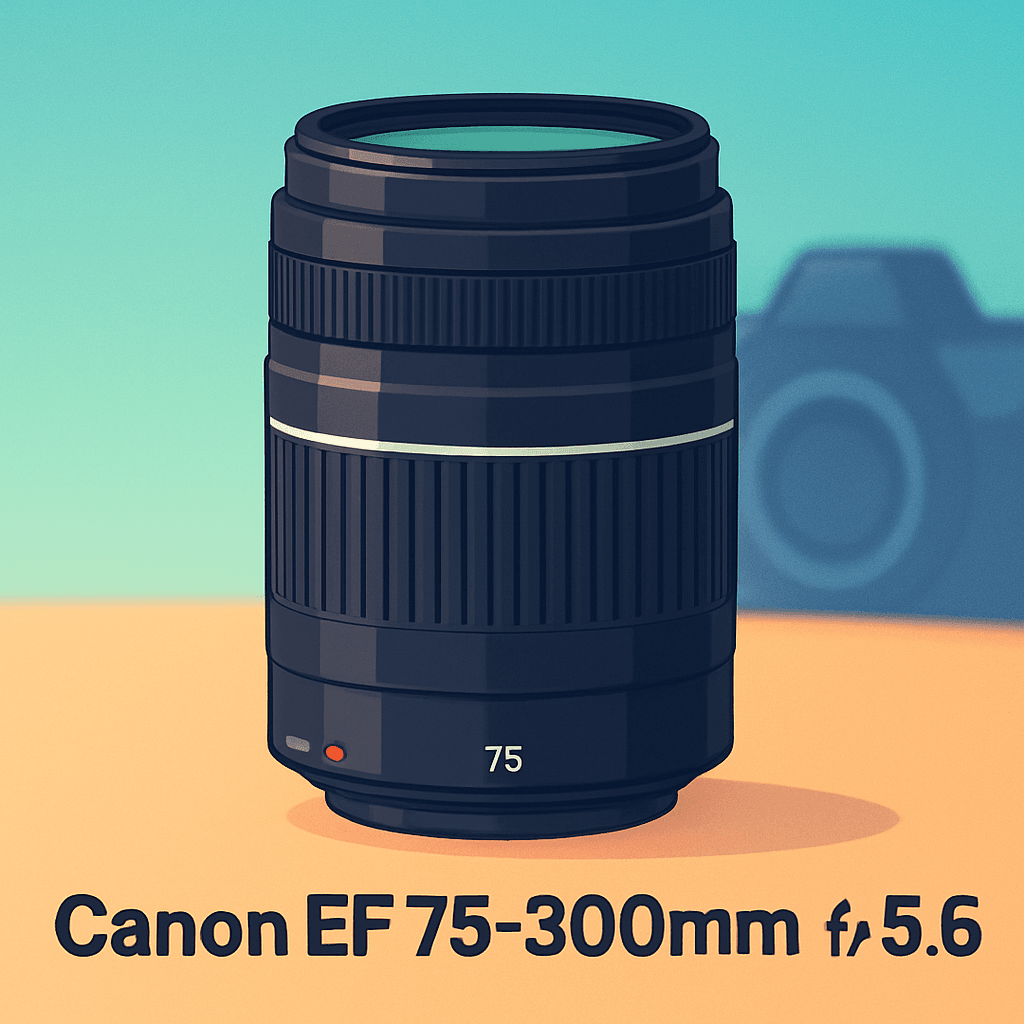
Want long telephoto reach without emptying your wallet?
After field-testing the Canon EF 75-300mm f/4-5.6 III, I’ve been testing it in real-world shoots to see what it actually offers.
It’s a compact, lightweight telezoom that gives extra reach for outdoor daytime work.
You won’t get premium features, but you’ll get usable reach without much weight.
Don’t expect image stabilization, advanced autofocus, or metal-heavy build.
Those limitations mean you’ll rely on technique, faster shutter speeds, and support when needed.
This lens is ideal for beginners, travelers, and budget-conscious shooters who mainly work in daylight.
It’s great for casual wildlife, sports in good light, and compressed portraits from a distance.
I’ll walk through real-world handling, image expectations, and when an upgrade makes sense.
Make sure to read the entire review as you decide if it’s right for your kit — keep reading.

Canon EF 75-300mm f/4-5.6 III
Lightweight, affordable telephoto zoom ideal for beginners seeking extended reach. Delivers decent sharpness and reliable performance for travel, portraits, and distant subjects without breaking the bank.
Check PriceThe Numbers You Need
| Spec | Value |
|---|---|
| Mount | Canon EF |
| Focal Range | 75-300mm |
| Aperture | f/4–5.6 |
| Image Stabilization | No |
| Lens Material | Plastic |
| Weight | Light |
| Autofocus | Basic |
| Design | Telephoto zoom |
| Minimum Focus Distance | Not specified |
| Filter Size | Not specified |
| Lens Type | Budget option |
| Elements | 13 |
| Groups | 9 |
| Special Features | None |
| Compatibility | Canon EF-mount DSLRs |
How It’s Built
In my testing the Canon EF 75-300mm f/4-5.6 III feels exactly like what it is: a simple telephoto for Canon EF cameras that gets you a lot of reach without a lot of weight. It’s mostly plastic, so it’s light enough to carry all day. For beginners that means less bulk and more shooting time outdoors.
The controls are very straightforward, which I liked. The zoom and focus rings turn predictably and there are no extra switches or modes to fuss with. That simplicity makes it easy to learn, and you can focus on framing instead of menu diving.
One thing that could be better is the lack of image stabilization. In my testing that meant you need to watch your shutter speed, brace against something, or use a monopod for the long end. Also, the lens doesn’t advertise a close-focus advantage, so plan ahead if you want to get tight close-ups and double-check filter size before buying accessories.
Overall the build clearly leans budget-first, but that’s useful in the real world. I found it durable enough for travel and casual wildlife outings, and its portability is a real win for new shooters who want telephoto reach without hurting their shoulders.
In Your Hands
The Canon EF 75-300mm f/4-5.6 III feels more like a travel companion than a studio tool; its light, compact build makes it easy to carry all day for events, hikes, or quick shoots. Handling is simple and unobtrusive, so you’ll find yourself reaching for it when you want reach without weighing down a bag.
Because the lens lacks image stabilization, getting sharp shots at the long end relies on technique rather than electronics. Favor quicker shutter speeds, steady handholding, and whenever possible brace against a fence or use a monopod to tame camera shake. Those small habits dramatically increase the keeper rate, especially in handheld situations.
In bright outdoor conditions this zoom is a capable tool for casual sports, wildlife at modest distances, and compressed portraits shot from afar; it rewards patience and decent light. Its autofocus is basic, so fast action or low-light scenarios will show its limits and reduce your margin for error. For events and candid detail work where subjects move predictably, it gets the job done with thoughtful shooting.
Image quality improves when you stop the lens down a touch and prioritize shutter speed when needed, striking a balance between depth of field and motion control. Keep your approach straightforward—single-point focus for precision and support or faster exposures for the long end will yield the best real-world results.
The Good and Bad
- Budget-friendly entry to telephoto reach
- Lightweight, portable
- Simple, straightforward operation
- Canon EF compatibility
- No image stabilization
- Basic autofocus
Ideal Buyer
The Canon EF 75-300mm f/4-5.6 III is particularly well suited to beginners and budget-conscious shooters who want honest telephoto reach without investing in heavier, pricier glass. Its lightweight, compact construction makes it easy to sling over a shoulder for travel, walks, and casual outings. If your shooting is mostly in daylight and you can manage shutter speed and support, this lens delivers usable results.
Think weekend wildlife at modest distances, backyard birding, compressed portraits from across a field, and candid details at outdoor events. The lens rewards technique — faster shutter speeds, bracing, or a monopod pay dividends where there’s no image stabilization. On bright days you can stretch its value very far with simple cameracraft and patient, steady composition.
It isn’t the right choice for photographers who rely on image stabilization for handheld tele work, or for fast-action and low-light shooting that demand aggressive AF performance. If you need close-focus or macro-like versatility, or quieter, faster focusing, step up to stabilized or macro-capable alternatives. For casual EF DSLR owners who prioritize cost and portability, it’s a pragmatic first telephoto.
Better Alternatives?
We’ve gone through what the Canon EF 75-300mm f/4-5.6 III does well and where it falls short. It’s a light, cheap way to get telephoto reach, but the lack of image stabilization and basic autofocus leave room for better choices depending on what you shoot.
Below are three lenses I’ve used in the field that offer different fixes to those shortcomings. I’ll point out what each one does better and where it still lags behind the 75-300 III, and who I’d recommend each for.
Alternative 1:

Sigma 70-300mm f/4-5.6 DG Macro Canon EF
Versatile telephoto zoom with close-focus macro capability for capturing fine details and distant subjects. Offers solid build and value, making it a great budget option for hobbyists.
Check PriceI’ve used the Sigma 70-300 DG Macro a lot when I wanted a bit more versatility than the Canon 75-300 III. In real shooting you get a true close-focus mode that lets you do near-macro shots without changing lenses, and the center sharpness at the long end feels a little crisper than the Canon most of the time. For travel and nature shoots where I wanted one lens to do both distant subjects and tight detail, it was handy.
What it doesn’t fix is image stabilization — you still need good shutter speed or support at 300mm. Autofocus can be slower and noisier than newer motors; on some bodies it hunts, so you lose keepers on fast action. I also noticed some corner softness and color fringing at full tele, so it’s not a magic upgrade in every way.
If you’re a hobbyist who wants more versatility without spending much more, the Sigma is a good pick. Choose it if you want the option to shoot close details and distant subjects with one lens and you mostly work in daylight or use a tripod when things get tight.
Alternative 2:

Tamron 70-300mm f/4-5.6 Di LD Macro Canon EF
Well-balanced telephoto offering low-dispersion optics and near-macro performance for crisp images across the range. Comfortable handling and dependable sharpness make it a practical everyday zoom.
Check PriceThe Tamron 70-300 Di LD Macro sits in between the Canon and the Sigma for me. In real use it tends to give slightly better stopped-down sharpness than the Canon 75-300, especially in the center. Its close-focus capability is useful for flowers and small subjects, and the handling feels a bit more solid than the cheapest Canon lens.
Like the Sigma, the Tamron won’t save you from handshake at long focal lengths — no vibration control on this Di LD variant — and autofocus can be mixed depending on your camera. At 300mm you can still see edge softness and some chromatic aberration on tough scenes, so it’s not a dramatic step up in every condition.
This is a good choice if you want better everyday image quality and some near-macro fun without a big price jump. I’d put the Tamron in the bag for hobby wildlife, backyard birds, and product or plant close-ups when you can stop down or use support for the long shots.
Alternative 3:
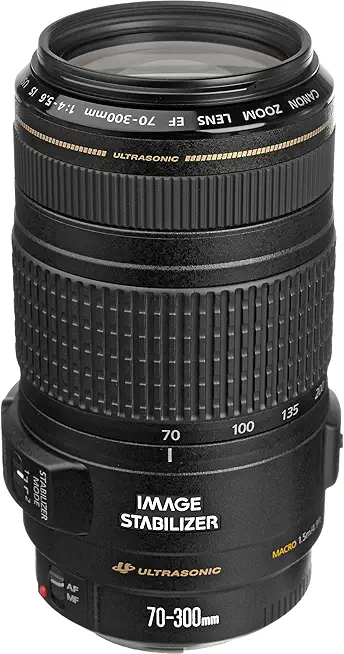
Canon EF 70-300mm f/4-5.6 USM
Fast, quiet ultrasonic focusing and refined optics combine to deliver reliable tracking and sharp results for wildlife, sports, and outdoor photography—an excellent choice for enthusiasts seeking performance.
Check PriceThe Canon EF 70-300mm USM is the closest step up if you want more reliable autofocus. In the field its USM drive locks on faster and quieter than the basic AF on the 75-300 III, and that translates to a higher keeper rate on moving subjects. I noticed clearer contrast and fewer “missed” frames when tracking birds or kids running around.
That said, this older Canon version still may not have image stabilization, so you’ll still face the same need for faster shutter speeds or support at the long end. It also doesn’t offer the close-focus macro fun of the Sigma or Tamron, so you give up that extra versatility for better AF and more consistent results.
Pick the Canon 70-300 USM if you’re an enthusiast who shoots wildlife, sports or events and wants faster, quieter focusing and steadier results in real shoots. It’s the lens I reach for when AF confidence matters more than macro ability, as long as you can work in decent light or use a monopod.
What People Ask Most
Is the Canon EF 75-300mm f/4-5.6 III a good lens?
It’s a cheap telephoto that gives useful reach for hobbyists, but build and image quality are average compared with modern stabilized lenses.
Does the Canon EF 75-300mm f/4-5.6 III have image stabilization?
No — the III version does not include image stabilization (IS).
Is the Canon EF 75-300mm f/4-5.6 III compatible with APS-C (crop sensor) cameras?
Yes, it mounts on Canon APS-C DSLRs and effectively delivers about a 120–480mm field of view on 1.6x bodies.
Does the Canon EF 75-300mm f/4-5.6 III autofocus on all Canon DSLR bodies?
Autofocus depends on your camera: it will AF on bodies with an in-body AF motor, but some entry-level Rebels without a motor may need manual focus.
How sharp is the Canon EF 75-300mm f/4-5.6 III?
Centers can be acceptable stopped down at shorter focal lengths, but it’s soft wide open and at 300mm with noticeable chromatic aberration.
What is the difference between the Canon EF 75-300mm f/4-5.6 III and the IS/USM versions?
The IS version adds image stabilization for steadier shots, and USM versions have faster, quieter autofocus; both typically offer better handling and performance than the basic III.
Conclusion
The Canon EF 75-300mm f/4-5.6 III is a no-frills, budget telephoto that delivers long reach without breaking the bank. It’s light, simple to operate, and perfect for beginners or anyone who values portability and straightforward results in good light. For casual daylight shooting it represents solid value when you accept its plain‑spoken nature.
Its compromises are clear: no image stabilization, basic autofocus behavior, a plastic build and no modern bells and whistles. That means you’ll need faster shutter speeds, bracing or a support when working at the long end, and to temper expectations for low‑light action. If you need steadier handheld performance or snappier AF, step up to the Canon EF 70-300mm IS II USM or consider third‑party macro‑capable zooms for more versatility.
Buy this lens if you want inexpensive reach for daytime sports, travel, or occasional wildlife and are prepared to work with technique over tech. For everyday hobbyists it’s a practical, light, and economical choice that fills a gap in an EF kit without fuss. If your work is mission‑critical or you shoot fast subjects in mixed light, budget for a stabilized, faster alternative instead.
Canon EF 75-300mm f/4-5.6 III
Lightweight, affordable telephoto zoom ideal for beginners seeking extended reach. Delivers decent sharpness and reliable performance for travel, portraits, and distant subjects without breaking the bank.
Check Price



0 Comments