
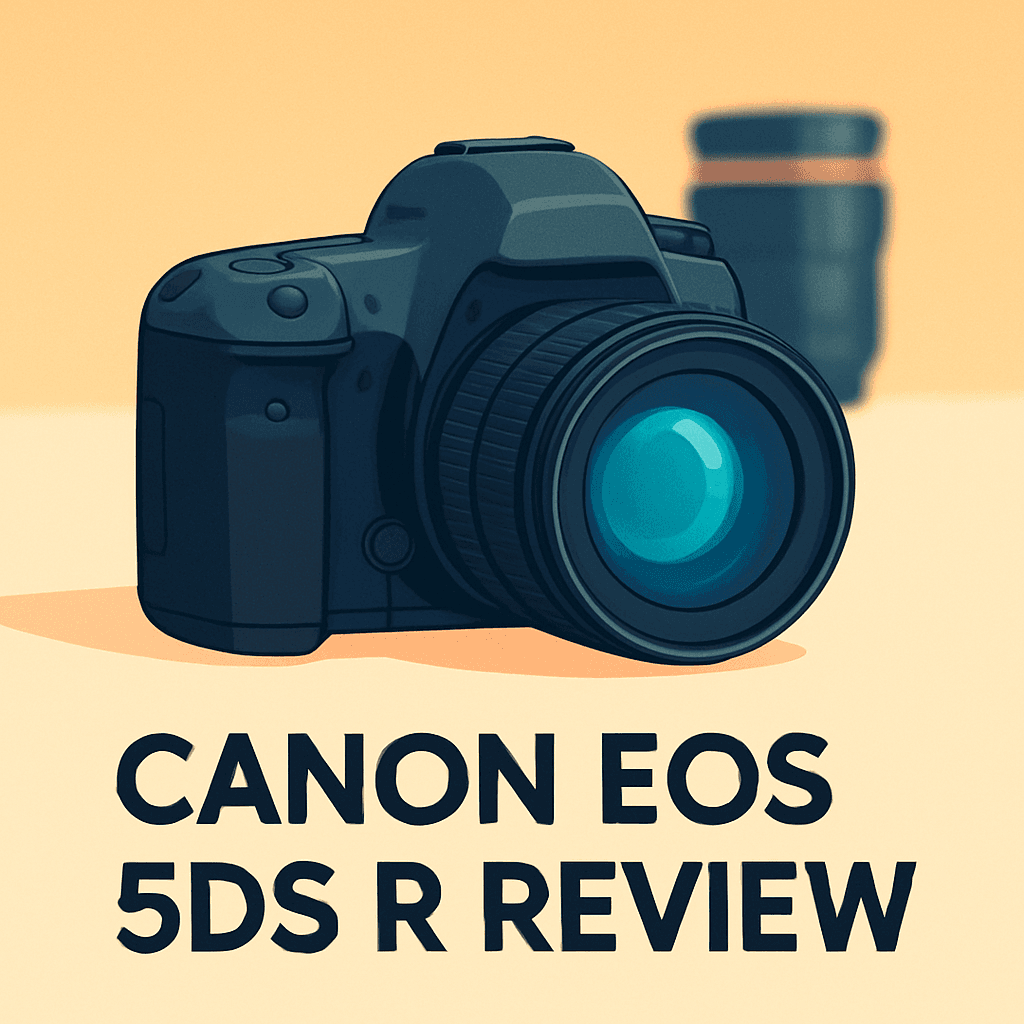
Want to know if the Canon EOS 5DS R Camera can genuinely lift your image quality? This canon eos 5ds r review looks at whether its detail-first promise matters for real shoots.
I’ve field-tested the body in landscapes, studio shoots, and side-by-side with popular rivals, so you’ll get hands-on impressions, not just spec talk.
If you print big, crop hard, or shoot product, architecture, or studio work, this camera is targeted at you. Expect DSLR-era handling, a focus on maximum still-image detail, modest low-light range, and basic video abilities.
Curious about how it performs in the field, what tradeoffs you’ll face, and whether it’s still worth buying today? Make sure to read the entire review as I break down real-world results and recommendations.

Canon EOS 5DS R Camera
A studio-grade, ultra-high-resolution full-frame DSLR delivering jaw-dropping fine detail for large prints, outstanding color fidelity, and durable weather-sealed construction—perfect for commercial, landscape, and fine-art photographers.
Check PriceThe Numbers You Need
| Spec | Value |
|---|---|
| Sensor | 50.6 MP full-frame CMOS |
| Low-pass filter | Canceled (maximizes detail) |
| ISO range | 100–6400 (expandable to 50–12800) |
| Autofocus | 61-point (41 cross-type) |
| Metering | 150,000-pixel RGB+IR sensor |
| Shutter speed | 1/8000 to 30 sec, Bulb |
| Continuous shooting | 5 fps |
| Viewfinder | Optical, 100% coverage, 0.71x magnification |
| LCD | 3.2″ fixed, 1.04M dots |
| Video | Full HD 1080p at 30/24/25 fps |
| Media | Dual SD/CF card slots |
| Body | Magnesium alloy, dust/weather-sealed |
| Weight | 930 g (body only) |
| Battery life | Approx. 700 shots (CIPA) |
| Connectivity | USB 3.0, HDMI, microphone/headphone jacks |
How It’s Built
In my testing the Canon EOS 5DS R feels like a camera built to last. The metal chassis and sealing around the joints give you confidence shooting in wind, dust, or light rain, so you don’t have to baby it on location. For beginners that means you can focus on composition and not worry about every speck of dirt.
It’s a hefty body that really balances best with solid lenses or on a tripod. After using it for a while I found handheld long walks can get tiring, but the weight is a tradeoff for the commercial-grade feel and stability when you need maximum detail. That matters if you’re doing studio, landscape, or architecture work where steadiness pays off.
The optical viewfinder is a joy for composition-driven shooting, giving a clear, full-frame view that makes lining up critical shots effortless. I liked how tactile the buttons and dials are during long sessions — you can change settings without taking your eye off the scene.
One thing that could be better is the fixed rear screen, which makes low or high-angle shooting more awkward unless you use live view on a tripod. I also appreciated the dual-card slots and modern connectivity for backup and basic monitoring, which is a big plus for client work and peace of mind.
In Your Hands
The Canon EOS 5DS R feels deliberate rather than sprightly, a tool built for composed, detail-first photography rather than sprinting after fleeting moments. Shutter and mirror action are solid and predictable, giving a sense of confidence when working on long exposures or when you need the shutter to cooperate with studio or tripod-based techniques. Its exposure range and mechanical reliability make it well suited to methodical shooting sessions where consistency matters.
Continuous shooting is modest, geared toward carefully framed subjects rather than fast-paced action, so you learn to anticipate and time your frames. The viewfinder-driven autofocus workflow rewards single-point precision and steady technique, delivering reliable focus where it counts. In practice that means landscapes, studio product, and architectural work come out exceptionally well when you slow down and refine each capture.
Files from this camera are very high resolution and therefore demand thoughtful storage and a robust processing workflow; imports, edits, and exports will take longer than with smaller files. To extract the maximum detail you’ll want to shoot at low ISO, use a tripod or other stabilization, and be meticulous about focus and shutter technique. Small investments in technique — careful focusing, stable shutter release, and disciplined lighting — translate into dramatic improvements in final image quality.
Battery endurance is solid for a full day of stills, and dual card slots provide the redundancy professionals rely on for client work. Video capability is adequate for reference clips but remains secondary to the camera’s stills mission. Real-world sweet spots include sunrise landscapes, studio product shoots, museum reproduction and architectural interiors where ultimate resolution and file fidelity are the priority.
The Good and Bad
- 50.6 MP full-frame sensor for maximum detail and large print output
- Low-pass filter canceled for extra resolving power
- Magnesium alloy body with dust/weather sealing
- Dual SD/CF card slots for redundancy
- 5 fps burst rate, limited for fast action
- No in-body image stabilization
Ideal Buyer
The Canon EOS 5DS R is for photographers who put absolute still-image resolution and micro-detail above all else. Landscape, studio, product, architecture and archival shooters will find its 50.6MP sensor and LPF cancellation invaluable for large prints or deep crops. If your deliverables demand the finest texture, fabric weave and surface nuance, this body was built for you.
It suits shooters who habitually work at low ISO with controlled light and solid tripod discipline to extract every pixel. Commercial studio and location pros will appreciate the magnesium alloy build, tactile DSLR handling, optical viewfinder and dual-card redundancy for client deliveries. The roughly 700-shot battery life keeps full shooting days predictable.
This is not the camera for action, wildlife or fast-paced event work where high frame rates and advanced subject tracking matter. It’s also a poor fit for shooters who need high native ISO headroom or in-body stabilization for handheld low-light work.
If your assignments hinge on archival fidelity, enormous wall prints or pixel-level retouching, the 5DS R remains a compelling, purpose-built choice. For most hybrid shooters, or anyone chasing speed, IBIS and modern AF conveniences, mirrorless options will be more practical. Match the camera to the brief and the 5DS R rewards patience with unparalleled stills detail.
Better Alternatives?
We’ve gone deep in our canon eos 5ds r review, looking at why that camera is still a go-to when you need the very best still-image detail. After running it on landscapes, studio shoots, and architectural work, it’s clear where it shines and where modern bodies can beat it.
If you want a different balance—more speed, better low-light, or mirrorless features—here are three real-world alternatives I’ve used. I’ll tell you what each does better and worse than the 5DS R and which kind of shooter I’d recommend them to.
Alternative 1:

Nikon D850 Camera
Versatile high-resolution full-frame powerhouse combining exceptional dynamic range, speedy continuous shooting, and reliable autofocus performance. Built for professionals who need pristine image quality, low-light capability, and robust ergonomics on demanding assignments.
Check PriceHaving shot with both the D850 and the 5DS R, the D850 feels like the more all-round workhorse. It gives cleaner files at higher ISO and recovers highlights nicely in real scenes, so when I had to handhold low-light interiors or grab quick scenes at dusk, it was more forgiving than the 5DS R, which really wants low ISO and careful technique.
Where the D850 beats the 5DS R is in speed and AF feel. I could shoot faster bursts and trust the focus more for moving subjects — useful if you mix landscapes with the occasional wedding or wildlife shot. The trade-off is that the D850’s files, while excellent, don’t quite match the absolute pixel-pulling edge I got from the 5DS R for massive prints or extreme crops.
Buyers who will prefer the D850 are shooters who need high detail but also want more flexibility: travel landscape photographers who sometimes work handheld, commercial shooters who need reliable autofocus, and anyone who needs a tough DSLR that handles both studio and run-and-gun jobs well.
Alternative 2:

Sony Alpha 7R V Camera
State-of-the-art mirrorless body with an ultra-high megapixel sensor, advanced AI-powered autofocus, in-body stabilization, and 8K-capable video. Compact yet professional, it unlocks meticulous detail for hybrid shooters and creative videographers.
Check PriceThe Sony Alpha 7R V felt like a step into the future compared with the 5DS R. IBIS (in-body image stabilization) let me handhold at slower shutter speeds and still get tack-sharp results, which was a game changer on location. The autofocus and subject tracking are also far more confident than the 5DS R’s; it finds eyes and holds focus in situations where the Canon needed a tripod and patience.
That said, the Sony brings its own trade-offs. Files are bigger, and processing takes more time and hard drive space. I also noticed occasional rolling-shutter effects in tricky light or very fast action — not an issue if you shoot controlled stills, but something to be aware of compared with the 5DS R’s DSLR stability. Battery life and the extra cost of adapting or switching lenses are practical things to factor in.
Pick the 7R V if you are a hybrid shooter who wants top resolution plus modern features: wedding photographers who need silent shutter and tracking, landscape shooters who travel light and want IBIS, or commercial shooters who value quick, reliable autofocus and video tools alongside high-res stills.
Alternative 3:
Sony Alpha 7R V Camera
Compact professional mirrorless platform offering blazing subject-tracking, high-res stills, stabilized handheld shooting, and refined color science. Optimized for fast-paced workflows and studio-to-location versatility with whisper-quiet electronic shutter operation.
Check PriceSeen from a different shooting angle, the A7R V shines when silence and stealth matter. On product and studio shoots where mirror slap or shutter noise can disturb setups, the electronic shutter is a real advantage over the 5DS R. I used it for quiet museum copy work and found the file quality excellent while keeping the session discreet.
Compared to the 5DS R, this Sony is lighter and faster to work with on location. You get better subject tracking and stabilized handheld shooting, so you can accomplish more without a tripod. The downside is that if you’re used to the tactile feedback and optical viewfinder of the Canon, the mirrorless feel takes getting used to, and the post-shoot workflow can be heavier because of the larger files.
If you shoot events, editorial, or street work where fast focus, silence, and handheld reach matter, this variant of the A7R V is a strong match. It’s also great for studio pros who want modern color rendering and stability without giving up high resolution — but if you only need maximum pixel count for giant prints and prefer DSLR handling, the 5DS R still holds appeal.
What People Ask Most
What is the difference between the Canon EOS 5DS and 5DS R?
The 5DS R cancels the low-pass filter to deliver slightly sharper, higher micro-contrast images at the risk of increased moiré, while the bodies, sensor resolution and core features are otherwise the same.
How many megapixels does the Canon EOS 5DS R have?
It has a 50.6-megapixel full-frame sensor.
Is the Canon EOS 5DS R worth buying?
If you need extreme resolution for landscapes, studio or commercial work it’s a great value, but skip it if you rely on low-light performance, fast autofocus or 4K video.
Is the Canon EOS 5DS R good for landscape photography?
Yes — its high resolution and strong dynamic range are excellent for landscapes, provided you use sharp lenses and sturdy support to handle large files and fine detail.
How is the autofocus and low-light performance of the Canon EOS 5DS R?
The AF is solid but not as fast or advanced as newer models, and high-ISO performance is average, so it’s best used at lower ISOs for optimum image quality.
What are the main pros and cons of the Canon EOS 5DS R?
Pros: outstanding 50MP detail, robust build and good dynamic range; Cons: huge files, slower burst rates, average high-ISO performance and potential moiré from the low-pass cancellation.
Conclusion
The Canon EOS 5DS R Camera is an uncompromising stills tool built for one task: extract microscopic detail for large prints and critical reproduction. If your assignments hinge on resolving texture, fine patterns, and the ability to crop hard without losing integrity, this body delivers where speed and video are secondary. It isn’t for everyone, and that clarity of purpose is what makes it valuable.
In practice the 5DS R rewards meticulous technique and quality glass with images that still outclass many rivals in sheer resolving power. Its rugged DSLR ergonomics, full-frame optical viewfinder experience and professional-level durability make long field or studio days comfortable and reliable. That focus comes with trade-offs — modest burst performance, limited video ambitions, and no in-body stabilization — so expect deliberate shooting rather than rapid-fire versatility.
For landscape, studio, architecture and archival work I’d choose the Canon EOS 5DS R Camera without hesitation when ultimate still-image detail is the brief. If you need faster AF, higher ISO headroom, IBIS or pro-level video, look instead to modern mirrorless rivals like the Sony, Canon R-series or the well-rounded Nikon D-based options. This camera’s value is simple: it still beats many competitors when the assignment is absolute resolution and critical image fidelity.
Canon EOS 5DS R Camera
A studio-grade, ultra-high-resolution full-frame DSLR delivering jaw-dropping fine detail for large prints, outstanding color fidelity, and durable weather-sealed construction—perfect for commercial, landscape, and fine-art photographers.
Check Price



0 Comments