
Want a single camera that gets you wide landscapes, close-up macros, and distant wildlife without swapping lenses?
That’s the idea behind the Panasonic Lumix FZ200 Camera — a bridge body built around a rare constant f/2.8 zoom and strong stabilization. I’ve put it through real-world shoots to see how it holds up.
This review digs into handling and build, stills and 1080/60p video performance, image quality, autofocus, pros and cons, the ideal buyer and key alternatives. You’ll get practical takeaways, not just specs.
There are clear trade-offs — huge reach and a bright constant aperture versus the limits of a small sensor and older AF. I’ll show where it shines and where it stumbles, so make sure to read the entire review as you keep reading.
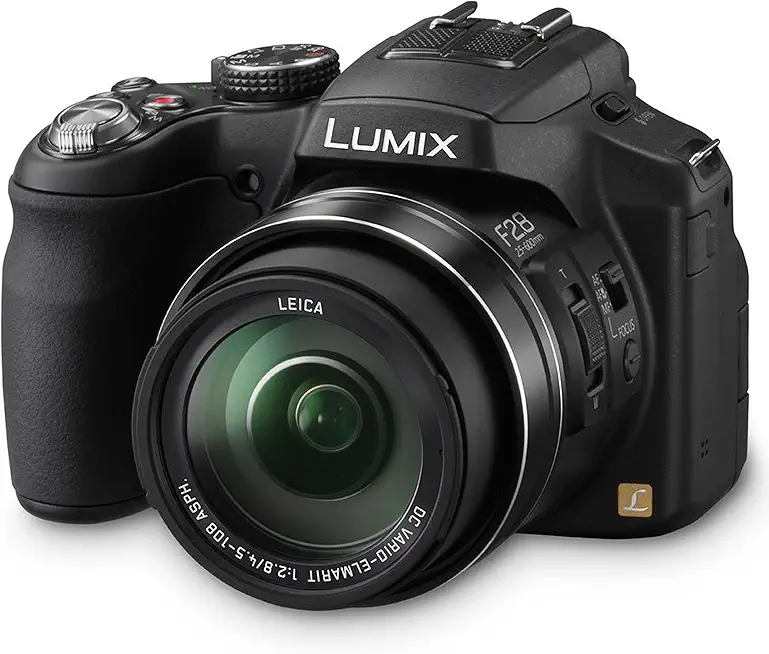
Panasonic Lumix FZ200 Camera
Compact bridge camera with a bright constant-aperture lens, lightning-fast autofocus and intuitive manual controls—ideal for low-light shooting, travel and creative telephoto work without lugging heavy gear.
Check PriceThe Numbers You Need
| Spec | Value |
|---|---|
| Sensor | 1/2.3″ 12.1 MP MOS |
| Lens | 24–600mm (25x zoom) constant f/2.8 LEICA DC VARIO-ELMARIT |
| Aperture | f/2.8 (entire zoom range) |
| Image Stabilization | POWER O.I.S. (Optical Image Stabilization) |
| Viewfinder | 0.21″ EVF, 1,312k dots |
| LCD | 3.0″ fully articulated, 460k dots |
| ISO Range | 100–6400 |
| Shutter Speed | 60–1/4000 sec (mechanical), 1/16,000 sec (electronic) |
| Continuous Shooting | 12 fps (full resolution) |
| Video | Full HD 1080/60p, AVCHD/MP4 |
| Autofocus | 23-area contrast AF, Light Speed AF |
| Focus Range | 1 cm macro (Wide), 1 m (Tele) |
| Battery | DMW-BLC12, approx. 540 shots per charge |
| Weight | 588g (with battery and card) |
| Dimensions | 127.6 x 84.5 x 99.2 mm |
How It’s Built
In my testing the Panasonic Lumix FZ200 felt surprisingly travel-friendly for what it offers. It’s compact enough to toss in a day pack and still gives you a long reach without carrying a mess of lenses, so you actually want to take it out and shoot more.
The grip is comfortable and the control layout makes sense right away. I found the zoom rocker and exposure controls fall naturally under my fingers, though at the longest reach it leans a bit forward and I switch to a two‑hand hold for steady shots.
The fully articulated screen is great for low and high angles and for video or selfies, and after using it for a while the hinge held up without feeling loose. The built‑in EVF is a nice real‑world advantage in bright sun, and the basic USB/HDMI ports cover simple tethering and monitoring needs. Battery and card access are straightforward, so swapping files or power in the field is no drama and the camera will get you through a long day of shooting.
One thing I really liked was the combo of EVF plus the flip screen — it makes framing easy in any situation. One thing that could be better is weather protection; it’s not sealed, so I kept it out of heavy spray and dust. For beginners this body is forgiving and intuitive, but treat it with a little common‑sense care outdoors.
In Your Hands
The FZ200’s stabilization is a standout in everyday shooting, making its long tele reach far more usable handheld than you’d expect. With the lens and O.I.S. working together you’ll rescue a surprising number of shots from the long end, so handheld wildlife and distant subjects feel realistic rather than tentative. It rewards steady technique—palm support and a calm breath will convert more frames into keepers than on unstabilized superzooms.
Responsiveness overall leans practical: there’s a fast burst mode and the camera wakes and fires without ceremony, though you’ll notice the usual viewfinder interruption during rapid sequences. Shutter lag is modest in normal use, and the electronic option is handy for bright-light shooting, albeit with the trade-offs that come with any electronic exposure method. Buffer performance handles everyday bursts well, but extended high-speed sequences will prompt a pause.
Battery life covers a full day of mixed stills and video in real-world travel use, with EVF or screen habits being the main influence on longevity. Macro performance at the wide end is genuinely useful — you can get incredibly close and render fine detail with pleasing background rendering. At the long end you’ll find close-ups more constrained, so plan framing accordingly when you need tight subject isolation.
Video shooting yields smooth Full HD motion and the stabilization keeps footage watchable straight out of camera, but autofocus can be prone to hunting during stills-to-video transitions and in continuous modes. For critical clips you’ll want to favour steady pans, pre-focused pulls, or manual adjustments to avoid focus hunting. The body is solidly built for travel, yet without weather sealing you’ll want to mind dust and moisture and treat ports and covers with a little extra care in the field.
The Good and Bad
- Constant f/2.8 aperture throughout 24–600mm range
- POWER O.I.S. for handheld telephoto work
- 12 fps continuous shooting (full resolution)
- Fully articulated 3.0″ LCD
- 1/2.3″ sensor limits image quality in low light and dynamic range versus 1″ sensor rivals
- AF is more likely to hunt than the FZ300, especially in continuous AF and stills-to-video transitions
Ideal Buyer
The Panasonic Lumix FZ200 is for photographers who want one camera to do a lot without swapping lenses. If you crave a 24–600mm reach with a constant f/2.8 and strong stabilization in a single, pocket-friendly body, this is your platform.
Travelers and outdoor shooters will appreciate the reach, the POWER O.I.S., and the fully articulating LCD that makes framing easy in tricky angles. The integrated EVF and long battery life mean longer days shooting without hauling extra kit. It’s a smart choice for day trips and light travel.
Action and family shooters benefit from 12 fps bursts and 1080/60p video to capture quick moments with confidence. Macro-curious users get extra fun from a 1 cm wide-angle close focus for detailed shots. You’ll trade off low-light IQ, but gain versatility few other cameras offer.
Buy the FZ200 if you can live with a 1/2.3″ sensor’s noise and limited dynamic range, and if weather sealing isn’t mandatory. Skip it if you want the FZ300’s snappier AF or a 1″ sensor like the RX10 II/G3 X for cleaner high-ISO results. In short, choose the FZ200 for unmatched f/2.8 reach, exceptional handheld tele flexibility, and real-world value.
Better Alternatives?
We’ve already walked through what makes the Panasonic FZ200 special — that rare constant f/2.8 zoom, the huge 24–600mm reach and solid stabilization all in a compact package. It’s a very handy camera for travel, events and when you need reach without swapping lenses. But it’s not perfect: the small sensor limits low-light headroom and dynamic range, and the AF and weather resistance lag behind newer models.
If you’re thinking about something else, the market has a few clear alternatives that solve one or two of those issues while giving up other things the FZ200 does well. Below I’ll boil down how each alternative really behaves in the field, what they do better or worse than the FZ200, and who I’d recommend each camera to based on real use.
Alternative 1:

Panasonic Lumix FZ300 Camera
Rugged, weather-sealed design pairs with responsive controls, improved stabilization and a sharp zoom range for confident outdoor shooting; great for hybrid stills and video in challenging conditions.
Check PriceI’ve used the FZ300 a lot in rain and dusty trails, and the thing that hits you first is how much more confident you feel shooting in bad weather. Compared to the FZ200, the FZ300 keeps the constant f/2.8 zoom and similar handling, but adds splash and dust resistance and a better grip. On long days outside those small upgrades matter — you don’t have to drape a rain jacket over the camera as often.
Autofocus in the FZ300 is also noticeably quicker and steadier in everyday shooting. When I switched between the FZ200 and FZ300 during events, the FZ300 locked and stayed on moving subjects more often and hunted less when I went from stills to video. Image quality is roughly the same because they share the same small sensor, so low-light noise and dynamic range feel similar — you gain handling and AF, not extra clean ISO.
If you like the FZ200’s constant f/2.8 reach but want a tougher, more reliable tool for outdoor or mixed photo/video work, the FZ300 is the easy upgrade. Pick it if you shoot in rough conditions, want snappier AF in real-world use, and like having weather protection without changing the camera’s overall image character.
Alternative 2:

Sony RX10 II Camera
Large 1-inch sensor and premium glass deliver DSLR-like image quality in a single-body solution, offering fast performance, rich detail and superior low-light capability for enthusiasts and pros on the move.
Check PriceThe RX10 II is the option I reach for when image quality and low-light performance matter more than raw reach. The 1-inch sensor gives noticeably cleaner images at higher ISO and better highlight/shadow headroom than the FZ200. In dim venues or indoor work I was able to push exposure more and keep usable shots the FZ200 would have made grainy.
What you trade away is tele reach and, to some degree, the convenience of a constant f/2.8 across the whole range. The RX10 II is shorter on long reach than the FZ200, so when I needed to pull distant subjects in tight — like birds or field sports — the FZ200’s longer zoom was more useful. The RX10 II also feels heavier and pricier in the bag, but its video and slow-motion options plus cleaner images make it a strong choice for mixed pro work.
Choose the RX10 II if you want better low-light shots, cleaner high-ISO images and richer detail for printing or tight crops. It’s for people who value image quality and video features over extreme tele reach and who don’t mind the added weight and cost.
Alternative 3:

Sony RX10 III Camera
Ultra-versatile super-telephoto bridge camera combines a long-reaching zoom with a 1-inch sensor and professional controls, enabling dramatic close-ups, smooth video and creative compression without changing lenses.
Check PriceThe RX10 III is the bridge camera I grab when I want the best of both worlds: a big 1-inch sensor and long tele reach in one body. In the field it gives much better image quality than the FZ200 at the same focal lengths — cleaner shadows, nicer color and better detail — and its long zoom brings subjects close without changing lenses. That makes it a killer tool for wildlife or sports when you need both quality and reach.
It does have some trade-offs compared to the FZ200. The RX10 III’s maximum aperture narrows at the long end, so you don’t have the FZ200’s constant f/2.8 across every focal length; depth-of-field and low-light behavior change as you zoom. The RX10 III is also heavier, more expensive, and in my experience less pocketable for long hikes. Handling and build are solid, but you pay for that improved 1-inch sensor and extended zoom.
Go for the RX10 III if you need top-notch image quality plus a very long zoom in a single body and you can live with the extra weight and price. It’s best for shooters who want cleaner results for prints or pro work and who also need strong tele reach without swapping lenses — just know you won’t get the FZ200’s constant f/2.8 across the entire zoom.
What People Ask Most
Is the Panasonic Lumix FZ200 a good camera?
Yes — it’s a versatile bridge camera with a constant f/2.8 24–600mm-equivalent zoom that delivers sharp results in good light, but it struggles in low light compared to larger-sensor cameras.
Is the Panasonic FZ200 worth buying?
If you can buy one used or at a bargain, it’s worth it for the bright long zoom and handling; new buyers may prefer newer models with bigger sensors or 4K video.
What are the pros and cons of the Panasonic FZ200?
Pros: constant f/2.8 zoom, fast handling, RAW support and solid build; Cons: small 1/2.3″ sensor, limited high-ISO performance and dated video features.
How is the image quality of the Panasonic FZ200?
Image quality is strong at base ISO with good sharpness and contrast, but detail and noise control drop off quickly as ISO increases.
Does the Panasonic FZ200 shoot RAW?
Yes — it records RAW (RW2) files for greater editing flexibility.
Is the Panasonic FZ200 good for video?
It’s fine for casual 1080p video with reliable autofocus, but it lacks modern features like 4K and advanced audio inputs for professional work.
Conclusion
The Panasonic Lumix FZ200 Camera is a compelling all‑in‑one for photographers who want extreme reach with a constant bright aperture and rock‑steady stabilization in a travel‑friendly body. It delivers usable low‑light telephoto shots, fast bursts and capable Full HD video, plus a handy articulating screen and built‑in finder that make shooting flexible.
Those benefits come with clear compromises: the small sensor constrains high‑ISO performance and dynamic range, and autofocus can feel leisurely compared with Panasonic’s newer model. It also lacks the weather protection some shooters demand, so treat it as versatile but not indestructible.
If you prioritize constant‑aperture reach and convenience over ultimate image quality, the FZ200 offers tremendous value as a one‑camera solution for travel, wildlife and family action. If you want stronger AF, tougher build or noticeably cleaner high‑ISO images, look instead at the updated FZ300 or one‑inch competitors.
In short, the FZ200 is a purposeful compromise that nails lens versatility and handling while asking you to accept small‑sensor limitations. Buy it for its unique photographic freedom; skip it if pixel‑level image quality or weather sealing are non‑negotiable.
Panasonic Lumix FZ200 Camera
Compact bridge camera with a bright constant-aperture lens, lightning-fast autofocus and intuitive manual controls—ideal for low-light shooting, travel and creative telephoto work without lugging heavy gear.
Check Price



0 Comments