
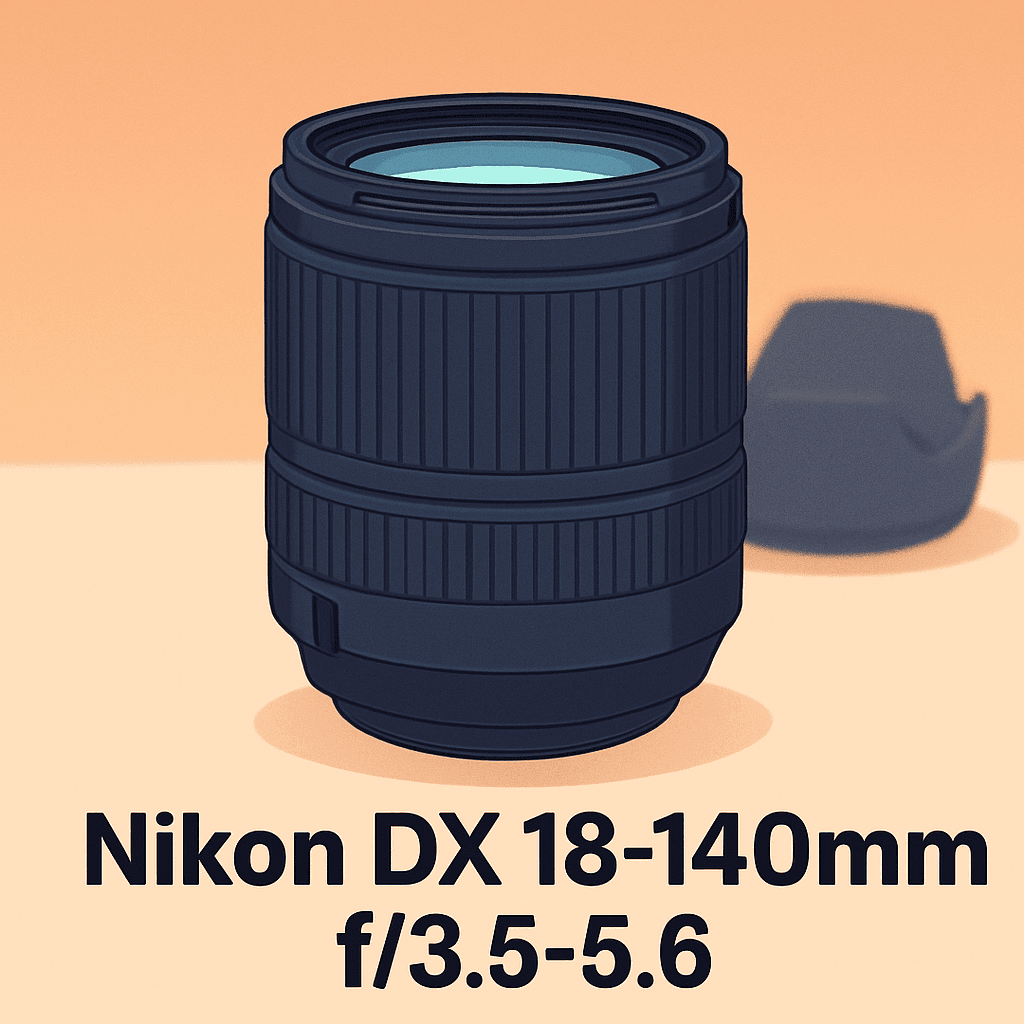
Looking for a single lens that handles landscapes, portraits, and everyday moments without swapping glass?
The Nikon AF-S DX NIKKOR 18-140mm f/3.5-5.6G ED VR promises that kind of all-in-one convenience for Nikon DX shooters.
I spent time shooting with it across trips and daily shoots, and I’ll keep this hands-on review focused on what actually matters: results in the field.
This is for travelers, families, and enthusiasts who want reach and stabilization without lugging a bag of lenses.
We’ll look at handling, autofocus behavior, optical trade-offs, and who benefits most from its wide-to-tele range — make sure to read the entire review as I’ll point out practical strengths, real limits, and better alternatives, so keep reading.
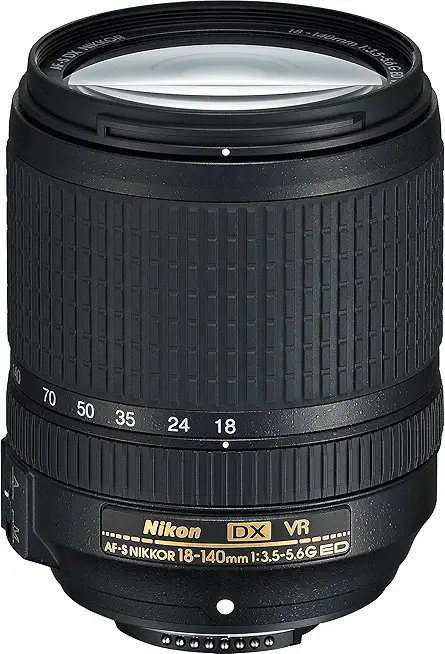
Nikon AF-S DX NIKKOR 18-140mm f/3.5-5.6G ED VR
A versatile wide-to-telephoto travel zoom offering sharp optics, effective vibration reduction and extra-low dispersion glass for reduced chromatic aberration. Lightweight, reliable autofocus makes it ideal for landscapes, portraits and everyday shooting.
Check PriceThe Numbers You Need
| Spec | Value |
|---|---|
| Focal Length | 18-140mm |
| Maximum Aperture | f/3.5-5.6 |
| Lens Mount | Nikon F (DX) |
| Format Compatibility | APS-C (DX) |
| Image Stabilization | Vibration Reduction (VR) |
| Optical Construction | 16 elements in 12 groups |
| Minimum Focus Distance | 0.45 m (1.48 ft) |
| Maximum Reproduction Ratio | 1:4.6 |
| Autofocus | Silent Wave Motor (AF-S) |
| Filter Size | 67 mm |
| Aperture Blades | 7, rounded |
| Diaphragm | Electronically controlled |
| Dimensions (Diameter × Length) | Approx. 75 × 88 mm |
| Weight | Approx. 490 g |
| Zoom Type | Rotary zoom ring |
| Lens Hood | Included, petal-shaped (HB-38) |
How It’s Built
In my testing the Nikon AF-S DX NIKKOR 18-140mm f/3.5-5.6G ED VR feels compact and light for what it does, sitting comfortably on smaller DX bodies. At roughly the size and weight you’d expect for an all‑in‑one zoom, it’s easy to carry all day without killing your neck. That makes it a great grab‑and‑go option for trips and family outings.
The zoom ring has a smooth, predictable throw with decent resistance, so you can reframe quickly without surprises. I did notice a little zoom creep if I point the lens down for long periods, but it’s not severe. The focus ring is short on travel but feels smooth enough for casual manual tweaks and simple video pulls.
It mounts cleanly to Nikon F DX cameras and uses a common 67mm filter size, which made swapping a polarizer or ND filter in the field painless. The petal-shaped hood that comes in the box really helps cut flare and protects the front element. The electronically controlled diaphragm and seven rounded blades give highlights a fairly pleasing rounded look when stopped down.
The body is mostly plastic but feels nicely put together, with no obvious wobble and solid tolerances. One thing I liked was the overall balance and included hood; one thing that could be better is the lack of weather sealing and that slight barrel extension creep. For beginners this means a friendly, well‑built lens that’s easy to use, but watch it in wet weather and when you’re carrying it pointed down.
In Your Hands
From wide-angle landscapes to head-and-shoulders portraits and casual wildlife, the Nikon AF-S DX NIKKOR 18-140mm behaves like a true grab-and-go lens. The long end often rescues frames that would otherwise need a second body or lens, giving you reach without constant equipment changes while still feeling versatile for everyday work.
Its vibration reduction meaningfully improves handheld usability at the tele end and takes the edge off dim-light shooting, making more keeper shots possible without a tripod. VR is steady for static subjects and forgiving during smooth pans, though deliberate technique still helps when tracking faster movement.
Close-focus performance lets you frame plates, small products, and scene details with satisfying clarity—useful for food, travel, and detail work even if it isn’t a macro tool. The front thread is a common size so polarizers and NDs are easy to use in the field, and the included hood does a good job of curbing flare without getting in the way of filter rotation.
On DX bodies the lens wears comfortably for day-long outings; there’s a subtle balance shift as the barrel extends but nothing that ruins usability. Zoom throws are predictable for quick reframing, autofocus is quiet and dependable for most handheld scenarios, and any breathing or framing shift is modest during normal shooting.
The Good and Bad
- Broad 18–140mm focal range for one-lens convenience
- Vibration Reduction (VR) for steadier handheld shooting
- AF-S drive for autofocus capability
- Moderate size and weight for the range (approx. 75 x 88 mm; 490 g)
- Variable maximum aperture f/3.5–5.6 limits low-light performance and background blur at tele
- Extending zoom design can introduce zoom creep and balance shifts
Ideal Buyer
The Nikon AF-S DX NIKKOR 18-140mm f/3.5-5.6G ED VR is ideal for shooters who want one lens that does most jobs. Travel photographers, family shooters, and street or event shooters will appreciate its wide-to-tele reach. It covers landscapes, portraits and casual wildlife without constant lens swaps for quick-turnaround shooting.
Enthusiasts stepping up from a short kit zoom get meaningful extra reach and stabilization. Beginners who value convenience over a fast aperture can shoot handheld in more situations. The 67mm filter size and included hood make it practical for travel, quick field work and run-and-gun video.
This lens suits shooters who prioritize VR and flexibility rather than shallow-depth rendering. If you need a constant f/2.8 or true macro, look elsewhere. For everyday photojournalism, family albums, and vacation snaps the Nikon 18-140 is a reliable one-lens choice.
Avid landscape shooters who demand edge-to-edge microcontrast or portraitists chasing creamy bokeh will outgrow it. Likewise, pros needing faster low-light performance or higher magnification should consider the alternatives. For most DX shooters though, it’s a smart balance of reach, size and practical image stabilization.
Better Alternatives?
We’ve already looked closely at the Nikon 18–140mm and what it brings to the table: a single, convenient zoom that covers wide to short-tele for most travel, family and everyday work. It’s a great all-rounder, but no lens is perfect for every shooter, so it helps to see a few other options if your needs tilt toward lighter weight, extra reach, or better low-light performance.
Below are three real-world alternatives I’ve used. I’ll point out what each one does better and where it falls short compared to the 18–140, and which kind of shooter will get the most from each choice.
Alternative 1:

Nikon AF-S DX NIKKOR 18-105mm f/3.5-5.6G ED VR
Compact everyday zoom delivering balanced coverage from wide-angle to tele, with vibration reduction and quiet autofocus. Ideal for travel, family events and video thanks to smooth zooming and reliable image quality.
Check PriceThe 18–105mm is a bit smaller and lighter than the 18–140, and in the field that makes a real difference when you’re walking all day or shooting video on a small DX body. I found it balances better on lighter cameras and feels less tiring. The handling is smooth and the VR and AF are comparable, so you don’t lose much in everyday use.
Where it falls short is reach — you give up the extra tele worked into the 18–140. That matters when you need to pull in distant subjects without changing lenses. Optically they’re similar in real shots: neither is a superstar at the edges, but both give perfectly usable results for travel, portraits and event work.
Choose the 18–105mm if you want a cheaper, lighter walkaround lens that’s easy to carry and steady for video. If you often need the long end for distant subjects, stick with the 18–140; if you value comfort and balance on smaller bodies, the 18–105 will likely please you.
Alternative 2:

Nikon AF-S DX NIKKOR 18-200mm f/3.5-5.6G ED VR II
Superzoom powerhouse covering a huge focal range to replace multiple lenses, with updated vibration reduction and solid autofocus. Perfect for travel and wildlife snapshots where reaching distant subjects quickly matters.
Check PriceThe 18–200mm’s big win is reach. In practice this means fewer lens swaps on trips and the ability to bring distant scenes much closer. I’ve used it when hiking or at events where swapping lenses wasn’t practical — being able to go from wide landscape to a tight distant portrait without stopping is liberating.
That extra reach comes with trade-offs. At the long end you’ll notice softer corners and more distortion than the 18–140, and images need a bit more correction in post to look their best. It’s also heavier and a bit bulkier, so after a long day I preferred swapping to a lighter option when image quality mattered most.
Pick the 18–200mm if your priority is convenience and reach — if you travel light or shoot wildlife/subjects at a distance and don’t want to carry multiple lenses. If you care more about a balanced size, slightly better optics across the zoom range, or heft and sharpness for prints, the 18–140 remains the smarter middle ground.
Alternative 3:

Nikon AF-S DX NIKKOR 18-140mm f/3.5-5.6G ED VR
All-purpose travel lens combining broad focal reach with effective stabilization and extra-low dispersion elements for crisp, color-accurate images. Lightweight construction and responsive autofocus suit enthusiasts and on-the-go photographers.
Check PriceThis listing is the lens we’ve been reviewing — and for good reason. In real use it’s the comfortable middle option: longer reach than basic kit zooms but not as heavy or compromised at the long end as a full superzoom. The VR is very helpful for handheld tele shots, and the close-focus capability makes it useful for small-subject work without switching to a macro lens.
What it doesn’t do as well is match the low-light speed and subject separation of faster primes or specialty zooms, and it won’t reach as far as 18–200mm options. If you push it at the very long end you’ll see some softness and mild distortion, so it’s best thought of as a versatile all-rounder rather than a specialist.
If you want one lens to cover almost every situation — travel, family, events, light wildlife — the 18–140 is the go-to choice. If your work demands very low-light performance or extreme reach, consider a faster prime or a superzoom instead. For most enthusiasts who value convenience and balanced image quality, this lens hits the sweet spot.
What People Ask Most
Is the Nikon DX 18-140mm f/3.5-5.6 a good lens for travel and everyday photography?
Yes — it’s a versatile all-in-one zoom that’s compact for travel and covers most everyday situations, though the variable f/3.5-5.6 limits low-light performance and background blur.
Does the Nikon DX 18-140mm f/3.5-5.6 have Vibration Reduction (VR)?
Yes, it includes Nikon’s VR image stabilization which helps handheld shooting, especially at longer focal lengths.
Is the Nikon DX 18-140mm f/3.5-5.6 compatible with full-frame (FX) Nikon cameras?
It’s designed for DX cameras; you can mount it on some FX bodies in crop mode but expect heavy vignetting and reduced resolution on full-frame sensors.
What is the 35mm equivalent focal length of the Nikon DX 18-140mm f/3.5-5.6 on a DX body?
On a DX body the 1.5x crop factor makes it roughly a 27–210mm equivalent on 35mm/FX.
How sharp is the Nikon DX 18-140mm f/3.5-5.6 across the zoom range?
Center sharpness is good for an all‑in‑one zoom, but corners soften, especially wide-open and at the long end; stopping down improves overall sharpness.
Does the Nikon DX 18-140mm f/3.5-5.6 have an internal autofocus motor (AF-S) and quiet/fast AF?
Yes, it’s an AF-S lens with Nikon’s Silent Wave Motor, giving reasonably quick and quiet autofocus on most Nikon bodies, though not as fast as pro-grade lenses.
Conclusion
The Nikon AF-S DX NIKKOR 18-140mm f/3.5-5.6G ED VR is the practical Swiss Army knife for Nikon DX shooters. It delivers a long, useful zoom range with image stabilization and a quiet focus motor that make it a genuinely capable single-lens solution.
I found it dependable in the field for travel, family moments, street photography and casual tele work. VR smooths handholding at longer focal lengths and the AF-S motor keeps acquisition unobtrusive for stills and run-and-gun video. For most everyday shooters this combination of reach, stabilization and usability is hard to beat.
But the convenience comes with compromises. The variable maximum aperture limits low-light performance and the ability to produce very shallow depth of field at the long end, and it won’t replace a dedicated macro or a faster prime. The extending design can shift balance as you zoom, which matters on long shoots.
If you want one lens to do most jobs on a DX body, this is a strong, practical pick. Look elsewhere if you prioritize fast glass, true macro capability, or radically lighter options. Match the lens to your shooting priorities and it will reward you with dependable, everyday versatility.
Nikon AF-S DX NIKKOR 18-140mm f/3.5-5.6G ED VR
A versatile wide-to-telephoto travel zoom offering sharp optics, effective vibration reduction and extra-low dispersion glass for reduced chromatic aberration. Lightweight, reliable autofocus makes it ideal for landscapes, portraits and everyday shooting.
Check Price



0 Comments