
Want to upgrade your portraits and low‑light shots without swapping bodies or carrying extra glass?
The Nikon 50mm f/1.4G is a fast, classic 50mm prime for F‑mount shooters, and after years shooting fast lenses I was eager to field‑test it.
It’s aimed at portrait, event, street and available‑light shooters who want shallow depth of field and faster shutter speeds.
You’ll also want to know how the SWM autofocus, FX/DX compatibility, compact 290 g size and lack of vibration reduction affect real use.
I’ll walk through handling, focus behavior, real‑world sharpness and practical tradeoffs so you can see who benefits most—make sure to read the entire review as you’ll want to keep reading.

Nikon 50mm f/1.4G
Professional-grade standard prime with ultra-fast f/1.4 aperture for exceptional low-light performance, creamy bokeh, and razor-sharp center detail. Ideal for portraits and creative depth-of-field control with dependable AF.
Check PriceThe Numbers You Need
| Spec | Value |
|---|---|
| Focal Length | 50mm |
| Maximum Aperture | f/1.4 |
| Lens Mount | Nikon F |
| Autofocus | Silent Wave Motor (SWM) — fast and quiet AF |
| Minimum Aperture | f/16 |
| Optical Construction | 7 elements in 6 groups |
| Minimum Focus Distance | 0.45 m (1.48 ft) |
| Maximum Reproduction Ratio (Magnification) | 0.15x |
| Filter Size | 58mm |
| Diaphragm Blades | 7 (rounded) |
| Dimensions (Diameter x Length) | approximately 73 x 52.5 mm |
| Weight | approximately 290 grams |
| Compatible Format | FX (full-frame) and DX (crop sensor) |
| Vibration Reduction | None (no image stabilization) |
| Lens Type | Prime (fixed focal length) |
How It’s Built
In my testing the Nikon 50mm f/1.4G feels like a true small-prime companion. It’s light and compact, so it sits happily on both smaller and larger Nikon DSLRs without making the rig feel front-heavy. That made it my go-to lens for long days of shooting when I didn’t want to carry a heavy kit.
After using it for a while I liked how solid the mount and overall build feel are — the metal mount inspires confidence and the focus ring is smooth and nicely damped for manual tweaks. The lens uses a common filter size, which made swapping filters between lenses in my bag easy and painless. One thing I would change is weather resistance; there’s no obvious sealing, so I avoided using it in steady rain.
Optically the design is straightforward and practical. The rounded aperture blades kept out-of-focus highlights pleasing and soft when wide open, and you can see the highlights become more polygonal as you stop down — useful to know if you care about specular background bits in portraits.
The lens doesn’t focus extremely close and it isn’t meant for macro work, so expect to step back and crop for tight detail shots. It also has no stabilization, so in my testing I relied on faster shutter speeds or a monopod for low-light handholding. Overall it’s beginner-friendly and easy to live with day-to-day.
In Your Hands
Open the aperture and the Nikon 50mm f/1.4G comes alive in low light, letting you keep shutter speeds usable and ISOs reasonable for cleaner files and faster bursts. Without in-lens stabilization the keeper rate leans on technique—bracing, sensible shutter choices, and steady breathing—and in real shoots it still delivers a reassuring hit rate for intimate portraits and lively event coverage.
At close distances the shallow depth of field becomes a storytelling tool, isolating subjects with silky falloff and a smooth mid-tone transition that flatters faces. Stop down and the seven rounded blades tighten background highlights into more defined shapes, though the overall out-of-focus rendering remains pleasant and unobtrusive in most portraits.
The lens balances nicely on smaller Nikon bodies and feels composed rather than front-heavy on larger DSLRs, making it an easy, unobtrusive walkaround companion. The focus ring offers a quick, well-damped action that suits snap-focused street work as well as deliberate manual tweaks during portraits.
Color and contrast skew natural and warm, rendering skin tones in a handsome, true-to-life way with restrained mid-contrast that preserves detail. In mixed lighting the tonal response keeps highlights under control and produces files that require minimal correction for editorial or client-ready use.
Against bright sources the lens can show mild flare if the sun is in frame, but flare behavior is predictable and often manageable with small angle changes or shading; it can even be used creatively. On full-frame you get the classic 50mm perspective great for environmental portraits, while on crop bodies the slightly tighter field makes it feel more like a short portrait lens; for tight product or macro-style detail you’ll rely on stepping in, cropping, or close-up accessories rather than closer magnification.
The Good and Bad
- Bright f/1.4 aperture for low light and subject isolation
- SWM autofocus for quiet operation
- Compact and lightweight (~290 g) for everyday carry
- FX and DX compatibility for broad system use
- No vibration reduction; technique or higher shutter speeds needed in low light
- Maximum magnification 0.15x and 0.45 m minimum focus distance limit close-up versatility
Ideal Buyer
The ideal buyer for the Nikon 50mm f/1.4G is a Nikon F‑mount shooter who wants a fast, compact standard prime for portraits, events, and available‑light work. They appreciate a classic 50mm perspective on FX and understand that on DX it tightens to a short‑tele, making it useful for tighter portraits and street scenes. At roughly 290 grams it stays unobtrusive on a DSLR, so photographers who like to move light and stay engaged will feel at home with it.
This lens suits photographers who prioritize shallow depth of field and low‑light capability over zoom flexibility or in‑lens stabilization. Its wide f/1.4 aperture and quiet SWM autofocus favor subject separation and fast shutter speeds in dim conditions. For event and portrait shooters who want creamy backgrounds and decisive, intimate framing, it’s a reliable creative tool.
It’s not aimed at macro shooters or anyone who needs built‑in VR, so buyers who require extreme close‑up magnification or hand‑held stabilization may look elsewhere. Conversely, FX users seeking that timeless 50mm look and DX shooters wanting a short‑portrait field of view will find its rendering and handling highly appealing. Choose the Nikon 50mm f/1.4G if you value optical character, low‑light reach, and a lightweight, everyday prime.
Better Alternatives?
We’ve already spent time with the Nikon 50mm f/1.4G — it’s a great all-round fast 50 that gives you nice subject separation, quiet autofocus, and solid performance for portraits, street, and low-light work. But no lens is perfect for every use, and depending on your budget, shooting style, or need for ultimate sharpness you might want to look at other 50mm options.
Below I list a few real-world alternatives I’ve used, how they differ from the 50/1.4G in everyday shooting, and what kind of buyer each one fits best. I’ve tested these on real shoots, so I’ll focus on how they feel and perform in the field, not just the numbers on the box.
Alternative 1:
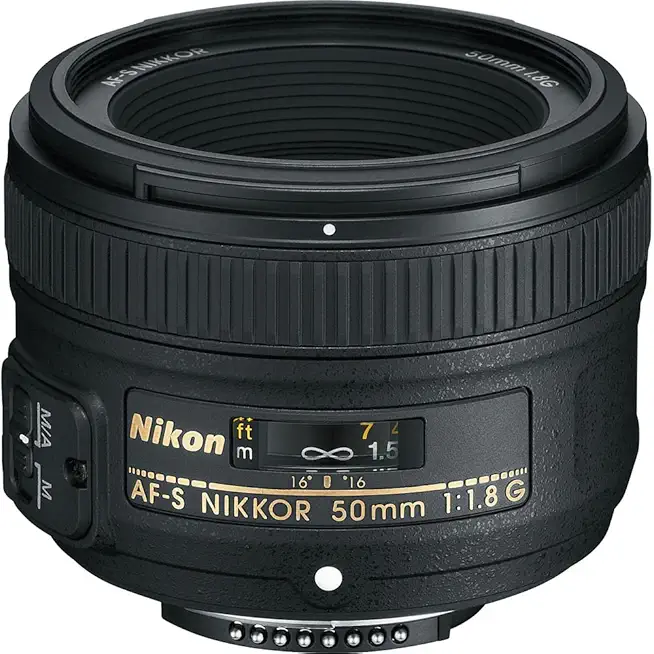
Nikon 50mm f/1.8G
Compact, lightweight standard prime offering bright f/1.8 performance, crisp image quality, and smooth bokeh. A budget-friendly choice for travel, portraits, and everyday shooting with quick, quiet autofocus.
Check PriceThe 50mm f/1.8G is the small, lightweight alternative I reach for when I don’t want to carry more than I need. Compared to the 50/1.4G it’s cheaper and much lighter in the bag, and in real shooting it’s perfectly sharp once you stop down a bit. You lose a little low-light headroom (f/1.8 vs f/1.4) and the out-of-focus areas aren’t as creamy, but for street, travel, and casual portrait work it gets the job done without slowing you down.
In practice that means on a dim indoor gig I’ll need to nudge ISO or drop shutter speed slightly more than with the f/1.4G. Autofocus is quick and quiet on modern bodies, and the smaller size makes it less obvious on candid shoots. Build feels a touch cheaper than the 1.4G, so I’m more careful with it in rough weather or tight spaces.
If you want a light, budget-friendly walkaround or a good backup for your kit, this is the pick. Beginners, travelers, or anyone who values weight and price over the very last stop of low-light performance will prefer the 50/1.8G to the 50/1.4G.
Alternative 2:
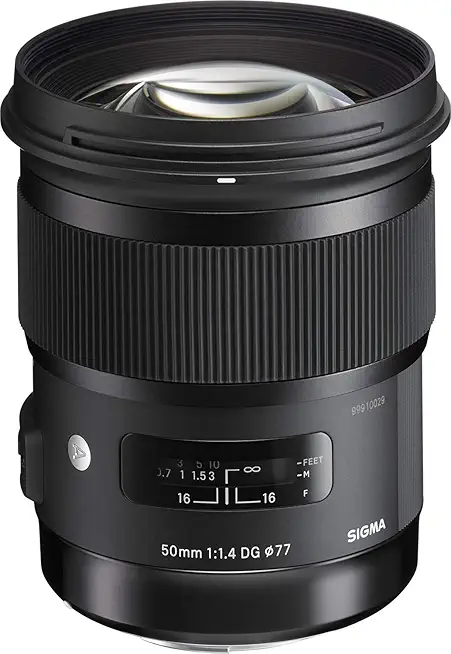
Sigma 50mm f/1.4 Art Nikon
Art-series full-frame optic delivering spectacular resolution, edge-to-edge sharpness, and velvety bokeh at f/1.4. Solid construction and precision optics ideal for professional portraits, studio work, and creative low-light photography.
Check PriceThe Sigma 50mm f/1.4 Art is the obvious choice if you want cleaner, crisper images right out of the camera. On people work and studio shoots I noticed more fine detail and punch compared with the Nikon 50/1.4G, plus the backgrounds fall away in a very pleasing, smooth way. That extra image “pop” is real in pictures, not just on paper.
That improvement comes at a cost in the field: the Sigma is bigger and heavier, and it doesn’t sit as comfortably on small bodies for long walk-and-shoot days. Autofocus is good, but on some older bodies it can need a tiny calibration to be perfectly consistent. For studio or wedding days where image quality matters most, I happily carried the extra weight; for quick street sessions I found it a bit overkill.
Pick the Sigma Art if you’re a pro or enthusiast who puts image quality first — wedding shooters, studio portrait photographers, and anyone who crops tightly or sells prints. If you don’t mind the size and want the best-looking files, this is the step up from the Nikon 50/1.4G.
Alternative 3:
Sigma 50mm f/1.4 Art Nikon
Premium fast prime engineered for outstanding micro-contrast, minimal aberrations, and silky background separation. Exceptional color rendition and build quality make it a favorite for editorial, wedding, and fine-art photographers seeking maximum impact.
Check PriceSaying it again as a slightly different take: the Sigma Art also wins if you want richer color and very controlled rendering — skin tones and midtones have a bit more life to them compared with the Nikon 50/1.4G in my shoots. The build feels very solid and the handling gives confidence on paid jobs where the lens needs to perform every time.
What it doesn’t do as well is stay out of the way when you need a compact setup. I wouldn’t choose it for long travel or discreet street work where the Nikon 50/1.4G’s smaller footprint is a real advantage. Also, expect to pay more up front and to accept the extra weight at the end of a long day.
This variant of the Sigma is for photographers who want maximum impact from a single prime — editorial, fine-art, and high-end portrait shooters who prize color, separation, and build quality over portability. If your priority is the most striking images and you can handle the bulk, it’s worth the trade.
What People Ask Most
Is the Nikon 50mm f/1.4 worth buying?
Yes — it’s worth buying if you want a faster aperture, nicer bokeh and better low-light performance than the cheaper 50mm f/1.8, though it costs more.
How sharp is the Nikon 50mm f/1.4 wide open?
Center sharpness is decent wide open but a bit soft with mild aberrations; it sharpens up noticeably by f/1.8–f/2.
Does the Nikon 50mm f/1.4 have vibration reduction (VR)?
No, the Nikon 50mm f/1.4 does not have vibration reduction.
Will the Nikon 50mm f/1.4 autofocus on entry-level Nikon DSLRs (D3xxx/D5xxx)?
The AF‑S 50mm f/1.4G will autofocus on D3xxx/D5xxx bodies, but the older 50mm f/1.4D requires a camera with a built‑in focus motor to AF.
What is the difference between the Nikon 50mm f/1.4G and the 50mm f/1.4D?
The G is the newer AF‑S model with an internal motor, updated coatings and no aperture ring, while the D is the older screw‑drive design with an aperture ring and slightly different rendering.
Is the Nikon 50mm f/1.4 good for portrait photography?
Yes — its f/1.4 aperture gives shallow depth of field and pleasing bokeh ideal for portraits, though stopping down a bit improves sharpness on the eyes.
Conclusion
The Nikon 50mm f/1.4G is an honest, versatile standard prime that delivers the shallow depth and low-light reach many Nikon shooters crave for portraits, street work and event coverage. Its quiet AF and compact footprint make it easy to carry and fast to use in busy shoots and dim interiors. On both FX and DX bodies it reads familiar and intuitive, producing images with pleasing color and subject separation that feel filmic without calling attention to themselves.
It is not without compromise. There’s no in-lens stabilization so handholding at very low shutter speeds demands technique or higher ISO, and it won’t replace a macro or a zoom when working tight or from a distance. Stopped-down highlights can show the aperture’s character, so shooters who need perfectly round bokeh at every aperture may look elsewhere.
For most photographers this lens hits the sweet spot between rendering, handling and cost, giving a distinctive look without fuss. Pick the Nikon 50mm f/1.4G if you want a lightweight, characterful fast‑50 that simply behaves in real shooting conditions; consider the 50mm f/1.8G for budget and weight savings, the Sigma Art for optical maximums, or a Rokinon if manual control and video are your priority. If you value ease of use, pleasing skin tones and a fast, reliably practical prime, the f/1.4G remains my recommendation.
Nikon 50mm f/1.4G
Professional-grade standard prime with ultra-fast f/1.4 aperture for exceptional low-light performance, creamy bokeh, and razor-sharp center detail. Ideal for portraits and creative depth-of-field control with dependable AF.
Check Price




0 Comments