
Want a single lens that covers travel, street and casual portraits without weighing you down? It’s the kind of glass that can simplify your kit and keep you shooting longer.
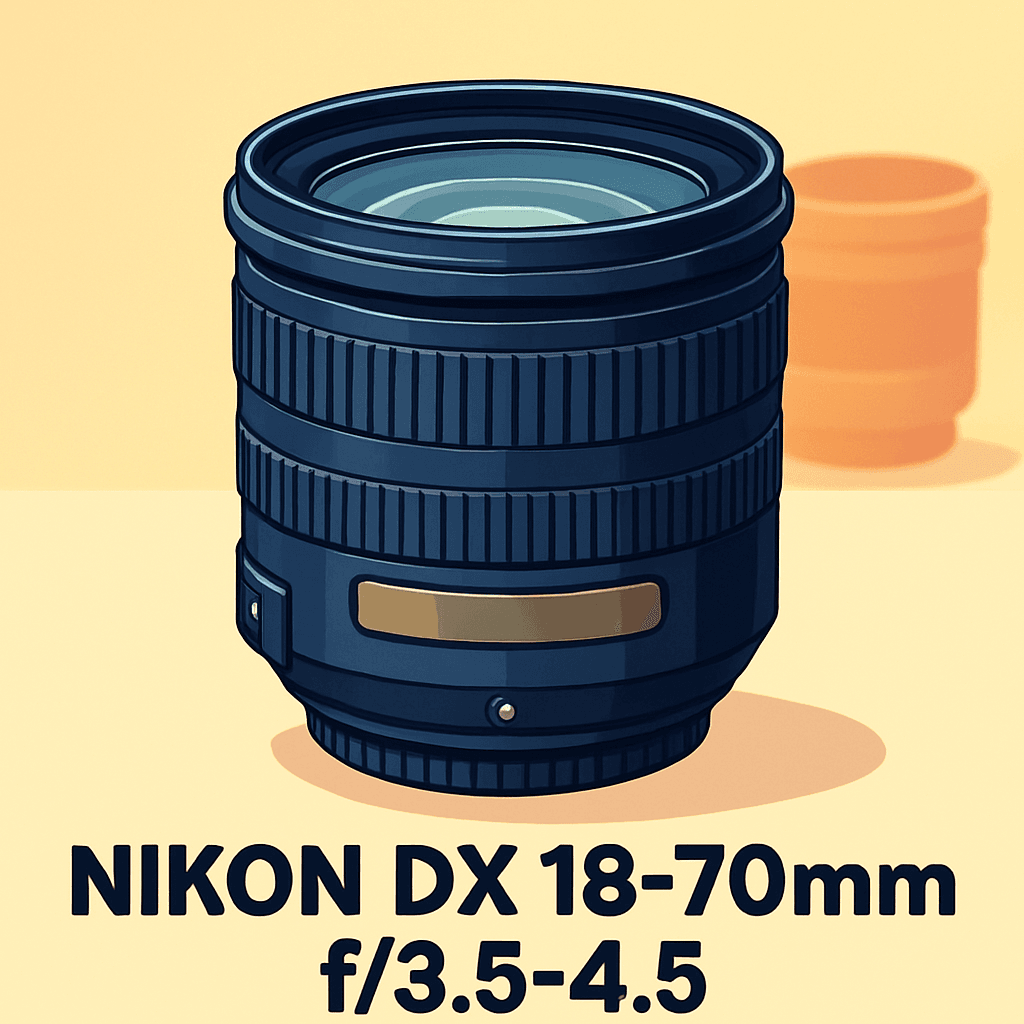
I field-tested the Nikon DX 18-70mm f/3.5-4.5G AF-S on travel and event shoots to see how it performs in real light. It’s a compact, practical DX walkaround zoom with AF-S drive but no in-lens stabilization.
If you shoot a Nikon DX body and want one versatile lens for daytime travel, street and portraits, this review’s for you. I’ll focus on handling, sharpness, autofocus and comparisons to newer rivals—keep reading.

Nikon DX 18-70mm f/3.5-4.5G AF-S
Compact, travel-ready short-telephoto zoom delivering sharp optics and a bright variable aperture. Silent-wave autofocus locks focus quickly for crisp portraits and landscapes, making it an excellent everyday lens for enthusiasts.
Check PriceThe Numbers You Need
| Spec | Value |
|---|---|
| Focal length | 18–70 mm |
| Aperture range | f/3.5–4.5 |
| Lens mount | Nikon F (DX) |
| Format compatibility | APS-C (DX) |
| Lens construction | 11 elements in 8 groups |
| Angle of view | 76° to 23° |
| Minimum focus distance | 0.38 m (1.25 ft) |
| Maximum magnification | 0.31× |
| Autofocus | Silent Wave Motor (AF-S) |
| Image stabilization | None |
| Filter size | 67 mm |
| Diaphragm blades | 7 (rounded) |
| Dimensions (diameter × length) | ≈73 mm × 72 mm |
| Weight | ≈375 g (13.2 oz) |
| Extra feature | ED glass element (reduces chromatic aberration) |
How It’s Built
In my testing the Nikon DX 18-70mm f/3.5-4.5G AF-S feels like a classic walkaround lens. It’s compact and easy to carry so you don’t mind leaving it on the camera. That translates to shooting more often on the street or while traveling.
The zoom ring has a confident throw and snaps between focal lengths without feeling loose. The focus ring sits close to the front and gives smooth, predictable feedback for casual manual tweaks. There’s a simple AF/MF switch that’s easy to flip without looking.
Build-wise it feels solid rather than flimsy, and tolerances are decent for everyday use. Mounted on my DX bodies it balances nicely and doesn’t pull the camera too far forward. Beginners will appreciate the straightforward, no-fuss layout.
One thing I really liked was how usable the controls are in real shooting—quick to adjust on the fly. One thing that could be better is the lack of in-lens stabilization, which means I had to use faster shutter speeds or support the camera in low light. In practice that just means being a bit more deliberate when shooting inside or at dusk.
In Your Hands
The 18–70mm range feels like a true walkaround on a DX body: wide enough for interiors and landscapes, comfortably centered for streets and environmental portraits, and long enough to isolate faces without switching lenses. In practice that flexibility lets you shoot an entire day with one optic and still get varied framing without fuss.
The variable aperture means the lens hands you more light at the wide setting than at the tele, so you constantly juggle shutter, ISO and depth of field as scenes change. In bright outdoor work this is rarely an issue, but in dim interiors or low-light events you’ll need to lean on faster shutter speeds, higher ISO or additional support to keep frames sharp.
Close-focus capability is a pleasant surprise for detail shots — not a macro, but close enough to capture texture, foliage and subject detail with nice separation. The optical design keeps color fringing in check, which preserves micro-contrast and makes fine detail pop in real-world images.
Without optical stabilization you learn to work with technique: braced shooting, slightly faster shutters, higher ISOs or on-camera light when needed. When using polarizers or NDs, favor slimmer glass and avoid stacking to minimize any corner shading.
Ergonomically it’s compact and balanced for long days on the street or while traveling, so it becomes an easy grab for documentary walks, daylight events and casual portraits. For indoor action or low-light moments it rewards disciplined technique rather than relying on lens tricks.
The Good and Bad
- Useful 18–70mm range for DX as a one-lens walkaround
- AF-S autofocus drive
- Compact size and moderate weight for daily carry
- 0.38 m minimum focus distance with 0.31x magnification for close-up versatility
- No image stabilization (VR)
- Variable maximum aperture (f/3.5–4.5)
Ideal Buyer
For Nikon DX shooters who want one lens that truly covers the day-to-day, the Nikon DX 18-70mm f/3.5-4.5G AF-S is a compelling walkaround choice. Its wide-to-short-tele range handles landscapes, streets and environmental portraits without swapping glass, and it frames comfortably on DX bodies. The lens’s compact size and AF‑S drive make it especially pleasant on smaller DSLRs, though the older design lacks VR found on newer kits.
It’s a great match for travel and documentary photographers who work mostly in decent light or who don’t mind nudging shutter speed and ISO when light drops, and it performs well for daytime events and street work. If you value straightforward handling, responsive phase-detect autofocus and a modest, balanced package, this lens keeps your kit simple and predictable. The 0.38m close-focus capability adds useful versatility for detail work and casual close-ups.
However, it’s not the pick if you frequently shoot handheld in low light or need a constant fast aperture for shallow depth of field. If in-lens stabilization or a faster, constant-aperture zoom matters, you’re better off with alternatives that prioritize VR or speed, such as the 18–105 VR or the Sigma 17–70 OS. Keep the 18–70mm if you want a compact, reliable everyday performer that rewards sensible shooting technique.
Better Alternatives?
We’ve already walked through the Nikon DX 18-70mm f/3.5-4.5 — its handling, where it shines and where it falls short. If you like the 18–70’s compact feel and snappy AF-S focus, that’s a strong reason to stick with it. But there are clear reasons to look at other lenses depending on how you shoot.
Below are three practical alternatives I’ve used in the field. I’ll say plainly what each one does better or worse than the 18–70 and what kind of shooter I think should pick it.
Alternative 1:

Nikon DX 18-105mm f/3.5-5.6G AF-S VR
All-in-one mid-range zoom offers extended reach for travel and event shooting with built-in vibration reduction for steady handheld results. Smooth zooming and reliable autofocus handle both stills and run-and-gun video.
Check PriceI use the 18–105 a lot when I need reach without swapping lenses. Compared to the 18–70 it gives you a longer tele end (105mm) and built-in VR, so handheld shots in lower light are easier to pull off. For travel and events where you’re moving fast, that extra reach and stabilization save me from changing lenses or raising ISO as much.
Where it loses to the 18–70 is in sheer compactness and in the little bit of crispness the 18–70 shows at overlapping focal lengths. The 18–105 is a touch larger and feels a bit softer at some focal lengths and apertures, so if you care about the absolute edge/peripheral sharpness the 18–70 still has a slight advantage in my experience.
Pick the 18–105 if you want one-lens convenience for travel or events and you value VR and extra reach over the smallest size and the very best edge acuity. It’s for shooters who want fewer lens changes and more flexibility when light gets tricky.
Alternative 2:

Nikon DX 18-55mm f/3.5-5.6G AF-P VR
Check PriceThe AF-P 18–55 is the lightweight, modern-feeling option. Its stepper motor makes autofocus very quiet and smooth in live view and video — noticeably better than the older AF-S motor in the 18–70 when you’re recording. It’s also smaller and lighter, so it’s easier to carry all day or use on a gimbal for handheld video.
On the downside, the 18–55 stops at 55mm, so you lose some tele reach compared to the 18–70. The build is more plastic and manual-focus feel is minimal, so if you like a firmer focus ring or shoot a lot of manual focus work, the 18–70 gives a better tactile feel. Also, very old Nikon bodies may not fully support AF-P without firmware updates.
Choose the AF-P 18–55 if you’re a vlogger, hybrid shooter, or someone who values light weight and quiet, smooth autofocus for video. It’s great as an everyday walkaround lens when size and AF behavior in video matter more than extra reach.
Alternative 3:

Nikon DX 18-55mm f/3.5-5.6G AF-S VR
Responsive silent-wave autofocus combined with vibration reduction yields sharp handheld results and quick subject acquisition. Durable construction and consistent optics make this a reliable, versatile standard zoom for enthusiasts and beginners.
Check PriceThe AF-S 18–55 VR sits in the middle ground. It adds VR like the 18–105 and keeps the AF-S motor you’re used to with the 18–70, so autofocus feels familiar and reliable for stills. In real shooting it’s a dependable little lens with good center sharpness and steady handheld performance thanks to VR.
Compared to the 18–70 it trades away range — it tops out at 55mm — so you lose the longer reach. It’s usually smaller than the 18–70 but not as smooth for video AF as the AF-P version. The build is decent, and I’ve found it tougher than the AF-P in rough handling, but it doesn’t offer the same compactness or modern AF smoothness.
Go for the AF-S 18–55 VR if you want a stable, reliable standard zoom for stills, you like the feel of AF-S autofocus, and you don’t need the extra reach. It’s a good pick for beginners and enthusiasts who want simple, steady results without worrying about the newest AF tech.
What People Ask Most
Is the Nikon DX 18-70mm f/3.5-4.5 a good lens?
Yes, it’s a solid, versatile walkaround lens with decent sharpness for its age, but it won’t match newer, faster zooms in low light or bokeh quality.
What cameras is the Nikon 18-70mm f/3.5-4.5 compatible with?
It fits Nikon F-mount DX cameras (like older D70/D90/D3000/D5000 series) and can be used on FX bodies in crop mode but will vignette on full-frame coverage.
Does the Nikon 18-70mm f/3.5-4.5 have Vibration Reduction (VR)?
No, this model does not include Vibration Reduction, so you may need higher ISO or a tripod in low light.
What is the full-frame equivalent focal length of the Nikon DX 18-70mm?
On a Nikon DX body the 18-70mm gives a full-frame equivalent of about 27-105mm.
Is the Nikon 18-70mm f/3.5-4.5 good for portraits and travel photography?
Yes, it’s a handy travel lens and works for casual portraits at the longer end, though the slow aperture limits shallow depth-of-field and low-light performance.
Is the Nikon DX 18-70mm f/3.5-4.5 worth buying used?
Yes, it’s a good buy used if you find one cheap and in good condition—just check for clear glass, smooth focus, and no fungus or heavy wear.
Conclusion
The Nikon DX 18-70mm f/3.5-4.5G AF-S is a clear-minded walkaround lens that trades modern bells for practical, everyday performance. Its compact handling, solid AF-S drive and useful close-focus ability make it an easy choice for travel, street and casual portrait work.
In the field it delivers dependable center sharpness and pleasing rendering where it matters most, and the ED element helps keep color fringing in check. Autofocus is quick and unobtrusive on DX bodies, so you spend less time hunting and more time composing.
The compromises are obvious and honest: no in-lens stabilization and a variable aperture limit its low-light handheld flexibility versus newer zooms. If you regularly need longer reach, steadier handheld shooting or the fastest apertures, the 18–70’s older design may feel dated.
If you want a single, straightforward lens that stays out of the way and produces strong real-world results, buy this and shoot. If low-light handheld versatility or maximum reach are priorities, consider the stabilized or faster alternatives instead.
Nikon DX 18-70mm f/3.5-4.5G AF-S
Compact, travel-ready short-telephoto zoom delivering sharp optics and a bright variable aperture. Silent-wave autofocus locks focus quickly for crisp portraits and landscapes, making it an excellent everyday lens for enthusiasts.
Check Price


0 Comments