
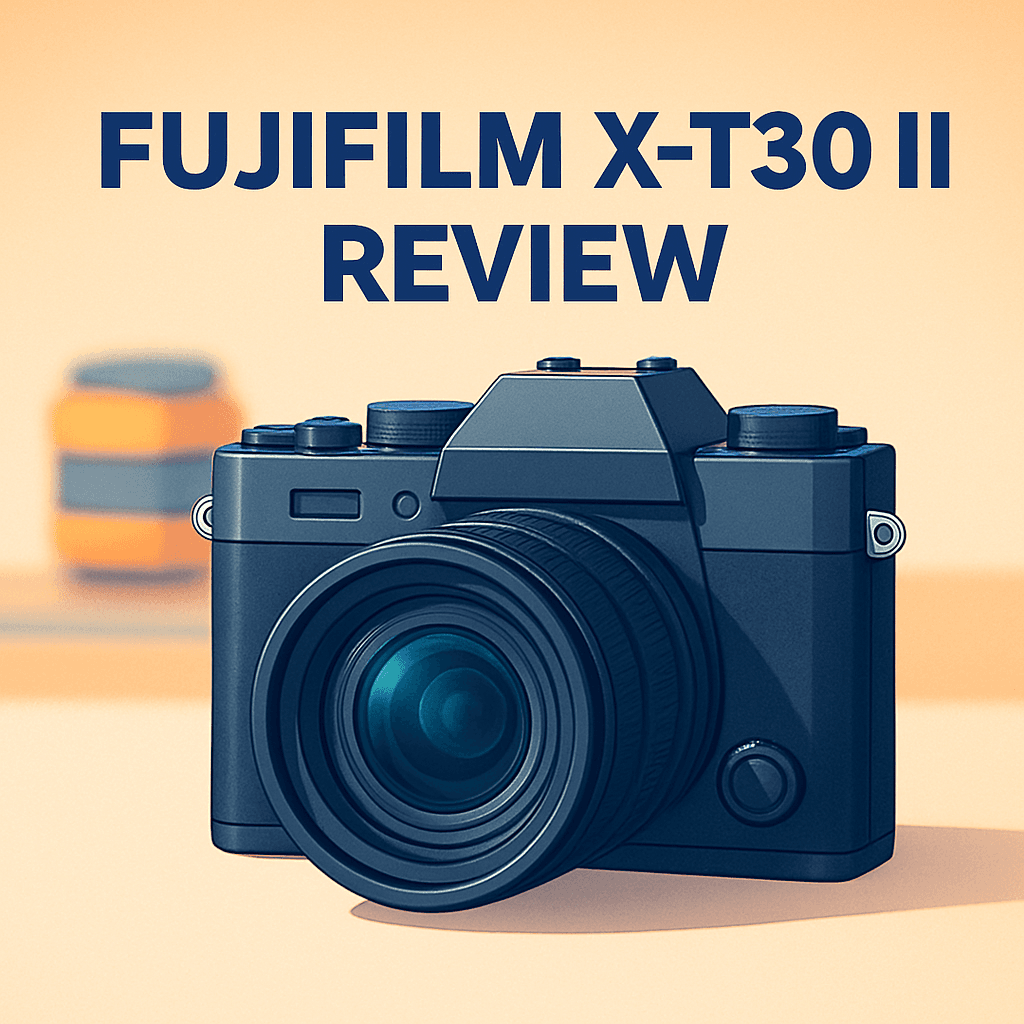
Want to know if the Fujifilm X-T30 II Camera will actually lift your image quality and speed on real shoots?
I’ve taken this compact body out on street, travel, and family assignments, and I field-tested it against a couple of popular rivals to see how it behaves in the real world.
If you’re after a small APS‑C camera with Fujifilm’s signature color and film sims, plus hybrid stills/video flexibility and easy portability, this review is aimed at you.
I’ll cover design and handling, AF and burst performance, stills and video image quality, battery and workflow, strengths, limits, and clear alternatives — so make sure to read the entire review as you’ll want the full findings before deciding.

Fujifilm X-T30 II Camera
Retro-styled mirrorless delivers rich color, high-resolution APS-C imaging, responsive autofocus and film-simulation modes for expressive photos and smooth 4K video — a compact creative tool for enthusiasts.
Check PriceThe Numbers You Need
| Spec | Value |
|---|---|
| Sensor | 26.1 MP APS-C X-Trans CMOS 4 |
| Image processor | X-Processor 4 |
| ISO range | 160-12800 (extended 80-51200) |
| Shutter speed | 1/4000s (mechanical), 1/32000s (electronic) |
| Continuous shooting | 8 fps (mechanical), 30 fps (electronic with crop) |
| Autofocus | Hybrid AF, 425 points |
| Viewfinder | 0.39″ 2.36M-dot OLED |
| LCD | 3.0″ 1.62M-dot tilting touchscreen |
| Video | 4K/30p, FHD/240p |
| Film simulations | 18 modes |
| Weight | 383 g (body only) |
| Size | 118.4 x 82.8 x 46.8 mm |
| Memory | Single UHS-I SD slot |
| Battery | NP-W126S, approx. 380 shots |
| Connectivity | Wi-Fi, Bluetooth |
| Weather sealing | No |
How It’s Built
In my testing the X-T30 II felt like a true travel companion — small and light enough to carry all day without getting in the way. That compactness makes it great for street work and family shoots where you want to blend in and move fast.
The electronic viewfinder is clear and responsive in normal shooting, so composing through it feels natural and there’s minimal blackout between frames. The tilting touchscreen is handy for low and high angles, and the touch controls respond well when I need quick focus or menu tweaks.
Grip and controls surprised me for such a small body; the hand sits comfortably and the dials have a satisfying click. Menus are snappy in daily use and I liked having user-assignable buttons for things I reach for often, which speeds up real shoots.
One thing I really liked was how portable it is without feeling toy-like — you still get a solid, tactile camera in a compact package. One thing that could be better is the lack of weather protection, which means I avoid shooting in heavy rain without extra cover.
Practical notes from real shoots: there’s only one card slot, so I make a habit of backing up to a laptop or phone during breaks. Battery life is fine for casual days, but I bring a spare for long assignments and the Wi‑Fi/Bluetooth pairing generally works well for quick client previews, even if transfers aren’t blazing fast.
In Your Hands
Out in the field the X‑T30 II feels quick and eager—menus pop, focus locks, and the overall interface keeps you moving between frames without fuss. The mechanical shutter is reliable for most assignments, while the high-speed electronic option is a boon for silent shooting and taming bright lenses, though it brings the usual electronic tradeoffs: a cropped view, occasional rolling artifacts, and a burst window that favors short rapid sequences over marathon runs. In practice the keeper rate is strong for deliberate shooting and short action bursts, but it softens as subject movement becomes fast and erratic.
Battery life covers a casual day of street or family work without drama, but on heavy assignment days where you’re shooting continuously or firing lots of bursts I always carry a spare. Video is usable and color-rich for run-and-gun projects; autofocus is steady most of the time, but quick pans and busy foregrounds can reveal rolling shutter and occasional AF hunting. The camera’s wireless tools are genuinely helpful for quick client previews and social sharing, though transfers aren’t instantaneous.
Practical limits matter: the single card slot means you should have a file-backup plan, and the electronic shutter can show banding under some artificial lights. Telephoto tracking is competent for slower-moving subjects but less consistent with rapid, unpredictable motion, so I pick my moments and shooting modes accordingly for the best results.
The Good and Bad
- 26.1 MP APS‑C X‑Trans CMOS 4 for detailed stills
- X‑Processor 4 for responsive operation
- 4K/30p and FHD/240p for slow motion needs
- Compact and lightweight body (383 g)
- No weather sealing
- Single UHS‑I SD card slot
Ideal Buyer
The Fujifilm X‑T30 II Camera is for photographers who prioritize compact APS‑C bodies and those signature Fuji film simulations. It’s a camera for makers who want gorgeous straight‑out‑of‑camera color without hauling a larger rig. If you shoot assignments, it balances professional output with a travel‑ready size.
Travel, street, documentary and family shooters will appreciate the small footprint, light weight and responsive handling for on‑the‑move assignments. Silent electronic shooting and the fast e‑burst make it excellent for decisive moments and discreet work. Ergonomics and responsive dials help keep one‑handed shooting fluid.
Hybrid creators who need clean 4K/30 and occasional FHD/240 slow motion will find the X‑T30 II practical and straightforward. The JPEG film sims speed delivery for clients and social sharing, cutting down edit time. It’s a strong option for content creators who don’t need cine‑level features.
It’s not the right pick for those demanding weather sealing, dual‑card redundancy, in‑body stabilization or class‑leading AF for intense sports or fast action. If you prioritize color, portability and versatile stills with useful video, this body belongs near the top of the short list. Bring a spare battery and card workflow plan for long days and pro gigs.
Better Alternatives?
We’ve already dug into what the Fujifilm X‑T30 II does well and where it trips up in real shoots. It’s a great, compact APS‑C body with lovely in‑camera colors and fast stills performance, but not everyone needs the same mix of strengths. If you found the X‑T30 II’s limits—AF tracking in fast action, 4K60 video, weather sealing or a different color look—you should know the practical alternatives.
Below are a few real-world options I’ve used on assignments and trips. I’ll spell out what each one does better and where it loses to the X‑T30 II, and who will actually prefer each camera when you’re out shooting.
Alternative 1:

Sony Alpha a6400 Camera
Portable hybrid combines lightning-fast subject tracking with precise eye-detection AF, high-quality APS-C stills and crisp 4K video, plus a versatile tilting touchscreen for vlogging and fast-paced shooting.
Check PriceIn real shooting, the Sony a6400’s AF feels more confident than the X‑T30 II for moving subjects. I’ve used it for street sports and kids running around and it kept faces and eyes locked more often, especially when subjects changed direction. The a6400’s keeper rate for action is higher, and its video AF is smoother for handheld clips—useful for run‑and‑gun work.
Where it falls short compared to the Fuji is color and handling. Sony’s out‑of‑camera JPEGs are more neutral and usually need a bit more work to get a punchy, finished look like Fuji’s film sims give you straight away. The a6400 also lacks Fuji’s tactile exposure dials and that satisfying analog feel; if you love the X‑T30 II’s control layout, the Sony feels more menu-driven in day‑to‑day use. It also doesn’t solve weather sealing or stabilization, so those limitations remain.
This camera is for shooters who need reliable AF and fast subject tracking—vloggers, run‑and‑gun hybrid shooters, and anyone who shoots a lot of moving subjects. If you want the broadest lens choices on APS‑C and a camera that just “sticks” to a subject in unpredictable scenes, the a6400 is the one I reached for more than once on active shoots.
Alternative 2:

Canon EOS R10 Camera
Lightweight enthusiast body offers speedy continuous shooting, reliable autofocus with subject recognition, sharp APS-C image quality and robust 4K video capabilities—ideal for action, travel, and everyday content creation.
Check PriceThe Canon R10 stands out in real shoots for its Dual Pixel AF. In practice that means quick, consistent eye and face detection in both stills and video. I found it very forgiving when tracking kids, pets, or cyclists—fewer missed frames than with the X‑T30 II in similar situations. It also gives you cleaner 4K footage at higher frame rates for smoother motion without a lot of fuss.
On the downside, the R10 doesn’t deliver Fuji’s film‑like JPEGs or the tactile controls that some shooters prefer. Its colors look nice straight out of camera, but they’re a different, more modern flavor than Fuji’s classic look. Battery life and stabilization are still areas where Fuji’s compromises match Canon’s; you’ll want spare batteries for long days and there’s no IBIS to rely on for shaky hands.
Pick the R10 if you’re a content creator who wants confident AF and 4K that’s ready for social or short films, or a sports hobbyist who needs crisp bursts and fewer missed shots. It’s a solid choice for hybrid shooters who want quick, reliable results without chasing Fuji’s specific color style.
Alternative 3:
Canon EOS R10 Camera
Compact, feature-packed tool balances portability with performance, delivering detailed images, responsive AF, advanced shooting modes and 4K-ready video — a go-to choice for photographers and online creators on the move.
Check PriceSeen from the travel and street angle, the R10 is very easy to carry and quick to use. I’ve taken it on day trips where weight mattered and appreciated how fast it wakes up, grabs focus and lets me keep shooting. Its shooting modes and AF responsiveness make it easy to get usable shots fast, which is exactly what you want when light or time are changing.
Compared to the X‑T30 II it’s more about convenience than character. The R10 won’t replace Fuji’s film sims or the specific look you get from those in a single click, and it doesn’t offer the same mechanical controls that some photographers love to use when dialing in exposure on the fly. Also, if you’re counting on weatherproofing or dual‑card safety, neither camera is a big winner here.
If you travel a lot, make content on the move, or want a compact body that still performs in tricky situations, the R10 is a practical pick. It’s particularly good for photographers who prefer quick results, reliable AF in mixed scenes, and a camera that stays out of the way while you work. For fans of Fuji’s color and tactile controls, though, it’s a trade‑off you should weigh carefully.
What People Ask Most
Is the Fujifilm X-T30 II worth buying?
Yes — it’s a compact, great-looking APS-C camera with excellent image quality and fast AF that’s ideal for enthusiasts, but skip it if you need IBIS or pro-level video features.
What is the difference between the Fujifilm X-T30 and X-T30 II?
The X-T30 II keeps the same sensor but adds a higher-resolution rear screen, refreshed processing/AF improvements and firmware refinements for smoother operation.
Does the Fujifilm X-T30 II have in-body image stabilization (IBIS)?
No — the X-T30 II does not have IBIS, so use stabilized lenses or a gimbal for handheld low-light or video work.
How is the image quality of the Fujifilm X-T30 II?
Very good — sharp files, rich Fujifilm color and strong high-ISO performance for an APS-C sensor, especially if you shoot RAW or use the film simulations.
Is the Fujifilm X-T30 II good for video?
It’s solid for casual 4K video and vlogging with good colors, but lacks IBIS and some pro recording features, so it’s not ideal for demanding cinema work.
How long does the battery last on the Fujifilm X-T30 II?
Expect roughly 300–380 shots per charge under normal use, with noticeably shorter life when using the EVF or recording video, so bring a spare battery.
Conclusion
The Fujifilm X-T30 II is a camera I reach for when I want great color, compact handling, and clean stills without hauling a full kit. Its high-resolution APS‑C sensor, beloved film simulations, and snappy operation make it a joy for travel, street, and everyday assignments. In short: it’s a color-first, shoot-now tool that accelerates delivery and keeps you moving.
That usefulness comes with clear compromises that matter in the field. There’s no weather sealing, only a single card slot, and no in-body stabilization, so full‑day shoots and demanding outdoor work require planning and backups. The fastest electronic modes help catch decisive moments, but they come with crop and some e‑shutter caveats that you should respect.
If your priorities are portable image quality, tactile controls, and iconic Fujifilm color, this body is a strong value and a reliable travel companion. If bulletproof AF tracking, dual-card redundancy, or IBIS are mission‑critical, look to the Sony or Canon alternatives. Choose this camera when color and compactness drive your decisions; pick something else for heavy action or studio redundancy.
Fujifilm X-T30 II Camera
Retro-styled mirrorless delivers rich color, high-resolution APS-C imaging, responsive autofocus and film-simulation modes for expressive photos and smooth 4K video — a compact creative tool for enthusiasts.
Check Price

0 Comments