
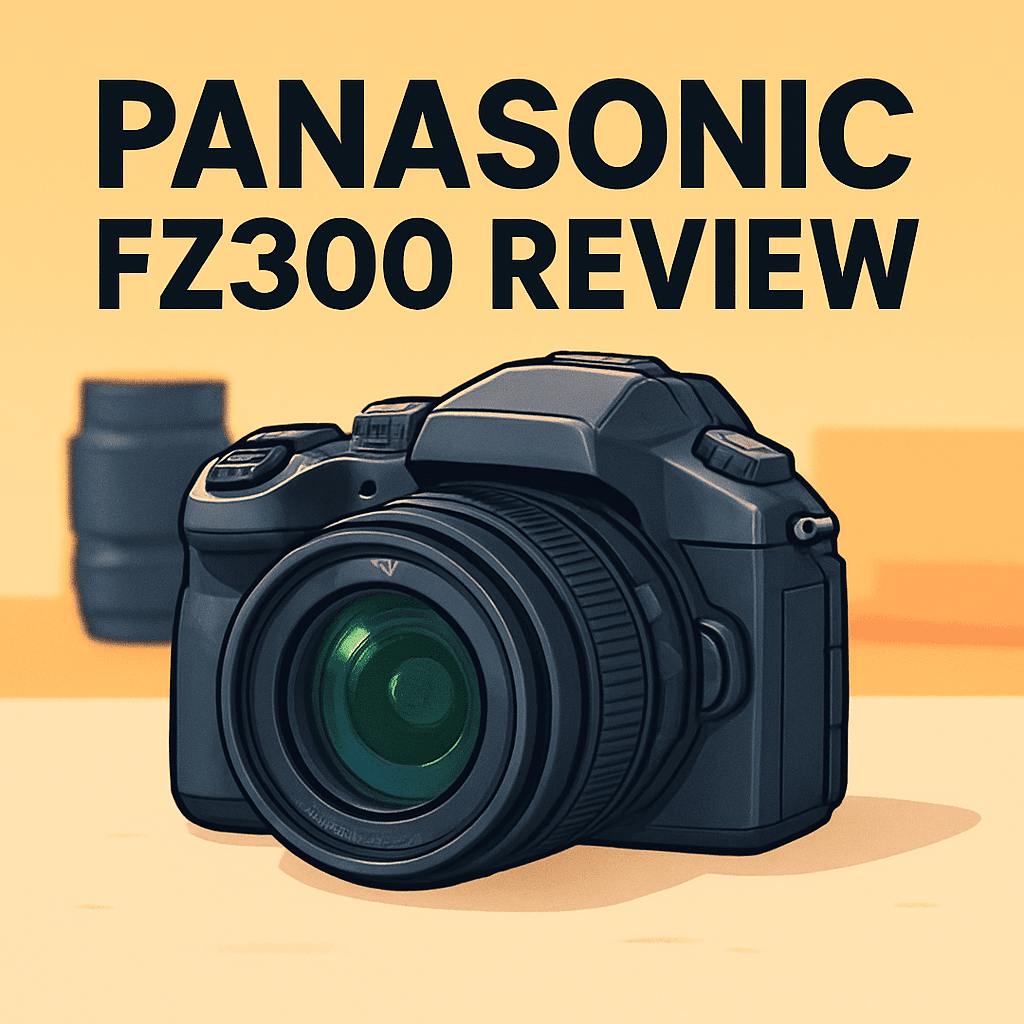
panasonic fz300 review — curious if this fixed-lens, long-zoom with a constant ƒ/2.8, weather sealing, and 4K video can really simplify your kit?
I’ll walk through design and handling, performance, image quality, autofocus, pros and cons, who it’s for, and sensible alternatives.
Having taken it into rain, trails and busy shoots, I’ll share hands-on impressions you can use in the field.
If you’re a traveler, outdoor shooter, or hybrid creator who values reach, a bright aperture and reliable stabilization, this will matter to you.
We’ll focus on real-world payoffs and honest trade-offs — make sure to read the entire review as it answers whether the FZ300 is the one-lens solution you need, so keep reading.

Panasonic Lumix FZ300 Camera
Rugged, all-weather bridge camera offering a constant bright f/2.8 zoom, high-resolution sensor, 4K video, and advanced image stabilization—ideal for travel photographers who want long reach without swapping lenses.
Check PriceThe Numbers You Need
| Spec | Value |
|---|---|
| Sensor | 1/2.3" 12.1 MP MOS |
| Lens | 25–600mm (35mm equivalent) ƒ/2.8 constant aperture zoom |
| Optical Image Stabilization | POWER O.I.S. |
| Weather Sealing | Yes |
| Focus Points | 49 |
| Continuous Shooting | 12 fps (AFS), 6 fps (AFC) |
| Video | 4K UHD 30p, Full HD 60p |
| Viewfinder | 0.39" 1.44M-dot OLED, 100% coverage |
| LCD | 3.0" 1.04M-dot fully articulated touchscreen |
| ISO Range | 100–6400 (expandable) |
| Shutter Speed | 60–1/4000 sec (mechanical), up to 1/16000 sec (electronic) |
| Flash | Built-in pop-up |
| Battery Life | Up to 380 shots (CIPA) |
| Connectivity | Wi-Fi, NFC |
| Weight | 691g (with battery and card) |
How It’s Built
In my testing the Panasonic Lumix FZ300 Camera feels like a solid travel partner rather than a toy. It’s bigger than a compact but still packable enough to toss into a daypack without making you wince. That size means you get a good grip and real controls you can use without fumbling, which is great if you’re new to manual settings.
I liked how confident the body feels in wet or dusty conditions. After using it in light rain I kept shooting without worrying about a splash ruining the day. For beginners that weather protection means you can focus on learning composition instead of babysitting gear.
The electronic viewfinder is bright and clear in my experience, though the eyecup is a bit snug if you wear glasses. The fully articulated touchscreen is responsive and a real plus for low or high-angle shots. I found the screen helpful for framing tricky shots and for quick touch-focus when I wanted a fast setup.
Controls are laid out logically and the grip keeps the camera steady, but the balance shifts forward when the lens is extended and long handheld sessions can get tiring. The pop-up flash is handy for fill, and pairing via Wi‑Fi/NFC was quick and painless in my tests. Overall it’s a beginner-friendly, well-built camera with just a little room for improvement in long-zoom handling.
In Your Hands
As an all‑in‑one, the Panasonic Lumix FZ300 Camera’s POWER O.I.S. is the unsung hero — handholdability out to the long end is genuinely usable, and stabilization smooths wander during video clips. I regularly kept shots sharp at focal lengths that would otherwise demand a tripod, and the system makes panning and tracking feel forgiving. In handheld recording the stabilization tames jitter without introducing the odd float some systems exhibit.
The constant wide aperture across the zoom changes how you shoot: exposure stays predictable as you frame in, and subject separation at the tele end is surprisingly convincing for a bridge camera. Low‑light telephoto work benefits from that steady brightness—autofocus locks and metering behave more consistently than with variable‑aperture zooms. Zoom action and lens control feel precise from wide to long, which encourages creative framing on the fly.
Shutter options give flexibility; the electronic mode is invaluable for silent shoots but can show rolling‑shutter artifacts during fast panning. Burst shooting is brisk in single‑shot AF with a high keeper rate, while continuous‑AF bursts are steadier for tracking but produce fewer keepers in chaotic action. In practice you quickly learn which mode matches your subject and adjust accordingly.
Video captures good detail and benefits from the same stabilization, though focus transitions can hunt at extreme reach and under dim light. The exposure compensation range is practical for high‑contrast scenes, and everyday ISO handling holds up for indoor and evening work if you mind shadow noise. A full day of mixed stills and video is achievable on one battery with sensible power‑saving habits.
The Good and Bad
- 25–600mm equivalent zoom with constant ƒ/2.8 throughout the range
- Weather‑sealed body for confidence in adverse conditions
- POWER O.I.S. aids handheld shooting at long focal lengths and in video
- 4K UHD 30p and Full HD 60p video options
- Small 1/2.3″ sensor compared to larger‑sensor alternatives
- 4K limited to 30p (no higher‑frame‑rate 4K option)
Ideal Buyer
If you want an all‑in‑one superzoom that lets you leave the lens bag at home, the Panasonic Lumix FZ300 Camera delivers 25–600mm reach with a bright constant ƒ/2.8. Its weather‑sealed body and POWER O.I.S. make it a practical choice for shooters who prioritize rugged reliability and handheld versatility across varied conditions.
Travel and outdoor photographers who need a single carry‑on solution will appreciate punching into distant scenes without swapping glass, especially in dim light where that constant ƒ/2.8 helps. Birders, roadside wildlife chasers, and adventure tourists get a compact, confidence‑inspiring package that handles rain, dust, and long telephoto framing better than most compacts.
Hybrid creators who shoot stills and 4K video will value the FZ300’s 4K30p, fully articulated touchscreen, stable POWER O.I.S., and integrated OLED EVF for flexible framing and smooth handheld clips. Built‑in flash, Wi‑Fi/NFC, and straightforward controls make it a fast, dependable tool for social, travel, and documentary workflows where speed and simplicity beat gear swaps.
If you prioritize the absolute best low‑light image quality, larger‑sensor IQ, or the fastest subject tracking and highest burst rates, the FZ300 isn’t the right long‑term choice. Those shooters should look to larger‑sensor mirrorless bodies or high‑end superzooms that trade the FZ300’s one‑lens convenience for superior low‑light performance and pro‑level AF speed.
Better Alternatives?
In this panasonic fz300 review we covered the camera’s biggest selling points: a true all-in-one 25–600mm equivalent zoom with a constant ƒ/2.8, solid weather sealing, and useful in-body stabilisation that makes handheld long-tele work possible. That setup is hard to beat if you need reach and reliability in rough weather.
If you want something different — cleaner low-light shots, faster tracking for birds or sports, or a tiny camera made for vlogging — here are a few real-world alternatives I’ve used and trusted. Each one trades something the FZ300 does well for something else you might value more.
Alternative 1:

Sony RX10 IV Camera
Professional-grade superzoom with a large 1-inch sensor, lightning-fast autofocus, high-speed continuous shooting, and crisp 4K video—perfect for wildlife, sports, and action photography where speed and reach matter.
Check PriceThe RX10 IV, in my hands, beats the FZ300 on raw image quality and speed. That bigger sensor and Sony’s autofocus make a real difference when shooting birds in flight or fast sports — keeper rates go up, and the images hold up much better at higher ISO. Video also looks cleaner and autofocus during recording is more confident, so it’s easier to stay on fast-moving subjects.
Where it loses to the FZ300 is in the simple, go-anywhere toughness and that predictable constant ƒ/2.8 feel at long reach. The RX10 IV is heavier and pricier, and you don’t get the same weather confidence I’d trust on a wet hike with the FZ300. Also, while the RX10 IV is fast, you can’t rely on the same constant exposure behavior across the entire zoom the way the FZ300 gives you.
Pick the RX10 IV if you’re a wildlife or action shooter who wants better low-light IQ and top-tier AF and speed, and you don’t mind the extra size, weight, or cost. If you need rugged weather sealing and the exact constant-brightness tele reach for unpredictable outdoor work, the FZ300 still has the edge.
Alternative 2:

Canon PowerShot G7 X Mark III Camera
Compact vlogger-friendly camera with a 1-inch sensor, bright lens, flip-up touchscreen, and clean HDMI output for live streaming—designed to capture stunning low-light portraits and social-ready video on the go.
Check PriceThe G7 X Mark III is a different kind of camera in daily shooting: tiny, pocketable, and geared toward creators. Compared to the FZ300 it gives you better background separation and cleaner low-light results thanks to the larger sensor and fast lens. The flip-up screen and livestream-friendly outputs make it much easier to shoot selfie-style video or quick portraits around town.
But it’s no match for the FZ300’s long reach or weather durability. You lose the 25–600mm flexibility — the G7 X is built for close-to-medium subjects, not long-distance wildlife — and it isn’t weather-sealed, so I won’t grab it first for a rainy outdoor shoot. Stabilisation and handling at long focal lengths just aren’t part of its job.
Go for the G7 X Mark III if you’re a vlogger, travel creator, or portrait shooter who wants something small that produces creamier backgrounds and better low-light video. If you need a do-it-all outdoor telephoto tool for wildlife or stormy hikes, the FZ300 remains the more practical pick.
Alternative 3:
Canon PowerShot G7 X Mark III Camera
Pocketable content-creator camera delivering creamy background separation, fast aperture for low-light performance, seamless vertical shooting support, and user-friendly controls—perfect for solo creators seeking professional results without bulky gear.
Check PriceLooking at the G7 X Mark III from a creator’s angle, it’s all about ease and image style. In real shoots I loved how quickly I could get a soft background and flattering skin tones without lugging a bag of lenses. The camera’s handling for vertical shots and quick social clips is much friendlier than the FZ300’s more photo-first layout.
The trade-offs are the same: you give up reach, ruggedness, and the bright, predictable long-tele performance of the FZ300. For run-and-gun content that stays within arm’s reach, the G7 X is liberating. For long-distance subjects, inclement weather, or when you need a single tool from wide to long tele, the FZ300 stays the smarter option.
Choose this Canon if you’re a solo creator who values portability, easy framing for vertical video, and nicer out-of-camera portraits. If your days are filled with long-distance shooting, harsh outdoor conditions, or you need a constant ƒ/2.8 zoom through the whole range, stick with the FZ300.
What People Ask Most
Is the Panasonic FZ300 worth buying?
Yes if you want a weather-sealed, all-in-one travel/telephoto camera with a constant f/2.8 zoom and good handling; skip it if you need a larger sensor or 4K video.
How is the image quality of the Panasonic FZ300?
Image quality is solid in good light with sharp lenses and punchy color, but the small 1/2.3″ sensor shows noise and limited dynamic range at high ISO.
How does the Panasonic FZ300 compare to the Panasonic FZ1000?
The FZ1000 has a larger 1″ sensor and better low-light performance plus 4K video, while the FZ300 offers a longer constant-aperture zoom (25–600mm equiv. at f/2.8) and better weather sealing.
Does the Panasonic FZ300 record 4K video?
No, the FZ300 records up to Full HD 1080p; it does not have 4K recording.
Is the Panasonic FZ300 good in low light or for night photography?
It’s usable in low light thanks to the f/2.8 lens, but the small sensor limits high-ISO performance, so expect more noise than cameras with larger sensors.
What is the zoom range and aperture of the Panasonic FZ300?
The lens covers about 25–600mm equivalent (24x zoom) with a constant maximum aperture of f/2.8 across the zoom range.
Conclusion
The Panasonic Lumix FZ300 Camera nails the brief as a do‑everything bridge camera with a bright, constant ƒ/2.8 zoom, weather sealing and POWER O.I.S. that truly helps you keep shots usable at longer reach. The 4K30p video, fully articulated touchscreen and a clear OLED finder make it a practical tool for hybrids. In real use it feels like a compact, confident field camera more than a toy.
Performance is straightforward and reliable rather than headline‑grabbing. Practical burst rates and responsive stabilization mean you’ll catch most moments without changing lenses, and battery life gets you through a long outing. Autofocus and high‑speed tracking are competent, but they aren’t the fastest in class.
The main trade‑offs are also plain: a smaller sensor limits ultimate low‑light IQ and dynamic range, and there are faster AF and burst options if you chase very rapid action. That said, for travelers, outdoor shooters and creatives who want one rugged, long‑reach camera that mostly does everything well, it’s hard to beat the convenience.
panasonic fz300 review — Recommended for photographers who prioritize reach, constant brightness and weather‑sealed versatility; look elsewhere if you need larger‑sensor image quality or top‑tier tracking performance.
Panasonic Lumix FZ300 Camera
Rugged, all-weather bridge camera offering a constant bright f/2.8 zoom, high-resolution sensor, 4K video, and advanced image stabilization—ideal for travel photographers who want long reach without swapping lenses.
Check Price



0 Comments