
Looking for a single lens that can carry you from wide environmental shots to tight interview close-ups?
The Sony FE 28-135mm f/4 G aims to be that tool, pairing a broad zoom range with cine-friendly controls, steady OSS, and smooth, quiet AF for real-world video work.
It’s built like a G-series lens with weather resistance and a substantial front end, so there are trade-offs for stills-first shooters; after field-testing it on assignments, I saw those pros and cons firsthand. Make sure to read the entire review as I compare it to the 24–105, 70–200, and 24–70 f/4 alternatives—keep reading.

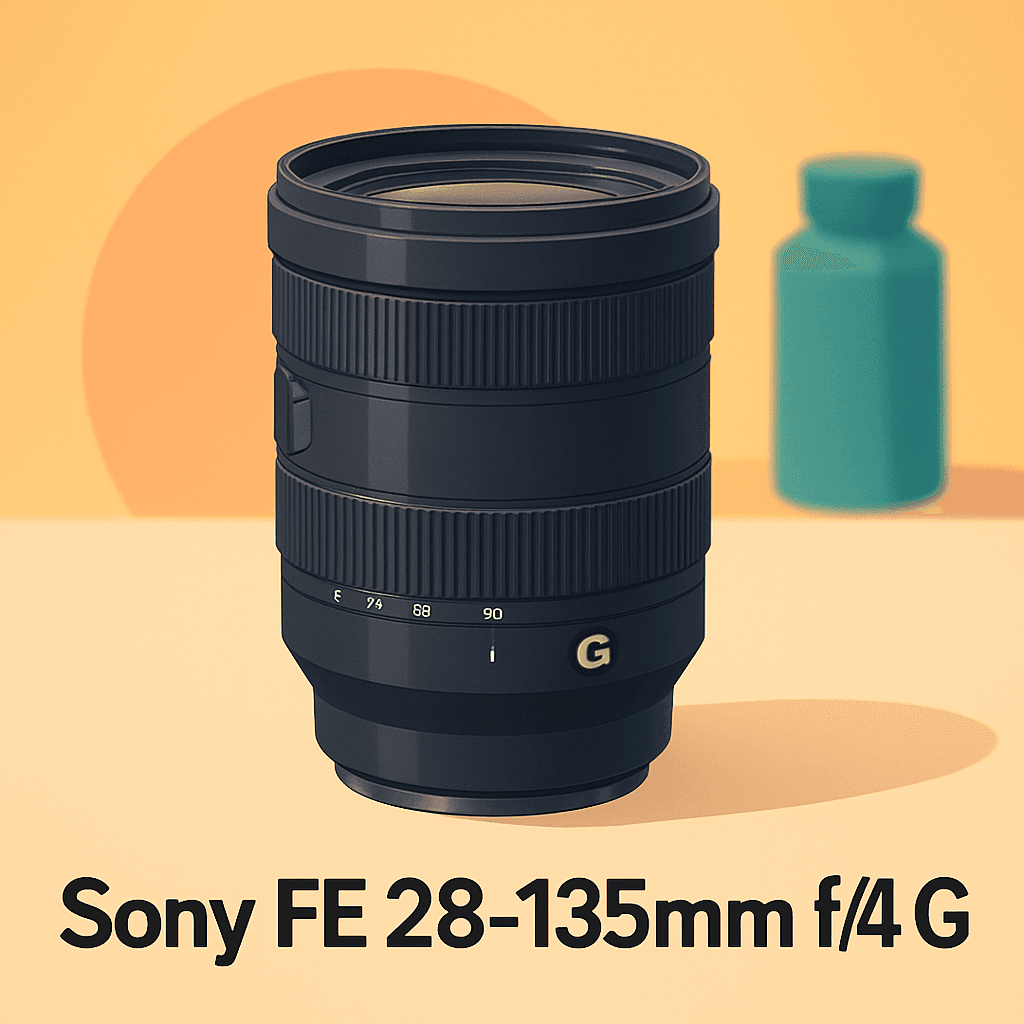
Sony FE 28-135mm f/4 G
Versatile, long-range zoom ideal for hybrid shooters and cinematographers. Constant aperture delivers consistent exposure and smooth focus transitions; advanced optics minimize aberrations for crisp, contrast-rich images and flattering subject separation.
Check PriceThe Numbers You Need
| Spec | Value |
|---|---|
| Focal length | 28-135 mm |
| Maximum aperture | f/4 (constant) |
| Lens mount | Sony E-mount (full-frame) |
| Format compatibility | Full-frame and APS-C |
| Optical image stabilization | Yes (Optical SteadyShot, OSS) |
| Lens type | Zoom G-series lens |
| Minimum focus distance | Approximately 0.40 m (1.31 ft) |
| Maximum magnification | Around 0.29x |
| Aperture blade count | 9, rounded blades |
| Autofocus | Power zoom with smooth, quiet AF suitable for video |
| Filter size | 95 mm |
| Dimensions (approximate) | 87 mm diameter × 139 mm length |
| Weight | Around 650 grams (1.43 lbs) |
| Lens elements/groups | 18 elements in 14 groups, including aspherical and ED glass |
| Weather sealing | Dust and moisture resistant design |
How It’s Built
In my testing the Sony FE 28-135mm f/4 G feels solid and thoughtfully built. It’s a G-series lens with dust and moisture resistance, so I didn’t worry about light rain or dusty event days.
Mounted to a Sony full-frame body it balances comfortably and never felt front-heavy during handheld shooting. For longer days I still reached for a rig or a light shoulder support. If you add filters and a hood it gets noticeably bulkier.
The power zoom is the star — smooth, quiet and geared for controlled pulls that are repeatable on video. The focus ring has a linear, predictable feel and overrides easily when I want manual pulls. I really liked how subtle zoom and focus moves translate into clean footage.
The big front element means a 95mm filter, which I found to be the one thing that could be better for travel and weight. Carrying matching caps, filters, and a large hood adds bulk, so plan your bag accordingly. The nine rounded aperture blades help give pleasing out-of-focus highlights, which makes backgrounds look nicer in real shoots.
In Your Hands
On set the Sony FE 28-135mm f/4 G functions as a single-lens toolkit, stretching from a useful wide to a short tele that suits interviews, events, travel and documentary work. The practical reach makes it easy to recompose without swapping glass, keeping workflow fluid on run-and-gun shoots.
A constant aperture through the range gives exposure predictability that’s a big advantage for video and hybrid shooters; white balance and ISO choices stay steady as you zoom, so you spend less time chasing exposure shifts. Built-in stabilization smooths handheld framing and lets slower shutter choices survive without jitter, which helps b-roll and ambient-light shooting.
Up close the lens allows convincing detail shots and tight product b-roll without changing glass, giving useful macro-ish options for inserts and cutaways. On smaller bodies the framing tightens in a practical way, trading field of view for reach when you want fewer lens swaps.
Ergonomically the power zoom and linear focus feel built for repeatable, cinematic moves—zoom pulls are controllable and focus ramps respond predictably for manual pulls. For long days it’s comfortable on a shoulder rig or gimbal but benefits from support during extended handheld work. In mixed lighting it proved dependable, though fast-paced stills shooters may miss the immediacy of a more compact fingertip zoom.
The Good and Bad
- Versatile 28–135mm range with constant f/4
- OSS for added stability
- Power zoom with smooth, quiet AF suited to video
- Dust and moisture resistant G-series construction
- Starts at 28mm rather than 24mm
- Large 95mm filter size increases bulk and accessory footprint
Ideal Buyer
If you make movies for a living or split time between video and stills, the Sony FE 28-135mm f/4 G will feel like it was built for you. Its powered zoom, whisper-quiet AF and OSS let you craft smooth, repeatable zoom and focus pulls without swapping lenses. The constant f/4 gives predictable exposure through a shoot.
Event, documentary, corporate and wedding shooters who need one all-purpose tool will appreciate the 28–135mm reach and weather-sealed G-series build. You can move from interview wide to tight b-roll without changing glass, and OSS keeps handheld framing steady during long days. The linear manual ring and cine-friendly ergonomics make in-camera storytelling easier.
Still photographers who prioritize range and stabilization over the shallowest background blur will also find this lens useful. Travel and hybrid shooters who prefer fewer lens changes and consistent exposure will like the balance between versatility and image control. It’s a practical choice when convenience beats ultimate speed.
This lens is not for shooters who need a true 24mm start, want the lightest kit, or demand f/2.8 or faster apertures for low light and subject isolation. If you live on a gimbal or need the smallest filters and cases, look to smaller zooms. But for cine-minded operators and hybrid pros, this is a compelling single-lens solution.
Better Alternatives?
We’ve gone through the Sony FE 28-135mm f/4 G in detail — how it’s built for smooth, video-style zooms, steady handheld work with OSS, and a useful 28–135mm range for hybrid shooters. It’s a great one-lens solution when you need controlled zoom pulls and consistent exposure across the frame.
If you’re thinking about trade-offs — wanting wider coverage, more tele reach, or something lighter and more stills-focused — here are three lenses I’ve used in the field that make different compromises. Each one beats the 28–135 in certain real-world ways and gives up other things, so I’ll point out who I’d pick each for.
Alternative 1:
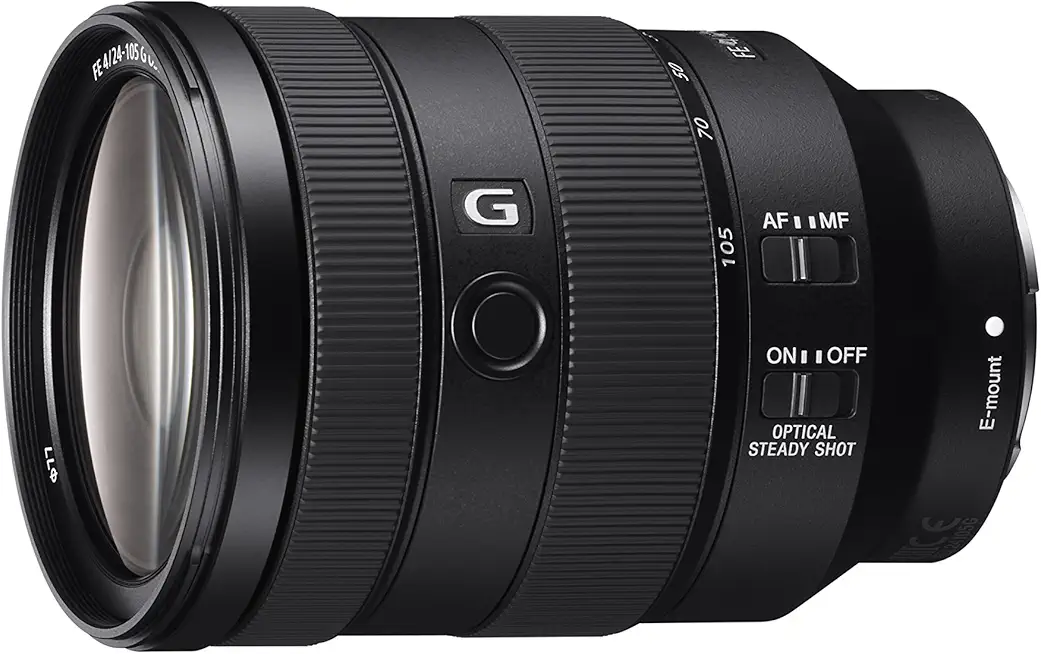
Sony FE 24-105mm f/4 G
Reliable all-purpose travel zoom offering flexible framing from wide to short-telephoto, stabilized shooting, and sharp performance across the frame—perfect for landscapes, portraits, and everyday storytelling with professional color and micro-contrast.
Check PriceI’ve used the 24-105 a lot for travel and run-and-gun shoots. Compared to the 28–135, it gives you that extra 4mm on the wide end, and that feels huge in tight interiors and landscapes — you don’t have to step back as much to get the scene. It’s also a touch smaller and lighter in the bag, so it’s easier to carry all day when you’re mostly shooting stills.
Where it loses to the 28–135 is the reach. If you need that extra telephoto compression at 135mm, the 24-105 won’t match it — you stop at 105mm. It also doesn’t have the built-in power zoom feel for smooth cinematic pulls, so for video moves the 28–135 still wins hands down.
If you’re a travel, landscape, or wedding shooter who wants one reliable lens that’s easy to carry and gives you useful wide shots, the 24-105 is the pick. If you’re a video-first shooter who needs longer reach or a true cine-style zoom, stick with the 28–135.
Alternative 2:

Sony FE 70-200mm f/4 G
Compact, fast telephoto built for action and portrait work. Constant aperture ensures reliable exposure; responsive autofocus and high-quality optics deliver punchy subject isolation, tack-sharp details, and smooth background falloff.
Check PriceThe 70-200 f/4 is a very different tool from the 28–135. I take it when I need longer reach, cleaner subject separation, and tighter portraits — it pulls backgrounds away and gives you more pleasing compression for people and distant details. For sports, events, and portraits it feels more natural and faster to use for tracking than a power-zoom lens.
What you give up is the wide-to-mid coverage. The 70-200 doesn’t help you at 28–50mm, so you’ll need a second lens for wider scenes. It also won’t give you the same smooth zoom pulls and video-first ergonomics of the 28–135, so it’s less handy if your main work mixes video and single-operator gimbal moves.
Pick the 70-200 if you shoot portraits, events, or action where reach and subject separation matter more than having a single all-in-one zoom. If you need a true hybrid video lens or want the flexibility of wide-to-tele in one barrel, the 28–135 is still the better single-lens choice.
Alternative 3:
Sony FE 70-200mm f/4 G
Lightweight, pro-grade reach ideal for events and wildlife from moderate distance. Balanced handling, effective image stabilization, and rugged construction enable long handheld sessions with consistent, high-resolution results.
Check PriceUsed handheld for long gigs, the 70-200 f/4 stands out for balance and build. It feels solid on a body, and the stabilization lets you hold longer at longer focal lengths without getting tired as fast. On long wedding days or wildlife outings from a moderate distance, it keeps results sharp even when you’re moving a lot.
Compared to the 28–135 it’s a specialist: it wins when you need sustained long-lens work, but it won’t replace that nice wide-to-mid coverage in a single shot. Also, if your work needs those smooth, repeatable zoom moves for video, the 28–135’s power zoom and cine-friendly controls will be more useful.
This version of the 70-200 is for shooters who do long handheld sessions — wedding photographers, event shooters, and anyone who chases subjects at a distance. If you want one lens that does everything from wide interviews to short telephoto b-roll, the 28–135 still earns its place; if you need true tele performance and comfort during long shoots, choose the 70-200.
What People Ask Most
Is the Sony FE 28-135mm f/4 G a good lens for video?
Yes — it’s designed with smooth, cine-style zoom and focus behavior that makes it excellent for run-and-gun video work.
How sharp is the Sony FE 28-135mm f/4 G across the zoom range?
Center sharpness is strong across the range, with mild corner softness at the wide and tele ends that improves when stopped down to f/5.6–f/8.
Does the Sony FE 28-135mm f/4 G have image stabilization (OSS)?
No — this lens does not include OSS, so you’ll want to use camera IBIS, a gimbal, or other stabilization methods.
How does the Sony FE 28-135mm f/4 G compare to the Sony FE 24-105mm f/4 G OSS?
The 28-135 gives longer reach and a smoother, more video-friendly zoom, while the 24-105 has OSS and a wider field for more general walkaround use; pick based on whether reach/video handling or stabilization/wider angle matters more.
Is the Sony FE 28-135mm f/4 G fast and reliable for autofocus?
Autofocus is smooth and reliable, especially for video and portraits, though it favors smooth tracking over the outright speed of small fast primes.
Is the Sony FE 28-135mm f/4 G worth buying for portraits and events?
Yes — it’s a versatile option for portraits and events thanks to the constant f/4 and useful reach, but if you need built-in stabilization or wider coverage the 24-105mm might be a better fit.
Conclusion
The Sony FE 28-135mm f/4 G is built as a video-first, full-frame G-series power zoom with stills-capable refinements. It delivers a unified exposure and a long, useful zoom range that removes the need to swap lenses in many shoots. For hybrid shooters this is a tool that prioritizes controlled, cinematic moves.
Its real strengths are obvious in motion: the motorized zoom is buttery smooth, autofocus is quiet and unobtrusive, and the manual focus feels linear and predictable for pull focus. Built-in stabilization and weather-sealed construction make handheld and on-location work more reliable. The rounded aperture helps keep out-of-focus highlights pleasingly behaved.
Those strengths come with trade-offs. It doesn’t give the widest framing, the constant aperture isn’t a substitute for faster glass in low light, and the beefier front end increases the size and accessory cost you carry. Photographers who prize compactness or maximum background separation may find it less convenient.
Bottom line: if your priority is video or a true hybrid workflow where repeatable, silent zooms and dependable handling matter, the Sony FE 28-135mm f/4 G is an excellent, purposeful choice. If stills-first shooting, broader wide-angle, or maximum aperture speed are more important, consider the 24–105 f/4, 70–200 f/4 or 24–70 f/4 alternatives instead. It’s a lens that earns its place on a kit primarily designed for controlled, cinematic capture.
Sony FE 28-135mm f/4 G
Versatile, long-range zoom ideal for hybrid shooters and cinematographers. Constant aperture delivers consistent exposure and smooth focus transitions; advanced optics minimize aberrations for crisp, contrast-rich images and flattering subject separation.
Check Price


0 Comments