
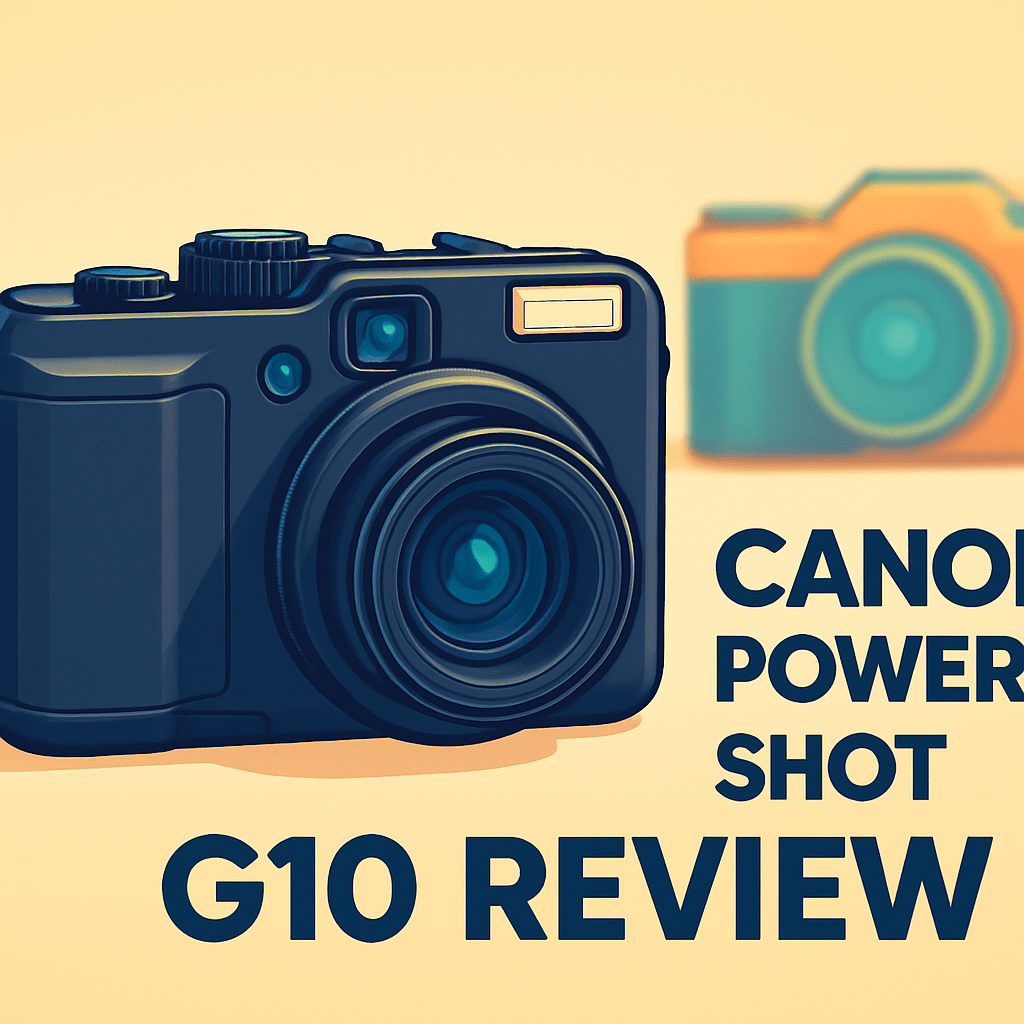
Want a compact camera that still hands you full manual control and RAW files without hauling a DSLR? This review looks at the Canon PowerShot G10 Camera from the viewpoint of someone who shoots in the field.
It’s aimed at photographers who value tactile controls, a versatile 28–140mm zoom, an optical viewfinder and a hot shoe for flash — the practical tools that matter on real shoots.
Think of the G10 as a stills-first, enthusiast compact with image stabilization and basic movie capability; you’ll care most about handling, RAW workflow, and how the zoom performs in everyday light.
I put the camera through everyday shoots to see how those strengths translate into usable photos — Make sure to read the entire review as I separate what matters from what’s just marketing, so keep reading.

Canon PowerShot G10 Camera
Professional-grade compact offering rich RAW capture, intuitive controls, and a bright zoom lens for versatile shooting. Durable body and thoughtful ergonomics deliver excellent image quality for travel, street, and event photography.
Check PriceThe Numbers You Need
| Spec | Value |
|---|---|
| Sensor | 14.7 MP |
| Lens | 28–140mm (5x zoom) |
| Aperture | f/2.8–4.5 |
| Raw capture | Yes |
| Image stabilization | Yes |
| LCD | 3.0″, 461,000 dots |
| Viewfinder | Optical, real-image |
| ISO range | 80–1600 |
| Shutter speed | 15–1/4000 sec |
| Hot shoe | Yes |
| Manual controls | Full |
| Exposure compensation | +/- 2 EV |
| Movie mode | 640×480, 30 fps |
| Dimensions | Approx. 109.1 x 77.7 x 45.9 mm |
| Weight | Approx. 350g (with battery) |
How It’s Built
Out of the box the Canon PowerShot G10 feels like a proper little camera — solid and reassuring in the hand rather than toy-like. In my testing its weight and size made it comfortable to shoot with all day, though it’s not a shirt-pocket camera; you’ll want a small bag for long outings. That heft actually helps steady the camera when you’re composing slow shots.
The controls sit where your fingers expect them, and I found the dials and buttons easy to reach without shifting my grip. After using it for a while the layout becomes second nature, which is great if you’re learning manual settings. Beginners will appreciate how tactile everything feels compared with tiny point‑and‑shoots.
The screen is clear enough for framing and quick reviews, but in bright sun I reached for the optical viewfinder far more often. In my testing that viewfinder was a real advantage — it’s simple, reliable, and a nice battery saver when you don’t want to rely on the LCD. I also liked having the hot shoe for a flash or other accessories; it’s a feature you’ll use more than you think.
Materials and assembly felt solid with no loose parts during real-world use, so it inspires confidence on a trip. What could be better is the LCD’s modest brightness and resolution compared with newer cameras; it makes critical focusing outdoors a little trickier. All in all it’s a well-built, friendly camera for photographers stepping up from basics.
In Your Hands
In the field the PowerShot G10 feels like a stills-first camera: it accommodates long exposures without fuss when mounted and can freeze moderate action reliably, but it isn’t tuned for high-speed sports. Low-light headroom is useful up to a point—images remain clean at moderate sensitivities, while pushing it further brings noticeable noise that requires cautious processing. Image stabilization proved genuinely helpful for handheld work, making usable shots at slower shutter speeds that would otherwise blur.
Autofocus is confident in good light and face detection does a solid job for portraits and family snapshots, locking onto subjects quickly and predictably. Indoors and when zoomed toward the long end the AF can become a bit more deliberate, occasionally hunting before settling, so patience or pre-focus techniques pay dividends. For routine shooting the focus behavior is dependable enough to keep you working without constant adjustment.
The zoom covers useful focal lengths for landscapes, interiors, and short-tele portraits, and the lens is at its most forgiving wide open on the wide end. Background separation is modest at the long end—pleasing for subject isolation but not dramatic—and sharpness across the range rewards stopping down slightly. Stabilization contributes to sharper handheld results throughout the zoom, especially in lower light.
Video is serviceable for quick clips and web sharing; expect basic definition and conservative autofocus during recording. Stabilization helps while walking, but focus transitions can be slow and occasionally obvious when you pan or change subjects. For casual movies it’s fine, but it won’t replace a modern hybrid for continuous AF performance.
Operation feels tactile and responsive—startup and shot-to-shot cadence keep pace with casual and enthusiast workflows, and the physical controls make dialing exposure straightforward. Battery life in real use carried me through typical day shoots with mindful use of the viewfinder and conservative review; a spare cell is a sensible backup for extended outings. Overall the G10 is a solid, workmanlike tool for photographers who prioritize manual control and reliable stills performance.
The Good and Bad
- Versatile 28–140mm (5x) zoom range covers wide to short telephoto
- RAW capture for flexible post-processing
- Image stabilization aids handheld shooting
- Full manual controls for precise exposure
- Movie mode limited to 640×480, 30 fps
- ISO range tops out at 1600
Ideal Buyer
The Canon PowerShot G10 Camera is for photographers who want compact portability without sacrificing full manual exposure control and a tactile shooting experience. If you love turning dials, shooting RAW, and shaping images in post with confidence and precision, this pocketable tool rewards a deliberate workflow and careful editing. The built-in hot shoe and optical real-image viewfinder give creative flash options and a battery-saving, distraction-free way to compose in bright light.
Its 28–140mm zoom and effective image stabilization suit travel photographers, street shooters, and portraitists who need one versatile optic for landscapes, interiors, and short-tele portrait work. Stills-focused creators who only want basic VGA video will appreciate that the camera prioritizes sharpness, exposure control and RAW latitude over cinematic movie features. Ergonomics, physical controls, and the thoughtful layout make it easy to dial in settings on the fly for intentional, repeatable results.
Choose the G10 if you value tactile handling, RAW latitude for confident post-processing, and an accessory-ready platform with a hot shoe for off-camera flash creativity. If your priorities are cutting-edge autofocus, higher ISO headroom, or 4K video, modern compacts will outpace it — yet for photographers who want a compact with serious stills capability, solid build and practical zoom reach, the G10 remains a smart, characterful pick.
Better Alternatives?
We’ve already dug into what makes the Canon PowerShot G10 a solid, hands-on compact: the 28–140mm zoom, RAW files, manual controls, a real viewfinder and a hot shoe. That setup covers a lot of ground for stills work, but some shooters want different strengths—faster autofocus, a much bigger sensor, better video, or a more refined single-lens experience.
If the G10’s mix of zoom flexibility and manual handling isn’t quite the right tool for your style, the cameras below are the ones I reach for in the field when I need those other strengths. Each one trades something the G10 does well for a different real-world advantage—read on to see which fit your shooting habits.
Alternative 1:
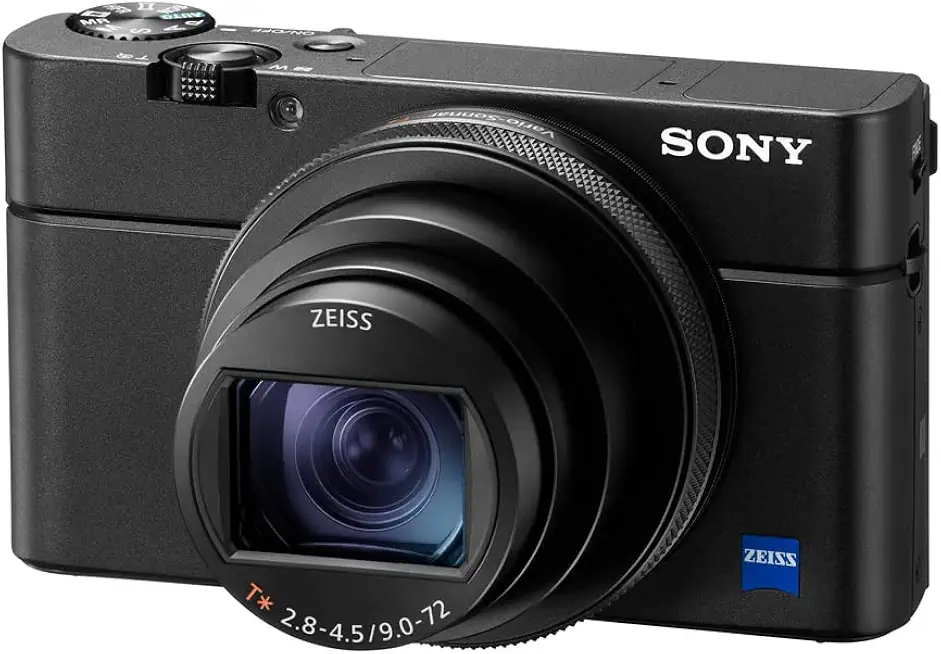
Sony RX100 VII Camera
Flagship pocket camera with lightning-fast autofocus, a versatile zoom range, and superb low-light performance. Ideal for vloggers and travelers seeking pro-level speed and sharpness in a pocketable body.
Check PriceI’ve used the RX100 VII as my go-to pocket camera when I need speed. In real shooting it locks onto moving people and subjects much better than the G10 ever could—follow-focus and subject tracking are simply more reliable. The larger 1″ sensor and newer image engine give cleaner files at higher ISO, and the 4K video with solid autofocus makes it a much stronger hybrid for short video clips or quick travel footage.
What you give up versus the G10 is physical control and accessory flexibility. The RX100 VII has no hot shoe, so you can’t attach bigger flashes or some accessories the G10 supports. The camera is also smaller and more fiddly to hold for long handheld sessions, and battery life is noticeably shorter in my shoots. It’s a trade of modern AF and image quality for less tactile handling and flash options.
If you’re a traveler, vlogger, or someone who wants the best pocketable autofocus and low-light performance, the RX100 VII is the pick. If you rely on an external flash, prefer a chunkier grip, or want the optical viewfinder and hot shoe of the G10, you’ll miss those things with the Sony.
Alternative 2:

Fujifilm X100V Camera
Refined hybrid shooter combining a large APS-C sensor, sharp fixed-prime lens, and tactile dials for fast, creative control. Produces film-like color and detail tailored to street and portrait photography.
Check PriceThe X100V is the camera I reach for when image quality and the feel of shooting matter most. In real use its APS-C sensor and fast fixed lens produce images with far better color, cleaner high-ISO performance, and nicer background separation than the G10. Fujifilm’s film simulations and physical dials make it a joy to use—files often look great straight out of the camera, which saves time when I’m editing on the road.
Where it loses to the G10 is obvious: there’s no zoom. You trade the G10’s 28–140mm flexibility for a single wide-ish prime, so you’ll be moving your feet or changing framing more often. It’s also bulkier than the small compacts and can cost more. Autofocus is good for everyday shooting, but it isn’t aimed at high-speed action the way some modern compacts are.
Buy the X100V if you value top-notch stills, beautiful straight-out-of-camera color, and a camera that encourages deliberate, frame-by-frame shooting—street photographers, portrait shooters, and anyone who loves a tactile control layout will prefer it. If you need a zoom for travel or event shooting, the G10 or a zoom-based alternative will serve you better.
Alternative 3:
Fujifilm X100V Camera
Rangefinder-style compact delivering exceptional image quality, intuitive manual controls, and beautiful JPEG film simulations. Lightweight and discreet, perfect for everyday carry and capturing candid moments with stunning clarity.
Check PriceIn the field the X100V feels like a carefully tuned tool for quiet, creative work. Its hybrid viewfinder and easy manual controls let you compose and expose quickly without fumbling through menus—this is something I appreciated when shooting street scenes or portraits where being fast and unnoticed matters. The camera’s JPEGs are lovely, so for many trips I didn’t need to spend long in post like I often do with the G10’s files.
On the downside, the fixed lens is a limit in practical shooting: you lose reach for detail and telephoto portraits that the G10’s 140mm end covers. The X100V also tends to be heavier to carry than ultra-small compacts and has a battery life that’s not great for extended days without spares. In situations that demand flash versatility or long zoom reach, the G10 still wins hands down.
If you want a discrete, high-quality everyday camera that encourages thoughtful shooting and gives gorgeous color and tone, the X100V is hard to beat. It’s ideal for street shooters, portraitists who like a classic look, and anyone who values image character and manual feel over zoom reach and flash flexibility.
What People Ask Most
Is the Canon PowerShot G10 worth buying?
It’s worth buying used if you want full manual controls and a solid compact with RAW for cheap, but newer models or cameras with larger sensors give much better image quality and low‑light performance.
How is the image quality of the Canon PowerShot G10?
Image quality is good for daylight and low ISO shots with fine detail, but the small 1/1.7″ CCD limits dynamic range and high‑ISO performance compared to modern cameras.
How does the Canon PowerShot G10 compare to the Canon PowerShot G9 or G11?
The G10 improves resolution and adds refinements over the G9, while the G11 sacrifices megapixels for better noise control and adds extra features—choose the G10 for controls and resolution, the G11 for cleaner high‑ISO images.
Does the Canon PowerShot G10 shoot RAW and have full manual controls?
Yes, the G10 shoots RAW and offers full manual exposure controls including aperture, shutter speed, and exposure compensation.
What are the Canon PowerShot G10 specifications (sensor size, megapixels, lens)?
The G10 has a 1/1.7″ CCD sensor at about 14.7 megapixels and a 28–140mm equivalent f/2.8–4.5 zoom lens.
How is the low-light and high ISO performance of the Canon PowerShot G10?
Low‑light performance is limited: expect usable results up to around ISO 200–400, with noticeable noise and loss of detail at higher ISOs.
Conclusion
After extensive hands‑on shooting, the Canon PowerShot G10 Camera proves itself a serious stills tool rather than a convenience point‑and‑shoot. Its flexible zoom, RAW capture, dependable image stabilization and full manual controls give you creative control in a compact package. The optical viewfinder and hot shoe further tilt this camera toward photographers who like to shape light and frame deliberately.
Those practical strengths arrive with trade‑offs that are impossible to ignore. Video capability is basic and not a selling point, the camera’s high‑ISO headroom is modest and exposure compensation is deliberately limited, so demanding low‑light or very high‑contrast work will push it. The lens also treads conservative aperture territory at the long end, so background separation at reach is muted compared with newer designs.
That mix places the G10 squarely for photographers who put stills, manual handling and flash flexibility first—travel shooters, street photographers and enthusiasts who plan to process RAW files. It rewards deliberate shooting more than rapid hybrid workflows. For those priorities its value remains strong.
If you need cutting‑edge autofocus, significantly better high‑ISO performance or modern video, the alternatives outlined are wiser choices. For anyone who values a tactile, versatile compact for photographs above all else, the Canon PowerShot G10 Camera is a clear, practical recommendation.
Canon PowerShot G10 Camera
Professional-grade compact offering rich RAW capture, intuitive controls, and a bright zoom lens for versatile shooting. Durable body and thoughtful ergonomics deliver excellent image quality for travel, street, and event photography.
Check Price

0 Comments