
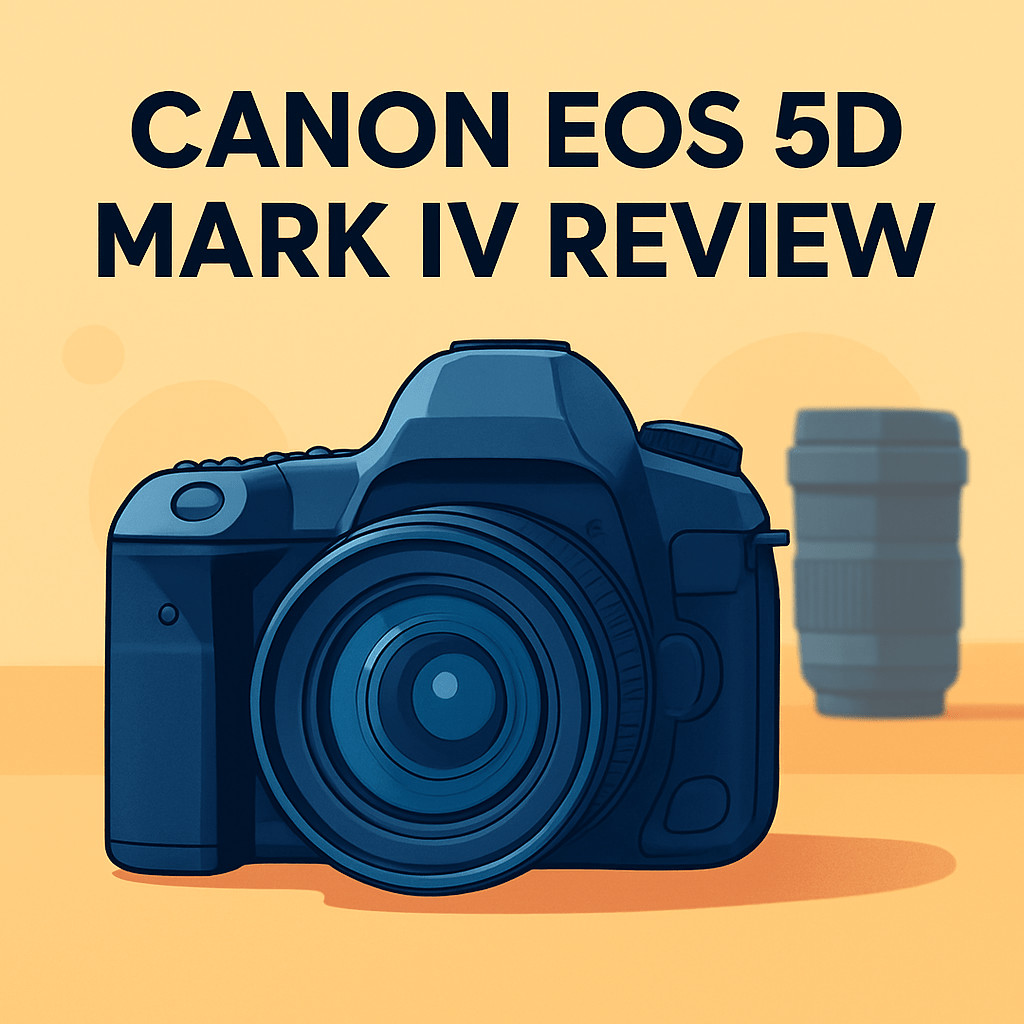
canon eos 5d mark iv review: Want to know if this camera will finally lift your image quality and handle both stills and video without slowing you down?
I’ve field-tested the Canon EOS 5D Mark IV Camera across weddings, landscapes, and fast-paced shoots to see how it performs in the real world. It promises full-frame 30.4MP stills, 4K at 30p, Dual Pixel AF, dependable 7 fps, weather sealing, dual card slots, and long battery life — all the practical tools shooters ask for.
If you value an optical viewfinder with credible live-view/video AF and need a balanced stills/video tool for on-location work, this review is for you. I’ll dig into handling, image quality, autofocus behavior, strengths and limits, and who should buy it next — make sure to read the entire review as you’ll want the full picture before choosing.

Canon EOS 5D Mark IV Camera
Professional 30.4MP full-frame body delivers exceptional image quality, reliable autofocus, and 4K video — built for demanding weddings, commercial shoots, and travel with weather-sealed durability and responsive controls.
Check PriceThe Numbers You Need
| Spec | Value |
|---|---|
| Sensor | 30.4 MP full-frame CMOS |
| Image processor | DIGIC 6+ |
| ISO range | 100–32000 (expandable to 50–102400) |
| Autofocus system | 61-point AF with 41 cross-type points |
| Continuous shooting | 7 fps |
| Video resolution | 4K UHD (4096×2160) at 30 fps |
| Dual Pixel CMOS AF | For video and live view |
| LCD screen | 3.2-inch touchscreen, 1.62 million dots |
| Viewfinder | Optical pentaprism, approx. 0.71x magnification |
| Shutter speed | 1/8000 to 30 sec, bulb |
| Connectivity | Built-in GPS, Wi-Fi, NFC |
| Storage media | Dual card slots (CF and SD) |
| Weather sealing | Dust and moisture resistant body |
| Battery life | Approx. 900 shots per charge (CIPA standard) |
| Weight | Approx. 890 grams (body only) |
How It’s Built
In my testing with the Canon EOS 5D Mark IV Camera the body feels solid and confident. Weather sealing let me shoot in drizzle and dust without panicking. I liked that peace of mind on rainy days.
It’s on the heavier side, so expect extra shoulder strain on long handheld shoots. The deep grip and button layout make it comfortable and fast to operate. The top plate gives instant info I actually use.
The touchscreen is responsive for menus, focus taps, and quick playback. Live view control felt intuitive when I needed it. The optical viewfinder is bright and clear, and framing through it always felt reliable — a feature I really liked.
Dual card slots let you set up backups or split RAW and JPEG without juggling gear. Built-in GPS and wireless made geotagging and quick client previews painless on location. Just bring the right card readers for offload.
The shutter felt solid across everything from fast moments to long exposures, so I trusted it on jobs. In my testing it stayed reliable and quiet under heavy use. The trade-off is the weight for handheld work, which could be better for long walks or gigs.
In Your Hands
The Canon EOS 5D Mark IV’s burst cadence feels purposeful, ideal for weddings, events and moderate action. Its autofocus locks consistently and the buffer clears reliably between runs, favoring steadiness over frantic speed.
Battery life will get you through a full editorial day of mixed stills, live view and some video, so you rarely feel tethered to a charger. Heavy video days still benefit from a spare battery tucked in the bag.
Dual CF and SD slots let you split RAW and JPEG, use overflow or create in-camera backups for critical jobs. That straightforward approach speeds handoffs and reduces anxiety about lost frames during quick turnovers.
Built-in GPS quietly geotags shoots, a small but welcome time-saver for travel and location-heavy assignments. Wi‑Fi and NFC make client previews and mobile transfers painless on location without disrupting workflow.
Weather sealing proved trustworthy in drizzle, wind and dusty festival conditions, so the body keeps working when less rugged gear would have been retired for the day. That durability makes it a go-to when a shoot simply can’t be rescheduled.
4K capture integrates cleanly into interview and b‑roll pipelines, while Dual Pixel autofocus delivers smooth, natural focus transitions in live view and video. For hybrid shooters, the camera’s video behavior noticeably shortens turnaround on deliverables.
I still reach for the optical viewfinder for immediate, decisive shooting in fast-paced environments, but switching to live view and Dual Pixel AF is second nature when you need precise framing, touch focus or gentle focus pulls. The workflow toggle between viewfinder and live view feels intuitive on real shoots.
The Good and Bad
- 30.4MP full-frame CMOS delivers substantial detail.
- Dual Pixel CMOS AF for video and live view offers smooth, reliable focusing.
- 4K UHD recording up to 30p for high-resolution video needs.
- Weather-sealed body (dust/moisture resistance) for field reliability.
- 4K video capped at 30p; manage expectations for higher frame-rate needs.
- 7 fps ceiling may not suit the fastest action requirements.
Ideal Buyer
For working pros and serious enthusiasts who prize robust image quality and tactile handling, the Canon EOS 5D Mark IV is an easy choice. Its 30.4‑megapixel full‑frame sensor delivers the headroom needed for large prints and tight crops. Photographers who prefer an optical pentaprism viewfinder and traditional DSLR ergonomics will feel at home.
If your days mix portraits, weddings and editorial assignments with occasional video, this body fits the bill. Dual Pixel CMOS AF makes live view and 4K shooting reliable for interviews, BTS and b‑roll. The 4K capped at 30p is perfectly usable for most client work that doesn’t demand slow‑motion.
You’ll appreciate the weather sealing, dual CF/SD slots and roughly 900‑shot battery life on marathon shoots. Those features translate into confidence on rain‑soaked location days, multi‑card redundancy and minimal mid‑day swaps. Ergonomics and built‑in GPS/Wi‑Fi/NFC keep fast turnarounds realistic.
This is not for shooters who need 4K at 60p, frame‑rates beyond 7 fps, or in‑body stabilization as a must‑have. If you own Canon glass and want proven color, reliable AF and a balanced stills/video tool that shoulders long days, the 5D Mark IV is tailor‑made. Otherwise, consider higher‑frame or IBIS‑equipped alternatives.
Better Alternatives?
We’ve just gone through the canon eos 5d mark iv review and what it does well — solid stills, reliable Dual Pixel live‑view AF, and a balanced mix of photo and video tools. If that combo fits you, great. But many shooters ask what else is worth considering before they buy.
Below are three real alternatives I’ve used in the field. I’ll cover what each one does better and where it falls short compared to the 5D Mark IV, and which kind of photographer would likely prefer each body.
Alternative 1:

Nikon D850 Camera
High-resolution 45.7MP sensor produces stunning detail and dynamic range; fast frame rates, robust battery life, and versatile shooting modes make it ideal for landscape, studio, and wildlife professionals.
Check PriceThe Nikon D850’s biggest real-world win over the 5D Mark IV is sheer detail. I’ve used the D850 for landscapes and studio work where that extra resolution gives noticeably cleaner large prints and more freedom to crop. In daylight and well-lit studio shoots the images look a step above when you need fine texture or big reproductions.
Where it’s worse for some jobs is workflow and video AF. Those huge files eat storage and slow down editing, so for fast-turnaround weddings or long event days the 5D Mark IV feels easier to manage. For run-and-gun video and live‑view focus transitions the Canon’s Dual Pixel still feels smoother than what I get from the D850’s live‑view AF in real shooting conditions.
If you’re a landscape, commercial, or studio shooter who values resolution and dynamic range for prints and retouching, the D850 is a clear choice. If you shoot a lot of hybrid video, fast-paced events, or want smaller files for quicker delivery, you might stick with the 5D Mark IV instead.
Alternative 2:
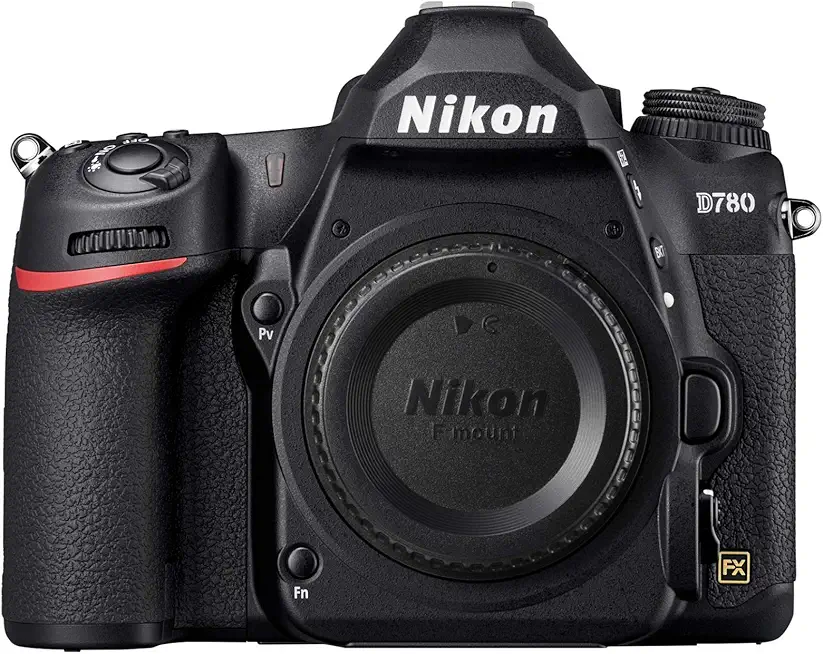
Nikon D780 Camera
Hybrid-focused full-frame body blends mirrorless-like live view AF with DSLR ergonomics, delivering clean low-light performance, 4K video, and responsive continuous shooting for hybrid photo-video creators.
Check PriceThe D780 feels like a modern DSLR that borrows the best bits of mirrorless. In live view its on‑sensor AF is noticeably better than older DSLRs I’ve worked with and in many cases rivals the 5D Mark IV’s Dual Pixel. For hybrid shooters who jump between stills and video, the D780’s live‑view behavior and low‑light performance made my shoots smoother and faster to frame and focus.
It does less well than the 5D Mark IV on resolution — files are smaller and you’ll have less cropping room if you need tight crops for headshots or editorial work. Also, if you already love Canon color rendering and have a big Canon glass collection, switching bodies can change skin‑tone handling and add adapter complexity.
Choose the D780 if you’re a hybrid shooter, wedding second‑shooter, or documentary photographer who wants solid stills plus much improved live‑view AF and video in a familiar DSLR shape. If you want the exact look and handling of Canon’s system or need that 30MP crop headroom, the 5D Mark IV still has reasons to stay in your bag.
Alternative 3:
Nikon D780 Camera
Engineered for speed and versatility, it offers fast hybrid autofocus, extended battery life, quiet live-view capture, built-in Wi-Fi for instant sharing, and a durable magnesium-alloy chassis for demanding assignments.
Check PriceUsed in more active shoots, the D780’s speed, quiet live‑view mode and solid build stood out. For ceremonies or quieter situations where you need to be discreet, the silent live‑view shutter and responsive AF let me capture moments without the mechanical noise or intrusive presence you sometimes get from heavier DSLR shooting modes.
Compared to the 5D Mark IV, the D780 trades a bit of resolution and the Canon color/feel for snappier live‑view operation and smaller files that make long days and fast edits easier. The D780’s built‑in sharing tools also made handing images to clients on location faster than my workflow with the 5D Mark IV in some gigs.
If you’re a photojournalist, event shooter, or an assignment shooter who needs a durable body, quiet operation, and fast live‑view work, the D780 is a strong alternative. If your priority is Canon-specific color, the optical viewfinder performance for certain AF workflows, or the 30MP crop latitude, the 5D Mark IV may still be the better fit.
What People Ask Most
Is the Canon EOS 5D Mark IV worth buying?
Yes—it’s still a strong all‑round DSLR with excellent image quality, solid build, and versatile features, but consider newer models if you need the latest autofocus or mirrorless advantages.
What are the differences between the Canon EOS 5D Mark IV and the 5D Mark III?
The Mark IV adds a 30.4MP sensor, 4K video, Dual Pixel AF, touchscreen, improved processor and connectivity, and better high‑ISO performance compared with the Mark III’s 22MP sensor and older electronics.
Does the Canon EOS 5D Mark IV record 4K video?
Yes, it records 4K (UHD/4K) video, but with a 1.64x crop and some autofocus limitations compared with its full‑frame live view AF.
How good is the autofocus on the Canon EOS 5D Mark IV?
The AF is very good for stills thanks to the 61‑point system and works well in challenging light, while Dual Pixel CMOS AF gives smooth and reliable live‑view and video focusing.
Is the Canon EOS 5D Mark IV good for wedding photography?
Yes—its image quality, weather sealing, battery life, and reliable AF make it a great wedding camera, though some shooters now prefer newer bodies for improved low‑light AF and speed.
What is the battery life (shots per charge) of the Canon EOS 5D Mark IV?
About 900 shots per CIPA charge with the LP‑E6N battery, though real‑world numbers vary with flash use and LCD playback.
How much does the Canon EOS 5D Mark IV cost?
It launched at $3,499 body‑only; current new and used prices vary widely depending on condition and market, so check recent listings for accurate pricing.
Conclusion
The Canon EOS 5D Mark IV Camera is a decisive, professional-grade DSLR that marries a high-resolution full-frame sensor with Canon’s proven Dual Pixel live-view and video autofocus. It pairs an optical pentaprism viewfinder and responsive touchscreen with rugged weather sealing, dual media slots, and dependable battery life. That combination makes it a very practical tool for demanding field work.
In practice its strengths are clear: consistent image rendering, flexible RAW files, smooth live‑view/video focusing, and an optical shooting experience that still matters to many pros. Build quality and connectivity options mean fewer compromises on location shoots, and the handling feels familiar and reliable under pressure.
The trade-offs are equally straightforward. Video is limited to the 30p range and the burst rate won’t satisfy the fastest sports shooters. The CF-plus-SD media approach and the camera’s substantial heft are logistics you should accept before committing to this body.
Overall verdict: buy the Canon EOS 5D Mark IV Camera if you value an optical‑finder workflow with credible modern live‑view/video AF, rugged reliability, and versatile stills performance. If you instead need higher resolution, more advanced hybrid video behavior, or in‑body stabilization, consider the alternatives outlined earlier.
Canon EOS 5D Mark IV Camera
Professional 30.4MP full-frame body delivers exceptional image quality, reliable autofocus, and 4K video — built for demanding weddings, commercial shoots, and travel with weather-sealed durability and responsive controls.
Check Price

0 Comments