
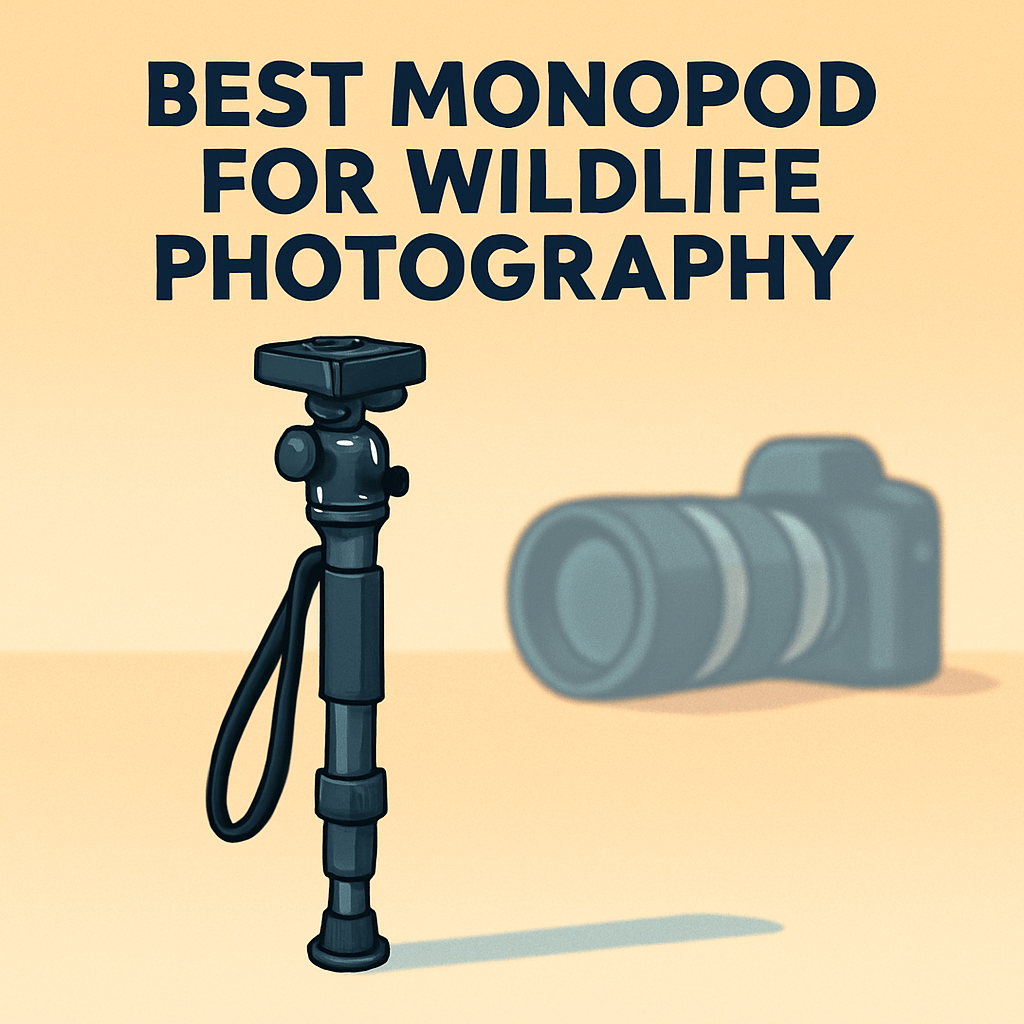
Ever missed the perfect wildlife moment because your gear was too slow or too shaky? If you’re searching for the best monopod for wildlife photography, you want something that keeps pace with fast subjects and long hikes.
Monopods strike a rare balance between portability and on-the-ground stability. They let you reposition quickly while still supporting long telephoto lenses.
Compared with tripods, monopods deploy fast and weigh less. That makes them ideal for dawn chases, crowded hides, and boat-based work where every second and every ounce matters.
This roundup narrows the field to five monopods that excel in real-world wildlife scenarios. We judged ease of carry, locking systems, stability under load, and how each one behaved during tracking and panning.
No matter your budget or shooting style, the right monopod can make more keepers and reduce missed opportunities. You’ll find recommendations here that match different priorities and field demands.
We also focused on real-world user feedback and field-tested performance, not just lab specs. Expect clear takeaways to match a monopod to how, where, and what you shoot—so you spend more time framing shots and less time wrestling gear. Read on as we break down strengths, trade-offs, and which designs match common wildlife scenarios.
1. Sirui P-326 Carbon Fiber Monopod

Sirui P-326 Carbon Fiber Monopod
Ultra-lightweight carbon support for photographers delivering stability, smooth panning, and durable build for travel and field shoots.
Check PriceAs a wildlife photographer who spends long days hiking and waiting in blinds, the Sirui P-326 immediately feels like a sensible companion. It’s carbon fiber and weighs just 0.9 lbs, so carrying it all day doesn’t wear you down.
Despite that featherweight profile, the monopod supports up to 22 lbs and extends to 60.6″ across six sections. I’ve used it with heavy telephoto setups — including 600mm-class lenses — and it takes some sideways pressure without drama, so it’s reliable when you have to track a skittish subject.
The twist-locks are fast and secure for rapid setup and teardown, which matters when a bird or mammal appears and you don’t have time to fiddle. The reversible screw mounting plate (1/4″ & 3/8″) is handy when swapping heads or attaching quick-release plates in the field.
Small details count in the wild: a foam grip and built-in wrist strap keep the monopod comfortable during long sessions and the rubber foot with a detachable spike lets you adapt to dirt, rock, or frozen ground. That spike-plus-rubber combo genuinely improves footing on varied terrain and gives you confidence when panning.
Nothing’s perfect — the 22 lb rating is robust for most DSLR+telephoto rigs, but it’s not the top capacity you can buy, and the Sirui sits above many budget monopods in price. Still, if you value true portability without sacrificing the ability to carry big glass, this is one of the most practical, field-ready choices you can make.
- Extremely lightweight (0.9 lbs)
- Solid load capacity (22 lbs)
- Quick, reliable twist-locks
- Comfortable foam grip + wrist strap
- Load capacity not the highest
- Pricier than budget monopods
2. Sirui P-306 Aluminum Monopod Budget Pick

Sirui P-306 Aluminum Monopod
Sturdy aluminum support offering reliable stability, quick setup, and lightweight portability for everyday shooting and outdoor adventures.
Check PriceIf you want a no-nonsense monopod that won’t break the bank, the Sirui P-306 fits the bill. It’s aluminum, weighs about ~1.1 lbs, and extends to 60.6″ with six sections — simple, reliable, and easy to carry between hides.
The real strength here is practical load support: a 17.6 lbs capacity is enough for most DSLR bodies with large telephoto lenses, so you can confidently track birds or mammals without feeling under-gunned. The reversible mounting screw (1/4″ & 3/8″) makes it compatible with most heads and quick to set up in the field.
For terrain, the rubber foot with an extendable spike is genuinely useful — it gives extra bite on soft ground or muddy banks, which I appreciate when stalking shorebirds or working in damp meadows. The rubber grip and wrist strap keep the monopod comfortable on long hours of glassing and can double as a walking stick on rough trails.
User feedback and my own experience align: it’s praised as a budget-friendly yet sturdy option that feels more capable than its price suggests. It’s a little heavier than carbon-fiber alternatives and, as an aluminum unit, can transmit minor vibrations in some conditions — nothing catastrophic, but worth noting if you routinely shoot at very slow shutter speeds.
Overall, the Sirui P-306 is an excellent choice if you want a portable, affordable monopod that carries heavy glass well and adds field-ready features like a spike and reversible screw. It’s especially smart for photographers who prioritize value and practicality over the absolute lightest build.
- Good load capacity — 17.6 lbs
- Lightweight for aluminum — ~1.1 lbs
- Extendable spike improves stability on soft ground
- Budget-friendly yet sturdy
- Slightly heavier than carbon-fiber options
- Aluminum can transmit minor vibration vs. carbon fiber
3. Benro Adventure 8X CF Series 3 Monopod

Benro MAD38C Carbon Fiber Monopod
Professional-grade carbon support with enhanced load capacity, anti-rotation head, and fast deployment for demanding photo and video work.
Check PriceThe Benro Adventure 8X CF Series 3 is the sort of monopod I reach for when a long hike and a long lens are both on the day’s menu. It’s carbon fiber and very light — typically around the 1 lb class — so it genuinely saves your back on multi-mile shoots without feeling fragile in hand.
It carries a respectable load capacity of around 22 lbs, enough for most DSLR bodies with large telephotos, and its height extends to generous heights (varies by exact model), which helps when you need eye-level framing or a little extra reach from uneven ground. The twist-lock leg sections are smooth and quiet, which I appreciate when stalking skittish birds; the operation is unobtrusive and fast for sudden setups.
The large rubber foot gives reliable grip across grass, dirt and rock, and the foam grip plus wrist strap make extended handheld use comfortable. In real-world terms this monopod is a genuine “back-saver” — lightweight, easy to shoulder and quick to deploy when a herd of animals or a flock lifts off unexpectedly.
Be realistic about the trade-offs: because it lacks tripod-style feet, you’ll notice slight stability compromises on very uneven terrain and when trying to push shutter speeds down to very slow values. If you shoot handheld at fast shutter speeds or need to move a lot, you’ll love it; if you frequently need rock-solid, tripod-level steadiness for long exposures, consider that limitation.
- Ultra-lightweight (around 1 lb class)
- Durable carbon-fiber frame
- Smooth, quiet twist-lock operation
- Large rubber foot for good grip on varied surfaces
- Lacks tripod-style feet — less stable on very uneven ground
- Slightly less stable for very slow-shutter shots vs. tri-foot setups
4. Vanguard VEO 2S CM-264TR With Tri-Feet

Vanguard VEO AM-264TR Aluminum Monopod
Versatile aluminum monopod designed for rapid adjustments, compact transport, and steady shots during travel and field assignments.
Check PriceThe Vanguard VEO 2S CM-264TR is a carbon-fiber monopod with a tri-feet base that feels like the best compromise between a monopod’s mobility and a tripod’s steadiness. Its carbon-fiber build keeps weight down, though it is slightly heavier than a plain monopod because of the tripod base.
Where this model shines in the field is stability. The tri-feet base dramatically increases stability on uneven ground and lets you dial in slower shutter speeds without obvious shake, which is a real advantage for dawn and dusk wildlife work. The twist-lock legs deploy quickly and lock securely, so you can move fast when an animal appears.
Vanguard has packed useful extras for mixed photo/video shooters: a smartphone clamp and Bluetooth remote are built in, and there’s a panning function for smooth tracking. In practice the panning action can be a bit stiff, so it’s great for deliberate pans and video setups but slightly less fluid for very fast, continuous tracking.
Load capacity is impressive — around 30 kg (66 lbs) — so it’ll handle big telephotos and gimbal setups without complaint. If you want a monopod that behaves like a lightweight tripod when you need it, this is a strong all‑rounder; just be mindful that the added tri-feet and features make it a touch heavier to carry on long hikes.
- Tri‑feet gives exceptional stability
- Strong carbon-fiber build with reliable twist locks
- Smartphone clamp + Bluetooth remote for video/vlogging
- High load capacity (~30 kg / 66 lbs)
- Panning action can feel stiff
- Slightly heavier, less ideal for long treks
5. Manfrotto XPRO 5-Section Monopod

Manfrotto MVMXPROC5US XPRO 5-Section Carbon Fiber Video Monopod
Advanced carbon video support with fluid movement, five-section compactness, and professional stability for smooth cinematic captures.
Check PriceThe Manfrotto XPRO 5-Section Monopod is a workhorse built for shooters who favor stability and gear safety over shaving grams. Constructed from aluminum and weighing around 1.25 lbs, it feels solid in hand and gives you confidence when mounting heavy telephoto lenses and pro camera bodies.
Its standout is the power locking system with quick power locks. Those locks snap tight fast, so you can raise or lower height without fumbling when a bird or mammal appears suddenly.
You also get options for fluid video heads, which is handy if you switch between stills and smooth panning for wildlife behavior sequences. The slightly taller-than-average height range gives extra framing flexibility when you need just a bit more reach without kneeling or stepping back.
In real-world field work the XPRO feels tougher than the ultralight carbon options. That heavier build translates to less flex and a lower risk of slippage under heavy loads, so you can lean on it more aggressively for tracking and long telephoto shots.
If you hike all day, note the trade-off: it’s heavier and a bit bulkier when folded than carbon-fiber monopods, so it’s not the first pick for minimalist trek-only setups. But for anyone shooting large lenses regularly who needs dependable locking, robustness, and gear protection, the Manfrotto XPRO is a smart, pro-oriented choice.
- Durable, robust construction
- Fast, reliable power locks
- Supports heavy camera + telephoto setups
- Taller max height for extra framing reach
- Heavier than carbon-fiber monopods
- Less compact when folded
Tips for Wildlife Monopod Photography
Start by balancing your lens precisely on the monopod. Many collars don’t rotate smoothly, so check how your lens sits before you trust it in the field. A little adjustment up front prevents strain on the head and keeps panning fluid when subjects bolt or circle.
Tilt the monopod slightly—around three degrees—so the center of gravity sits over the contact point. That tiny angle makes a big difference when you’re tracking a bird or sweeping across a herd. It gives smoother pivots and reduces the urge for corrective muscle movements.
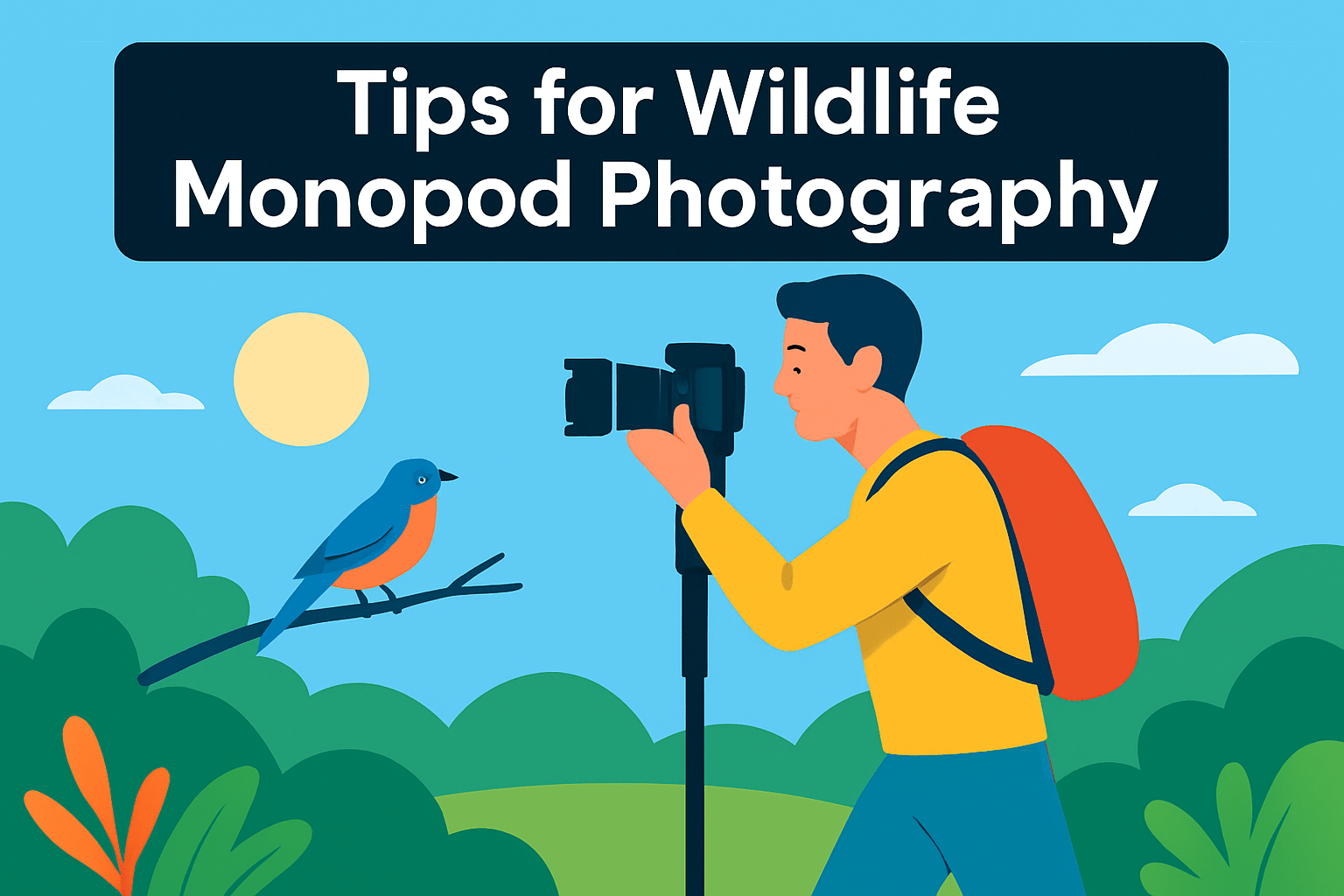
Use your body as part of the system. Stand with feet shoulder-width apart, place the monopod leg between them, and form a “human tripod.” Lean forward and apply gentle downward pressure; your core and legs will absorb motion so your arms can focus on precise framing.
Hold the monopod close to your body and keep a firm grip to cut vibration and fatigue. For long lenses you’ll still need respectable shutter speeds. Monopods let you drop slower than hand-holding—think down to roughly 1/80s at 600mm—but wait for lull moments in the animal’s movement for best results.
Set the camera at eye or chin level whenever possible. That height makes framing and tracking far easier, especially for birds in flight. Also experiment with monopod height and stance: widen your base for long stints, or tilt the unit back when you have good surface grip to open up different angles.
If you’re working overhead or trying unusual angles, lock the head securely and use a remote shutter release. That reduces the chance of an accidental drop and keeps your hands free for quick corrections. Small habits like these keep shots steady and let you concentrate on behavior and timing—the real keys to great wildlife photos.
Monopod Techniques in the Field
In the field a monopod is only as good as the technique behind it. I treat mine as part of my body — not a separate stick. Plant your feet shoulder-width apart and slot the monopod leg between them so you form a steady three-point support; this “human tripod” is the single best trick for tight crops with long glass.
Balance matters more than you’d think. Mount the lens on the monopod collar and make tiny fore/aft adjustments until the setup wants to sit naturally over the foot. I often tip the monopod a hair forward, roughly three degrees, to bring the camera’s center of gravity over the contact point; that small tilt makes panning and tracking dramatically smoother.
How you hold the monopod counts. Keep it close to your chest, grip it firmly, and use your core to absorb motion rather than relying only on arm strength. When stalking birds or following skittish mammals, lean into the monopod and apply gentle downward pressure — it steadies the rig and reduces fatigue on long watches.
Match the foot to the terrain. An extendable spike bites in soft ground and a rubber foot grips rocky perches. If you’re on a boat or leaning over a fence, brace the monopod against your leg or a nearby rock; a little external support buys you slower shutter speeds when needed.
Pick the right head and habits for the job. A gimbal or fluid head makes heavy telephotos feel easy to swing, while a secure quick-lock keeps the camera from slipping. Always double-check twist locks and clamps before a stakeout; a collapsed monopod ruins shots and stresses gear.
Finally, practice these moves before the trip. Run through stances, height changes, and panning with your actual lenses. When the moment arrives, your hands will know what to do and you’ll get the keepers instead of the missed chances.
What People Ask Most
Is a monopod good for wildlife photography?
Yes, a monopod is a very useful tool for wildlife photography because it offers improved stability while remaining portable. It lets you reposition quickly in the field and can help steady long lenses during tracking.
Should I use a monopod or a tripod for wildlife photography?
A monopod is best when mobility and speed are priorities, while a tripod is preferable when maximum stability and very slow shutter speeds are required. Choose based on how much you move and the shooting conditions you expect.
What features should I look for in a monopod for wildlife photography?
Look for sturdy construction, a reliable locking mechanism, and a compatible mounting screw or head option. Additional useful features include a good foot or spike, a comfortable grip, and a wrist strap for handling.
How tall should a monopod be for wildlife photography?
Pick a monopod that adjusts to a height that lets you frame comfortably from your usual shooting posture, whether standing or crouching. An ample height range gives flexibility for different situations and lenses.
Can a monopod support large telephoto lenses for wildlife photography?
Many monopods are built to support heavy telephoto lenses, but you should verify the model’s rated load capacity and build quality before use. Match the monopod to your equipment to ensure safe and stable support.
How do I use a monopod effectively for wildlife photography?
Balance the lens on the monopod and adopt a stable stance with the monopod leg between your feet to form a steady base. Hold the monopod close to your body, check locks regularly, and use a remote release or secure head when needed for smoother shots.
What type of head works best on a monopod for wildlife photography?
Gimbal or tilt-capable heads are commonly preferred for long telephoto work because they allow smooth tracking and quick movements. Choose a head that matches your lens collar and offers secure locking for steady framing.
Conclusion for Best Wildlife Photography Monopod
This roundup distilled five monopod options for wildlife work, comparing materials, real-world stability, and field-focused features so you can choose the style that fits your shooting needs.
Use the provided specs, real-world notes, pros and cons, and practical tips to match a monopod to your priorities—whether that’s ultralight portability, budget value, tripod-like stability, or heavy-equipment support.
Remember that technique matters as much as gear: stance, monopod angle, secure locks, and body bracing often determine whether a shot is sharp in the field.
To keep improving your skills and decision-making, read more articles on our site for practical advice and field-tested approaches to wildlife photography.
Have questions or want to share your own monopod experiences? Please leave a comment below — we usually reply within a few hours.




0 Comments