
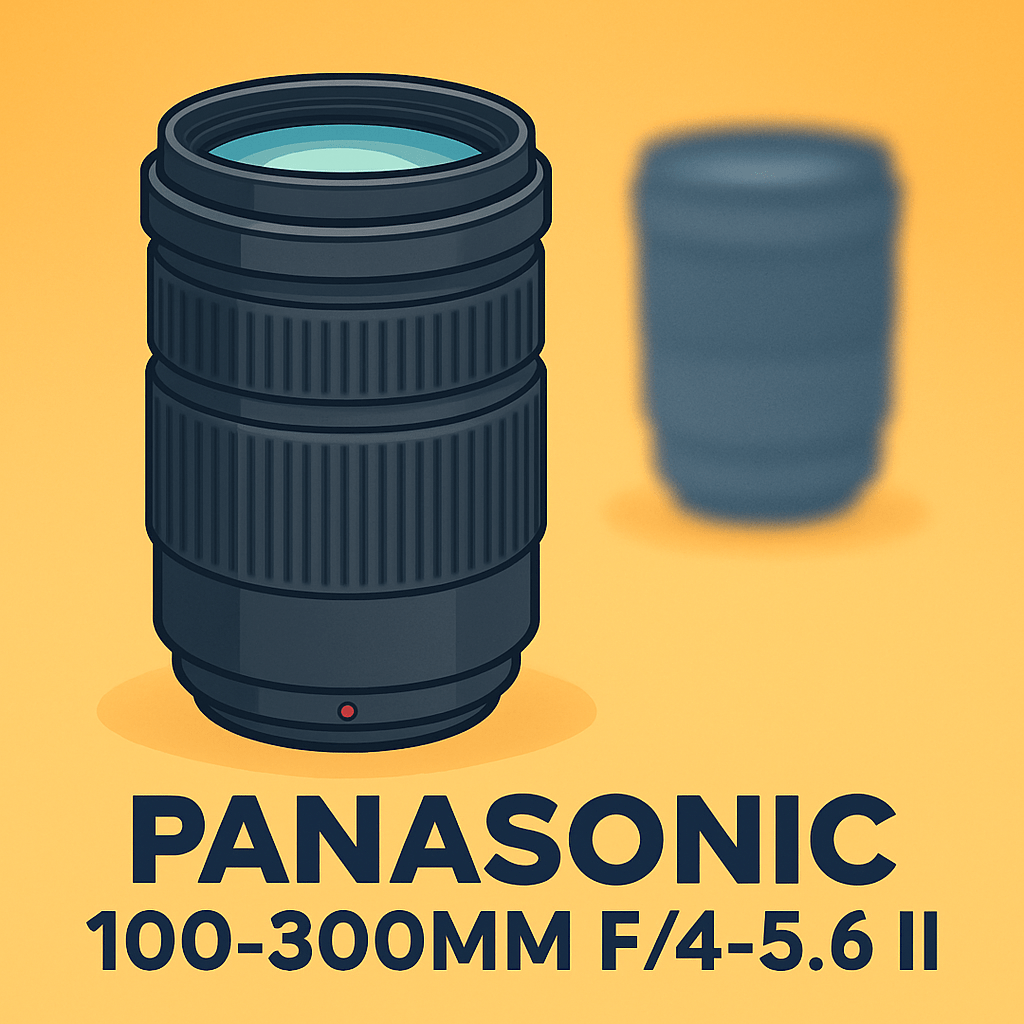
Want big reach without lugging a giant lens?
It’s the Panasonic LUMIX G 100–300mm f/4–5.6 II Micro Four Thirds (aka Panasonic 100–300mm f/4–5.6 II), promising 200–600mm equivalent reach in a compact body.
It’s aimed at Micro Four Thirds shooters wanting handheld tele reach without heavy glass, and I’ve tested it in the field to see if O.I.S., quicker AF and close magnification pay off.
It’s best suited to daylight action and distant subjects, not close-up macro or low light. Make sure to read the full review for real-world handling, image quality and stabilization—keep reading.

Panasonic LUMIX G 100-300mm f/4-5.6 II Micro Four Thirds
Lightweight long-range zoom delivering crisp, versatile reach for wildlife and sports shooting. Smooth autofocus and stabilized handling make distant subjects accessible, while compact construction keeps travel and handheld work effortless.
Check PriceThe Numbers You Need
| Spec | Value |
|---|---|
| Focal Length | 100-300mm |
| Aperture | f/4.0-5.6 |
| Lens Mount | Micro Four Thirds |
| Equivalent Focal Length (35mm) | 200-600mm |
| Optical Image Stabilization | POWER O.I.S. |
| Zoom Type | Telephoto zoom |
| Minimum Focus Distance | 1.5 m |
| Autofocus | Yes — faster AF performance |
| Lens Construction | 14 elements in 10 groups |
| Filter Diameter | 58 mm |
| Maximum Magnification | 0.5x |
| Weight | Approximately 520 g |
| Lens Coating | Nano Surface Coating |
| Compatible Cameras | Panasonic and Olympus Micro Four Thirds bodies |
| Dimensions (Diameter x Length) | around 70 mm x 135 mm |
How It’s Built
In my testing the Panasonic LUMIX G 100–300mm f/4–5.6 II Micro Four Thirds (aka Panasonic 100–300mm f/4–5.6 II) feels like a proper tele lens that doesn’t intimidate you at first pick-up. It’s compact and noticeably lighter than big glass, so I actually grabbed it for hikes and casual wildlife walks. That ease of carrying translates directly to more shooting time and fewer missed moments.
The build is mostly plastic but solid, and the lens goes together cleanly with no rattles after using it for a while. I liked the Nano Surface Coating — in backlit situations it kept contrast punchy and cut down on annoying flare, so highlights stayed cleaner than I expected. For beginners that means fewer ruined shots when the sun sneaks into frame.
Mounted to small mirrorless bodies the balance is great; on larger bodies it tips the handling slightly forward but never feels awkward in short bursts. The zoom ring has a reassuring resistance and the focus ring is smooth enough for manual tweaks, though I did wish the focus ring had a touch more dampening for precise close work.
Practically, this is a grab-and-go tele that you can realistically shoot handheld for long periods if you’re mindful of posture. After using it for a weekend of field work I found it easy to carry all day and simple enough for beginners to learn telephoto technique without getting fatigued.
In Your Hands
The Panasonic LUMIX G 100–300mm f/4–5.6 II Micro Four Thirds delivers pleasing center sharpness across the zoom range while edges soften a touch as you push to the long end, so careful framing pays dividends. Colors are lively and contrast holds up well even in contrasty backlit scenes, thanks to modern coatings that keep flare and ghosting in check. At the longest focal lengths the lens shows its limits more readily, so technique and steady hands make the difference between a keeper and a near miss.
Its variable aperture design means this zoom is happiest in daylight and well-lit environments; low light will demand faster shutters or higher sensitivity from the body. Built-in POWER O.I.S. is conspicuously helpful for static subjects and slower shutter work, letting you shoot handheld with more confidence, though moving subjects still benefit from quicker shutter speeds. Background separation won’t match faster primes, but the lens’ close-magnification capability lets you isolate subjects more effectively than typical telezooms in this class.
The minimum focus distance and half-life magnification open up practical uses beyond distant beasts, making tight portraits of larger subjects and flower studies plausible while stopping short of true macro work. For wildlife and birding the reach and stabilized platform raise the handheld keeper rate, particularly in daylight, though tracking very small or fast subjects remains technique-dependent. For field sports the lens performs best outdoors under good light, offering reliable framing and respectable hit rates at a distance.
As a travel and landscape tool it’s a strong compromise: compact to carry and capable of compressing scenes for dramatic framing, with stabilization that helps when you can’t set up a support. The lens rewards thoughtful shooting—steady posture, pre-focusing where possible, and attention to light—to get the most from its long reach. In short, it’s a versatile, portable tele zoom that shines when matched with deliberate technique and favorable lighting.
The Good and Bad
- 200–600mm equivalent reach in a relatively light, compact package (~520g)
- Built-in POWER O.I.S. for stabilized handheld tele shooting
- Faster AF performance (per lens revision)
- 0.5x max magnification expands subject options
- Variable aperture f/4–5.6 limits low-light performance and depth-of-field control
- Minimum focus distance of 1.5m restricts close-up capability
Ideal Buyer
The Panasonic LUMIX G 100–300mm f/4–5.6 II Micro Four Thirds is for Micro Four Thirds shooters who want extreme reach without hauling heavy glass. Think wildlife, birds, distant landscapes, and daytime field sports where reach matters more than a wide aperture. Its lightweight body and built‑in POWER O.I.S. make handheld shooting practical on hikes and quick trips.
This lens is perfect for photographers who prioritize portability and stabilized tele reach over absolute low‑light performance. It suits travel shooters who need a compact 200–600mm equivalent focal spread and birders who value keeper rates from lens stabilization. The 0.5x magnification also widens use for tighter portraits and larger subject close‑ups without swapping glass.
Look elsewhere if you need faster apertures for dim arenas, dedicated macro focusing, or the very best edge‑to‑edge optics at extreme tele lengths. Serious sports shooters and pro wildlife photographers chasing the smallest margin of performance will likely prefer larger, faster super‑tele lenses. For most enthusiasts the Panasonic 100–300 II hits a practical sweet spot: long reach, manageable weight, and stabilization that consistently keeps more shots in the frame.
Better Alternatives?
We’ve already gone over the Panasonic 100–300mm f/4–5.6 II and what makes it such a handy, stabilized long-reach lens for Micro Four Thirds shooters. It’s a great balance of reach, weight, and price for daytime wildlife, travel, and field sports.
If you want something lighter and cheaper, or something with more reach and better edge-to-edge sharpness, there are a few clear alternatives to consider. Below I’ll run through three lenses I’ve used in the field, how they compare to the Panasonic 100–300 II, and which kind of shooter each one suits.
Alternative 1:

Olympus M.Zuiko Digital 75-300mm f/4.8-6.7 Micro Four Thirds
Affordable telephoto offering impressive reach in a compact package, ideal for hobbyists photographing birds and events, or travel. Reliable optics and intuitive controls deliver sharp images without bulky gear.
Check PriceI’ve used the Olympus 75–300 a lot on casual birding trips. It gives the same 300mm long end as the Panasonic but starts at 75mm, which is useful when you don’t need full tele right away. It’s usually cheaper and pretty light, so it’s easy to slip into a travel bag.
Compared to the Panasonic 100–300 II, the Olympus is better if you want a lower cost and a bit more short-end framing flexibility. It’s worse for handheld tele work because it has no lens stabilization — that matters if your camera body doesn’t have good in-body stabilization. In my experience the Olympus AF can be slower and it can look softer at the extreme long end, especially in low contrast or against busy backgrounds.
Pick the Olympus if you’re a hobbyist or traveler on a budget who shoots mostly in good light and can lean on a tripod or on-camera IBIS. If you need the steadiness and faster AF of the Panasonic for moving subjects, the Olympus will feel like a trade-off you make to save money and weight.
Alternative 2:

Panasonic LEICA DG VARIO-ELMAR 100-400mm f/4.0-6.3 Micro Four Thirds
Professional-grade super-telephoto lens blending high-resolution optics with versatile reach for distant wildlife and aviation photography. Fast, precise autofocus and excellent contrast deliver clean images even at extreme focal lengths.
Check PriceI use the Panasonic 100–400 when I need reach I can’t get with the 100–300. The extra 100mm at the long end makes a big difference for skittish birds, distant wildlife, and air shows. Optically it punches above the 100–300 for edge sharpness and overall contrast, so prints and crops look cleaner.
Against the Panasonic 100–300 II it’s clearly better in reach and image quality at long distances and it tends to track moving subjects more reliably. The trade-off is size, weight, and cost — the 100–400 is heavier and bulkier, so you’ll feel it on long walks and you’ll likely spend more. Handheld shooting is still possible thanks to O.I.S., but many days I bring a monopod for comfort and steadier results.
Choose the 100–400 if you’re a serious wildlife or aviation shooter who needs extra reach and better long-range results. If you want something light and travel-friendly, or you shoot mostly close to mid-tele, the 100–300 is the easier everyday choice.
Alternative 3:
Panasonic LEICA DG VARIO-ELMAR 100-400mm f/4.0-6.3 Micro Four Thirds
Built for demanding field work, this long-range optic offers robust construction, superb micro-contrast, and stable performance. Ideal for nature shooters seeking reliable sharpness, color fidelity, and consistent results across distances.
Check PriceOn longer shoots where conditions are mixed, the 100–400 stands out for its build and consistent results. I’ve used it in brisk mornings and bright noon light, and it holds color and micro-contrast better across the frame than the smaller 100–300. That means richer files to work with and more usable shots when you need to crop.
What it does better than the 100–300 II is stability in tough field work, more reliable AF tracking on birds in flight, and a wider useful focal range for distant subjects. What it does worse is obvious: it’s bigger, heavier, and more expensive. You trade portability for performance — if you want all-day handheld comfort, the 100–300 remains easier to carry.
If you are a nature shooter who needs dependable long reach and image quality across sessions, the 100–400 is a smart upgrade. If your priority is a light kit for travel or you shoot mostly in daylight at moderate distances, the Panasonic 100–300 II will likely be the better, more practical lens.
What People Ask Most
Is the Panasonic 100-300mm f/4-5.6 II a good lens?
Yes — it’s a solid budget telephoto for Micro Four Thirds, offering good reach and reasonable image quality for the price.
Is the Panasonic 100-300mm f/4-5.6 II image stabilized?
No, the lens itself lacks optical stabilization, so you’ll want a camera with IBIS or use faster shutter speeds.
Is the Panasonic 100-300mm f/4-5.6 II compatible with Olympus/Micro Four Thirds cameras?
Yes, it’s a Micro Four Thirds mount lens and works natively on Panasonic and Olympus/OM System bodies.
How sharp is the Panasonic 100-300mm f/4-5.6 II?
Center sharpness is decent, but edges and the long end can be soft; stopping down improves overall sharpness.
Is the Panasonic 100-300mm f/4-5.6 II good for wildlife and bird photography?
It’s useful for casual wildlife because of the 200–600mm equivalent reach on MFT, but the slow aperture and average AF limit its performance on fast birds or in low light.
How does the Panasonic 100-300mm f/4-5.6 II compare to the Panasonic 100-400mm or Olympus tele zooms?
It’s cheaper and lighter than the 100-400 and Olympus pro tele zooms. Those lenses, however, generally offer better sharpness, build, stabilization and faster AF for demanding wildlife work.
Conclusion
The Panasonic LUMIX G 100-300mm f/4-5.6 II Micro Four Thirds is the most practical long-reach option I’ve used for handheld Micro Four Thirds tele work. Its 200–600mm equivalent reach, built-in POWER O.I.S., faster AF and useful close-magnification make it a versatile field lens. It trades ultimate glass for portability and reliable results in good light.
That trade-off has costs: the variable aperture and relatively limited close-focus means it isn’t the best choice for low-light shooters or dedicated macro fans. At the extreme long end you’ll need sharp technique, steady light and conservative shutter choices to get keepers. If you expect top-tier edge-to-edge tele performance, bigger lenses will outperform it.
Buy it if you want stabilized, long-reach handheld performance on an MFT body without hauling super-tele glass. If you need even more reach or optical refinement, step up to the longer 100–400 class; if weight or budget trumps reach, consider the lighter 40–150 or 75–300 options. This lens sits perfectly between travel-friendly convenience and true telephoto capability.
Master light, stance and panning to make the most of POWER O.I.S. at 300mm. For daylit wildlife, travel and field sports, it’s my go-to compromise — practical, portable, and thoroughly usable when you know its limits.
Panasonic LUMIX G 100-300mm f/4-5.6 II Micro Four Thirds
Lightweight long-range zoom delivering crisp, versatile reach for wildlife and sports shooting. Smooth autofocus and stabilized handling make distant subjects accessible, while compact construction keeps travel and handheld work effortless.
Check Price


0 Comments