

Ever wondered why some portraits melt into a buttery, dreamlike blur while others keep every detail locked in sharp focus?
That alluring quality is called bokeh — the aesthetically pleasing out-of-focus blur that turns distracting backgrounds into soft, luminous canvases. Aperture and focal length are the primary controls photographers use to sculpt that blur, shaping depth of field and the character of out-of-focus highlights.
Open the aperture wide and the field of focus collapses, producing rounder, creamier highlights and velvety background roll-off. Choose a longer focal length and optical compression enlarges and softens background elements, amplifying subject separation; together with subject-to-background distance, these choices decide whether bokeh reads gentle or dramatic.
In this roundup I spotlight five lenses celebrated for exceptionally smooth, creamy bokeh and strong subject isolation. Whether you shoot portraits, weddings, or editorial work, the right optic can turn ordinary backgrounds into cinematic, emotive canvases — and this article shows which lenses most consistently deliver that coveted buttery blur.
1. Sony FE 135mm F1.8 GM Overview

Sony FE 135mm F1.8 GM
Telephoto prime delivering razor-sharp detail, creamy bokeh, and exceptional low-light performance for portrait and event photographers.
Check PriceThe Sony FE 135mm F1.8 GM is one of those lenses that makes portrait work feel almost cinematic. Shot wide open, it delivers extremely shallow depth of field and razor-sharp subject separation—exactly what you want when isolating a subject from a busy background.
Bokeh here is legendary; reviewers and pros call it a “bokeh monster” for good reason. The 11‑blade rounded diaphragm produces perfectly circular highlights and a consistently smooth, creamy out-of-focus rendering that flatters skin tones and makes backgrounds melt away.
Autofocus is fast and reliable thanks to Sony’s XD Linear Motor actuators, so you get quick, accurate focus in studio and on-location scenarios. That responsiveness makes the lens practical for both controlled portrait sessions and more dynamic shoots where timing matters.
Optically it holds up—the lens delivers excellent sharpness and pleasing color rendition even when used wide open, so you don’t sacrifice image quality for that dreamy blur. In short, if your primary goal is dramatic subject isolation and luscious bokeh, this lens will serve you extremely well.
The main trade-offs are physical: the FE 135mm F1.8 GM is large and heavy. It can become tiring during extended handheld use and is awkward to balance on smaller camera bodies, so consider ergonomics before committing if you shoot long handheld sessions.
- Extremely shallow depth of field and strong subject isolation
- Consistently smooth, creamy bokeh (11‑blade rounded diaphragm)
- Fast, accurate autofocus (XD Linear Motor actuators)
- Excellent sharpness and color rendition wide open
- Large and heavy
- Challenging to handle on smaller camera bodies
2. Nikon Nikkor Z 85mm f/1.2 S Overview

Nikon NIKKOR Z 85mm f/1.2 S
Ultra-fast portrait lens offering unparalleled subject separation, buttery bokeh, and exquisite sharpness at very shallow depth.
Check PriceThe Nikon Nikkor Z 85mm f/1.2 S is widely regarded among Nikon Z-mount users as one of the best lenses for portrait bokeh. Its f/1.2 aperture delivers exceptionally shallow depth of field and very smooth, creamy background blur that practically isolates your subject from any environment.
In practical shooting the bokeh is often described as “dreamy” — out-of-focus areas render smoothly with lovely transitions and minimal nervousness. That quality paired with the focal length makes it ideal for headshots and short- to mid-distance portrait work where subject separation matters most.
Optically the lens stays sharp even wide open, so you won’t sacrifice resolution for the blur. Autofocus is fast and precise, which makes this a practical tool not just in the studio but at events and on-location sessions where speed matters.
Many professional portrait photographers call the 85mm f/1.2 S a “must-have” for the highest-quality bokeh, and for good reason: it balances ultra-fast aperture performance with reliable AF and premium build. The lens also offers robust construction and extensive weather sealing, so it holds up in real-world conditions.
The main trade-offs are physical. This lens is very large and heavy, so extended handheld shoots can be tiring and it can feel unwieldy on smaller camera bodies. If you prioritize ultimate background separation, creamy bokeh, and build quality, this lens is an excellent choice; if you need compact, travel-friendly gear, consider the handling costs.
- Incredibly smooth, creamy bokeh at f/1.2.
- Excellent subject separation and background blur for portraits.
- Fast, reliable autofocus in low light.
- Robust build and extensive weather sealing.
- Very large and heavy; tiring for extended handheld use.
- Difficult to handle on smaller camera bodies.
3. Sony 100mm f2.8 STF GM OSS Overview

Sony SEL100F28GM 100mm f/2.8
Professional 1:1 macro delivering stunning close-up detail, crisp resolution, and smooth background rendering for critical work.
Check PriceThe Sony 100mm f/2.8 STF GM OSS is a special-purpose portrait lens built around Sony’s Smooth Trans Focus (STF) technology, and in use it feels like a painter’s tool for backgrounds. The STF element yields exceptionally smooth, creamy bokeh and a very soft transition between in-focus and out-of-focus areas, which is why many shooters call it a “bokeh monster.”
As a photographer I reach for this lens when I want a dreamy, painterly background that makes the subject pop without harsh edges. It creates excellent subject separation in controlled lighting, producing a soft, three-dimensional look that flatters skin tones and highlights.
Because the STF element intentionally diffuses light, the lens loses about two stops of light, so it’s best paired with studio lighting or well-lit scenes rather than dim, handheld situations. The lens is manual-focus only, which can be limiting for fast-paced work, but that manual control is often exactly what creative portrait shooters want when crafting precise focus and background separation.
Build quality is reassuringly solid, with a metal construction that feels durable on a rig or tripod. The lens rewards careful composition and deliberate shooting — it’s not a grab-and-go wedding lens, but in the studio or controlled location work it produces a unique, soft look that’s hard to replicate in post.
If your workflow values tactile control, dreamy bokeh, and a distinctive painterly rendering, this Sony is a brilliant tool. If you need autofocus or low-light speed, however, be aware of the trade-offs before committing.
- Exceptionally smooth, creamy bokeh (STF)
- Painterly, soft backgrounds
- Excellent subject separation in controlled lighting
- Solid metal build quality
- Manual-focus only — limiting for fast action
- Loses about two stops of light — less practical in low light
4. Laowa 105mm f2 STF Overview

Venus Optics Laowa 105mm f/2 STF E-mount
Special apodization portrait lens producing ultra-smooth, cinematic bokeh with silky highlights and precise manual control.
Check PriceThe Laowa 105mm f/2 STF is a photographer’s tool when creamy, painterly backgrounds matter most. It’s highly praised for producing exceptionally smooth, creamy bokeh with gentle transitions and minimal harsh edges, which makes portraits and product shots look layered and three-dimensional.
This lens is manual-focus only, and many users actually appreciate the precision that affords for careful compositions. Because of that control, it’s frequently used with flash in studio setups to make subjects pop cleanly from the background.
Optically it shines for subject separation; the STF design smooths the out-of-focus areas so highlights render softly and pleasingly. The result is a distinctly attractive background blur that’s especially flattering for headshots and isolated subjects.
Physically the Laowa 105mm f/2 STF is compact and lightweight for a high-quality bokeh lens, so it’s surprisingly practical for travel and on-location work. That smaller footprint makes it less tiring to handhold than many other specialty bokeh optics.
There are trade-offs to accept. Being manual-focus only limits its usefulness for fast-paced events or run-and-gun work, and it can be challenging in low light when quick, accurate AF would otherwise save shots. But if you prioritize dreamy background separation and deliberate framing, this lens delivers.
In short, choose the Laowa 105mm f/2 STF if you value exquisite, creamy bokeh, precise manual control, and a compact form that travels well. Avoid it if you need rapid autofocus or frequent low-light spontaneity.
- Very smooth, creamy bokeh in studio settings.
- Excellent subject separation and background blur.
- Compact and lightweight for a high-quality bokeh lens.
- Manual focus allows precise creative control.
- Manual focus only; limiting in fast situations.
- Challenging to use in low light due to manual-focus limitations.
5. Sigma 35mm f1.4 Art DG HSM Overview

Sigma 35mm F1.4 DG HSM Art for Canon
Fast wide-angle prime engineered for extraordinary sharpness, beautiful bokeh, and reliable low-light performance for creators.
Check PriceThe Sigma 35mm f/1.4 Art DG HSM is a photographer’s workhorse when you want creamy, attractive bokeh without carrying a giant lens. It really shines in environmental portraits and street photography, where that smooth background blur separates subjects while still showing context.
Users often compare its background blur to classic medium-format lenses — impressive for a 35mm. It’s also sharp even wide open, delivering excellent color rendition that keeps skin tones and scene colors pleasing straight from the camera.
Autofocus is fast and reliable in normal shooting scenarios, so you won’t feel held back when working handheld or moving through a scene. That makes the lens versatile for portraits and general photography where speed and accuracy matter.
Another practical benefit is its relatively compact and lightweight design compared to other high-end bokeh lenses; it’s far easier to carry on walks, trips, or full days of shooting. That portability makes it a great everyday lens for photographers who want beautiful out-of-focus backgrounds without a heavy kit.
Keep in mind a couple of real-world caveats reported by users. In certain lighting conditions the background can read a bit “busy,” so pay attention to your backgrounds when you want the creamiest separation. Also, some users find it challenging in very low-light situations, so plan accordingly if you frequently shoot in dim environments.
- Creamy, attractive bokeh for environmental portraits
- Sharp wide open with excellent color rendition
- Fast, reliable autofocus
- Compact and lightweight for travel and everyday use
- Can produce a slightly “busy” background in certain lighting conditions
- Challenging to use in very low-light situations (note as reported by some users)
How Aperture Affects Bokeh
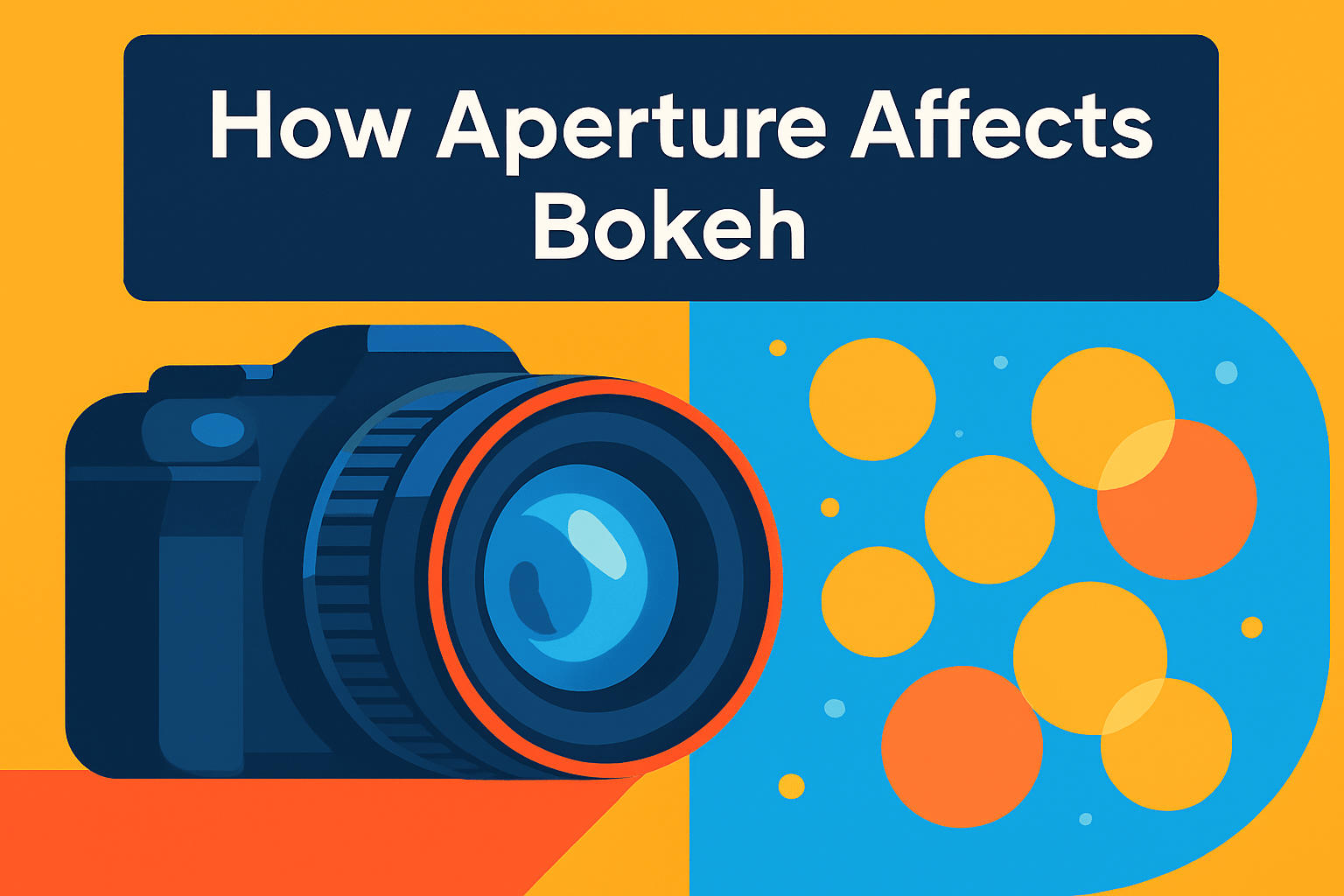
Aperture is the primary control I reach for when I want pleasing bokeh. Opening the iris to low f-numbers (f/1.2–f/2.8) thins the depth of field and renders backgrounds into creamy, painterly blur. That shallow plane of focus is what makes subjects pop against a soft backdrop.
At the extreme — say f/1.2 or f/1.4 — the plane of focus becomes paper-thin. Eyes will be tack-sharp while everything behind them dissolves into soft gradients and round highlights. At f/2.8 you still get strong separation, but focus becomes more forgiving for moving subjects.
Conversely, smaller apertures such as f/5.6–f/11 bring more of the scene into focus. They’re useful when you want environmental context or group shots, but they won’t produce the creamy background most portrait shooters chase. Even quality optics can look flat if you close the iris too far.
The diaphragm’s design has a big impact on the look of bokeh highlights. Lenses with many rounded blades render smooth, circular out-of-focus orbs, while fewer or straight-edged blades create polygonal highlights that can feel harsher. Shooting wide open usually gives the roundest discs; as you stop down the blade geometry becomes obvious.
Use the widest aperture for the strongest bokeh, but be pragmatic. If focusing is difficult or you need more depth for eyes and noses at different distances, stop down a stop or two — f/2–f/2.8 is a sweet compromise for many portrait setups. That little step can save ruined frames while keeping a pleasing background.
Also be aware that some lenses show character wide open — onion rings, nervous rendering or color fringing — and may actually smooth out when slightly stopped down. I always bracket apertures during a shoot to find the lens’s “sweet spot” for bokeh. Over time you’ll learn which lenses deserve the full-open treatment and which benefit from a tweak.
Aperture won’t act alone; distance and focal length play their parts too. But as a working rule, open up to create mood and separation, and stop down for more control without sacrificing too much of that creamy blur.
How Focal Length Affects Bokeh
Focal length is one of the quickest ways to change how your background renders. In short, longer lenses—think 85mm, 105mm or 200mm—tend to deliver more pronounced, creamier bokeh than wide-angle glass at the same aperture. That comes from optical compression: telephotos flatten the scene and magnify out-of-focus elements so the blur looks softer and larger.
Wide-angle lenses, by contrast, naturally have a deeper depth of field, so backgrounds stay more defined even at fast apertures. You can get closer to your subject to increase separation, but a long focal length usually gives a more pleasing, painterly background without needing the fastest glass. Moving in with a telephoto decreases depth of field even more and makes the blur feel denser.
Compression also changes how highlights render. With telephotos those circular highlights grow and melt into smooth orbs, while on wide lenses they remain smaller and sometimes busier. That’s why an 85mm at f/1.8 often reads creamier than a 35mm at f/1.4 when you want subject isolation.
In practice I pair a longer focal length with a large subject-to-background distance for big payoff. This combination will give you strong bokeh even if you don’t own an ultra-fast lens. If swapping lenses isn’t an option, step back and zoom in, or crop later—both mimic the compression effect.
Don’t write off wide angles, though. They’re superb for environmental portraits where context matters and for a more natural depth of field. Use them intentionally when you want background details to remain part of the story.
One last note: long glass makes focus less forgiving. Keep the eyes sharp with single-point focus or eye-AF and don’t hesitate to stop down a stop or two (for example to f/2.8) if you’re missing focus. Small changes in focal length or distance often deliver the biggest improvement to your bokeh.
What People Ask Most
What lens produces the best bokeh?
There is no single winner; lenses with wide apertures and optical designs that prioritize smooth out-of-focus rendering are typically praised. Special designs like STF elements and certain fast primes often produce the creamiest blur.
What focal length is best for bokeh?
Longer focal lengths generally produce more pronounced and softer background blur due to optical compression. Short telephoto and telephoto ranges such as the classic portrait lengths are commonly used for strong bokeh.
Does aperture size affect bokeh?
Yes, a wider aperture creates a shallower depth of field and stronger, creamier bokeh. The shape of the aperture diaphragm also influences the appearance of out-of-focus highlights.
Are prime lenses better for bokeh than zoom lenses?
Primes often offer wider maximum apertures and simpler optical formulas that can yield smoother bokeh, so they are frequently favored. However, some zooms are designed to deliver very pleasing background blur and can be excellent in practice.
How can I get better bokeh with a kit lens?
Use the widest aperture available, move closer to your subject, and increase the distance between subject and background to enhance background separation. Cropping and choosing backgrounds with softer shapes can also improve the perceived blur.
What lens is best for portrait bokeh?
Short telephoto primes with wide apertures are commonly recommended for portrait bokeh because they isolate the subject and render backgrounds smoothly. Lens choice should also factor in handling and working distance for comfortable framing.
Conclusion for Best Lenses for Bokeh
These five lenses are consistently singled out for producing exceptionally smooth, creamy bokeh and strong subject separation, making them excellent choices when background rendition matters most.
Keep in mind there are trade-offs: some options are large and heavy, while others use optical designs or manual-focus operation that cost light or speed for their unique blur quality.
At the end of the day, aperture and focal length remain your primary controls for pleasing background blur, and pairing a longer focal length with generous subject-to-background distance will amplify the effect.
If you struggle with focus while chasing the shallowest depths of field, stopping down a bit (for example to f/2.8) often keeps the creaminess while improving usability.
If you want to deepen your technique and visual judgment, explore more articles on the site to learn practical approaches and creative tips for better bokeh and portraits.
Questions or experiences to share about these lenses or bokeh techniques are welcome in the comments, and we usually reply within a few hours.



0 Comments