
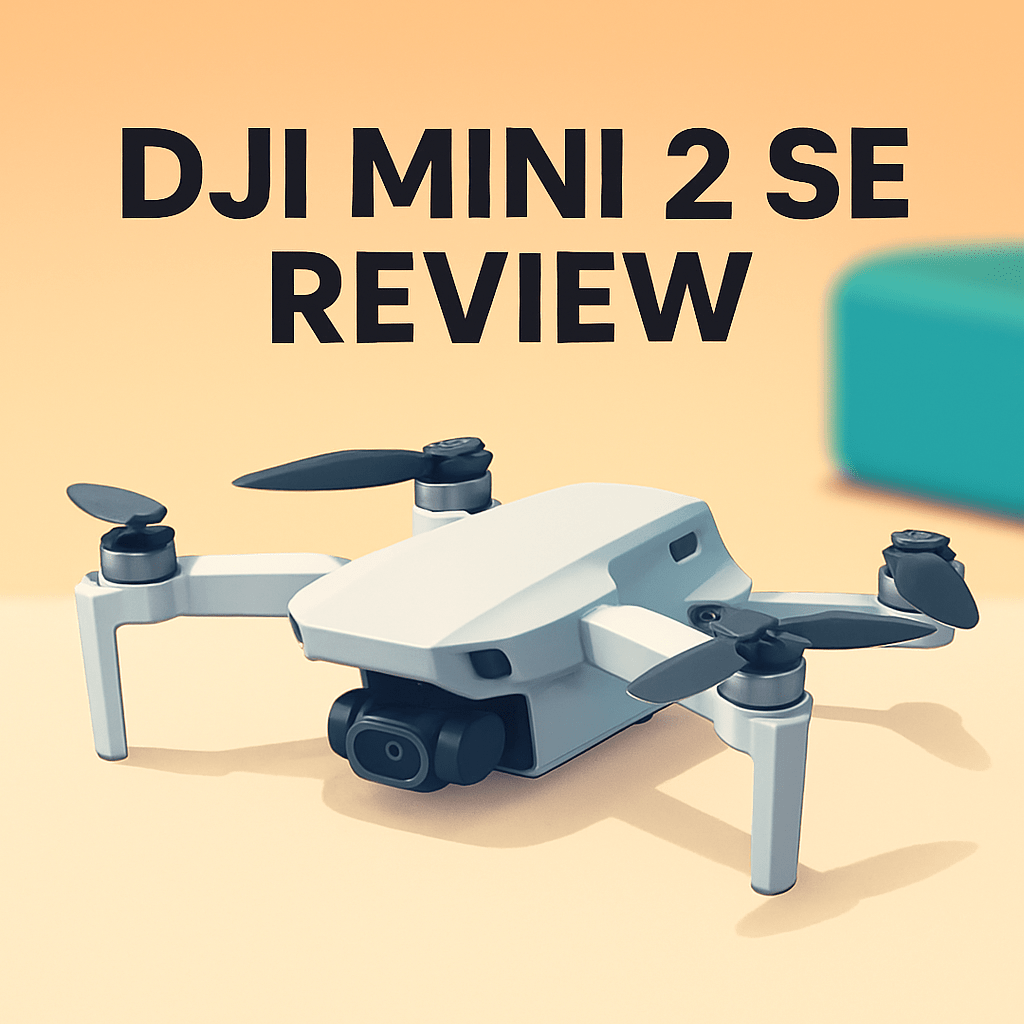
Wondering if the DJI Mini 2 SE Drone is the right compact drone for your trips and shoots?
It’s built around portability and simple, stabilized 4K footage, and it’s designed to make packing light actually pay off for travelers, new pilots, and quick-content creators.
I took one into the field for sunrise and breezy coastal shoots to see how it performs in real conditions, and this review breaks down camera impressions, flight stability, transmission behavior, and the trade-offs you’ll face—make sure to read the entire review as I show what it really delivers in the field, so keep reading.

DJI Mini 2 SE Drone
Pocket-sized aerial camera built for effortless flights: foldable, lightweight design offers stabilized footage, intuitive controls, and intelligent shooting modes—perfect for beginners and travelers capturing cinematic perspectives on the go.
Check PriceThe Numbers You Need
| Spec | Value |
|---|---|
| Weight | 249 g |
| Sensor | 1/2.3-inch CMOS, 12 MP |
| Video Resolution | 4K UHD at 30 fps |
| Max Flight Time | 31 minutes |
| Max Transmission Range | 6 km (FCC compliant) |
| Max Speed | 16 m/s (S Mode) |
| Max Wind Resistance | 8.5 m/s (Level 5) |
| Gimbal | 3-axis mechanical stabilization |
| Aperture | f/2.8 |
| Field of View (FOV) | 83° |
| Max Video Bitrate | 100 Mbps |
| Flight Modes | GPS, Vision Positioning, Beginner Mode |
| Obstacle Sensing | Downward vision sensor only |
| Internal Storage | No internal storage, supports microSD card |
| Controller | DJI RC-N1 or optional DJI RC |
| Max Takeoff Altitude | 4000 m above sea level |
How It’s Built
In my testing the DJI Mini 2 SE Drone felt built to disappear in a travel bag. It’s light and folds down small, so packing a tiny kit was effortless.
The 3-axis gimbal does the heavy lifting for smooth pans and forward runs. It keeps the horizon steady and tames micro-jitters so footage looks pro with minimal effort. The camera’s fairly wide field of view is great for sweeping landscapes but takes some getting used to for tighter framing.
I found relying on a microSD card simple but worth planning for—carry spares and a card reader for quick offloads. One thing that could be better is the lack of internal storage; that can slow a fast turnaround when you want to hand off clips on the fly. I would’ve liked at least a small internal buffer for emergencies.
The downward vision sensors give confidence for landings and low hover work, especially on textured ground. But there’s no multi-directional avoidance, so I stayed cautious around trees and buildings during testing. Controller choice matters too—the standard controller is ergonomic, while the screen-equipped option speeds setup and cuts app fussing.
One thing I liked was the overall fit and finish—it felt solid in hand and the hinges held position without creep. The gimbal cover snaps on cleanly and the props survived some rough pack-and-go handling without nicking easily. At higher elevations I did notice a touch less push, so expect to manage climbs more carefully.
In Your Hands
In everyday flights the DJI Mini 2 SE delivers predictable, usable airtime that comfortably covers short shoots and quick travel runs; in calm conditions you’ll squeeze a solid session out of a single battery, while breezy days chip into that margin and require earlier returns for safe landings. I learned to plan a conservative reserve on every sortie so I wasn’t fighting the wind or scrambling to land. Swapping batteries is straightforward, but you’ll want at least one spare for longer coverage.
The video link held steady across open fields with low latency that made framing and nudging the gimbal intuitive, while suburban and built-up areas introduced the occasional glitch and momentary drop in clarity. Putting the controller antennae and body between you and busy RF sources helped; in most shooting scenarios the feed was more than usable for confident composition. For critical captures I kept distances conservative and maintained line of sight.
GPS and vision-assisted modes translate into a reassuring hover and predictable behavior for new pilots, with Beginner Mode noticeably damping inputs for easier learning. Switch to a sportier control feel and you get brisk acceleration and brisker stopping that rewards smooth sticks, though higher-speed passes demand gentler motion to keep the gimbal steady. In practice, pacing your moves is the best way to get cinematic motion without micro-wobble.
On windy coastlines and blustery ridgelines the platform stayed composed in straight-line tracking and held the horizon well through gusts, but gusty hover spots required active trim and occasional repositioning. Expect slightly reduced on-station time when fighting sustained wind and plan shooting angles to minimize cross-gust exposure. The gimbal’s damping keeps footage usable even when conditions are less than ideal.
Workflow is pragmatic: microSD management, quick battery swaps, and a simple pairing routine get you from bag to airborne fast, and the app settings that matter are easy to tune on the fly. Without multi-directional obstacle avoidance the pilot’s workload rises around trees, buildings and crowds, so conservative flight paths and manual planning are essential. This drone shines for grab-and-go travel b-roll, exposed coastal runs, and steady top-down passes over open surfaces where downward sensing gives reliable low-altitude confidence.
The Good and Bad
- 249 g: highly portable and falls in the under-250 g class
- 3-axis mechanical gimbal for stabilized footage
- 4K UHD at 30 fps with 100 Mbps bitrate for detailed video capture
- 31-minute max flight time for extended sessions
- Obstacle sensing limited to downward vision sensor only (no multi-directional avoidance)
- No internal storage; microSD card required
Ideal Buyer
If you’re new to drones, the DJI Mini 2 SE Drone is an ideal first step. At 249 g and with Beginner Mode plus GPS and vision positioning, it removes a lot of the intimidation factor. You’ll learn framing and flight basics without hauling a heavy kit.
Travel shooters who prize packability will appreciate how the Mini 2 SE disappears into a small shoulder bag. The 4K/30p codec, 3-axis gimbal, and near-31 minute flight time make it a reliable run-and-gun B‑roll tool for social clips and YouTube vlogs. Setup is fast, which keeps you shooting during short golden hours.
This drone suits pilots who fly mostly in open environments where multi-directional obstacle sensing isn’t a deal-breaker. The downward sensors give confident landings and low-altitude passes, but approach trees, buildings, and crowded parks with extra caution. If your flights are coastal, desert, or wide parkland, you’ll get the most from it.
Finally, pick the Mini 2 SE if you don’t need internal storage and are comfortable juggling microSD cards and spare batteries. It’s a smart, budget-friendly stepping stone for creators who want stabilized 4K without the weight or complexity of higher-tier kits.
Better Alternatives?
We’ve gone through the Mini 2 SE in detail — how it flies, how the camera holds up, and where its limits are. If you liked the simplicity and the sub-250 g carry-everywhere feel, that’s great. But there are a few other options worth thinking about before you buy.
Below I’ll walk through three alternatives I’ve actually used in the field. I’ll point out what each one does better and where it falls short compared to the Mini 2 SE, and who I’d pick each for when I’m packing for a shoot.
Alternative 1:

DJI Mini 2 SE Drone
Ideal for content creators: quick setup, responsive controls, steady gimbal delivers crisp photos and smooth video, long-range transmission, and automated shots make capturing dramatic landscapes and urban scenes simple and fun.
Check PriceThis listing is the same Mini 2 SE I reviewed, framed as a content-creator pack. In practice it doesn’t magically change the flight or image quality — the gimbal, sensor, and handling are the same as in my tests. What can be better for creators are the way you use it: quick setup, reliable hover, and the automation modes make it easy to get clean cinematic moves without a lot of fuss.
What’s not better is the core trade-offs: you still don’t get multi-directional obstacle sensing and you still rely on a microSD card. If you fly around trees or tight urban canyons, you’ll need the same caution I used with the reviewed unit. The footage and stability match the review — dependable, but not magically better.
If you’re a solo content creator who wants something that gets in the air fast and gives you steady, social-ready shots, this is the setup I’d reach for. It’s for people who value speed and simplicity over advanced sensors or top-tier low-light image quality.
Alternative 2:
DJI Mini 2 SE Drone
Designed for everyday adventures, this ultralight quadcopter slips into a backpack, delivers reliable stabilization and sharp aerial imagery, and integrates with a mobile app for fast editing, sharing, and enhanced flight safety.
Check PriceThis is the same Mini 2 SE again, presented as the everyday-adventure companion. In the field I found the same strong points: it’s light enough to toss into a daypack, the gimbal keeps horizons steady on walks and coastal shoots, and the app workflow makes quick edits and shares painless. For travel, that play-on-the-go convenience is the real win.
Again, the downsides are identical to the review: limited obstacle sensing and no internal storage. On long hikes I worry less about weight and more about having spare batteries and cards — the drone itself won’t change those needs. Windy ridge lines also expose the same limits; it holds up well but you’ll see more gimbal correction when gusts pick up.
This angle is for hikers and travelers who want a dependable, packing-friendly drone. If your priority is light weight and easy sharing while you’re out exploring, this is the flavor I’d recommend. If you need beefed-up sensors or higher image detail, look elsewhere.
Alternative 3:

DJI Mini 4K Drone
Capture cinematic 4K footage with a high-resolution stabilized camera, advanced obstacle sensing, and precise flight controls. Ideal for filmmakers and enthusiasts seeking buttery-smooth aerial video and creative automated shots.
Check PriceI’ve flown the Mini 4K as a step up from the Mini 2 SE. The most obvious real-world difference is the image — footage looks smoother and more detailed, and the auto modes frame shots more confidently. On tight follow shots or when I wanted a reveal over trees, the added obstacle sensing saved me having to babysit the sticks the whole time.
Where it’s worse is in the small, packable sense: it can be slightly heavier or bulkier depending on the model and accessories, and it tends to cost more. For quick travel days when I’m trying to keep everything in one small bag, I sometimes still choose the Mini 2 SE because it’s simpler and lighter to carry.
I’d pick the Mini 4K when image quality and on-board safety matter more than squeezing ounces out of my kit. It’s the better choice for short films, client work, or anyone who wants more help from obstacle sensors during complex shots. If your shoots demand cleaner footage and fewer near-misses, go with the 4K option; if you live for light pack weight and quick setup, stick with the Mini 2 SE.
What People Ask Most
Is the DJI Mini 2 SE worth buying?
Yes — it’s a good value if you want an affordable, lightweight drone for casual photos and video and don’t need pro-level image quality.
What is the difference between the DJI Mini 2 and the Mini 2 SE?
The Mini 2 offers 4K video and more advanced camera features, while the Mini 2 SE is a budget model that drops higher-resolution video and some pro features to cut cost.
How long is the flight time/battery life of the DJI Mini 2 SE?
Expect up to about 30–31 minutes per battery in ideal conditions, with shorter times in wind or during aggressive flying.
Does the DJI Mini 2 SE shoot 4K or RAW photos?
No — the Mini 2 SE does not record 4K and typically only saves JPEG photos, so it’s not suited for RAW workflows.
Is the DJI Mini 2 SE good for beginners?
Yes — its light weight, simple controls, and lower price make it very beginner-friendly.
Is the DJI Mini 2 SE under 250g and do I need to register it?
Yes, it’s under 250 grams, which in many countries reduces registration requirements, but you should check local laws as rules vary by region and use.
Conclusion
The DJI Mini 2 SE Drone is a travel-minded, no-nonsense tool that delivers steady, publishable aerial footage with very little setup. Its combination of light weight, mechanical stabilization, and straightforward controls makes it ideal for grab-and-go shoots and content creators who prioritize mobility. In real-world work it repeatedly proved reliable for quick horizons, coastal runs, and travel b-roll.
That usefulness comes with clear compromises you must accept before buying. Multi-directional obstacle avoidance is absent and there’s no internal storage, which adds workflow friction and requires extra caution in cluttered environments. The wireless link is fine for everyday use but not the most robust option if you regularly push range or fly in crowded RF areas.
Put simply: choose the Mini 2 SE Drone if you want lightweight simplicity and stabilized 4K that won’t weigh down your pack. If you fly in windier conditions or need a more confident long-range video link, look to the stronger Mini sibling. If image quality and advanced safety assists matter most, the EVO Nano+ is the alternative worth the premium.
Overall this drone punches above its weight for beginners and travel shooters who value convenience over pro-level features. It’s an excellent everyday tool when used within its limits, but skip it if your work demands complete sensor coverage or top-tier transmission. Make the choice based on where and how you fly.
DJI Mini 2 SE Drone
Pocket-sized aerial camera built for effortless flights: foldable, lightweight design offers stabilized footage, intuitive controls, and intelligent shooting modes—perfect for beginners and travelers capturing cinematic perspectives on the go.
Check Price

0 Comments