
Hunting for the best camera you can buy for around $1,000? The choices can quickly feel overwhelming for newer buyers. This concise buyer’s guide narrows the field to five capable models that deliver real value in the midrange.
We zero in on the features that matter most to working photographers and hybrid shooters. Autofocus speed and tracking, in-body stabilization (IBIS), lens ecosystem, video capabilities, and ergonomics top the list. These are the traits that shape daily shooting, workflow, and long-term satisfaction.
No single camera is perfect for every job. Each one trades something to hit this price — often lens breadth, battery life, advanced video tools, or raw autofocus performance. Your decision should hinge on the few priorities that matter most to your shooting style.
Prefer fast action and razor-accurate subject tracking? You’ll favor different systems than someone who shoots handheld video and wants strong stabilization. Travel shooters and portrait photographers will likewise weigh ergonomics, lens options, and low-light handling differently.
Across the five picks you’ll find well-rounded hybrids, travel-friendly bodies, and used-market bargains that stretch a thousand dollars. Our real-world impressions focus on how these cameras perform, not just what specs say on paper. Use the guide to match a camera’s strengths to your needs and buy with confidence.
1. Canon EOS R10 Overview

Canon EOS R10 Body Only
Compact, high-speed mirrorless camera with advanced autofocus and burst shooting for crisp action photos and 4K video creation.
Check PriceThe Canon EOS R10 is an enthusiast-level APS-C hybrid built for photographers who want speedy stills and usable video in a compact package. It uses Canon’s Dual Pixel CMOS AF II, so subject detection and tracking for humans, animals, and vehicles is remarkably reliable in real-world shooting.
If you shoot action or wildlife you’ll appreciate the burst performance: up to 15 fps with the mechanical shutter and 23 fps electronically. Video shooters get 4K/60p capability (with a crop), which is impressive at this price, but note there’s no in-body image stabilization, so handheld 4K/60p will benefit from stabilized lenses or a gimbal.
Ergonomically it’s a winner — lightweight at 429 g with a comfortable grip, plus an EVF and touchscreen that make framing and quick menu work enjoyable on long days. There’s no headphone jack, so monitoring audio on shoots can be awkward unless you bring external solutions.
Lens choices at launch were limited for native RF-S glass, though many photographers adapt EF lenses when needed. That means the R10 is a great match for enthusiasts prioritizing autofocus, speed, and portability, but if you need a broad native APS-C lens lineup or built-in stabilization right away, plan for compromises or extras.
- Outstanding autofocus and subject tracking
- Very fast burst rates — 15 fps (mech) / 23 fps (electronic)
- Lightweight and comfortable for extended use (429 g)
- 4K/60p video (cropped) at this price point
- Few native APS-C RF-S lenses at launch
- No IBIS
2. Fujifilm X-S10 Overview
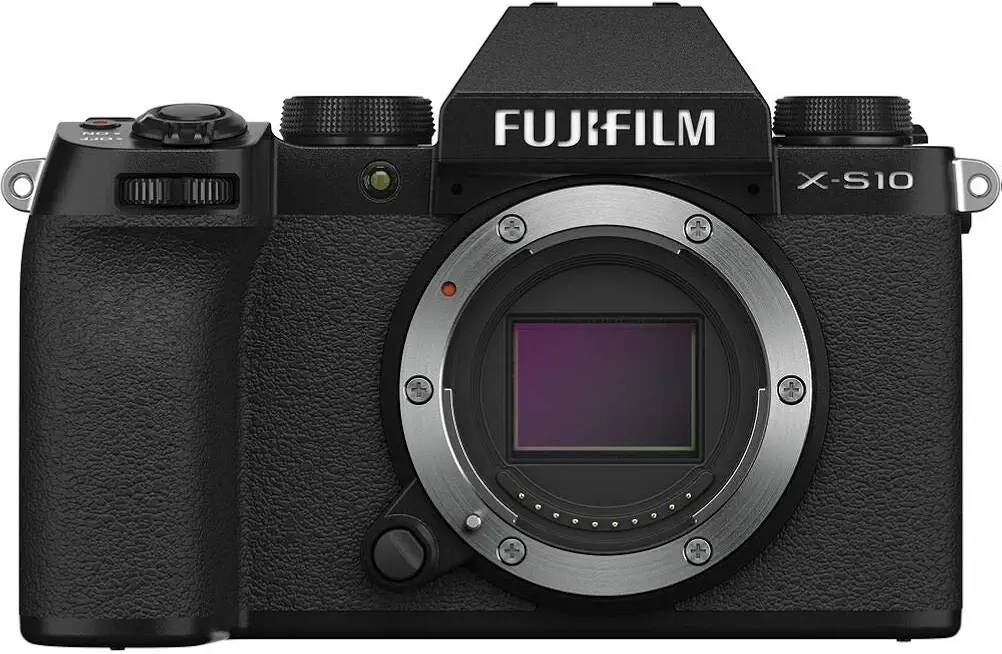
Fujifilm X-S10 Body
In-body stabilization and rich color science deliver smooth handheld shooting and stunning JPEGs, ideal for creatives and vloggers.
Check PriceThe Fujifilm X-S10 is a compact enthusiast body that feels like it was designed for photographers who shoot handheld and value color straight out of camera. Its effective in-body image stabilization (IBIS) lets me hold slower shutter speeds without a tripod, which is a huge benefit for travel and low-light shooting.
One of the things that keeps me reaching for the X-S10 is Fuji’s film simulations and excellent JPEG color; portraits and street shots often need minimal editing. Ergonomically it’s a pleasure — a deep grip and intuitive controls mean less menu-diving and more shooting time.
Autofocus on the X-S10 is a solid hybrid system for general-purpose work and everyday subjects. That said, it’s not as reliable on fast-moving subjects, so I would avoid it as my primary sports or wildlife camera.
If you’re into video, be aware the X-S10 records up to 4K/30p and doesn’t offer advanced codecs or 4K/60p. For run-and-gun hybrid creators who value color and stabilization over the highest frame-rate options, it still makes a compelling case.
The native Fujifilm lens ecosystem is extensive and full of affordable options, which makes the X-S10 a very sensible system buy for enthusiasts planning to grow their kit. Battery life is modest in real-world use, so I always carry a spare when I know I’ll be shooting all day.
Overall, the X-S10 is mostly a joy to use: stabilized, great JPEGs, and comfortable in the hand. Choose it if you prioritize image quality, in-body stabilization, and a strong lens lineup over top-tier AF for fast action or 4K/60p video.
- Effective in-body image stabilization (IBIS)
- Extensive native lens ecosystem with affordable options
- Loved film simulations and excellent JPEG color
- Comfortable deep grip and intuitive controls
- Autofocus lags top competitors for moving subjects
- No 4K/60p video
3. Sony a6600 Overview

Sony Alpha A6600
Long-lasting battery and industry-leading autofocus enable reliable tracking, sharp stills, and professional-quality 4K video on the move.
Check PriceThe Sony a6600 is a compact APS-C mirrorless that shines for photographers who need reliable autofocus and long run times in a travel-friendly package. Real-time tracking AF and Eye AF perform very well for both photos and video, so it’s easy to lock onto subjects and keep them sharp even when they’re moving.
It also includes in-body image stabilization (IBIS), which makes handheld shooting more forgiving and helps stabilize footage when you’re on the move. The body is small and light, so it won’t weigh you down on long walks, though the grip can feel small with larger, heavier lenses.
Battery life is a standout with a large “Z‑type” battery that extends runtime beyond many APS-C rivals, meaning fewer battery swaps during long shoots or travel days. The camera is strong on the used market, so you can often find a deal that brings this capable kit well within a $1,000 budget.
Be aware the menu system can be confusing for newcomers; there’s a learning curve before you’ll move through settings quickly. Also, while the E-mount ecosystem is broad, pairing the small body with heavier glass can upset handling balance, so factor ergonomics into your lens choices.
- Outstanding real-time autofocus and tracking
- In-body image stabilization
- Long battery life for APS-C Sony bodies
- Compact and travel-friendly
- Complex menu system for beginners
- Small grip with larger lenses
4. Sony A7 II Overview

Sony Alpha 7 II
Full-frame image quality with 5-axis stabilization for smoother handheld shooting and rich low-light performance for expressive photography.
Check PriceThe Sony A7 II is an older full‑frame mirrorless that still shines on the used market. It delivers class‑leading image quality for its era and brings in‑body image stabilization (IBIS) to a full‑frame body.
Its full‑frame sensor gives excellent dynamic range and low‑light performance. That makes it a strong choice for landscape, portrait, and street work where tonal latitude and clean high‑ISO files matter.
Handling is solid thanks to a magnesium‑alloy chassis and weather sealing, so the camera feels durable and ready for outdoor use. The built‑in IBIS helps keep handheld shots sharp and expands your usable shutter speeds.
There are trade‑offs. The autofocus shows its age compared with modern models, especially in low light and for fast action. Battery life is modest, charging uses older micro‑USB, and the user interface feels dated by today’s standards.
If you value full‑frame image quality and stabilization on a budget, the A7 II is mostly a very good buy on the used market. It’s ideal for photographers focused on landscapes, portraits, and street photography who can accept slower AF and shorter battery life in exchange for strong image quality and a rugged build.
- Full‑frame sensor — excellent image quality
- In‑body image stabilization (IBIS)
- Durable magnesium‑alloy, weather‑sealed build
- Access to Sony E‑mount lens ecosystem
- Autofocus lags modern cameras
- Average battery life and micro‑USB charging
5. Nikon Z50 II Overview

Nikon Z50 II
Compact mirrorless with responsive autofocus and versatile features for vlogging, travel, and everyday photography.
Check PriceThe Nikon Z50 II is a compact, lightweight APS-C mirrorless that refines what came before. Its 20.9MP sensor delivers sharp images with pleasing color, which makes it a strong option for travel, street, and casual shooting. The body feels balanced in hand and is easy to carry all day.
Controls are intuitive and the grip is comfortable, so you spend more time composing and less time fumbling through menus. The flip-down LCD is handy for selfies and vlogging, and the camera offers decent battery life plus convenient USB-C charging for on-the-go top-ups.
Autofocus is a hybrid system that’s fast and accurate for stills, so portraits and everyday moments are nailed consistently. For video and fast-action subjects, the AF isn’t as advanced as some Canon or Sony rivals, so consider that if you need top-tier tracking. There’s no in-body stabilization, so you’ll want stabilized lenses or a gimbal for smooth handheld video and low-light shooting.
One of the Z50 II’s smart moves is the larger Z-mount. That gives you compatibility with full-frame Z lenses down the road, which helps future-proof a system upgrade. The downside is a limited native DX lens lineup at the moment, so lens choices are more constrained if you stick exclusively to APS-C glass.
- Lightweight, comfortable for all-day use
- 20.9MP sensor with pleasing color
- Flip-down LCD great for vlogging/selfies
- Z-mount lets you upgrade to full-frame Z lenses
- Limited native APS-C Z-mount lens selection
- No in-body image stabilization (No IBIS)
Key Camera Features to Consider
When choosing a camera around the $1,000 mark, think about what you shoot most. Sensor size and resolution matter: APS-C and full-frame deliver different looks and low‑light performance, and a sensible megapixel range (~20–40MP) balances detail with manageable files.
Autofocus is where a camera either helps you nail the moment or makes you miss it. Fast, accurate AF with eye detection and subject tracking is essential for portraits, action, and wildlife; if you plan to shoot moving subjects, prioritize tracking performance over a few extra megapixels.
Image stabilization (IBIS) changes how you shoot handheld. IBIS lets you use slower shutter speeds without blur and makes run‑and‑gun video far more usable, but remember some lenses also offer stabilization—having both is ideal for low‑light and telephoto work.
Burst rate and buffer depth are the unsung heroes for action photography. A high frame rate helps only if the AF can keep up and the camera’s buffer won’t choke after a few frames, so balance fps with reliable tracking and sustained shooting performance.
A sharp EVF and a flexible LCD make framing and reviewing images less frustrating. If you vlog or shoot at odd angles, a fully articulating screen and clean HDMI/4K capabilities are worth the extra attention; watch for cropped 4K modes or overheating on longer takes.
Finally, ergonomics and real‑world usability matter more than spec sheets. Comfortable grips, tactile dials, good battery life, and an intuitive menu will keep you shooting longer and happier. Consider the lens ecosystem too—having access to the right glass will shape what you can do with the body you choose.
Lens Compatibility and Future Proofing
Choosing a camera mount is as important as picking the body itself. Lenses are what you keep for years, so favor systems with large, healthy ecosystems—Sony E, Canon RF and Nikon Z all offer strong native options and growing third‑party support. That means more choices at different price points, and better resale value when you decide to move on.
If you think you might step up to full‑frame later, buy with that upgrade path in mind. Full‑frame glass tends to be more versatile on future bodies, and many manufacturers make lenses that sit comfortably on both APS‑C and full‑frame cameras. APS‑C lenses are smaller and often cheaper, but they can limit your options if you later switch mounts or sensor sizes.
Adapters let you use legacy or different‑mount glass, but they come with trade‑offs. Autofocus speed, stabilization communication and certain features can be reduced or lost with cheaper adapters. If you rely on fast autofocus or in‑camera stabilization, test adapted lenses thoroughly before committing.
Invest in a few well‑chosen lenses rather than chasing the latest body. A sharp standard zoom and a fast prime cover most needs and hold value far better than camera bodies. Consider focal lengths you shoot most—those lenses will define your look long after the camera is replaced.
Finally, keep firmware and compatibility in mind as part of future‑proofing. Brands that frequently update bodies and lenses tend to improve autofocus and add features over time. Check manufacturer roadmaps, third‑party support and whether the mount enjoys ongoing development—those signals matter more than an extra megapixel on a single model.
What People Ask Most
What is the best camera for beginners?
Look for a camera with intuitive controls, reliable autofocus, and comfortable ergonomics. A broad lens ecosystem and good in-camera processing make learning easier.
Which camera has the best autofocus performance?
Prioritize systems with fast, accurate AF and robust subject detection like eye and animal tracking. These features help with both stills and video of moving subjects.
What camera is best for vlogging and YouTube?
Choose a camera with a fully articulating screen, good stabilization, and convenient audio input options. Portability and dependable autofocus are also important for solo creators.
Which mirrorless camera is best for photography?
The right mirrorless camera depends on your priorities; sensor size, lens availability, and ergonomics matter most. Pick a system that fits your shooting style and offers a lens lineup you plan to use over time.
What camera is best for low-light photography?
Look for cameras with strong high-ISO performance, good dynamic range, and effective stabilization for handheld shooting. Fast lenses and solid technique are equally important for getting clean low-light images.
Should I choose a full-frame or APS-C camera?
Full-frame bodies typically offer advantages in image quality and low-light performance, while APS-C options are generally smaller and lighter with more reach from lenses. Base your choice on budget, portability, and future upgrade plans.
What camera is best for travel photography?
Travel-friendly cameras balance image quality, weight, and battery life while offering versatile lens options. A comfortable grip and some form of stabilization make shooting on the go much more enjoyable.
Conclusion for the Best Camera Under $1,000
All five cameras profiled here are highly capable options around the $1,000 mark, each bringing strengths in areas like autofocus, stabilization, lens options, video, and handling.
Your best pick depends on which trade-offs you can live with—prioritize the features that matter most to your shooting style rather than chasing a single “best” model.
When possible, handle bodies, test menus, and review sample files to see which ergonomics and performance feel right for your work or hobby.
If you want to build skills and confidence behind the camera, explore more of our site’s practical guides and gear write-ups to learn how to get the most from whichever system you choose.
Please leave a comment below with your questions or experiences—we usually reply within a few hours and are happy to help you narrow down the options.




0 Comments