
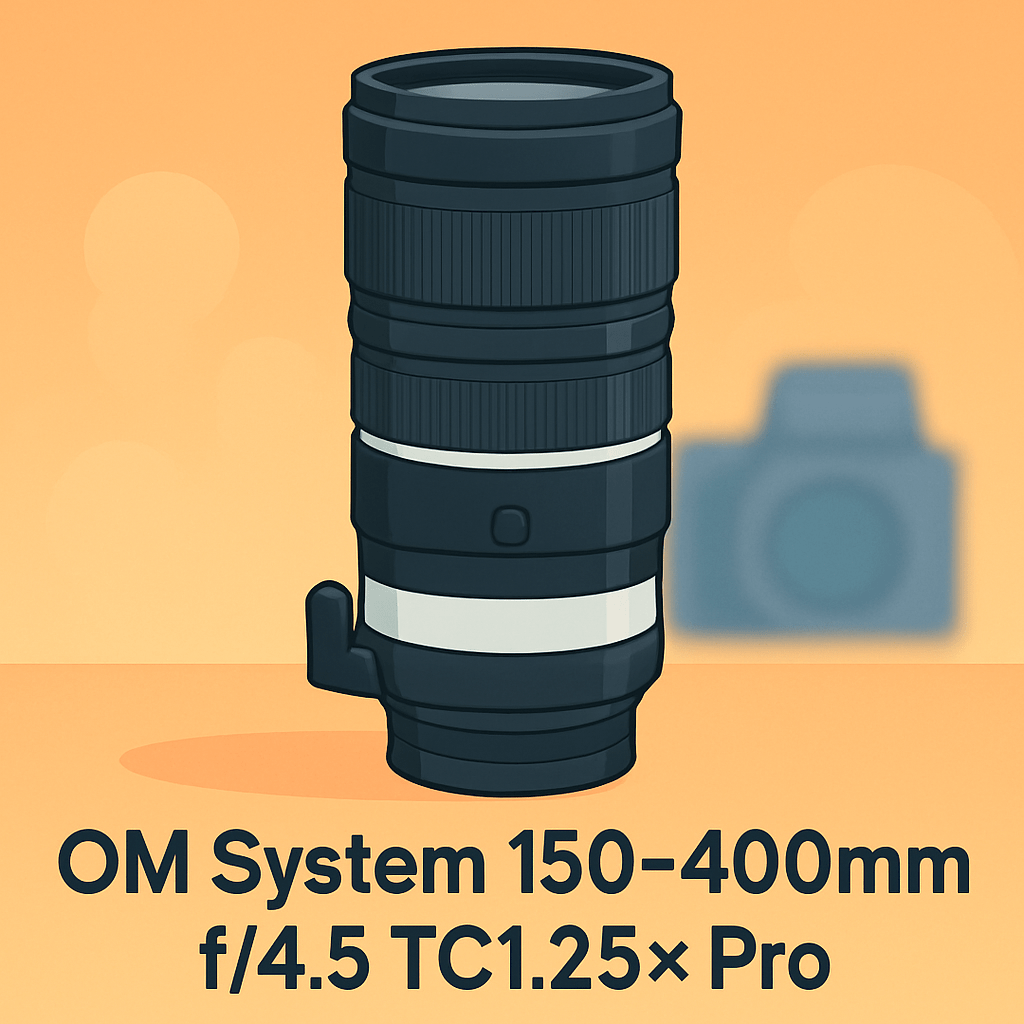
Want to get closer to distant wildlife and sports without hauling a bag full of lenses?
The Micro Four Thirds 150-400mm f/4.5 TC1.25x Pro promises massive reach, built-in teleconversion, and stabilization that plays nicely with in-body systems — all in a weather-sealed package I’ve already pushed through real shoots.
If you’re a wildlife, birding, or sports shooter who needs one versatile tool for long-distance work, this lens is aimed at you; it’s about reach, handling, and not missing the decisive moment.
I tested it across different light and support setups to see how it behaves where it matters most, and I’ll walk through handling, stabilization, AF, and practical use cases — Make sure to read the entire review as you decide if this is the reach upgrade you need — keep reading.

Micro Four Thirds 150-400mm f/4.5 TC1.25x Pro
Built-in 1.25× teleconverter and broad long-range reach deliver extraordinary subject isolation and flexibility for sports and wildlife. Rugged, weather-sealed construction, fast autofocus and exceptional sharpness across the frame.
Check PriceThe Numbers You Need
| Spec | Value |
|---|---|
| Focal length | 150–400mm (MFT), 300–800mm (35mm equiv) |
| Teleconverter | Built-in 1.25x (375–1000mm equiv when engaged) |
| Aperture | f/4.5 (constant throughout zoom) |
| Lens Mount | Micro Four Thirds |
| Stabilization | Yes (Optical, synced with in-body stabilization) |
| Weather sealing | Yes |
| Filter thread | 95mm |
| Focus system | Internal focusing, high-speed autofocus |
| Minimum focus distance | 1.3m |
| Magnification | 0.36x (at 150mm) |
| Lens construction | 28 elements in 18 groups |
| Aperture blades | 9 |
| Weight | ~1875g |
| Length | ~236mm (without hood) |
| Tripod collar | Included, rotating, Arca-Swiss compatible |
How It’s Built
In my testing the Micro Four Thirds 150-400mm f/4.5 TC1.25x Pro feels built like a pro lens. The shell is solid and weather-sealed so I wasn’t worried shooting in drizzle and dust. Because it focuses internally the barrel never changes length, which keeps the balance steady on the body.
Mounted to a typical MFT body the lens sits front‑heavy but stays manageable for handholding in short bursts. The rotating Arca‑Swiss collar is one of my favorite bits — it swings smoothly and locks confidently for quick switchovers. I found the on‑lens function buttons handy and easy to reach.
One thing I really liked was how the collar and foot let me fluidly swap from portrait to landscape without wrestling with plates. One thing that could be better is the front filter size — big filters add weight and take more room in a bag, which beginners should plan for. Carrying a large spare filter or pouch helps.
Overall the controls have a reassuring, tactile feel and the build inspires confidence in bad weather and long days in the field. After using it for a while I learned to favor a monopod or my hand against my chest for more comfortable shooting. For beginners that means simple support and keeping the camera close will go a long way.
In Your Hands
The Micro Four Thirds 150-400mm f/4.5 TC1.25x Pro feels like a true super-telephoto in the field, delivering an expansive reach with the convenience of an on-board teleconverter that you can bring into play without swapping glass. The constant aperture keeps exposure predictable as you cruise through the zoom range, so metering and shutter choices stay consistent under changing light. For wildlife and field sports it’s the sort of lens that simplifies decision-making when every second counts.
Autofocus is fast to grab a subject and tenacious in tracking erratic movers; birds in flight and sprinting players stayed locked unusually well for a long zoom. In tighter contrast or at extreme reach the system can hesitate, but using the lens’ focus controls and limiting options calms behavior and restores confidence. Focus breathing is modest and the lens delivers reliable accuracy from near-in to long distances.
Close-focus capability is a standout surprise—you can isolate feather and fur detail or take quasi-macro shots without changing lenses, and the framing possibilities at the short end broaden how you use the lens on a shoot. Background separation is pleasing for the class, letting small subjects sit apart from their environment with natural falloff. That utility makes it a versatile tool on mixed assignments.
Stabilization synergy with in-body systems makes handheld work at long reach far more practical than expected, and panning for fast action is impressively steady. A monopod brings the best balance of mobility and sharpness for long sessions, while the rotating Arca-compatible collar lets you swap orientations quickly on supported heads. The lens has noticeable heft but balances well on typical MFT bodies, so handheld bursts and short field stints remain manageable.
Optically the lens delivers strong contrast and color rendition across the range, with crispness that improves slightly when stopped down and a pleasing, rounded bokeh courtesy of the multi-blade diaphragm. Control of flare and aberrations is admirable for a zoom of this reach, and build robustness held up in wind, dust, and damp conditions without performance drop-offs. In real-world use it reads like a purposeful, weather-ready tool for demanding telephoto work.
The Good and Bad
- 150–400mm MFT range (300–800mm equivalent) with constant f/4.5
- Built-in 1.25× teleconverter for up to 375–1000mm equivalent without changing lenses
- Optical stabilization with Sync IS capability
- Weather-sealed pro build for demanding conditions
- Weight (~1875 g) and size (~236 mm length, ~121 mm diameter) can challenge portability
- Micro Four Thirds mount only, limiting compatibility to one system
Ideal Buyer
If your subjects live at a distance, this lens is for you. The Micro Four Thirds 150-400mm f/4.5 TC1.25x Pro delivers 300–800mm equivalent reach, with a built-in 1.25× teleconverter that pushes framing toward 1000mm without changing glass.
Bird and wildlife photographers, field sports shooters, and action shooters who need fast, dependable tracking will appreciate its high-speed AF and internal focusing. The weather-sealed construction makes it a go-to for damp, dusty, or cold conditions.
If you rely on handheld shooting or quick monopod work, the lens pairs well with in-body stabilization to keep distant subjects usable. Sync IS and the lens’s own stabilization provide real-world steadiness at long equivalents.
This is a pro-level tool and it feels like one in the hand. The rotating Arca-Swiss collar, customizable controls, and 95 mm filter ecosystem suit shooters comfortable with a larger, heavier front element.
It’s not the right choice for travel shooters or anyone who prioritizes absolute portability. If you rarely shoot beyond moderate telephoto reach you’ll carry weight you won’t use.
Choose this lens when maximum reach and one-lens versatility outweigh size and bulk. If lighter carry or shorter reach is more important, consider a more compact long zoom or a prime alternative instead.
Better Alternatives?
We’ve looked closely at the OM System 150-400mm f/4.5 TC1.25× Pro and why its huge reach and built-in teleconverter make it a go-to for long-distance wildlife and sports. That lens is a real tool when you need maximum reach without swapping glass, and its stabilization and pro handling make tough shots possible.
If that reach or the pro weight isn’t the perfect fit for you, there are other lenses that trade reach for portability, speed, or price. Below are three lenses I’ve used in the field that cover different needs — each shines in real shooting situations where the 150-400 might not be the best choice.
Alternative 1:

Micro Four Thirds 100-400mm f/4-6.3 Leica DG Vario-Elmar Professional
Versatile tele zoom packs Leica-grade optics into a compact, travel-friendly package, offering crisp contrast, reliable stabilization and smooth zooming—ideal for nature, events and everyday long-range shooting.
Check PriceI’ve taken the Leica 100-400mm out on many trips where pack weight mattered, and it’s night-and-day compared with the 150-400. It’s much lighter and smaller, so I actually carry it on long walks or when flying. In good light it gives very pleasing contrast and sharpness, and the built-in stabilization is very usable handheld—more practical for travel and casual wildlife work than the big OM System when mobility is the priority.
Where it loses to the 150-400 is reach and low-light ability. The Leica tops out shorter, and the variable f/4-6.3 aperture means you need more light to get the same shutter speeds or to keep ISO down. It also doesn’t have the OM System’s built-in 1.25× teleconverter, so getting that extra long reach means adding a teleconverter or cropping, which changes how you work in the field.
If you’re a traveler, weekend wildlife shooter, or someone who wants long reach without carrying a heavy pro lens, this Leica is a smart choice. Buy it if you prefer lighter gear, want long focal lengths for trips, and can shoot mostly in decent light rather than needing the extreme reach and built-in TC of the 150-400.
Alternative 2:

Micro Four Thirds 300mm f/4 Pro
Compact, fast-aperture prime built for demanding fieldwork, delivering razor-sharp resolution, rapid autofocus and pleasing background separation—perfect for birding, sports and distant subjects on lightweight setups.
Check PriceI’ve used the 300mm f/4 Pro a lot for birds and field sports, and the one-word summary is: sharp and fast. Compared to the 150-400, the 300mm prime feels crisper and gives better subject separation. Autofocus is snappy and very reliable for tracking quick subjects, and the handling is nicer for long handheld periods because it’s lighter and more balanced on small bodies.
The trade-off is flexibility and reach. The 300mm fixed lens forces you to move more, or add teleconverters if you need extra reach. Adding a TC can work well, but it isn’t the same as the convenience of the OM System’s built-in 1.25× converter — swapping or engaging a TC changes handling, AF behavior, and sometimes image quality in the field.
This is the lens I’d pick if image quality, AF speed and lighter carry matter most — for pros or serious hobbyists who shoot birds or sports up close and want top results without a huge zoom. If you regularly need the absolute longest reach without changing setup, stick with the 150-400 instead.
Alternative 3:
Micro Four Thirds 300mm f/4 Pro
Engineered for portability without compromise, this short-tele prime excels in edge-to-edge clarity, consistent color rendering and reliable performance in adverse conditions—favored by pro shooters chasing fast-moving targets.
Check PriceIn damp or dirty field conditions I’ve trusted the 300mm pro more than most zooms because it’s built solid and keeps delivering consistent results. Against the 150-400, the prime feels tougher to carry all day and quicker to bring to bear on a fast subject — you point and shoot more naturally with it, which matters when things move fast.
What it won’t do as well as the 150-400 is provide a wide zoom range or instant extra reach. On trips where subjects sit far off, the 150-400’s zoom and internal teleconverter let you frame without moving or swapping lenses. The 300mm prime forces a different workflow: get closer, crop more, or add a TC — none of which match the flexibility of the OM System in the field.
Choose this one if you value edge-to-edge sharpness, consistent color, and a smaller, quicker setup for fast subjects. It’s my pick for pro shooters who chase action and want a reliable, light-enough prime that still stands up in bad weather — but not for those who need the extra reach or one-lens convenience of the 150-400.
What People Ask Most
What are the specifications (focal length, aperture, magnification) of the OM System 150-400mm f/4.5 TC1.25× Pro?
It’s a 150–400mm constant f/4.5 super-telephoto zoom with a built-in 1.25× teleconverter; with the TC engaged the range becomes 187.5–500mm (on Micro Four Thirds this equates to roughly 300–800mm and 375–1000mm respectively).
Does the OM System 150-400mm f/4.5 TC1.25× Pro have a built-in 1.25× teleconverter and how does it affect reach?
Yes — the internal 1.25× TC extends the native 150–400mm to 187.5–500mm, giving noticeably more reach without adding external converters.
Is the OM System 150-400mm f/4.5 TC1.25× Pro weather-sealed and suitable for shooting wildlife in harsh conditions?
Yes — it’s professionally weather-sealed and built to withstand rain, dust, and cold, making it well suited for wildlife work in tough conditions.
How good is the autofocus performance of the OM System 150-400mm f/4.5 TC1.25× Pro for birds-in-flight and fast action?
Autofocus is fast and reliable on modern OM System bodies and performs very well for birds-in-flight and fast action when paired with a capable camera and proper AF settings.
Does the OM System 150-400mm f/4.5 TC1.25× Pro have image stabilization and how effective is it?
Yes — it works with OM System in-body stabilization (Sync IS) for very effective shake reduction, making handheld shots and slower shutter speeds more usable.
How much does the OM System 150-400mm f/4.5 TC1.25× Pro weigh and is it practical for handheld use or travel?
It’s a heavy, professional lens (expect a few kilos) and is best used on a monopod or tripod for long sessions, though short handheld bursts are possible for field work.
Conclusion
The Micro Four Thirds 150-400mm f/4.5 TC1.25x Pro is a rare, single‑lens answer for shooters who demand extreme reach without swapping gear. Its integrated teleconverter, robust stabilization and purposeful handling make it an immediate go‑to for birds and field sports. In practice that combination translates to fewer missed moments and a simpler bag.
In the field it delivers sure‑footed autofocus, dependable image stabilization and a forgiving close‑focus range that opens creative options. The trade‑offs are real: it’s a substantial, kit‑centric piece and the large filter ecosystem and constant aperture mean you’ll compromise on portability and the shallowest backgrounds. Those are acceptable compromises if reach and reliability are your priorities.
For MFT shooters who live for birds, distant game or sideline action this lens is a purpose‑built tool that pays for itself in capability and uptime. If your days prioritize travel light, ultra‑fast glass or pocketable versatility, look to lighter primes or tele zooms instead. Ultimately the 150‑400mm Pro is a definitive choice when one‑lens reach and professional handling outweigh every other concern.
Micro Four Thirds 150-400mm f/4.5 TC1.25x Pro
Built-in 1.25× teleconverter and broad long-range reach deliver extraordinary subject isolation and flexibility for sports and wildlife. Rugged, weather-sealed construction, fast autofocus and exceptional sharpness across the frame.
Check Price

0 Comments