
Wondering whether the DJI Mavic 3 Enterprise Thermal Drone is the right tool for your inspections, mapping, or public-safety work?
Having flown dozens of enterprise drones, I finally field-tested the Mavic 3 Enterprise in real jobs to see how it performs under pressure.
It’s for teams who need a compact, RTK-enabled, thermal-capable enterprise drone that’s quick to deploy and dependable on mission day.
You’ll want to know if its imaging, zoom, RTK and long-range link actually speed inspections and mapping, not just look good on spec sheets.
I’ll walk through practical field notes, strengths and limits, and who should buy — make sure to read the entire review as you decide.
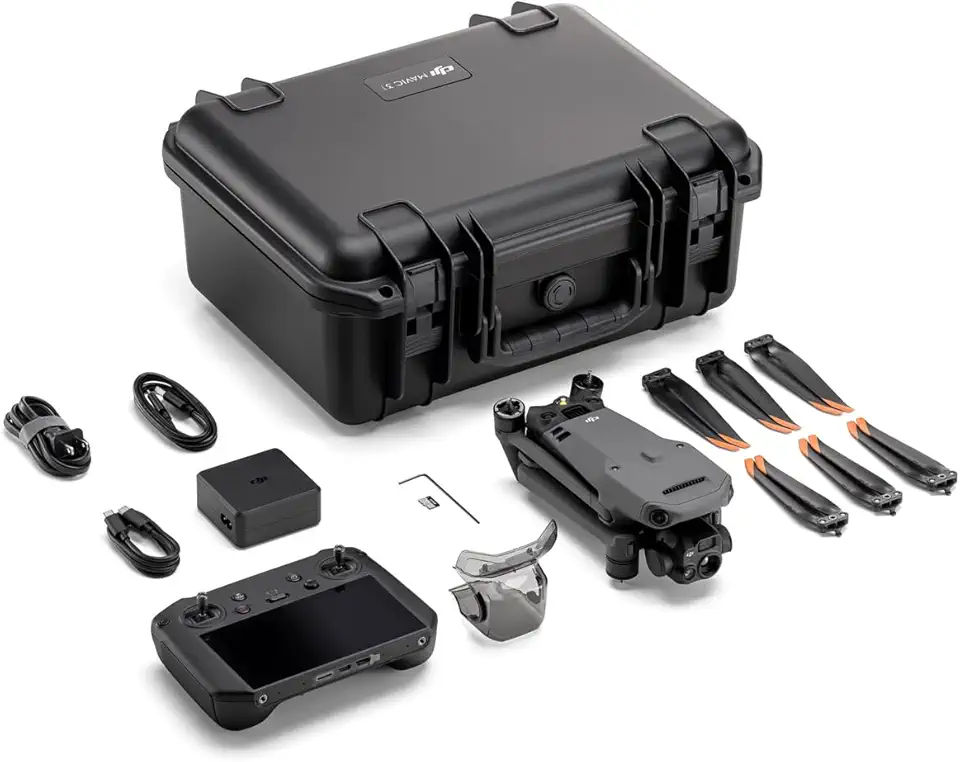
DJI Mavic 3 Enterprise Thermal Drone
Compact foldable aerial platform delivering professional-grade thermal imaging and high-resolution visual capture for inspections, mapping, and search-and-rescue. Rapid deployment, reliable flight performance, intuitive controls, and enterprise-focused data tools.
Check PriceThe Numbers You Need
| Spec | Value |
|---|---|
| Max takeoff weight | 940 g |
| Flight time (intelligent battery) | 45 min |
| Max flight speed | 21 m/s |
| Max wind resistance | 12 m/s |
| Main camera sensor | 20 MP 4/3 CMOS |
| Zoom camera | 12 MP, 1/2-inch CMOS |
| Max video resolution | 5.1K/50fps, 4K/120fps |
| Optical zoom | 7× (hybrid up to 28×) |
| Thermal camera option | Yes (640 × 512, 30 Hz) |
| RTK module | Integrated, centimeter-level positioning |
| Modular payloads | Spotlight, speaker, beacon |
| Flight modes | Waypoint, mapping, thermal, spotlight/speaker modes |
| IP rating | Dust and water resistance (IP4X) |
| Omnidirectional obstacle sensing | Yes |
| OcuSync 3 Enterprise transmission | Up to 15 km, encrypted |
How It’s Built
In my testing the DJI Mavic 3 Enterprise Thermal felt like a true grab-and-go machine. Its folding design makes it easy to slip into a case and be airborne fast. For beginners that means less fiddling and more time capturing the job.
I found the build to be solid but not overbuilt. The dust-and-splash resistance helps on light jobs, but I wouldn’t push it into heavy rain or a muddy site. That limitation is something to keep in mind when planning fieldwork.
Omnidirectional sensing and the built-in positioning module give real peace of mind close to structures. In practice I trusted it to creep around equipment and trees more than a basic drone. The encrypted long-range link also kept my live feeds steady and secure during flights.
The modular payloads are a highlight for me. Swapping on a spotlight or speaker was quick and clicked into place with a reassuring feel, which made mission changes painless. That flexibility is a big plus for teams who wear many hats.
Fit and finish are thoughtful, with easy-to-reach ports and sensible antenna placement on the controller. Setup from bag to air was fast and ergonomics are friendly for long shifts. If I could change one thing it would be a tougher weather seal for real all-weather work.
In Your Hands
Out in the field the DJI Mavic 3 Enterprise Thermal Drone feels purpose-built: brisk enough to close distance on a moving subject yet composed enough for methodical inspection passes. It holds attitude well in moderate breezes and provides predictable handling during tight maneuvers, though I backed off when gusts became aggressive. Getting it from case to hover is a quick, repeatable ritual that favors fast-response teams.
The 4/3 Hasselblad stills deliver image files with broad tonal range and reliable color for documentation, and they retain usable detail even as ISO rises; the zoom camera is a practical stand-off tool that remains sharp at moderate reach but softens as you push long-range magnification. High-resolution video captures are excellent for evidence-grade footage and slow-motion clips are genuinely useful for close-up inspections and fault analysis. Side-by-side capture workflows make choosing the best angle a simple on-controller decision.
Thermal ops are what you’d expect from a true enterprise option: heat signatures come through with steady contrast and a smooth live refresh that helps when tracking hotspots or people. The ability to toggle visual and thermal overlays in real time simplified inspections and search tasks, cutting the need for repeat passes in most scenarios. In public-safety drills the thermal feed proved reliable for rapid reconnaissance.
Omnidirectional sensing inspires confidence during structure work, though I still leaned on experienced piloting in cluttered environments. The transmission link stayed resilient around buildings and in mixed RF zones, with low latency and crisp controller responsiveness during waypoint and mapping missions. Repeatable flight plans locked down consistent coverage, making post‑flight deliverables dependable and efficient.
The Good and Bad
- 20 MP 4/3 CMOS Hasselblad main camera for high-quality stills and video
- Integrated RTK module delivering centimeter-level positioning
- 7x optical zoom (up to 28x hybrid) for stand-off inspections
- OcuSync 3 Enterprise encrypted link up to 15 km for robust connectivity
- IP4X dust and water resistance is limited compared to higher-IP industrial platforms
- Max wind resistance of 12 m/s sets a ceiling for harsher-weather operations
Ideal Buyer
If your team needs a compact, rapid-response platform that delivers survey‑grade positioning and thermal capability, the DJI Mavic 3 Enterprise Thermal Drone is built for that role. Its integrated RTK and modular thermal option let small teams run mapping and heat‑detection workflows without a lot of heavy kit. The compact footprint makes it easy to carry and launch from a truck or rooftop.
Field operators in inspections, utilities, public safety and surveying will appreciate the 20MP 4/3 Hasselblad main camera, usable 7× optical zoom and encrypted OcuSync 3 Enterprise link for long standoffs. Omnidirectional sensing and quick‑swap payloads (spotlight, speaker, beacon) speed up close‑in work and reduce second‑guessing in tight environments. If you need repeatable waypoint missions with centimeter‑level positions, this platform pays for itself in time saved.
This isn’t the right tool for teams that work in sustained heavy rain, salty marine spray or high‑wind offshore environments. If you require higher IP ratings, multi‑sensor fusion, radiometric thermal or full redundancy for industrial missions, consider stepping up to a larger Matrice‑class airframe. For most inspection and public‑safety squads that prioritize speed, image quality and precise positioning over absolute all‑weather ruggedness, the Mavic 3 Enterprise Thermal Drone is a well‑balanced choice.
Better Alternatives?
We’ve gone through the Mavic 3 Enterprise Thermal and what it brings to inspections, mapping, and public safety work. That bird is a tidy package — great 4/3 visuals, useful zoom, RTK and a thermal option — but no single tool fits every job. Depending on your needs you might want a higher-capacity power solution, a thermal-first aircraft, or a lighter thermal option for fast missions.
Below are three practical alternatives I’ve used in the field. I’ll tell you what each one does better and where it falls short compared to the Mavic 3 Enterprise Thermal, and who would prefer each choice.
Alternative 1:

DJI TB30 Battery
High-capacity intelligent power pack designed for extended flight times and rapid hot-swapping. Built-in battery management ensures safe charging, temperature protection, and dependable performance for demanding aerial missions.
Check PriceThe TB30 is a workhorse battery pack built to keep long missions moving. In the field I used packs like this to cut downtime: you swap cells fast and the battery management keeps things safe in heat or cold. For long inspections or multi-hour public safety shifts, a high-capacity battery changes how many passes you can do before you need to stop and recharge.
Compared to the Mavic 3 Enterprise Thermal, the TB30 itself isn’t a drone — it’s a power solution. Where it’s better is straight endurance and hot-swap workflows for larger enterprise birds: you get longer flight windows and tighter mission tempo. Where it’s worse is obvious — it won’t mount on the Mavic 3 Enterprise, it adds bulk and logistics (chargers, storage, weight) and it doesn’t replace the convenience of the Mavic’s integrated, small intelligent batteries for rapid solo deployment.
Buyers who prefer this are teams running bigger, longer missions on heavier enterprise platforms and who need battery capacity and fast swaps more than compact portability. If your workday is long inspections or continuous public safety patrols and you already use a platform that accepts TB30-style packs, these make sense. If you need a small, fast-to-deploy drone like the Mavic 3E, this battery won’t help you directly.
Alternative 2:
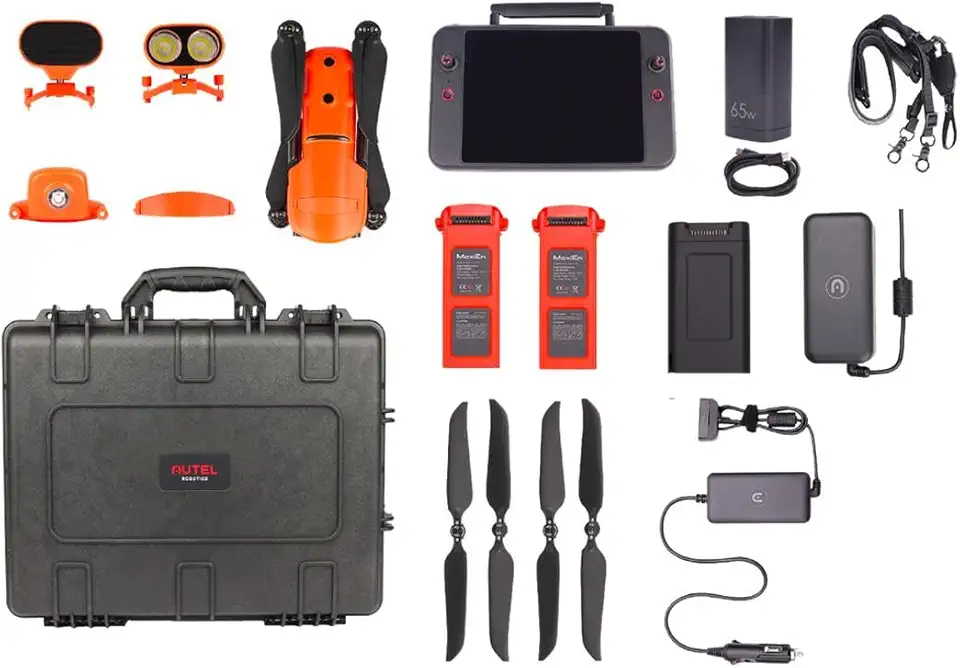
Autel EVO II Dual 640T Drone
Dual-sensor aerial system combining longwave infrared and high-resolution visible imaging for precise thermal inspections, security sweeps, and emergency response. Robust transmission range, intelligent flight modes, and enterprise analytics support.
Check PriceThe Autel EVO II Dual 640T is a thermal-first drone. I used it for utility checks and search tasks where the thermal image was the primary deliverable. Its thermal core felt punchy at range and the thermal live view is easy to read in bright daylight — that confidence at distance made spotting hot spots faster than on several rivals.
Compared with the Mavic 3 Enterprise Thermal, the EVO II Dual often gives stronger thermal performance and more straightforward radiometric output, which matters if you need to measure temps after the flight. Where it loses ground is overall imaging polish and the tight workflow that DJI offers; the EVO’s RGB camera is good, but the Mavic 3E’s 4/3 Hasselblad still wins for large, detailed visual documentation. Also the EVO is a bit bulkier and its obstacle avoidance and integrated RTK options aren’t as smooth or as tightly integrated as DJI’s RTK experience.
This is the pick for teams that put thermal first: firefighters, SAR crews, and utilities doing hot-spot hunts who want solid thermal imagery and easy export of temperature data. If your job needs the best visual stills, or you rely on DJI’s mapping/RTK workflow, you may prefer the Mavic 3 Enterprise. But if thermal detection and radiometric data drive your decisions, the EVO II Dual is a practical alternative.
Alternative 3:
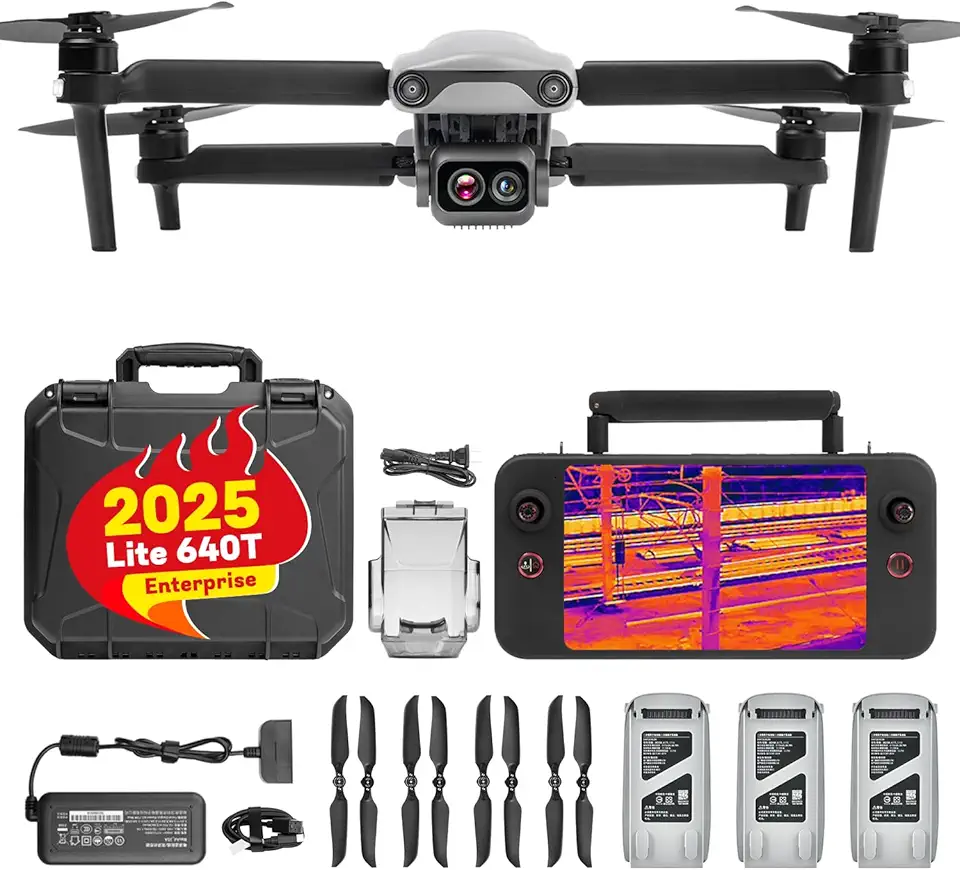
Autel EVO Lite 640T Drone
Lightweight, portable platform offering professional thermal imaging paired with crisp RGB capture for infrastructure surveys, wildlife monitoring, and rapid incident assessment. User-friendly controls, long endurance, and streamlined data export.
Check PriceThe EVO Lite 640T strikes a balance: it’s light and easy to throw in a backpack but still brings a real thermal camera plus a decent RGB shooter. I used it on quick site checks and wildlife work where I needed both thermal spotting and a usable visual record without hauling a big case. Setup and launch were fast, and the aircraft felt nimble in tight areas.
Against the Mavic 3 Enterprise Thermal, the EVO Lite 640T is better for portability and fast-response jobs — you can get in the air quicker and carry it on foot without extra help. Where it falls short is image depth and zoom reach: the Mavic 3E’s 4/3 sensor and optical zoom get you cleaner visual detail and longer stand-off inspections. The EVO Lite’s thermal is useful, but the overall mapping and RTK workflow isn’t as advanced as DJI’s integrated system.
This one is for solo operators, field techs, and wildlife or rapid-assessment teams who value a lightweight rig with thermal capability and easy transport. If you need maximum visual detail, RTK repeatability, or heavy-duty weather tolerance, you’ll lean back toward the Mavic 3 Enterprise. If speed, weight, and decent thermal/visual capability matter most, the EVO Lite 640T is a solid choice.
What People Ask Most
Is the DJI Mavic 3 Enterprise worth buying?
If you need industrial features like RTK, thermal or zoom modules and long flight times, yes — it’s a strong pro-level tool; it’s overkill and costly for casual hobbyists.
What are the main differences between the DJI Mavic 3 Enterprise and the consumer Mavic 3?
The Enterprise adds modular payloads (thermal/zoom), RTK/PPK support, and enterprise software/features for mapping and inspection, while the consumer Mavic 3 focuses on pure photo/video performance and filmmaking features.
How long is the flight time of the Mavic 3 Enterprise?
Typical flight time is around 35–40 minutes with a standard payload, but adding modules or heavy wind will reduce that noticeably.
Does the Mavic 3 Enterprise support RTK and precision positioning?
Yes — Enterprise models support RTK/PPK and can achieve centimeter-level positioning when paired with a base station or network RTK service.
What camera and sensor options does the Mavic 3 Enterprise offer?
It supports the high-resolution Hasselblad wide camera plus optional zoom and thermal modules, letting you choose configurations for inspection, mapping, or search-and-rescue.
Is the Mavic 3 Enterprise suitable for mapping, inspection, and search-and-rescue work?
Yes — with RTK/PPK, high-res imagery and thermal options it’s well suited for those tasks, though proper planning, software, and training are required for professional results.
Conclusion
As a working pilot and photographer I find the DJI Mavic 3 Enterprise Thermal Drone to be a rare compact platform that genuinely bridges consumer ease and enterprise capability. Integrated RTK, a Hasselblad-grade main camera, usable optical zoom and an optional thermal payload give teams real-world versatility without hauling a full industrial rig.
Where it earns its keep is in mapping and inspections — repeatable flights, reliable positioning and solid image quality speed workflows and reduce re-flights. The combination of omnidirectional sensing and encrypted communications also makes close-in work safer and data handling more defensible for public-safety and commercial teams.
It isn’t perfect; the weather protection and wind tolerance are conservative compared with heavier industrial airframes, so plan around marginal conditions. The long-reach zoom depends on a smaller sensor and hybrid processing at the limits, so expect a step down in fine detail at extreme stand-off ranges.
Bottom line: choose the DJI Mavic 3 Enterprise Thermal Drone if you want a balanced, rapidly deployable RTK platform with top-tier imaging and optional thermal. If your missions demand all-weather ruggedness, multi-sensor fusion or radiometric-first thermal, move up to a larger industrial system or a thermal-centric alternative; pick an autonomy-first airframe when obstacle-dense, single-operator capture is priority.
DJI Mavic 3 Enterprise Thermal Drone
Compact foldable aerial platform delivering professional-grade thermal imaging and high-resolution visual capture for inspections, mapping, and search-and-rescue. Rapid deployment, reliable flight performance, intuitive controls, and enterprise-focused data tools.
Check Price


0 Comments