
Can a modestly priced camera truly deliver cinematic-looking video without emptying your bank account?
That’s the question many creators are asking as budgets tighten and standards rise in 2026.
This guide exists to answer it plainly and practically.
We’ve narrowed the field to five standout, budget-friendly cameras that deliver strong video performance for the money.
Picks were informed by recent expert reviews, broad user feedback, and hands-on evaluation in everyday shooting scenarios.
We focused on what actually makes shooting easier and more reliable for creators on a budget.
This isn’t a paper spec comparison.
Instead we tested handling, workflow, and day-to-day performance so you get context, not just numbers.
What you’ll read are honest trade-offs and realistic expectations for each option.
Each entry includes a concise overview, real-world notes, and straightforward pros and cons.
We also explain who will benefit most from each camera so you can match gear to goals.
No hype, no fluff—just clear recommendations for practical creators.
Whether you’re vlogging on the go, building a small studio, or shooting travel cinema, there’s a wallet-friendly option for you.
Flip through the guide to find the best budget camera for videography that fits your creative approach and budget.
We’ve cut the confusion so you can spend more time shooting and less time researching.
1. Sony ZV-E10 / ZV-E10 II

Sony ZV-E10 II mirrorless camera body (APS-C)
Compact vlogger-centric APS-C camera delivering fast autofocus, clear 4K video, swivel screen and lightweight design for effortless content creation.
Check PriceThe Sony ZV-E10 is an APS-C interchangeable‑lens camera that punches well above its price for video. Its sensor size gives you noticeably better low‑light performance than smaller formats, and the system stays compact and flexible for run‑and‑gun work.
Autofocus is one of the ZV‑E10’s strongest real‑world advantages — fast and reliable tracking makes it ideal for product shots, street cinema, vlogging, and even casual wildlife clips. If you shoot solo or move a lot, that AF confidence saves countless retakes and keeps footage usable straight out of camera.
In June 2026 Sony introduced the ZV‑E10 II, which brings significant stabilization improvement and enhanced video features. That upgrade makes the Mark II a smarter buy if you want better in‑body motion control without immediately adding a gimbal.
The ZV‑E10 also includes thoughtful creator tools like the ‘Product Showcase’ mode that speeds up beauty and product vlogging setups. Combined with interchangeable lenses, it’s an affordable, versatile platform for social media creators and beginner–intermediate videographers who want room to grow.
There are a couple of caveats to keep in mind. The camera records only 8‑bit video, which limits how far you can push color grading compared with 10‑bit systems. Also, the original ZV‑E10 lacks IBIS, so you’ll need lenses with stabilization or a gimbal for the steadiest handheld results unless you opt for the Mark II.
- Very versatile for run-and-gun and varied scenarios
- Fast, reliable autofocus
- Strong low-light performance for APS-C
- Significant stabilization improvement in Mark II
- Only 8-bit video capture (limits grading flexibility)
- Original lacks IBIS (needs lens stabilization or gimbal)
2. Panasonic Lumix S5 II

Panasonic LUMIX S5 II (DC-S5M2) mirrorless camera body, full-frame
Hybrid full-frame powerhouse with advanced stabilization, high-quality 4K video, reliable low-light performance and robust weather-sealed body for professional creators.
Check PriceThe Panasonic Lumix S5 II is a full-frame mirrorless body built with video in mind. It records up to 6K and offers 10-bit color across most resolutions, which gives you real grading latitude. On top of that it has superb in-body image stabilization and phase-detection AF that behaves very smoothly for video work.
In the field the S5 II feels comfortable and solid for run-and-gun shooting. Colors are rich and the dynamic range is wide, so highlights and shadows hold detail well. Unlimited recording times and flexible aspect-ratio recording make it a reliable choice for long events and documentary shoots where you don’t want to babysit the camera.
There are a few practical limits to know. At 4K/60p the camera applies a 1.5x crop, which can be frustrating if you rely on wide-angle framing for interiors or vlogging. The body design is more functional than flashy, so if you care about looks or ergonomics above utility you might notice that trade-off.
Overall, if you’re a run-and-gun videographer who wants full-frame image quality, strong stabilization, and professional 10-bit files without recording limits, the S5 II is hard to ignore. Its strengths in color and dynamic range make it a very capable B- or main camera for projects where robustness and long takes matter more than having the absolute lightest kit.
- Excellent 6K/30p video with wide dynamic range
- Superb in-body image stabilization
- Phase-detection AF works smoothly in video
- 10-bit recording at most resolutions/frame rates
- 1.5x crop on 4K/60p restricts wide-angle use
- Functional, utilitarian design
3. Canon R8
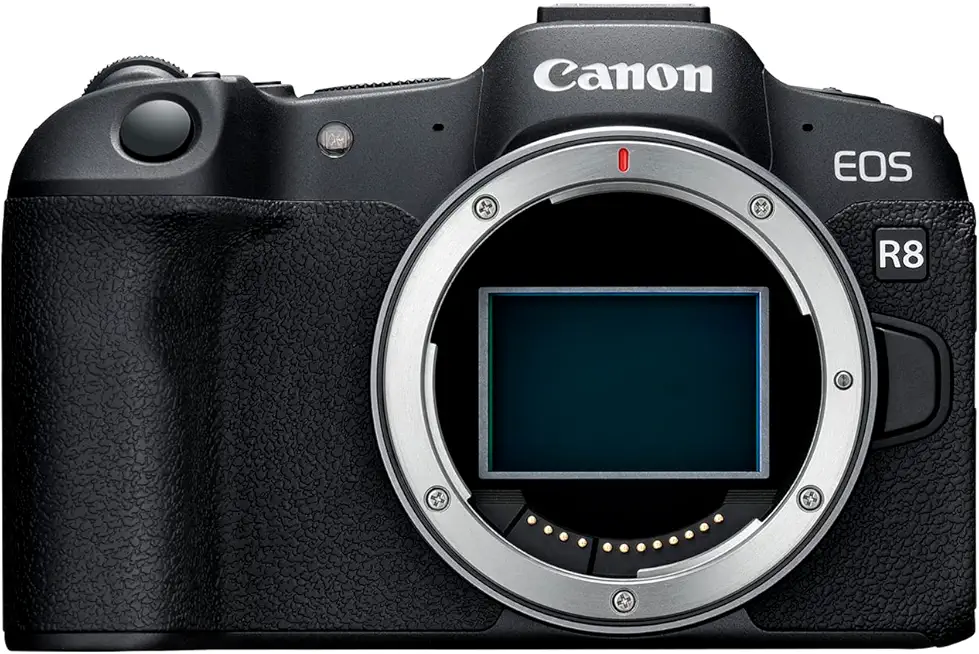
Canon EOS R8 mirrorless camera body, full-frame
Lightweight full-frame shooter offering blazing autofocus, sharp stills, cinematic 4K capture and intuitive controls for on-the-go photographers and filmmakers.
Check PriceThe Canon R8 is a full-frame mirrorless body that gives you oversampled 4K60p video at a surprisingly accessible price. It doesn’t have in-body image stabilization (IBIS), but it supports lens optical stabilization and electronic IS to help steady handheld shots.
In practice the R8 delivers very sharp, clean full-frame 4K footage that punches above its class. I prefer it for studio work or controlled environments where I can pair it with stabilized RF glass or use a tripod. The oversampling at 4K60p yields detailed images and nice latitude for color grading.
As a working photographer/videographer you’ll appreciate how easy the R8 is to operate — Canon keeps the menu and controls straightforward, so you can focus on composition and lighting rather than wrestling settings. The camera pairs with RF lenses that offer excellent optical stabilization, which largely offsets the lack of IBIS for many run-and-gun scenarios.
The trade-offs are clear: you get great full-frame video and Canon color science, but you should budget for stabilized RF glass if you plan to shoot handheld a lot. If you mostly shoot in studios, on gimbals, or with tripods, the R8 is an excellent value and a very capable tool for crisp, cinematic 4K60p footage.
- Full-frame oversampled 4K60p for sharp detail
- Strong value for the features offered
- Compatible with RF lenses with optical stabilization
- Easy to use without excessive complexity
- No in-body image stabilization (relies on lenses)
- RF lenses can be expensive, raising system cost
4. Olympus OM-D E-M10 Mark IV

OM SYSTEM E-M10 Mark IV micro four thirds camera
Stylish, pocketable Micro Four Thirds camera with user-friendly controls, stabilized shooting and creative filters—ideal for beginners and everyday photography.
Check PriceThe Olympus OM-D E-M10 Mark IV is a Micro Four Thirds mirrorless that’s built for shooters who value portability and steady handheld footage. It captures 4K30p video and pairs that with an effective 5-axis IBIS, which makes it surprisingly easy to get smooth clips without a gimbal.
As a working photographer, I appreciate how compact and stylish this body is — it goes everywhere and won’t weigh you down on long shoots. The IBIS here is genuinely one of the best in the budget range, so for run-and-gun vlogging or travel footage you’ll get usable, stable material straight out of camera.
The flip-down screen is another practical touch that vloggers and solo shooters will love; framing yourself is quick and intuitive. Autofocus is generally reliable in most conditions, though it doesn’t match the leading Sony systems for subject tracking. Still, for everyday shooting and interviews it performs well enough.
There are a couple of trade-offs to keep in mind. The smaller Four Thirds sensor means you’ll see more noise in low-light compared to APS-C or full-frame rivals, so plan lighting accordingly. Also, there’s no microphone input port, so you’ll need to handle audio with an external recorder or use a camera-mounted solution that doesn’t rely on a jack.
Overall, the OM-D E-M10 Mark IV is a smart buy if your priorities are stabilization, portability, and straightforward vlogging features. It’s especially suited to budget vloggers and casual videographers who want great in-body stabilization without lugging a lot of gear.
- Effective 5-axis in-body stabilization
- Stylish, compact, and portable
- Flip-down screen useful for vlogging/self-shooting
- Reliable autofocus in most conditions
- Smaller Four Thirds sensor yields more low-light noise than APS-C/full-frame
- No microphone input port
5. DJI Pocket 2

DJI Pocket 2 Creator Combo 4K pocket camera
Pocket-sized gimbal camera capturing smooth 4K footage, built-in stabilization, premium audio and versatile accessories for mobile creators.
Check PriceThe DJI Pocket 2 is a truly compact, all-in-one video tool with a built-in 3-axis gimbal that delivers smooth handheld footage straight out of the box. It shoots up to 4K and offers slow-motion capture, making it an excellent solution when you don’t want to carry a gimbal and camera separately.
In practical use it’s incredibly convenient for run-and-gun shooting and travel vlogging; many creators praise it for portability and ease of use. It includes useful features like slow-motion and subject-tracking (Active Track), which help you get polished clips quickly, though the small sensor does limit image quality and low-light performance.
If you’re a budget-conscious vlogger or traveler who values simplicity and rock-solid stabilization, the Pocket 2 is often the right call. It gives you stabilized B-roll, walk-and-talk shots, and long-enough battery life for days of shooting without hauling extra gear.
Be realistic about trade-offs: the Pocket 2 sacrifices some image quality and advanced video options compared with larger-sensor cameras or interchangeable systems. If you need better low-light performance or more creative control, the newer Pocket 3 upgrades the sensor but at a higher cost.
- Built-in 3-axis gimbal for excellent stabilization
- Extremely compact and portable for travel
- Effective slow-motion and subject-tracking modes
- Good real-world battery life
- Small sensor limits image quality and low-light performance
- Fewer video options than DSLRs/mirrorless
Key Things To Look For
Picking a budget camera for video isn’t about snagging the most pixels — it’s about matching features to how you actually shoot. Start by deciding what matters most to your workflow: are you moving a lot, shooting interviews, or chasing low‑light scenes? That one choice will make the rest of the trade‑offs feel obvious.
Resolution and frame rate are the basic currency. Today 4K is the baseline for clean, future‑proof footage, while 60fps gives you smooth motion and usable slow‑motion; higher frame rates are great for stylized slow moves but often come with trade‑offs like more heat or cropped framing. If you mainly post to social or YouTube, prioritize 4K/60; if you shoot cinematic interview pieces, stable 24/25/30fps may be enough.
Autofocus is the feature that saves you time on set. Reliable real‑time tracking keeps moving subjects sharp and lets you focus on composition instead of constant pulling. If you plan to shoot lots of run‑and‑gun or single‑operator work, prioritize a camera with proven tracking AF.
Stabilization changes how you move. In‑body stabilization (IBIS) or strong optical image stabilization reduces shake and often eliminates the need for a gimbal on short runs. If you expect long handheld takes or travel shoots, IBIS is a massive quality-of-life upgrade; if you need ultra‑smooth cinematic moves, plan for a gimbal regardless.
Low‑light performance comes down to sensor size and lenses. Bigger sensors and fast glass (think f/1.8 or wider) hold detail and keep noise under control when the lights are low. If you can’t afford large glass, favor a sensor with good high‑ISO performance and keep practical limits in mind for nighttime shoots.
Don’t overlook audio inputs and portability. A mic jack for an external microphone will lift your sound instantly, and a lightweight body makes long days less punishing. In short: match resolution and frame rate to your output, prioritize autofocus and stabilization for single‑operator work, and choose sensor and lenses based on your low‑light needs.
Top Budget-Friendly Accessories
Accessories are the fastest way to lift your footage from “okay” to “professional” without blowing the budget. Think of them as tools that solve problems your camera can’t—stability, sound, light and runtime. Buy based on the weaknesses of the camera you pick, not on FOMO about every gadget.
A solid tripod is non-negotiable. For run-and-gun work a lightweight travel tripod with a fluid head gives smooth pans and folds small for travel. For interviews or time-lapses choose a heavier-duty model with good load capacity and a quick-release plate so you don’t waste time swapping setups.
Audio makes more impact than tiny gains in image quality; a cheap shotgun mic or a lavalier will immediately improve perceived production value. Match the mic to your shooting style: on-camera shotgun for run-and-gun, lavs for sit-down interviews, and always check your camera’s input type and levels beforehand.
Light panels are your most forgiving accessory indoors. A small bi-color LED with decent CRI and a diffuser will flatter skin tones and let you shape scenes without hauling strobes. Battery-powered panels are worth their weight for location work.
If your camera lacks IBIS, a three-axis gimbal is worth the investment. It smooths walking shots and adds cinematic moves that handholding can’t. Make sure the gimbal supports your camera’s weight and balance easily—overloading a gimbal is a fast way to frustration.
Carry extra batteries and a dual charger; running out of power always happens at the worst moment. For longer shoots bring a high-capacity power bank if your camera supports USB charging. Memory cards with good sustained write speeds also prevent dropped frames during long 4K recording.
Finally, budget-friendly editing tools like DaVinci Resolve or Shotcut let you color, cut and fix audio without a monthly fee. Learn a few workflow basics early—stable shots, clear sound and natural light make editing far easier and keep your final product looking polished.
What People Ask Most
What is the best budget camera for beginner videographers?
There isn’t a single best choice; pick a camera that balances ease of use with reliable autofocus, good stabilization, and a usable audio input. Consider how you plan to shoot and choose a model that feels comfortable and straightforward to operate.
Which budget camera offers the best image stabilization for video?
Look for models that include in-body stabilization or a built-in gimbal, as these provide the smoothest handheld footage. If the camera lacks strong internal stabilization, plan to use a gimbal or stabilized lenses to reduce shake.
What features should I look for when choosing a budget camera for videography?
Prioritize dependable autofocus, effective stabilization, clear audio options, and a form factor that suits your shooting style. Also consider low-light performance and whether the system supports lenses and accessories you may need.
Is a mirrorless or DSLR better for budget videography?
Mirrorless cameras are often preferred for video because of their compact size and modern video-focused features, while DSLRs can still be perfectly capable if you already own compatible lenses. Choose the system that offers the lens options and ergonomics you need.
Can you get cinematic video quality from a budget camera?
Yes, cinematic results are achievable through thoughtful lighting, framing, camera movement, and color grading even on modest gear. Good technique and postproduction often matter more than the camera itself.
What lenses are recommended for budget videography cameras?
Start with a versatile standard zoom or a couple of well-regarded prime lenses that cover wide and portrait focal ranges. Prioritize optical quality, useful focal lengths for your subjects, and stabilization if available.
What is the best budget camera for low-light videography?
Cameras with larger sensors and good stabilization typically handle low-light conditions better, and pairing them with fast lenses improves results. Also plan to control lighting and exposure techniques to get the most from your gear.
Conclusion For Best Budget Camera For Videography
These five budget-friendly options give you distinct strengths—portability, stabilization, autofocus, and full-frame performance—so you can pick the camera that aligns best with the kind of video you want to make.
Think about your priorities first—stabilization, sensor size, autofocus reliability, audio inputs, and how much gear you want to carry—and let those factors guide the best value for your needs.
If you want to build skills and confidence, explore more of the site’s practical guides and reviews to learn techniques, gear trade-offs, and simple workflows that boost your results.
Please leave a comment with your questions or experiences below; we usually reply within a few hours and enjoy helping readers refine their setups.
Finally, test a camera in real shooting conditions, pair it with a few key accessories, and practice regularly—real improvement comes from using the gear while keeping your storytelling front and center.




0 Comments