
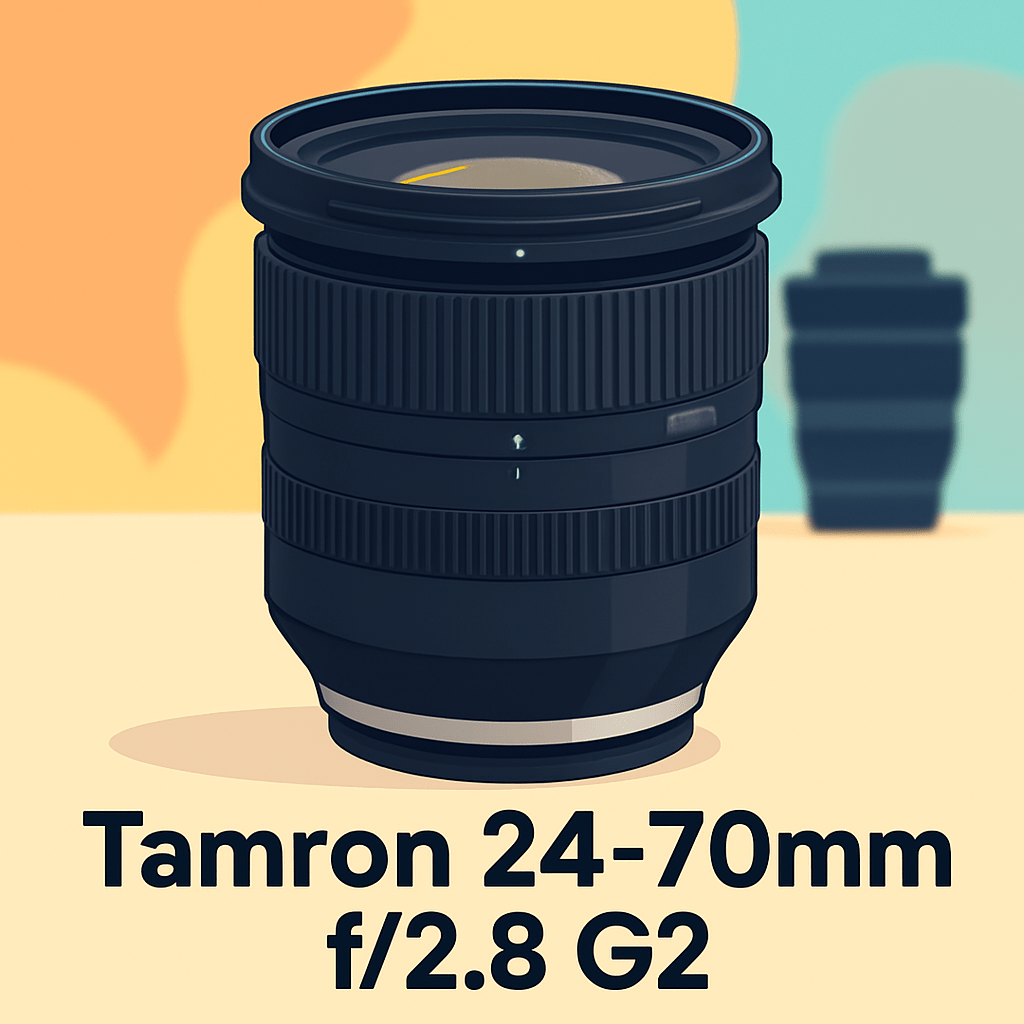
Ever wondered if one fast 24–70 zoom can really cover weddings, portraits, and run‑and‑gun documentary work without compromise?
I’ve field‑tested the Tamron 24-70mm F2.8 G2 Nikon F Mount across dim receptions, backlit streets, and studio quickies to find out. It’s a DSLR‑era design you can adapt to mirrorless, and its real‑world payoffs—low‑light reach, in‑lens stabilization, and weather resistance—matter on long shoots.
In this review I’ll parse autofocus behavior (USD), Vibration Compensation (VC), optical rendering, handling, and keeper rates on actual assignments. If you shoot events, weddings, or need a reliable do‑it‑all pro zoom, make sure to read the entire review as I break down what this lens really delivers in the field—keep reading.

Tamron 24-70mm F2.8 G2 Nikon F Mount
Fast constant f/2.8 standard zoom delivering exceptional sharpness, smooth autofocus, and weather-sealed construction. Versatile focal range ideal for weddings, portraits, and events; reliable performance for demanding pro shooters.
Check PriceThe Numbers You Need
| Spec | Value |
|---|---|
| Focal length | 24-70mm |
| Maximum aperture | f/2.8 constant |
| Lens mount compatibility | Full-frame DSLR and mirrorless cameras (Canon EF/EF-S with adapter, Sony FE, Nikon F, etc. depending on model) |
| Optical image stabilization | Tamron VC (Vibration Compensation) |
| Autofocus motor | USD (Ultrasonic Silent Drive) |
| Lens construction | 17 elements in 12 groups |
| Minimum focus distance | Approx. 0.38 m (15 inches) |
| Maximum magnification ratio | 0.28x |
| Filter size | 82mm |
| Diaphragm blades | 9, rounded |
| Weather resistance | Moisture-resistant and dust-resistant construction |
| Weight | Approx. 805 g (28.4 oz) |
| Dimensions (diameter x length) | Approx. 88 mm x 113 mm |
| Angle of view (full-frame) | 84°33′ to 34°21′ |
| Coating | eBAND and BBAR for flare and ghosting reduction |
How It’s Built
In my testing the Tamron 24-70mm F2.8 G2 feels like a proper pro zoom — solid metal-and-plastic mix with a reassuring heft. On Nikon DSLRs it balances well; adapted to mirrorless it sits a bit front-heavy but still usable. That heft gives confidence when shooting all day, but it’s noticeable.
It takes large filters, which means buying bigger, pricier filters but also makes avoiding vignetting easier. The mount has a gasket and the weather-resistant build gave me real confidence in light rain and dusty streets. For beginners that means you can keep shooting when the weather turns without panic.
Inside the barrel are complex elements and modern coatings meant to tame flare, and in my testing backlit scenes stayed surprisingly clean. The nine rounded blades keep out-of-focus highlights pleasingly soft, especially when stopped down a bit. That translates to smoother bokeh and fewer distracting ghosts in high-contrast shots.
The USD focus motor is quiet and snappy in the field, and the VC and AF/MF switches are chunky and easy to flip even with gloves on. Zoom and focus rings have decent resistance and showed minimal creep in my samples. What I liked most was the weather-sealed, solid feel; what could be better is the weight and large filter size for travel shooters.
In Your Hands
The Tamron 24-70mm F2.8 G2 for Nikon F feels like a dependable workhorse on Nikon DSLRs — AF is swift to lock and generally steady when tracking moving subjects, with only the occasional hesitant moment in very dim scenes. That character makes it a reliable choice for fast-paced event work where missing the moment isn’t an option.
When adapted to mirrorless bodies the lens remains capable, though the experience is not quite as integrated as native glass; subject-detection and eye/face tracking work, but they can feel a touch less immediate than mirrorless-native solutions. For portraits and run-and-gun documentary shooting the results are still excellent, but you’ll notice a subtle difference in responsiveness during continuous-action sequences.
Tamron’s stabilization is genuinely useful for handheld shooting — it steadies the view and raises keeper rates in low light — and it smooths out small motion during longer focal lengths. For video the VC keeps the image calm for static and slow-moving shots, though aggressive pans can occasionally reveal a mild wobble when starting or stopping.
Optically the lens renders with strong contrast and pleasing micro-contrast that helps subjects pop, and color transmission stays consistent across the range. Backlit scenes are well handled thanks to modern coatings, and out-of-focus backgrounds are creamy with rounded highlights, though stopped-wide edges can show mild aperture-shaped compression.
Close-focusing capability makes this more versatile than a typical standard zoom, useful for detail work like product or food shots without needing a separate macro lens. The controls — AF/MF switch and stabilization toggle — are easy to reach and work well with gloves, which keeps workflow smooth in the field.
Carried all day the lens is a noticeable but manageable presence and balances well on pro bodies, while weather resistance inspires confidence in mixed conditions. In short, it’s a versatile, practical tool for weddings, portraits, documentary and travel work where dependable AF, usable stabilization, and solid rendering matter most.
The Good and Bad
- Constant f/2.8 aperture across 24–70 mm
- Tamron VC stabilization for handheld flexibility
- USD autofocus motor for fast, pro-oriented focus drive
- Useful close-up capability: 0.38 m MFD, 0.28x magnification
- 82 mm filter thread increases filter size/weight considerations
- 805 g weight can feel substantial for all-day carry
Ideal Buyer
If you shoot Nikon DSLRs for a living—weddings, events, portrait and run-and-gun documentary—the Tamron 24-70mm F2.8 G2 Nikon F Mount is exactly the sort of workhorse you want on your bag. Its constant f/2.8, built-in VC, and weather-resistant build give you flexibility in dim chapels and rainy outdoor shoots. The close-focus capability and reliable optics make it a one-lens answer for many pro workflows, especially fast-paced assignments.
Mirrorless shooters who are budget-conscious but demand performance will also find a lot to like, provided they accept adapter trade-offs. On Z and other mounts it can tap into body IBIS and deliver strong stabilization, though autofocus integration won’t be as slick as native glass. For second-shooter duties or as a value-packed staple it is hard to beat.
If you insist on the absolute smallest, lightest, or fastest native AF response on modern mirrorless bodies, a mirrorless-native 24–70 will serve better. But for photographers who prioritize dependable optical rendering, weather resistance, and stabilization without the camera-brand premium, this Tamron is a practical, pro-grade compromise. It’s the lens for shooters who want performance over prestige.
Better Alternatives?
We’ve dug into the Tamron 24–70mm f/2.8 G2 and what it brings to the table: solid sharpness, built-in stabilization, weather resistance, and a lot of real-world usefulness for events and portraits. If you like the Tamron but want to see other routes—either for better system integration, slightly different image character, or a different handling feel—there are a few clear alternatives worth considering.
Below I’ll walk through three real-world choices I’ve used in the field. For each I’ll say what it does better and where it falls short compared to the Tamron, and who is likely to pick it up for their work.
Alternative 1:

Canon RF 24-70mm F2.8 L
Premium pro-grade optics produce outstanding edge-to-edge clarity and contrast with a constant f/2.8 aperture. Robust, weather-resistant build with responsive autofocus for creative low-light shooting and professional workflows.
Check PriceOn Canon mirrorless bodies the RF 24–70mm f/2.8 L felt snappier and more “plug-and-play” than using the Tamron on an adapted mount. Autofocus is faster and more reliable for tracking people, and the lens gives a slightly cleaner, punchier look straight out of camera—good for wedding and commercial work where you want minimal editing. I noticed fewer focus hiccups in low light compared with adapting DSLR lenses.
Where it loses to the Tamron is value and stabilization. The Canon is a pricier option and doesn’t have the same built-in vibration compensation that Tamron offers on the F-mount G2. If you shoot handheld in very low light without in-body stabilization, the Tamron’s VC can be more forgiving. The Canon is heavier and can feel bulkier on long shoots.
Buyers who should pick the RF 24–70mm are Canon mirrorless shooters who want the best native integration and fastest autofocus on their system. If you care most about speed, reliability, and image consistency on Canon bodies and don’t mind the higher price and weight, this is the lens to choose. If you want stabilization and a better price, the Tamron still makes more sense.
Alternative 2:
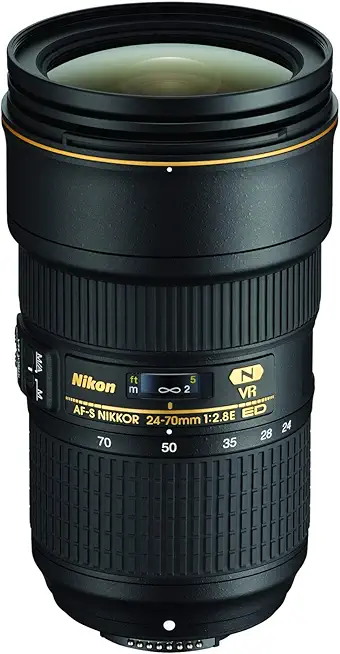
Nikon 24-70mm F2.8 E Nikon F Mount
Engineered for speed and precision, this constant f/2.8 zoom delivers fast, accurate autofocus, exceptional resolution, and refined bokeh. Durable, weather-sealed design suits studio, event, and landscape use.
Check PriceThe Nikon 24–70mm f/2.8E is the obvious in-system alternative for Nikon DSLR users. In the field it felt slightly more solid in the hand and gave a little edge in center sharpness and color when I needed very clean results. Its handling, switches, and balance on Nikon bodies feel like what many pros expect—confidence for long weddings or studio days where you want predictable control.
Compared to the Tamron G2, the Nikon is usually heavier and costs more. Where Tamron stands out is the built-in VC that helps with handheld low-light work; the Nikon E model lacks that extra stabilization, so you’ll lean more on faster shutter speeds or a tripod. The Tamron also feels a touch more compact and offers closer working distance for small subject work.
This Nikon is for shooters who want the tried-and-true Nikon look and handling on DSLR bodies, and who prioritize in-lens feel, durability, and very consistent AF on Nikon cameras. If you shoot mostly on a Nikon DSLR and want that native experience—and you don’t depend on built-in stabilization—the Nikon 24–70 E is a safe, pro-level pick. If you want stabilization or a slightly lighter, better-priced lens, the Tamron is still a great alternative.
Alternative 3:

Nikon 24-70mm F2.8 G Nikon F Mount
Classic professional standard zoom offering balanced sharpness and contrast across the range with a bright f/2.8 aperture. Solid construction, smooth handling, and consistent results for photographers on the move.
Check PriceThe older Nikon 24–70mm f/2.8G is a classic workhorse I’ve used on many shoots. It gives a familiar rendering—good contrast, reliable bokeh, and smooth handling. On the street and at small events it feels slightly lighter and more straightforward than modern pro zooms, and its look can be very pleasing for portraits straight from the camera.
Compared with the Tamron G2, the G version is less modern: no stabilization, older autofocus behavior, and it can be softer in the corners at wide-open apertures. The Tamron brings newer coatings, VC, and often better close-up performance. But the G can be a better fit if you prefer the classic Nikon rendering and want a proven lens that’s often available used at a lower price.
Pick the Nikon 24–70 G if you want a simple, dependable 24–70 that gives a pleasing look and you’re on a budget or shopping the used market. If you need stabilization, the newer handling of the Tamron, or the latest autofocus refinements, then the Tamron G2 will likely serve you better. The older Nikon still shines for shooters after that classic Nikon touch and straightforward handling.
What People Ask Most
Is the Tamron 24-70mm f/2.8 Di VC USD G2 worth buying?
Yes — it offers pro-level image quality, a constant f/2.8 aperture and effective VC for a much lower price than brand-name 24-70s, making it a strong value for most shooters.
How does the Tamron 24-70mm f/2.8 G2 compare to the Canon/Nikon/Sony 24-70mm f/2.8 lenses?
It matches or nearly matches the OEM lenses in center sharpness and autofocus for most uses, though the camera-brand lenses can have a slight edge in corner resolution and overall build; Tamron wins on price and stabilization.
Does the Tamron 24-70mm f/2.8 G2 have image stabilization (VC)?
Yes — it includes Tamron’s VC image stabilization, which noticeably helps handheld shooting in low light.
Is the Tamron 24-70mm f/2.8 G2 compatible with full-frame cameras?
Yes — it’s designed for full-frame DSLRs and also works on APS-C bodies with the expected crop factor.
How sharp is the Tamron 24-70mm f/2.8 G2 across the zoom range?
Very sharp in the center across the range, with corners improving when stopped down and a bit of softness possible at 70mm wide open.
Is the Tamron 24-70mm f/2.8 G2 weather-sealed?
Yes — it has moisture-resistant construction and a fluorine-coated front element for protection, though it isn’t rated for full immersion.
Conclusion
The Tamron 24-70mm F2.8 G2 Nikon F Mount is a hardworking, no-nonsense pro zoom that delivers the practical tools most photographers need: a constant fast aperture, stabilisation you can rely on, weather resistance that eases worry in the field, and useful close-focus versatility. Its optical character and real-world usability make it an easy choice for shooters who need one lens to cover a wide range of assignments. I found it to be consistently trustworthy across hectic shoots.
There are trade-offs to accept for that value. It’s a solid, substantial piece of kit that asks you to carry a bit more and to manage larger filters, and when adapted to mirrorless it doesn’t offer the same seamless integration as native modern designs. Those compromises are real but not dealbreakers for many working photographers.
For events, weddings and portraits it’s a clear winner thanks to its speed and stabilisation. For travel and documentary work it’s versatile and robust, though mirrorless-native rivals may feel more refined for run-and-gun shooting. Landscapers will appreciate stopped-down performance but should weigh filter needs.
If system integration and the slickest autofocus are critical, opt for a native mirrorless alternative. If you want pro-level speed and stabilisation for less money without sacrificing reliability, the Tamron is the practical, confident choice.
In short: buy this if you’re a Nikon F shooter or an adapter-ready mirrorless user who values hands-on performance and real-world dependability over the last ounce of mirrorless polish. It’s excellent value for working pros and passionate enthusiasts.
Tamron 24-70mm F2.8 G2 Nikon F Mount
Fast constant f/2.8 standard zoom delivering exceptional sharpness, smooth autofocus, and weather-sealed construction. Versatile focal range ideal for weddings, portraits, and events; reliable performance for demanding pro shooters.
Check Price



0 Comments