
Can a camera small enough to slip into your jacket pocket capture the sweeping detail of a mountain range at dawn? This guide compares five compact cameras for landscape photography — from true pocket compacts to high‑resolution mirrorless — to help you decide what to buy this year. We cut through specs lists and marketing blurbs to show how these cameras perform in the field.
We evaluate sensor size, lens options, stabilization, handling, and dynamic range, plus real‑world usability, to separate cameras that merely look good on a spec sheet from those that deliver usable files at dawn, dusk, and under changing weather. That means testing how each camera renders fine detail in shadows and highlights, how wide you can go for foreground‑to‑background depth, and whether stabilization and ergonomics are useful on a windy ridge. We also consider battery life, viewfinder clarity, and how intuitively controls are laid out when you’re trying to capture a fleeting light.
Expect trade‑offs: extreme pocketability tends to mean narrower angle of view or lower maximum resolution, while larger sensor systems usually deliver better dynamic range and more flexibility for large prints. Our aim is practical — to help you choose the camera that fits your landscape priorities, whether that’s a lightweight everyday companion or a go‑to tool for high‑resolution vistas. Read on to see how these five compact options balance weight, handling, and image quality so you can buy with confidence and spend more time shooting than debating gear.
1. Sony RX100 VII Compact Zoom
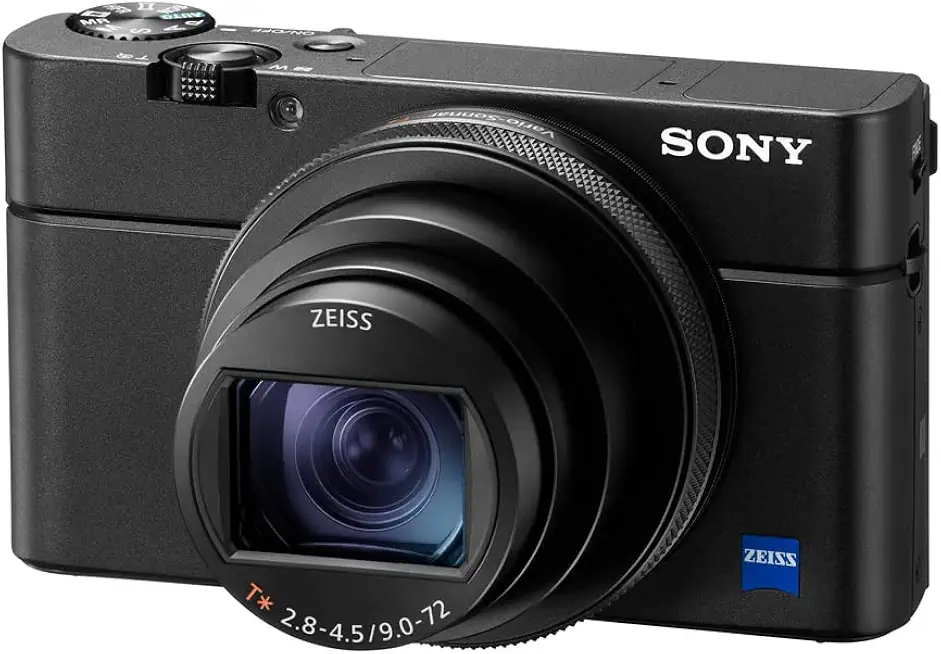
Sony RX100 VII DSC-RX100M7
Pocketable powerhouse delivering fast autofocus, 24–200mm zoom, and professional image quality for travel, vlogging, and everyday shooting.
Check PriceThe Sony RX100 VII is a phenomenal pocket camera for landscape shooters who prioritize portability without giving up reach. Its 20.1MP 1-inch stacked CMOS sensor paired with a Zeiss 24–200mm f/2.8–4.5 zoom gives you an enormous focal-length range in a 302 g body, so you can grab wide-ish vistas and distant details without swapping lenses.
Handling is pleasant on the trail: a pop-up EVF and tilting touchscreen make composition flexible, and the AF system—Real-time tracking AF, animal eye AF, and 20 fps burst shooting—is genuinely snappy and reliable in real-world use. That makes it easy to capture decisive moments of light or moving foreground elements.
Stabilization is provided in-lens and is effective for handheld shooting, though it isn’t class-leading; it keeps you usable into slower shutter speeds when you can’t set up a tripod. Image-wise, out-of-camera JPEGs are vibrant and often print-ready, but RAW files show limited dynamic range and become noisy with heavy post-processing.
Low-light is the RX100 VII’s main compromise: noise becomes apparent at ISO 1600 and above, so it’s not the best choice for twilight panoramas or extreme low-light landscapes without a tripod. The screen can also be fiddly to read in bright sun despite the Sunny Weather setting, so a hood or careful viewing angles help.
Overall, this is an ideal travel and hiking camera: lightweight, robust-feeling, and versatile for travel, street, and casual landscape work. It’s less suited if you need weather-sealing, want ultra-wide 24mm framing for expansive scenes, or plan to make very large prints from heavy-processed RAWs.
- 24–200mm reach in a pocketable body
- Excellent, snappy autofocus (real-time & animal eye AF)
- Lightweight—only 302 g with battery
- Vibrant, print-ready out-of-camera JPEGs
- No weather-sealing
- Noise becomes an issue at ISO 1600+
2. Fujifilm X100VI Landscape Companion

Fujifilm X100VI
Classic rangefinder styling with a large APS-C sensor, hybrid viewfinder, and film-simulation colors for expressive street and portrait photography.
Check PriceThe Fujifilm X100VI Landscape Companion is a deceptively powerful compact for landscapes, thanks to its 40MP APS-C sensor that delivers plenty of detail and room for cropping. That resolution makes it possible to pull fine texture from rock faces and distant detail without switching to a larger system.
It pairs that sensor with a fixed 23mm f/2 lens (35mm equivalent), which is sharp and characterful, perfect for intimate wide scenes and foreground interest. You trade zoom flexibility for optical quality and a deliberately simple shooting approach.
This is the first X100 model to include in-body stabilization, which really helps for handheld dawn and dusk work when you don’t want to carry a tripod. Autofocus borrows the X-T5’s class-leading system, so subject tracking and lock-on performance are reliable in the field.
The hybrid optical/electronic viewfinder is a joy to use for landscapes: optical clarity when you want it, and electronic preview for exposure checks and highlight warnings. The body is solid metal with tactile retro controls, giving a satisfying, fast tactile workflow when you’re composing on location.
Weather-sealing is possible, but you’ll need an adapter to get full protection—something to factor in if you shoot in harsh environments. Overall, this camera suits photographers who value style, simplicity, and a classic rangefinder experience over extreme flexibility.
- 40MP APS-C sensor for detail and cropping
- Classic rangefinder design and intuitive controls
- Hybrid optical/electronic viewfinder
- Effective in-body stabilization for handheld shots
- Fixed lens limits framing options
- Pricey and sometimes hard to find in stock
3. Ricoh GR III / GR IIIx Travel Primes
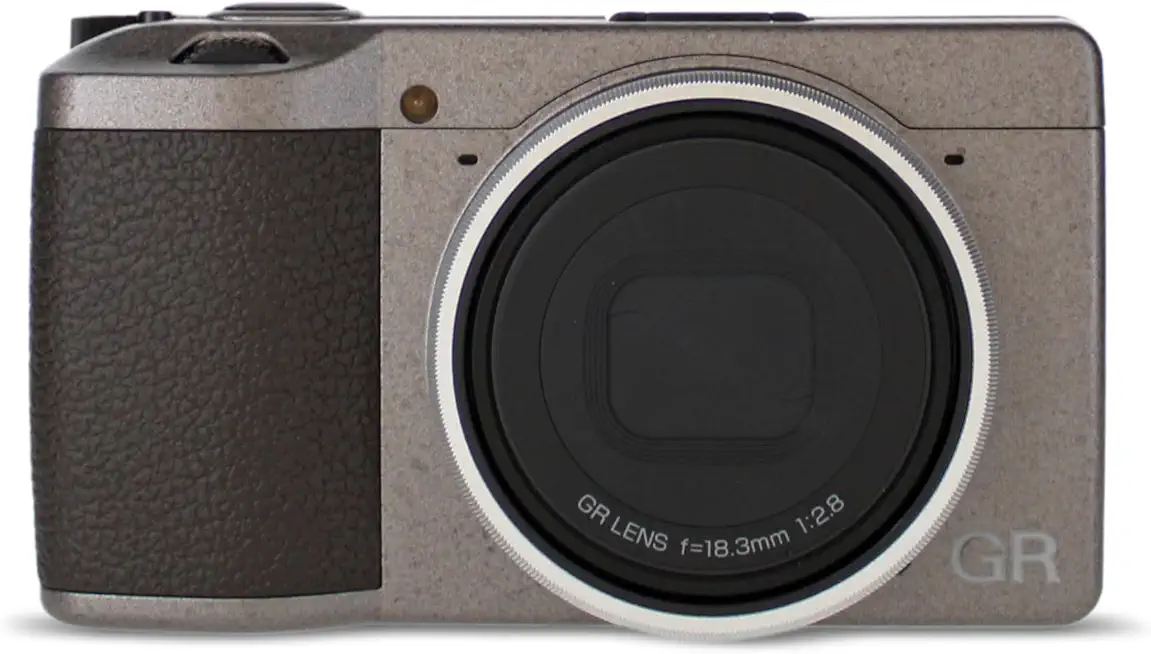
Ricoh GR III Diary Edition
Ultra-compact street shooter with a sharp 28mm-equivalent lens, tactile controls, and special-edition design for everyday visual journaling.
Check PriceThe Ricoh GR III / GR IIIx packs a 24MP APS-C sensor into an astonishingly small body, with the GR III offering a 28mm equivalent and the GR IIIx a 40mm equivalent focal length. That choice of primes means you get two distinct field-of-view personalities while keeping the camera pocketable.
The fixed focal-length lenses are notably sharp and contrasty, delivering DSLR-quality detail and pleasing tonal range straight out of camera. With a fast f/2.8 aperture, you can work in lower light and get subject separation when the scene calls for it.
Handling is a standout: the camera is truly pocketable—smaller than most smartphones—and the retracting lens protects the front element when stowed. The simple, unobtrusive design makes it effortless to blend into street and travel environments and to shoot quickly without fuss.
Ricoh also gives you three-axis in-body stabilization, which noticeably helps handheld low-light work and keeps the frame steady when you don’t have a tripod. That combination of sharp prime optics, APS-C sensor, and stabilization makes for a very capable landscape and street camera when you want portability above all.
This camera is ideal for minimalists and street shooters who want high-quality images from a jeans-pocket device. Be realistic, though: it’s not for photographers who need zoom flexibility or professional weather-sealing, and battery life can be mediocre on long outings—carry spares if you plan long days.
- 24MP APS-C sensor — great detail
- Extremely compact, smaller than most smartphones
- Fast f/2.8 prime lens for low light
- Three-axis in-body stabilization for handheld shots
- Fixed focal length — no zoom
- No weather-sealing
4. Sony A7R IV / A7R V High-Resolution Landscapes

Sony Alpha 7R V
High-resolution full-frame mirrorless with cutting-edge stabilization, advanced autofocus, and exceptional dynamic range for studio, landscape, and commercial work.
Check PriceThe Sony A7R IV (and the slightly updated A7R V) is a landscape photographer’s hunger for resolution made real. The A7R IV’s 61MP full-frame sensor delivers extraordinary detail and dynamic range, so you can recover shadows and highlights without the mushy artifacts you get from lower-resolution files.
In practice this means massive prints and generous cropping freedom while retaining fine texture and color fidelity. The body also benefits from 5.5 stops of in-body stabilization, which helps when you need sharper handheld shots during golden hour or when bracketing without a tripod.
Interchangeable-lens flexibility lets you pick ultra-wide to telephoto options depending on the scene, and the sensor’s color reproduction gives you a lot of post-processing latitude. The A7R V refines the platform further, but the A7R IV remains a particularly good value pick if you want that 61MP detail on a slightly lower budget.
Realistically, this camera is geared at serious landscape shooters who prioritize ultimate resolution, dynamic range, and system flexibility over pocketability. It’s relatively compact compared to traditional DSLRs, but it’s still larger and heavier than true compact cameras, and handling can feel a bit awkward with bigger optics—best for deliberate, static subjects rather than fast action.
- 61MP full-frame: unmatched resolution for large prints
- Extraordinary dynamic range for shadow/highlight recovery
- Versatile interchangeable-lens system (ultra-wide to telephoto)
- 5.5-stop in-body stabilization helps handheld landscape work
- Larger/heavier than true compacts — not pocketable
- Expensive system once you include lenses and accessories
5. Canon EOS R5 Mark II Landscape Workhorse

Canon EOS R5 Mark II Body
Flagship pro body offering blazing speed, robust build, and overwhelming image fidelity for demanding hybrid photo/video creators.
Check PriceThe Canon EOS R5 Mark II is a genuine landscape workhorse thanks to its 45MP full-frame sensor. That resolution gives you the headroom to crop, stitch, and pull detail out of shadows without falling apart, which matters when you’re printing large or pushing exposure recovery.
Its RF mount opens up Canon’s extensive lens lineup, including true ultra-wide options that let you capture sweeping vistas and strong foreground-to-background depth. That flexibility means you can tailor the system to the kind of landscapes you shoot, from intimate scenes to grand panoramas.
Out in the field the R5 Mark II feels built for serious use: it’s fully weather-sealed against dust and moisture, and the in-body stabilization integrates with stabilized RF lenses. That combo reduces the chance of ruined shots in harsh conditions and lets you handhold longer at slower shutter speeds when a tripod isn’t practical.
For hybrid shooters the video chops are class-leading — 8K/60p and 4K/120p give you options for high-resolution time-lapses and motion sequences alongside stills. The advanced autofocus (including animal and bird eye tracking) is reassuring if you occasionally need to track moving subjects, though be aware power-hungry features can chew through battery life on long days.
If you prioritise image quality, durability, and a modern, versatile system, the R5 Mark II is mostly a win for landscape photographers willing to carry a slightly larger kit and invest in lenses. It’s especially appealing to Canon users upgrading bodies who want one camera to handle demanding stills and video work.
- 45MP full-frame sensor
- Fully weather-sealed
- In-body stabilization that integrates with RF lenses
- 8K/60p and 4K/120p video
- Larger and heavier than compact cameras
- Cost increases with lenses and accessories
Sensor Size and Landscape Image Quality
Sensor size is one of the first choices you’ll make that shapes your landscape images. Bigger sensors tend to deliver cleaner files, more dynamic range and higher pixel counts, which all help when you want subtle tonal transitions, deep shadow recovery or giant prints. I lean to the largest sensor I can reasonably carry when ultimate image quality is the goal.
But sensor size also changes how a lens behaves. A smaller sensor crops the field of view, so a 24mm on a crop body frames much tighter than the same focal length on full-frame. That changes how you compose foreground elements and how wide a scene you can capture without stepping back or swapping lenses.
Depth of field is another practical issue. Larger sensors and longer focal lengths give shallower depth of field at the same framing, which can be beautiful for subject isolation but inconvenient for landscapes where you want everything sharp. That means stopping down more on full-frame bodies to keep foregrounds crisp, while smaller sensors often deliver the depth you need without extreme apertures.
Low-light performance and noise handling favor bigger sensors too. If you shoot at dawn, dusk or under heavy cloud, full-frame bodies let you use higher ISOs with less penalty. That said, smaller sensors hold their own when paired with good glass, stabilization and patient technique like bracketing and long exposures on a tripod.
Resolution should be matched to your output. High-megapixel sensors let you crop and print big, but they demand steady technique and sharp lenses. Don’t forget diffraction — every lens has a sweet spot; stop too far down on small sensors and you can lose fine detail, so test your kit to know where sharpness begins to fall off.
In the field, balance matters. If you value portability, a smaller-sensor compact and careful technique will still produce stunning landscapes. If you need the cleanest files, go larger. Either way, shoot RAW, bracket exposures, and use focus stacking or a tripod when the scene calls for it — those choices often matter more than the charted advantages of one sensor size over another.
Choosing Lenses for Landscape Photography
Picking the right lens matters as much as the camera body. For landscapes you almost always want something on the wide side — roughly a 10–35mm full‑frame equivalent — so you can include sweeping vistas and a strong foreground. Wide angles exaggerate depth and let you lead the viewer through the scene.
Primes and zooms each have a role. Primes generally give you sharper images and less distortion, which is handy for critical edge‑to‑edge detail. Wide‑angle zooms, however, buy you compositional freedom in the field and keep you from swapping lenses when light or weather changes.
Aperture choice for landscapes tends toward smaller settings. Stopping down to f/8–f/16 increases depth of field so foreground and background are both sharp. That said, faster lenses are valuable at golden hour and for nightscapes, where an f/2.8 or faster optic helps you capture more light without pushing ISO.
Don’t overlook telephoto glass. Lenses in the 70–200mm range or longer let you isolate distant peaks, compress layers of atmosphere, and create abstract compositions from faraway details. Just be mindful of haze and heat shimmer at extreme focal lengths — sometimes a crop or a high‑resolution sensor gives a cleaner result.
Manual‑focus primes shine for focus stacking and hyperfocal techniques. When shooting stitched panoramas or stacking multiple focus points for maximum sharpness, a precise manual focus tool can be faster and more reliable than hunting with autofocus.
Image stabilization is a boon for handheld low‑light shooting but is less critical when you’re on a tripod. Weather sealing and a sturdy mount matter more for all‑day outdoor use; a damp, windy ridge will punish gear that isn’t built for the conditions.
Finally, match lens choice to your camera’s sensor and your shooting style. A 23–24mm equivalent on an APS‑C or compact might feel more like a 35mm on full‑frame, so if you want expansive foregrounds and wide skies, seek true ultra‑wide coverage or consider wide adapters. Balance portability with the focal lengths you actually use in the field.
What People Ask Most
What is the best compact camera for landscape photography?
There is no single best compact camera; the right choice depends on whether you value portability or ultimate image quality. Consider sensor size, lens field of view, stabilization, and weather-sealing when choosing.
Are compact cameras good for landscape photography?
Yes, compact cameras can produce excellent landscape images when paired with quality lenses and solid technique. They are especially useful when portability and discretion are priorities.
What features should I look for in a compact camera for landscapes?
Prioritize wide-angle coverage, strong dynamic range, and effective stabilization for handheld work. Also look for weather-sealing, comfortable handling, and lens quality to suit your shooting style.
Can compact cameras capture wide-angle landscapes?
Yes, many compact cameras offer wide-angle lenses or equivalent fields of view suitable for expansive scenes. Fixed wide primes and wide zooms are common options for capturing foreground-to-background depth.
Which compact camera has the best dynamic range for landscapes?
Dynamic range varies across models, with higher-end and larger-sensor cameras typically offering more headroom for shadow and highlight recovery. Compare real-world sample images and reviews to judge which model meets your needs.
Is sensor size important in a compact camera for landscape photography?
Sensor size influences dynamic range, depth of field, and low-light performance, so it is an important factor to consider. However, good lenses and technique can still yield excellent results with smaller sensors.
Do compact cameras have sufficient resolution for large landscape prints?
Many compact cameras deliver enough resolution for common large prints when paired with quality optics and careful shooting. For the very largest prints, systems with larger sensors or higher resolution provide more flexibility.
Conclusion for Best Compact Landscape Cameras
Choosing the right camera for landscapes comes down to a simple trade-off: extreme portability and convenience versus larger sensors, lens flexibility, and the highest possible image quality.
If you prize pocketability and quick handling, compact models will serve many landscape situations very well; if your priority is resolution, dynamic range, and weather-sealed versatility for big prints, a full-frame system will be the better long-term tool.
Think about how and where you shoot—traveling light, city walks, and fast-moving weather favor smaller, grab-and-go bodies, while planned shoots, long exposures, and critical detail recovery benefit from larger sensors and interchangeable lenses.
If you want to deepen your skills and make the most of whichever system you choose, keep exploring our site for practical tips and technique-focused articles that build on these trade-offs.
Have questions or want to share your own experiences with compact versus full-frame landscape gear? Leave a comment below and we’ll usually reply within a few hours.



0 Comments