
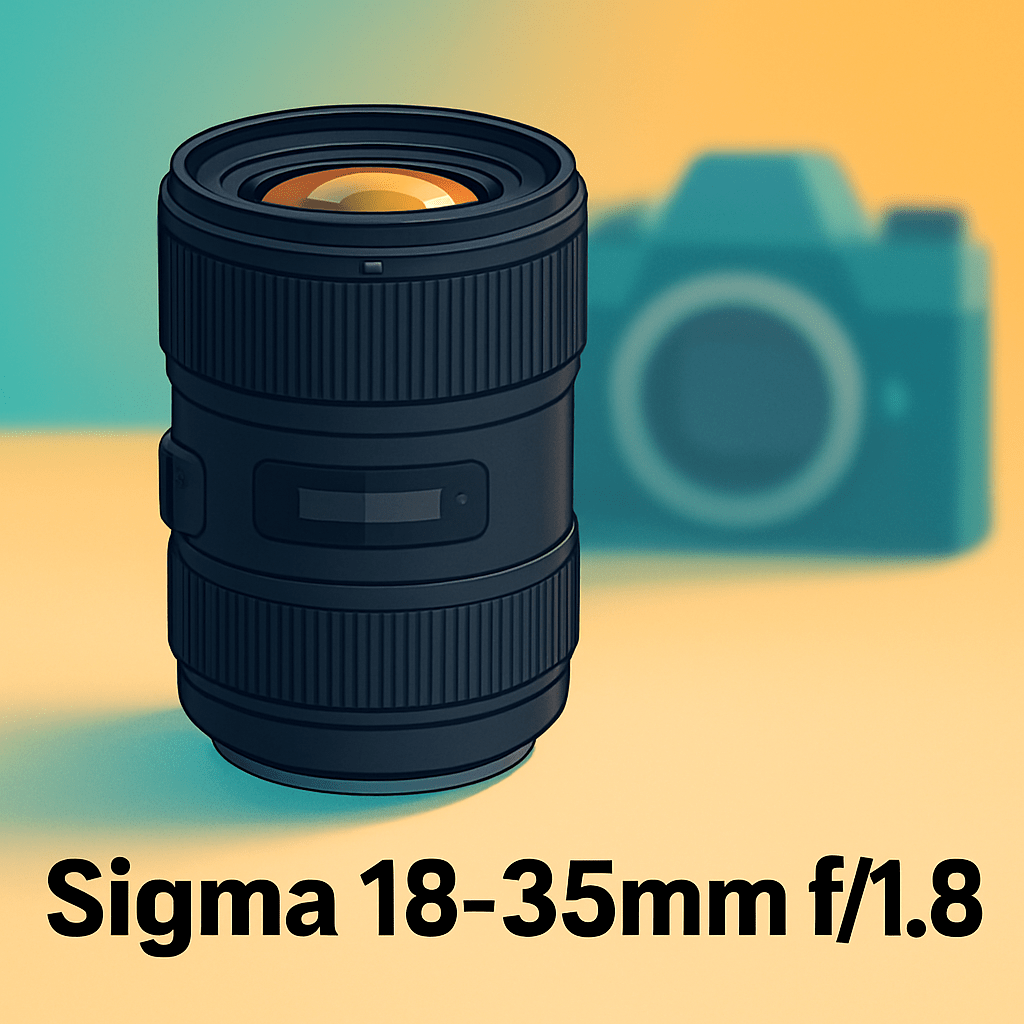
Want to squeeze DSLR-grade low-light performance and creamy background blur from a single APS-C zoom?
After field-testing the Sigma 18-35mm f/1.8 Art Canon on APS-C bodies, it’s clear this lens aims to do exactly that with a constant f/1.8 aperture.
It trades stabilization, lighter carry, and wide reach for sheer speed and image quality, so it’s best for photographers who care about low-light headroom and subject isolation.
I’ll walk through build, handling, real-world use, sharpness, autofocus, and the practical trade-offs to help you decide if it fits your kit. Make sure to read the entire review as I break down those trade-offs — keep reading.

Sigma 18-35mm f/1.8 Art Canon
Bright, constant f/1.8 zoom designed for APS-C sensors delivers exceptional sharpness, dramatic low-light performance and creamy bokeh. Perfect for portraits, events and video where subject separation matters.
Check PriceThe Numbers You Need
| Spec | Value |
|---|---|
| Focal length | 18–35mm |
| Maximum aperture | f/1.8 (constant) |
| Aperture range | f/1.8 to f/16 |
| Lens mount | Canon EF/EF-S/Sigma SA (depending on version) |
| Format compatibility | APS-C sensor cameras |
| Optical design | 17 elements in 12 groups |
| Minimum focusing distance | Approximately 28 cm |
| Maximum magnification ratio | 1:5.2 |
| Autofocus | Hyper Sonic Motor (HSM) |
| Image stabilization | None |
| Diaphragm blades | 9, rounded |
| Filter size | 72 mm |
| Angle of view | 76.5°–44.2° (APS-C) |
| Weight | Around 810 g |
| Dimensions | Approx. 78 mm diameter × 99 mm length |
How It’s Built
In my testing the Sigma 18-35mm f/1.8 Art Canon feels like a purpose-built tool for APS-C Canon bodies. It’s the EF/EF-S mount version, so don’t expect full-frame coverage. That matters if you’re choosing lenses for crop-sensor cameras.
The lens has a very solid, well-made feel when you pick it up. I liked that confidence in the hand — it inspires trust when you’re out shooting. The downside is that solid feel comes with weight, and you’ll notice it after a long walk or a full day of shooting.
On smaller APS-C bodies it can feel a bit front-heavy, so a firm grip or a strap helps a lot. The zoom and focus rings move smoothly with a short, predictable throw. Manual focus is pleasant for fine-tuning, even at wide apertures.
The 72mm filter thread is big but practical, especially if you use ND or polarizers for daylight work. Carrying larger filters is a small trade-off for using wide-open apertures without vignetting. In practice it’s easy to slot a polarizer on and keep shooting.
Optically the build includes special glass and a rounded-blade diaphragm that gives pleasing out-of-focus highlights. In my shots the bokeh is creamy and useful for portraits and low-light work. What could be better is the lack of image stabilization — you’ll need higher shutter speeds or a tripod for steady handheld shots.
In Your Hands
In dimly lit interiors and dusk streets, the Sigma’s constant wide aperture gives exposure headroom other zooms can’t match, freeing you to keep shutter speeds usable and tones clean. Because there’s no stabilization, handheld work forces trade-offs — higher ISOs or using a support for the slowest scenes. If you embrace that compromise, the lens opens creative opportunities you might otherwise skip.
Across its range the shallow depth of field behaves more like a short prime than a zoom, delivering strong subject separation and a soft falloff that photographers love. The rounded diaphragm blades render out-of-focus highlights smoothly and with pleasing circularity, turning busy backgrounds into unobtrusive, painterly layers.
Framing from wide to near-normal feels practical for environmental portraits, street work, and architectural shots where perspective matters as much as reach. Its close-focus capability also invites intimate compositions and small-subject detail without forcing a lens change.
On day-long assignments the build inspires confidence but the front-heavy balance on smaller bodies can lead to hand fatigue during extended handheld use. Bright-sky shooting at the lens’s widest aperture benefits from stout ND filters or stopping down, while crowded or fast-paced situations reward the fast optics with decisive subject isolation and quicker-looking results.
The Good and Bad
- Constant f/1.8 aperture across the entire 18–35mm range
- APS-C optimized design with aspherical and low dispersion elements
- 9 rounded diaphragm blades for potentially pleasing background rendering
- HSM autofocus system
- No image stabilization
- Relatively heavy for an APS-C standard zoom (around 810 g)
Ideal Buyer
The Sigma 18-35mm f/1.8 Art Canon is for APS-C shooters who put low-light performance and shallow depth of field above all else. If you routinely work receptions, dim interiors, nighttime street scenes, or run-and-gun portraits without a flash, that constant f/1.8 is a genuine game changer. It delivers more shutter-speed headroom and subject separation than most standard zooms.
Buyers comfortable working without optical stabilization — leaning on higher shutter speeds, solid technique, or support gear — will get the most from this lens. You should accept its limited 18–35mm span and the extra heft that comes with a very solid build, because you’re trading range and weight for optical ambition. If reach and featherweight carry are priorities, this isn’t the most practical choice.
Think wedding shooters needing usable wide apertures during receptions, photojournalists chasing usable frames in dim venues, and hybrid video creators who crave cinematic shallow focus from a zoom. Portrait photographers who value subject isolation and center sharpness will also appreciate what it brings. Choose the Sigma when f/1.8 speed and image quality are your primary mission.
Better Alternatives?
We’ve already dug into what makes the Sigma 18-35mm f/1.8 special: that unique constant f/1.8 speed, great center sharpness, and its clear trade-offs — no image stabilization, a shorter zoom range, and a bit of weight on smaller APS-C bodies. If you like the Sigma’s look and low-light power but worry about the missing features, there are solid choices that push the trade-offs in different directions.
Below I’ll run through three real-world alternatives I’ve used. For each one I’ll tell you what it does better and worse than the Sigma, and who I’d recommend it to based on actual shooting experience — not just numbers on a page.
Alternative 1:

Canon EF-S 17-55mm f/2.8 IS USM
Professional standard zoom with constant f/2.8 and image stabilization—fast, quiet focusing and impressive edge-to-edge sharpness. A versatile workhorse for weddings, events and everyday shooting in challenging lighting.
Check PriceThe Canon 17-55mm f/2.8 IS USM is the most practical alternative to the Sigma if you need more reach and stabilization. In real shoots I found the built-in IS lets you handhold at slower shutter speeds more often — that matters at events and run-and-gun situations where you can’t push ISO too high. Compared to the Sigma, you give up about one stop of light and a bit of subject separation, but you gain flexibility in framing and steadier handheld shots.
Optically the Canon feels very reliable across the frame. It won’t have the same ultra-shallow look wide open as the Sigma at f/1.8, but the corners and edges are more even across the zoom range, and autofocus is fast and quiet on Canon bodies. If you shoot long sets — weddings, conferences, long days — its balance and IS make it easier to use for hours compared with the Sigma’s heavier, front-heavy feel.
Pick the Canon if you’re an event or wedding shooter who needs more reach and wants stabilization to keep shutter speeds manageable. If you value the Sigma’s extra stop of aperture for shallow depth of field or creative low-light work, then stick with the Sigma; but if you want a more all-around, workhorse lens that reduces missed shots from camera shake, the Canon is a better everyday tool.
Alternative 2:

Tamron 17-50mm f/2.8 SP Di II VC Canon
Compact, fast-aperture standard zoom featuring vibration compensation for crisp handheld shots. Delivers reliable optics, consistent exposure and reduced blur—ideal for travel, street and low-light photography.
Check PriceThe Tamron 17-50mm f/2.8 VC is the budget-friendly stabilized option I reach for when weight and price matter. In the field its VC (vibration compensation) lets me squeeze usable handheld shots at lower shutter speeds without pushing ISO too high. Compared to the Sigma, you’ll lose the extra stop of aperture and the exact same shallow look, but you gain stability and a longer zoom range that’s handy for travel and street work.
Handling-wise the Tamron is lighter and more compact than the Sigma, so it’s easier to carry all day. Image quality is solid in the center and usable at the edges, though I’ve seen the Sigma pull ahead in mid-frame micro-contrast and subject pop when shot wide open. Autofocus is dependable for everyday use but not as snappy for aggressive action as Sigma’s HSM or Canon’s USM; still, for most handheld low-light scenes the VC makes a real difference.
This Tamron fits photographers who want a good all-round lens on a budget: travel shooters, street photographers, and hobbyists who need stabilization more than that extra f/1.8. If you need the absolute shallowest depth and the fastest low-light capture, the Sigma still wins — but the Tamron is a smarter, cheaper, and more forgiving tool for many real-world shoots.
Alternative 3:

Tamron 17-50mm f/2.8 SP Di II Canon
Lightweight constant f/2.8 standard zoom offering strong optical performance and smooth rendering at an affordable price. Suited to enthusiasts who want dependable wide-to-portrait coverage without built-in stabilization.
Check PriceThe older Tamron 17-50mm f/2.8 SP Di II (no VC) is the lighter, lower-cost choice if you don’t need stabilization. I used this one a lot when I wanted a small, quick lens for days I was walking a lot. Compared to the Sigma it’s not as strong in creating very shallow backgrounds or in low-light headroom, but it’s easier to carry and gives a familiar 17–50 range that covers wide to short-portrait angles.
In practice the non-VC Tamron focuses reasonably fast and produces pleasant images with nice color and contrast. The Sigma still beats it when I need punchy center detail at wide apertures or that very shallow look for subject separation. But on a stabilised body, or when I’m willing to use slightly higher shutter speeds, the Tamron gives good results and doesn’t tire me out on long walks or long shooting days.
Choose this Tamron if you’re an enthusiast, student, or travel photographer who wants a lightweight, affordable standard zoom and don’t need built-in stabilization. If you often shoot in very dim places and want the shallowest possible look, the Sigma remains the better pick; but for many shooters who want a simple, reliable lens with a comfortable carry, this Tamron hits the sweet spot.
What People Ask Most
Is the Sigma 18-35mm f/1.8 a full-frame lens?
No — it’s an APS-C (Sigma “DC”) lens and will vignette or require crop mode on full-frame cameras.
Is the Sigma 18-35mm f/1.8 worth buying?
Yes — for APS-C shooters who want a very fast, extremely sharp zoom for low light and shallow depth of field; but it’s heavy and has no image stabilization.
Is the Sigma 18-35mm f/1.8 good for portraits?
Yes — at the longer end it yields pleasing head-and-shoulders framing and strong background blur, though it’s not a long telephoto so watch for distortion up close.
Does the Sigma 18-35mm f/1.8 have image stabilization?
No — there’s no optical stabilization, so use a camera with IBIS, a tripod, or a gimbal for steady shots.
What mounts/cameras is the Sigma 18-35mm f/1.8 compatible with?
It was released for APS-C DSLR mounts including Canon, Nikon, Sigma SA and Sony A; there’s no native Sony E or full-frame mount without adapters.
Is the Sigma 18-35mm f/1.8 good for video/vlogging?
Yes for low-light and shallow-depth video, but it’s relatively heavy, lacks IS, and autofocus/noise performance varies by mount, so plan for stabilization and good audio solutions.
Conclusion
The Sigma 18-35mm f/1.8 Art Canon is a rare, purpose-built standard zoom that trades reach and stabilization for an unmistakable constant f/1.8 personality on APS-C bodies. In practice it delivers a photographer-first combo: more light, shallower depth of field, and an optical ambition you feel every time you press the shutter. It’s not for everyone, but it does exactly what it sets out to do.
On assignment it stood out for low-light confidence, subject separation and an image character that rewards careful framing and focus. Autofocus felt dependable and the rendering—especially out-of-focus transitions—lifted images from competent to evocative in ways faster-than-average zooms rarely do. If you prioritize image quality and creative control over convenience, this lens pays dividends.
That said, the compromises are real: it’s heavier to carry, lacks in-lens stabilization, and covers a deliberately short zoom span that limits versatility. Buy this Sigma if you hunt low-light situations, crave shallow depth of field on APS-C, and can adapt your technique to the missing features. If you need stabilization, longer reach, or a lighter, more general-purpose tool, look at the alternatives.
Sigma 18-35mm f/1.8 Art Canon
Bright, constant f/1.8 zoom designed for APS-C sensors delivers exceptional sharpness, dramatic low-light performance and creamy bokeh. Perfect for portraits, events and video where subject separation matters.
Check Price


0 Comments