
Want to stop missing the bucks that walk just outside your camera’s frame? Choosing the right trail camera can make or break a season. The difference between a blurry guess and a decisive identification often comes down to a few key features.
We evaluated five top hunting trail cameras and identified what each truly excels at. Some chase crisp image detail, others are tuned for split-second trigger speed. A few focus on stealth, remote security, or maintenance-free operation so your rig can sit unattended for months.
Image quality determines whether you can ID a buck, estimate age, or study movement patterns in a single frame. Trigger speed and detection range decide if a fast-moving doe flashes through or is caught cleanly. And stealth features like no‑glow IR, plus theft deterrents and battery strategies, keep your data reliable and your cameras safe.
Throughout this article we’ll walk you through those strengths and tradeoffs so you can match a camera to your hunting style and terrain. We also break down trigger speed and battery management in plain language to help you plan longer, smarter deployments. By the end you’ll know which features to prioritize for pressured farms, thick timber, and open food plots alike.

Tactacam Reveal Ultra Cellular Trail Camera 2PK - 4K Photo / 1080p Video LTE GPS
1. Browning Defender Pro Scout AI Review

Browning Defender Wireless Pro Scout Max 46MP Trail Camera
High-resolution 46MP wireless scouting unit delivers crisp daytime images, fast trigger speed, and dependable battery life for remote wildlife monitoring.
Check PriceAs a photographer who spends long hours in the field, the Browning Defender Pro Scout AI stands out for its image fidelity and stealth. It delivers sharp, high‑quality photos day and night, with an “invisible” no‑glow infrared flash that won’t spook deer or other wary animals.
Its trigger performance is exceptional — sub‑0.15 second trigger speed — and the detection range stretches well beyond 50 feet. That combination means you’re far more likely to freeze-frame passing bucks on narrow trails or out in open fields without motion blur.
The Defender Pro Scout AI automates sending HD photos straight to your app via reliable cellular connectivity. The built‑in AI helps reduce false triggers and organizes photos, which saves hours of sorting and gets meaningful images to you fast.
Setup is straightforward: app setup and Wi‑Fi are easy, and the unit is compact and easy to conceal. The robust build gives confidence for extended deployments in varied weather and rough setups.
A couple of real‑world caveats: advanced app features have a learning curve, so if you’re not comfortable with tech you’ll spend some time mastering the interface. Also, dense brush can cause occasional false triggers, so placement and trimming matter.
Overall, this camera is a strong choice for hunters who want top‑tier image quality, true stealth, and instant notifications. If you value rapid, reliable captures and AI‑assisted sorting — and don’t mind spending some time with advanced features — the Browning Defender Pro Scout AI is a very good pick.
- Sub-0.15 second trigger
- Sharp day/night images
- True no‑glow infrared
- AI reduces false triggers and organizes photos
- Advanced app features need technical familiarity
- Can false‑trigger in dense or windy brush
2. Tactacam Reveal Ultra Review
Tactacam Reveal Ultra Cellular Trail Camera 2PK - 4K Photo / 1080p Video LTE GPS
Two-pack cellular system captures ultra-clear 4K photos and 1080p video, with LTE connectivity and GPS for instant, location-tagged scouting.
Check PriceAs a field photographer who depends on clarity and reliability, the Tactacam Reveal Ultra stands out for its combination of strong imagery and straightforward cellular features. It captures clear 4K images and 1080p video, which is more than enough for scouting and identifying deer at typical stand distances. The camera’s trigger is tested under 0.5 seconds, so you’ll catch most passing animals without a lot of motion blur.
What really makes this model easy to deploy is the user‑friendly app and reliable cellular transmission. Remote control, straightforward photo delivery, Live Stream On Demand, and movement alerts simplify monitoring without frequent trips to the site. Active GPS tracking adds a security layer — if the camera is moved or tampered with it sends a signal, which is a practical feature for long-term setups on public land.
Battery life is solid and can be extended with optional solar or external packs, so you can leave it out longer and focus on patterning animals, not changing cells. The interface and connectivity are friendly to cellular beginners, making setup painless for most hunters. Keep in mind the image quality isn’t positioned as the absolute top for ultra‑high‑res stills, and Live Stream requires a separate subscription if you want continuous streaming. Overall, this is a great choice for hunters who prioritize security, ease of use, and reliable cellular performance in the field.
- Very user‑friendly cellular setup
- 4K photos and 1080p video
- Active GPS/theft alerts
- Strong battery life; supports solar/external packs
- Not the absolute top for ultra‑high‑res stills
- Live streaming needs separate subscription
3. Bushnell Core DS-4K No Glow Review

Bushnell Core DS-4K No-Glow Trail Camera 32MP 4K Video
Dual-sensor stealth camera records 32MP photos and 4K video with no-glow infrared for discreet, high-detail nocturnal monitoring.
Check PriceAs a photographer, the Bushnell Core DS-4K No Glow stands out for pure image quality. Its dual sensors, 32MP stills and 4K video deliver outstanding sharpness and color in daylight, while the night shots retain long‑distance clarity you can actually use to identify animals.
The camera’s true no‑glow infrared makes it genuinely stealthy; animals aren’t spooked and you get usable nocturnal detail at ranges other cams struggle with. With a 0.2 second trigger speed and detection up to 110 feet, it’s well suited to both trails and feeding areas where you need early notice and crisp frames.
Build and handling are straightforward in the field — weatherproof construction and simple controls mean you can leave it deployed through rough conditions without constant babysitting. The built‑in rear screen makes setup quicker, though it is smaller than the touchscreen panels you see on some newer models.
For hunters and photographers prioritizing image fidelity and stealth, this camera is mostly a win: it’s engineered to capture decisive moments with minimal disturbance. The trade‑off is cost and a less spacious field setup screen; the higher entry price is tempered by the camera’s performance and battery efficiency if you value long deployments and image quality above budget.
- Dual sensors for consistent sharpness
- True no‑glow invisible IR
- Weatherproof, robust build
- High battery efficiency
- Smaller rear screen
- Higher entry price
4. Stealth Cam Revolver 2.0 360° Review

Stealth Cam Revolver Pro 2.0 360° Cellular 40MP Trail Camera
360-degree cellular unit captures 40MP panoramic images, eliminating blind spots and streaming instant field updates for comprehensive coverage.
Check PriceThe Stealth Cam Revolver 2.0 360° is the kind of camera I reach for when I need complete situational awareness. Its 360° coverage with six independent detection zones (controllable via the app) means you can monitor busy trails and food plots without having to rotate or reposition the unit. That multi‑zone approach reduces missed activity, though it will naturally increase the number of images you’ll need to sort.
Image quality is impressive for a wraparound camera. It delivers bright, clear, detailed 4K photos and even records 2K video, which makes identifying antler configuration or distinguishing bucks from does much easier than lower‑res units. The 0.2 second trigger speed and 100‑foot detection range give you a good chance to capture animals coming from any direction.
In the field the app is intuitive and offers extensive remote control, so you can enable or disable specific zones to tame the image volume when needed. The Revolver is taller and bulkier than traditional cams, which helps house the 360° array and battery pack, but also makes concealment a bit more challenging. Expect long battery life when you power it with 16 AAs, which is a real advantage for longer deployments.
One caveat: the unit’s size and visibility are tradeoffs for the coverage it provides. The antenna has also been noted as somewhat flimsy, so think about securing it or protecting it from knocks. Overall, if you need maximum coverage and detailed images and don’t mind doing a little extra curation, this is a very capable camera.
- 360° coverage with six detection zones
- Bright, clear 4K photos and 2K video
- Fast 0.2 second trigger speed
- Long battery life using 16 AAs
- Large image volume to sort
- Bulkier and harder to conceal
5. Covert Interceptor Solar Review
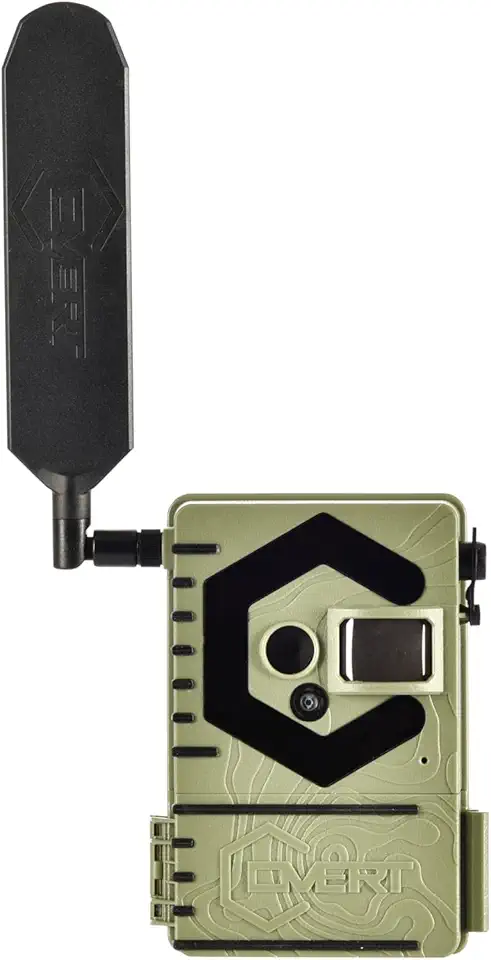
Covert Interceptor Scouting Camera 16MP 1080p GPS Wireless
Compact wireless pack records 16MP images and 1080p video, integrating GPS for precise location tracking and easy remote scouting.
Check PriceThe Covert Interceptor Solar is a hardworking, low‑maintenance choice for hunters who want to leave a camera out for long stretches. It’s solar‑powered with excellent battery longevity—even in low sunlight—and solar charging enables months‑long deployments with minimal maintenance, so you won’t be swapping AAs every few weeks. The body is compact and concealable, making it easy to tuck into a stand of trees or along a fence line without drawing attention.
Image quality is crisp and reliable, with advanced infrared that delivers strong nighttime performance. Triggering is quick and dependable, with a sub‑0.2 second trigger speed that helps capture fast‑moving game before it slips past. Detection holds up well at distance and performs reliably in both open fields and brushy terrain, which makes setup flexible across a variety of hunting spots.
Remote app control and customizable day/night settings let you fine‑tune sensitivity and schedules from your phone. The app is robust and useful for remote adjustments, though you may see occasional transmission delays during peak times or heavy network load. For most users the solar system plus app control means far fewer site visits and better long‑term scouting continuity.
As a photographer I appreciate the balance of stealth, battery autonomy, and night performance here. If you hunt places with decent sun exposure and want a camera that can run for months with minimal fuss, this is a solid pick. If you expect truly dark, dense-canopy sites with no sun, or need instant, lag‑free remote access at all times, consider those limitations before buying.
- Virtually no battery worries
- Fast, reliable trigger (sub‑0.2s)
- Excellent night vision (advanced infrared)
- App customization; compact and concealable
- Solar panel needs good sunlight
- Occasional app lag under heavy network load
Understanding Trigger Speed
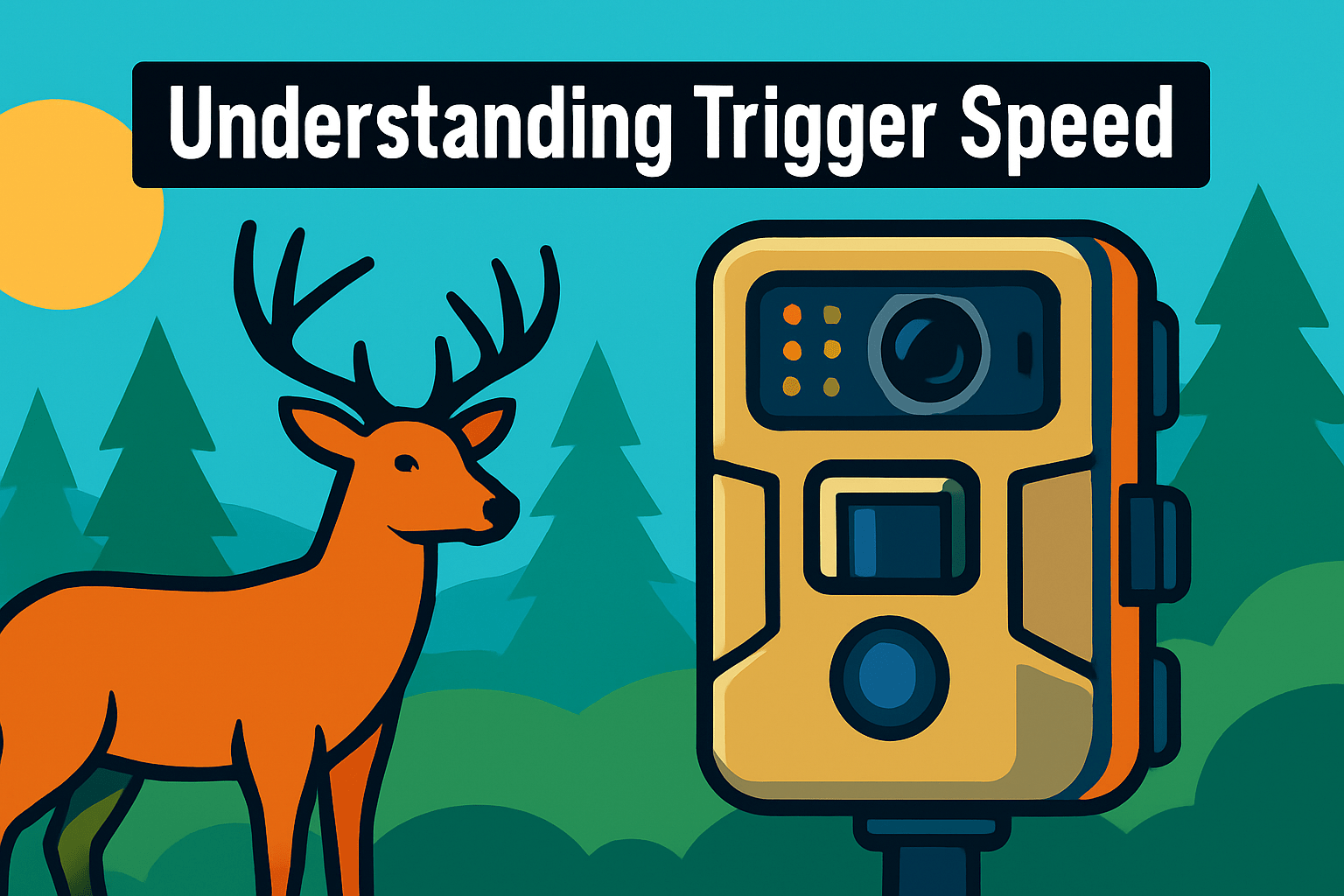
Trigger speed is the single technical spec that most directly determines whether you get the decisive frame or just a blur as an animal passes. It’s the delay from the moment the sensor senses motion to when the camera begins capturing the image. As a photographer I think of it like reaction time: the faster the camera reacts, the more consistently you’ll freeze antlers, noses and tail flags instead of motion smear.
Numbers matter. Many modern trail cams trigger in under a second, high‑end models sit around 0.2–0.5 seconds, and anything under 0.3 seconds is ideal for fast‑moving game. Remember, trigger speed is not the same as shutter speed: trigger speed starts the capture; shutter speed and flash duration determine how sharp a moving subject looks. Also watch recovery time — a quick trigger with a long recovery can still miss the rest of a group coming through.
Detection range gives you breathing room. Cameras with 50–100+ foot detection ranges give the unit time to see an animal and fire before it’s already past the frame. But range won’t save a slow trigger in a narrow trail. Place fast‑trigger cams where animals pass quickly (cuts, runways, narrow corridors) and don’t rely on slower units in high‑traffic areas.
From a field‑photographer’s perspective, placement and angle are as important as the spec sheet. Aim the camera so animals move across, not directly toward, the sensor — lateral motion more reliably trips passive infrared sensors and helps create a fuller, less blurred subject. Mount at a height that frames the animal’s vital area and avoid pointing into open sun or heavy brush that causes false triggers. If you expect groups, prioritize short recovery times so you capture several frames in succession.
In short: pair a fast trigger with sensible placement. A quick camera won’t help if it’s aimed poorly, and smart positioning can get usable images even from a middling trigger speed.
Battery Life and Power Tips
Battery life is one of those practical details that makes or breaks a long scouting season. In my experience, what drains trail cams fastest is simple: lots of photos, night IR bursts, and cold temperatures. If you’re running motion‑triggered bursts all night or a high‑frequency time‑lapse, expect life to plummet compared with a camera set for single shots on moderate sensitivity.
Choose your cells with the deployment in mind. Alkalines are cheap but lose up to half their capacity in the cold and can leak over long stints. Lithium AAs are the workhorse choice for serious hunters—they hold voltage in subzero temps, last far longer (think roughly 6–12+ months under moderate use) and resist leakage; NiMH rechargeables can work well short term, especially low‑self‑discharge types, but they sit at a slightly lower voltage and self‑discharge if you leave cameras idle.
For hands‑off setups, external 12V battery packs or solar panels change the game. A well‑sized external box can keep a camera running for up to a year, and a solar unit will be nearly maintenance‑free if you mount it in full sun and keep the panel clear of leaves. In winter, panels produce less charge, so combine solar with a lithium backup for reliability.
Small habits extend life more than you’d think. Trim vegetation from the sensor and position the camera to minimize false triggers, lower unnecessary resolution or burst counts, and disable unused features like live streaming or frequent poll intervals. Clean battery contacts before swapping cells and consider a dab of dielectric grease to limit corrosion.
Finally, balance stealth with maintenance. Cellular cams let you monitor battery status remotely so you visit less often, while non‑cell cams benefit from scheduled checks with fresh lithiums and spares in your pack. These simple rules keep your cameras collecting useful images instead of dead batteries in the trees.
What People Ask Most
What is the best trail camera for hunting?
There is no single best camera; the right choice depends on your priorities like image quality, trigger speed, stealth, battery life, and connectivity. Match the camera features to how and where you hunt for the best results.
What features should I look for in a hunting trail camera?
Prioritize clear image quality, fast trigger response, reliable night performance, and a useful detection range. Also consider power options, concealment, and any connectivity or app features you want for remote access.
How do I set up a trail camera for hunting?
Mount the camera at the height and angle that intersects animal travel and secure it firmly to prevent tampering. Adjust sensitivity, detection zones, and image settings before leaving it to collect data.
Where should I place my trail camera for the best results?
Position cameras on established trails, funnels, or near feeding and bedding areas where animals naturally move. Avoid dense brush that causes false triggers and choose spots that allow good concealment and a clear field of view.
How important is trigger speed and detection range on a trail camera?
Fast trigger speed and a good detection range greatly increase the chance of capturing fast or distant animals. Recovery time and shutter behavior also affect the ability to record multiple animals moving through quickly.
Are cellular trail cameras worth it for hunting?
Cellular cameras are valuable if you want remote access, instant notifications, or added theft alerts, offering convenience and better monitoring. Keep in mind they require network coverage and often come with additional costs for service.
How often should I check my trail camera while hunting?
Visit frequency depends on the camera’s power source, storage capacity, and how actively you monitor activity. Solar or cellular setups allow longer intervals between checks, while standard battery cameras usually need more frequent visits.
Conclusion for Best Trail Cameras for Hunting
Choosing the right trail camera comes down to prioritizing what matters most to your hunts: wide coverage, ultimate image quality, instant notifications and security, long‑term solar operation, or AI‑assisted stealth and organization.
Balance trigger speed and detection range with battery or solar options, concealment needs, and the level of app/security features you want, using the product notes and trigger/battery guidance to match a camera to each hunting situation.
Whether you’re aiming to cut down false triggers, monitor a food plot from every angle, or leave a camera in the field for months, the right tradeoffs will make scouting more effective and less work.
If you want to sharpen your setup and scouting skills, read more of our site’s guides and reviews to find practical tips and deeper comparisons that fit your experience level.
Please share your questions or field experiences in the comments below — we usually reply within a few hours and are happy to help you dial in the best setup for your terrain and game.



0 Comments